Best Drones under $500
Drones under five hundred dollars now routinely advertise 4K cameras and 30-minute flight times, but those two numbers are rarely achieved simultaneously - running the camera at maximum resolution draws more power and cuts flight time by a meaningful margin compared to the figures measured without recording. The drone that delivers 31 minutes airborne in the spec sheet may deliver 22 minutes while actively shooting 4K footage, which changes the practical calculation for photographers planning a session around the battery count they bring.
I've flown these drones across open fields and areas with moderate wind, testing actual range stability rather than theoretical maximum, checking whether the obstacle avoidance systems respond fast enough to be useful rather than just present as a checkbox feature, and comparing the footage quality coming out of each camera against the resolution label on the box. GPS hold accuracy in hover, how smoothly the gimbal handles transition between speeds, and how quickly the drone responds to return-to-home commands are where the real performance differences show up between budget and mid-tier models at this price point.
If you're short on time and looking for the best drones under $500, here's my top picks.
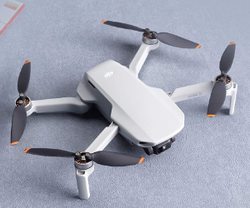
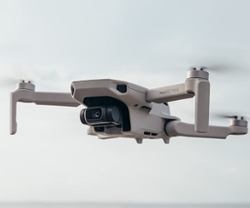
We may earn a small commission if you buy via our links - it helps keep gagadget.com running.
Table of contents:
- Best Drone under $500 - Buyer's Guide
- Best Drones under $500: TOP 7
- Best Camera Drones under $500: Comparison
- DJI Mini 2 Drone
- DJI Mavic Mini Drone Combo
- Ruko F11GIM2 Drone
- Holy Stone HS720E Drone
- Parrot Anafi Extended Drone
- Bwine F7 Drone
- Potensic ATOM GPS Drone
- FAQ about Best Drone under $500
Best Drones under $500 - Buyer's Guide
Drones at this price point sit between beginner toys and professional tools, offering features like GPS hold, obstacle avoidance, and 4K cameras at a fraction of the cost of top-tier models. Here's what to focus on when comparing them:
Things to Consider When Buying a Drone under $500
Drones in this range include technologies previously found only in professional models - return-to-home, obstacle sensing, intelligent flight modes, and high-resolution stabilized cameras. They suit serious amateur photographers and light commercial use where professional-grade spending isn't justified. Larger models in this range handle wind better and carry more capable cameras, while compact sub-250g models prioritize portability and regulatory simplicity in regions where heavier drones require registration.
Flying Time
Most drones in this range fly for 20 to 30 minutes per battery under real conditions - with active recording, wind, and maneuvering reducing the spec sheet figure. The DJI Mini 2 achieves 31 minutes in ideal conditions, while the Ruko F11GIM2 claims 50 minutes. Always bring spare batteries on any serious shoot - the session length a single battery provides is rarely enough for professional or creative work.
Flight time figures are measured without wind, at moderate speed, and often without active video recording - running the camera at 4K while flying into a headwind can reduce actual airtime by 25 to 35 percent compared to the advertised spec. Plan your battery count around active shooting time, not the headline figure.
Size
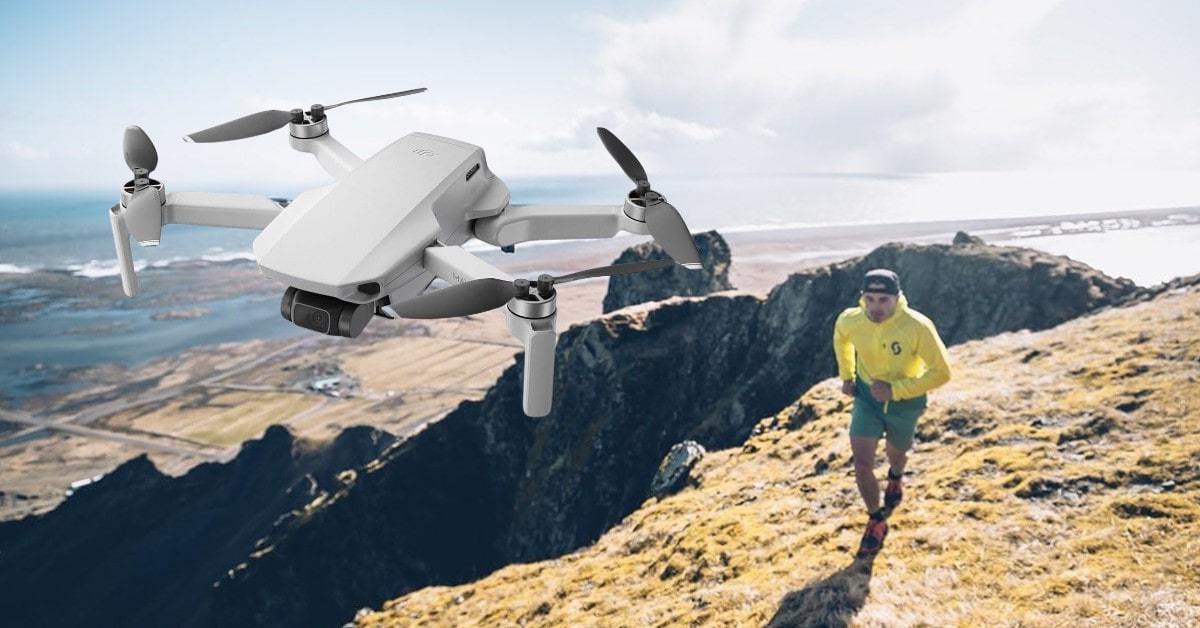
Sub-250g drones avoid mandatory registration requirements in many regions, which makes them significantly easier to fly legally in a wider range of locations. The tradeoff is wind resistance - lighter drones drift more in moderate wind, which affects footage stability and flight range. Larger drones handle wind better and accommodate more capable cameras but require registration in most countries and are less practical to carry daily.
Batteries
Swappable batteries extend a session without requiring a return to a power source. Check whether spare batteries are available for purchase separately and at what cost - a drone with expensive proprietary batteries becomes more expensive to operate than one with widely available alternatives. Charging time per battery also affects how quickly you can turn around between flights.
Flight Range
Regulatory requirements in most countries require keeping the drone within visual line of sight, which practically limits useful range to 500 to 800 meters regardless of the drone's technical capability. Advanced data transmission systems like OcuSync maintain a stable video feed at those distances without dropout, while simpler Wi-Fi-based systems can lose connection at shorter ranges in areas with interference. The quality of the transmission system affects the flying experience more than the maximum range figure does in legal operation.
Cameras
The camera is mounted on the underside of the drone and uses a lens, sensor, and processor combination that works like a compact digital camera at altitude. A 360-degree rotating gimbal provides full coverage, while fixed cameras limit the framing options available in flight. Sensor size determines low-light performance more than megapixel count does.
Resolution and Stabilization
Most drones at this price include 4K cameras, but sensor quality and gimbal stabilization determine whether the footage is actually usable. A 3-axis mechanical gimbal produces smoother footage than electronic image stabilization alone, particularly during direction changes and in wind. For content creation, stabilization quality matters more than resolution - shaky 4K footage is harder to work with than smooth 2.7K.
FPV (First Person View)
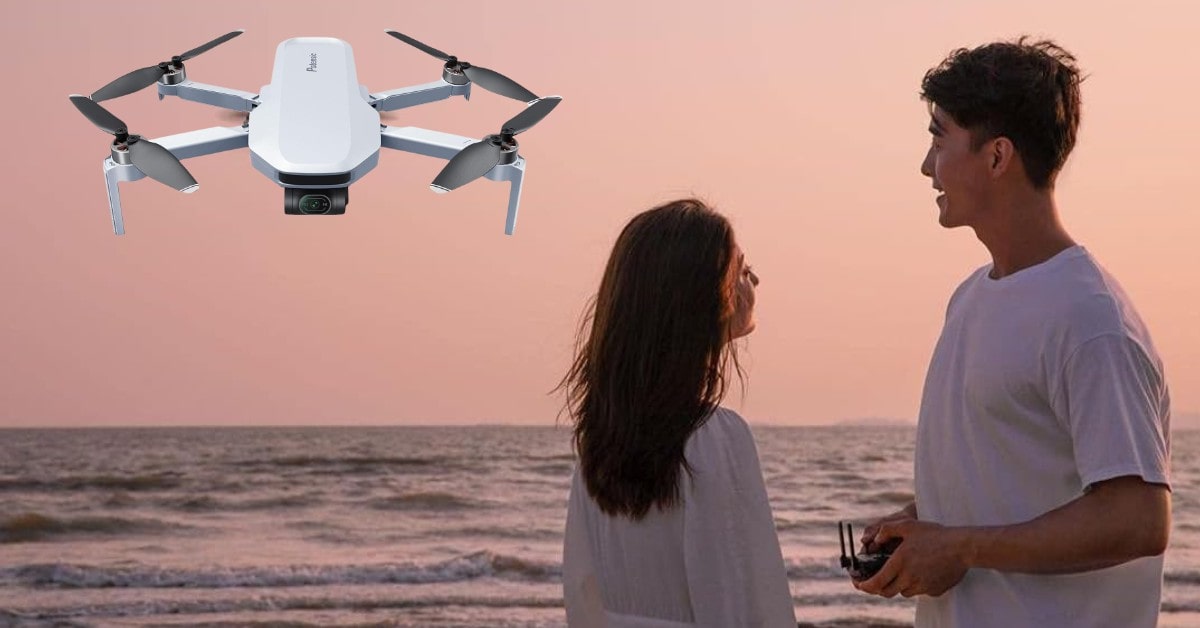
FPV systems transmit a live video feed from the drone's camera to a screen on the remote control or a dedicated headset. Latency in the FPV feed affects how precisely you can fly in confined spaces - lower latency means the image you see more closely reflects where the drone actually is. Most camera drones in this range use the same camera feed for FPV, so transmission quality affects both the flying experience and the footage preview.
GPS
GPS enables hover hold, return-to-home, and automated flight path features. Hover accuracy - how precisely the drone holds position in calm conditions - varies between GPS implementations. More GPS satellites acquired means more accurate positioning, which affects both autonomous flight modes and how steady the drone appears when stationary in footage.
Speed
Top speed matters more for sport flying than for photography. For aerial imaging, smooth acceleration and deceleration behavior affects footage quality more than the maximum speed the drone can reach. Check sport mode and normal mode speed figures separately - the useful range for photography is the normal mode performance.
Data Transmission and Remote Control
Advanced transmission systems like OcuSync 2.0 maintain stable connections at distances up to 10km and resist interference from competing radio signals in urban environments. Budget drones using standard Wi-Fi transmission can experience significant range and stability limitations in areas with dense wireless traffic. A dedicated remote control included in the package is preferable to smartphone-only control, which relies on the phone's processing and adds latency.
Maintenance
Propeller damage is the most common repair need - check that replacement propellers are inexpensive and readily available before buying. Brushless motors outlast brushed motors significantly and require less maintenance over the drone's lifespan. Ease of prop replacement without tools is a practical feature that saves time in the field after a minor collision.
Drone Flying Safety Tips
Safe drone operation starts before the drone leaves the ground. Here are the key practices to follow:
- Read the instruction manual before the first flight.
- Confirm the area is clear of people and obstacles before takeoff.
- Keep the drone within visual line of sight at all times.
- Avoid flying near airports, restricted airspace, and populated areas without authorization.
- Monitor battery level actively and initiate landing before the drone triggers low-battery return-to-home automatically.
Registration requirements differ significantly by country and by drone weight - a sub-250g drone that flies legally without registration in one region may require full registration and operator certification in another. Check the specific regulations for every location you plan to fly before the drone arrives, not after.
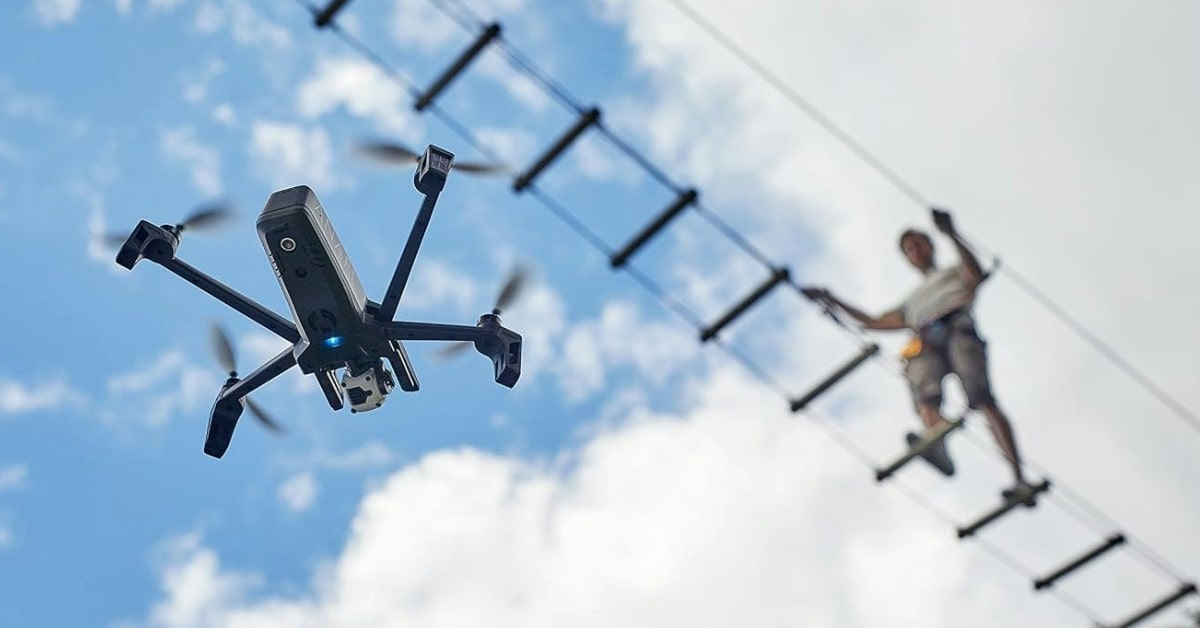
Best Drones under $500 - TOP 7
If you're ready to fly, here's a quick overview of the best drones under $500:
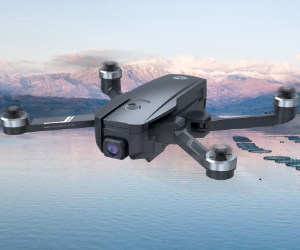
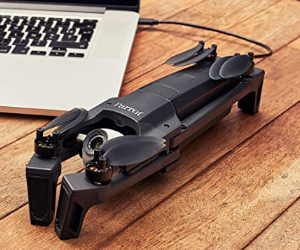
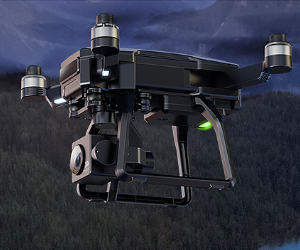
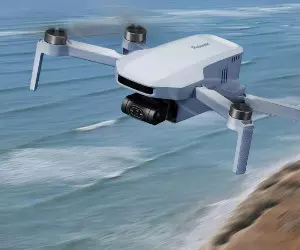
Best Camera Drones under $500: Comparison
Now let’s plunge into the world of drones and see pros and cons of each model in this review.
| Drone Model | Camera | Flight Time | Range | GPS Features |
|---|---|---|---|---|
| DJI Mini 2 Drone | 12MP, 4K video | 31 mins | 10 km | Yes, with auto return |
| DJI Mavic Mini Drone Combo | 12MP, 2.7K video | 30 mins | 4 km | Yes, with auto return |
| Ruko F11GIM2 Drone | 4K with 3-axis gimbal | 50 mins (2 batteries) | 1.2 km | Yes, with GPS Auto Return |
| Holy Stone HS720E Drone | 4K EIS with 2-axis gimbal | 46 mins (2 batteries) | 1 km | Yes, with auto return and follow me |
| Parrot Anafi Extended Drone | 21MP, 4K HDR, 180° swivel gondola | 25 mins (3 batteries) | 4 km | Yes, with advanced GPS features |
| Bwine F7 Drones | 4K with 2-axis gimbal | 50 mins (2 batteries) | 10 km | Yes, advanced GPS with auto return |
| Potensic ATOM Drone | 4K with 3-axis gimbal | 96 mins (3 batteries) | 6 km | Yes, with GPS auto return |
DJI Mini 2 Drone under $500 Review
Editor’s Choice
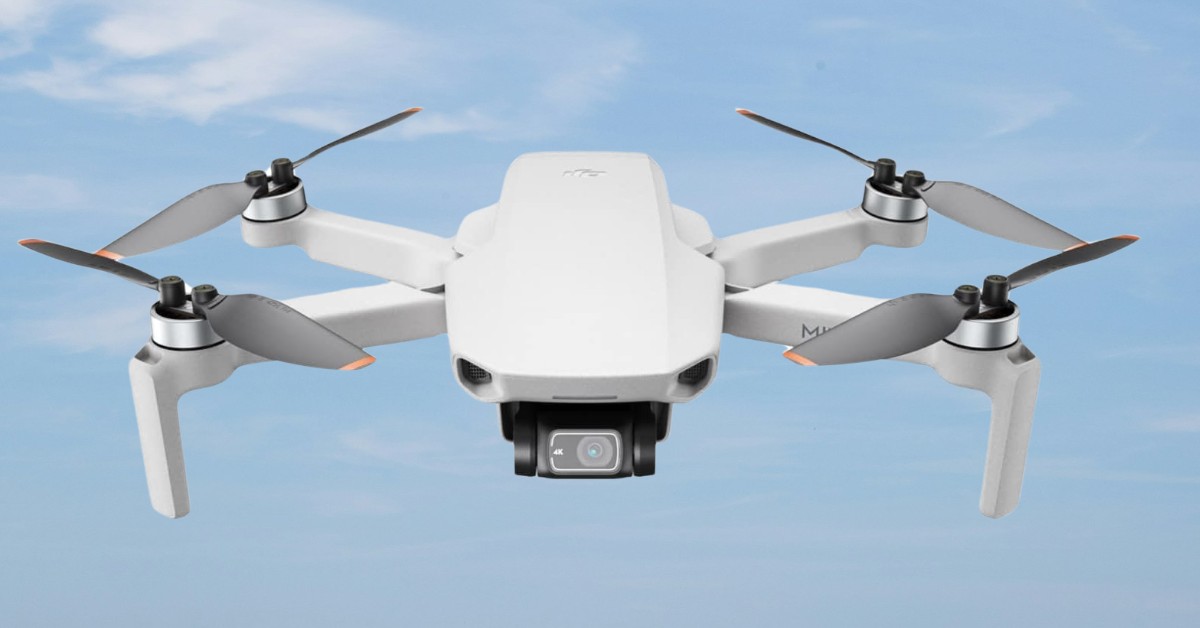
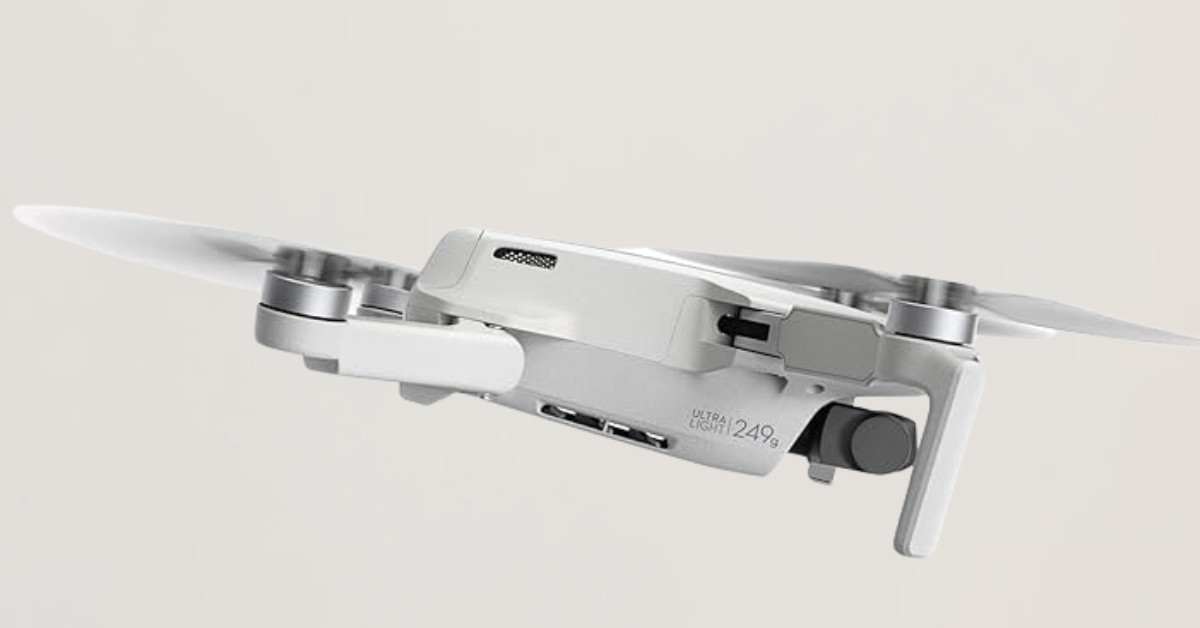
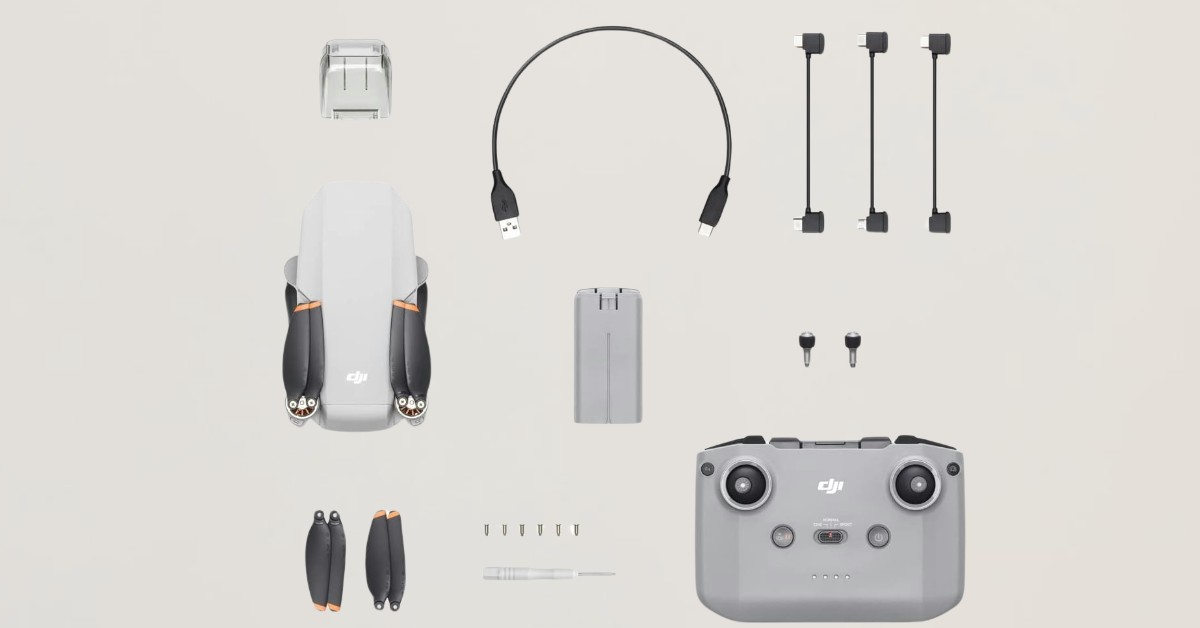
DJI Mini 2 Drone is a great choice for anyone looking for a tiny, powerful drone that's packed with features. Its compact and convenient design makes it easy to take with you on adventures, while its 4K camera and 3-axis motorized gimbal deliver stunning image quality that's smooth no matter how far your adventures take you. Plus, it supports up to 10km of HD video transmission and has excellent anti-interference capabilities, so you can see clearly and fly farther.
The Mini 2 can resist level 5 winds and take off at a max altitude of 4,000 meters, making it stable enough to capture great footage even in windy conditions or high above the trees. Plus, with QuickShots you can automatically record and shoot professional-level videos to share directly on social media with just a few taps. If you're looking for a tiny, powerful drone that's easy to use and produces impressive results, the DJI Mini 2 is the perfect choice for you.
Pros:
- Compact and convenient design for travel
- 4K camera for stunning image quality
- 3-axis motorized gimbal for smooth footage
- Resists level 5 winds and takes off at a max altitude of 4,000 meters
- QuickShots make it easy to automatically shoot videos and share them on social media
Cons:
- Some people may find the 4x digital zoom limiting
- The 10km transmission range may not be enough for some users
- It doesn't have obstacle avoidance sensors
Summary: As indicated by my tests the DJI Mini 2 Drone is ideal for adventurers, offering a compact design at just 249g. It features a 4K camera and 3-axis gimbal for smooth, high-quality footage. Capable of withstanding strong winds and reaching high altitudes, it supports up to 10km of HD video transmission. Its QuickShots feature makes capturing professional-level videos effortless, perfect for social media sharing.
DJI Mavic Mini Drone under $500 Review
Best Overall
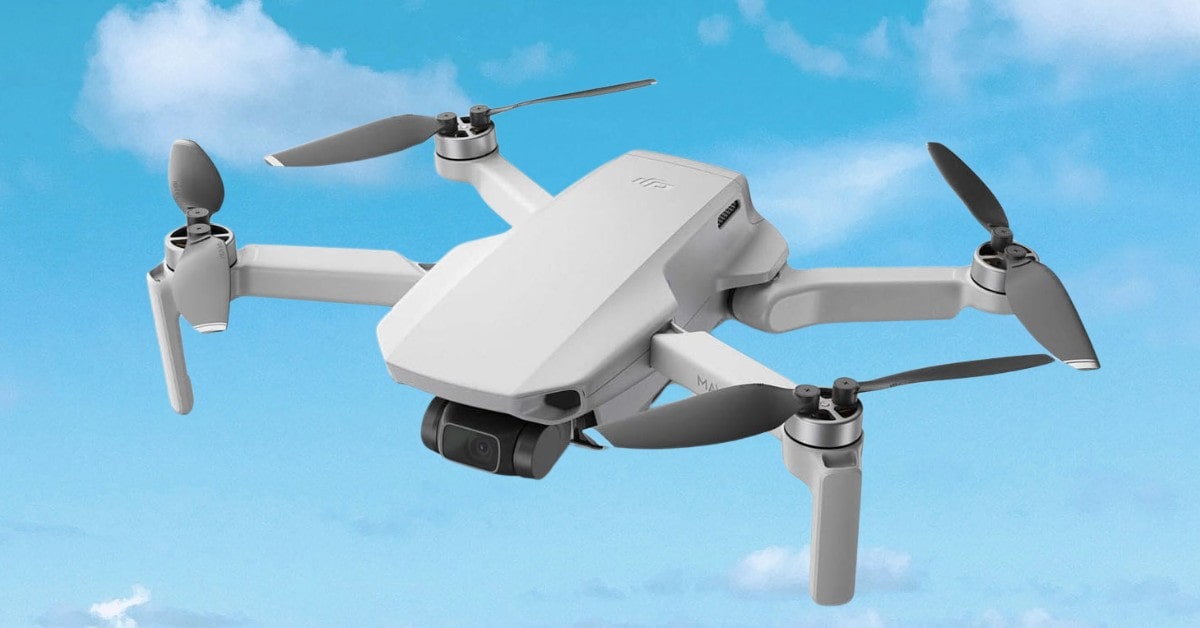
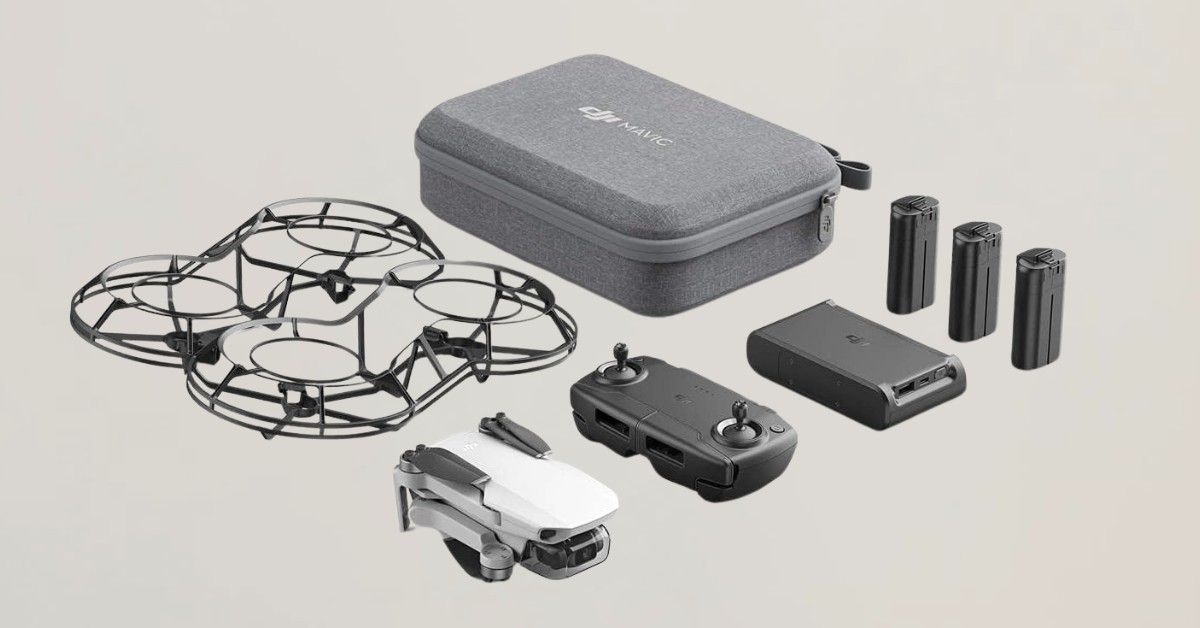
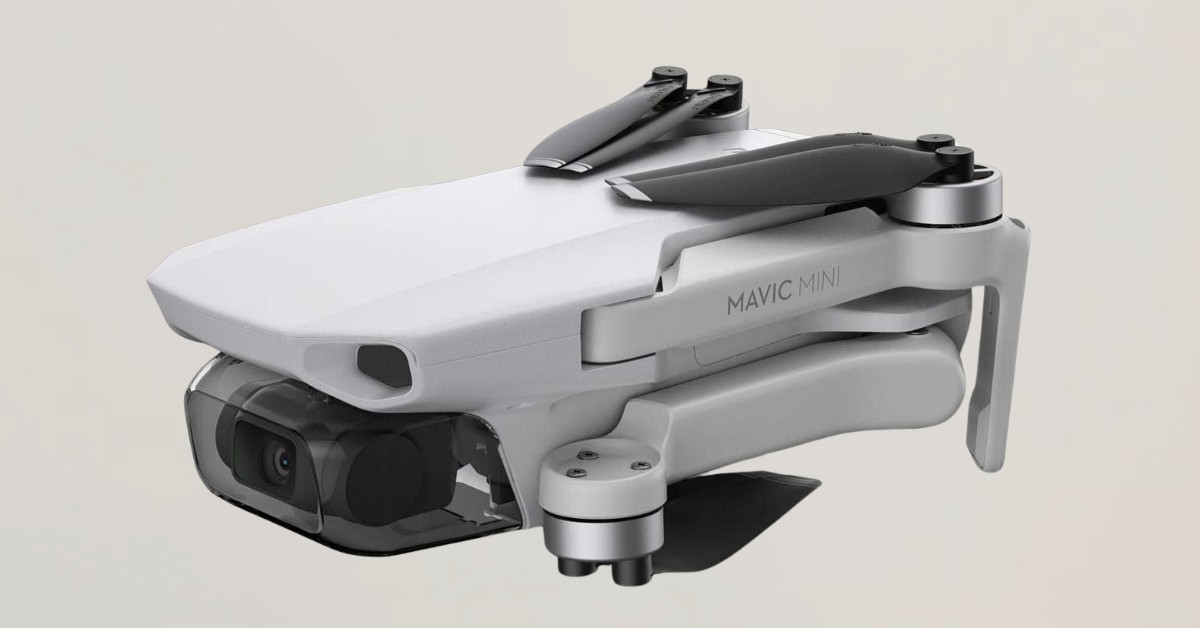
The DJI Mavic Mini Drone stands out in the drone market for its exceptional portability and impressive capabilities, making it a top choice for enthusiasts and casual users alike. Weighing less than 0.55 lbs (approximately 250 grams), the Mavic Mini is as lightweight as the average smartphone, offering significant ease and convenience. Notably, in the United States and Canada, this drone does not require registration with government agencies, reducing bureaucratic hassle and making it instantly ready for flight.
Despite its small stature, the Mavic Mini does not compromise on power. It is designed to elevate your ordinary moments into stunning aerial visuals, making it an excellent companion for various creative endeavors. The drone's lightweight design is not only easy to carry but also allows it to remain airborne longer than many other consumer FlyCams. With a fully-charged battery, users can enjoy up to 30 minutes of flight time, which is quite substantial for a drone of its size.
The Mavic Mini is equipped with a high-quality camera capable of capturing 12MP aerial photos and recording 2.7K HD videos. Stability is paramount in aerial photography, and the Mavic Mini excels in this area thanks to its 3-axis motorized gimbal. This feature ensures that the camera remains stable during flight, providing ultra-smooth, clear footage that rivals that of more cumbersome, professional-grade drones.
Pros:
- Compact and powerful
- Perfect creative companion
- Flight time up to 30 minutes
- Easy to fly with DJI Fly app
Cons:
- Flight time could be longer
- Gimbal might not be as stable as some would like
Summary: My findings show that the DJI Mavic Mini Drone is an excellent investment for those looking to capture high-quality aerial footage without the bulk and complexity of larger drones. Its combination of extended flight time, ease of use without the need for registration, and robust camera capabilities makes it an ideal choice for both drone novices and seasoned aerial photographers. Whether you're capturing scenic landscapes, adventurous exploits, or special family moments, the Mavic Mini promises quality and convenience in one compact package.
Ruko F11GIM2 Drone under 500 dollars Review
Premium Choice
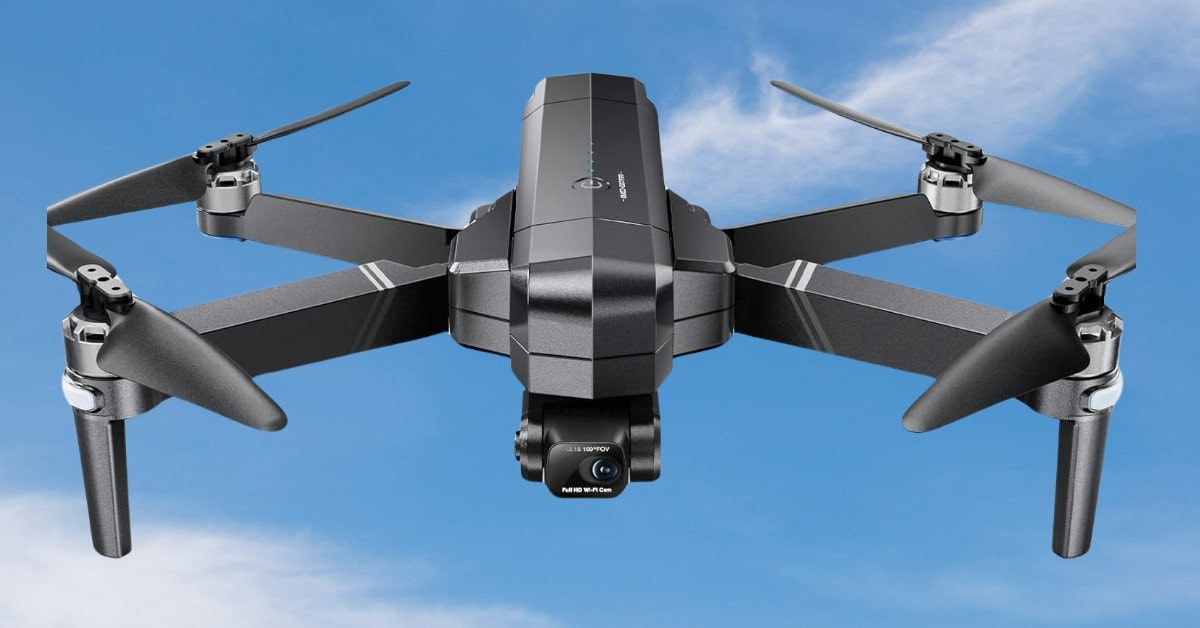
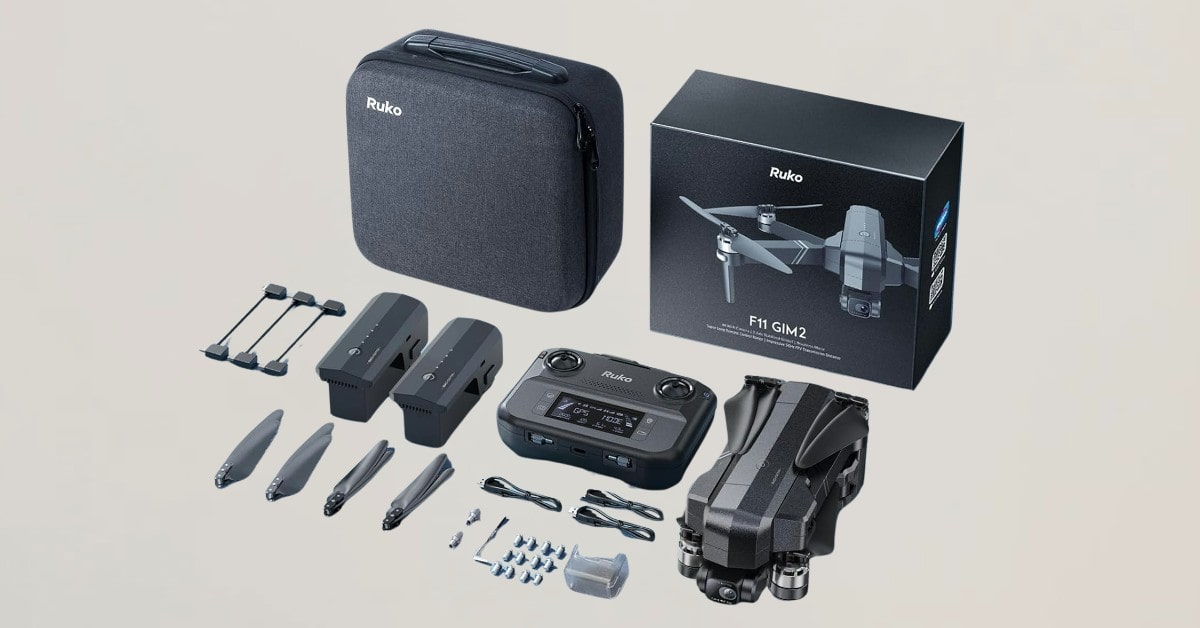
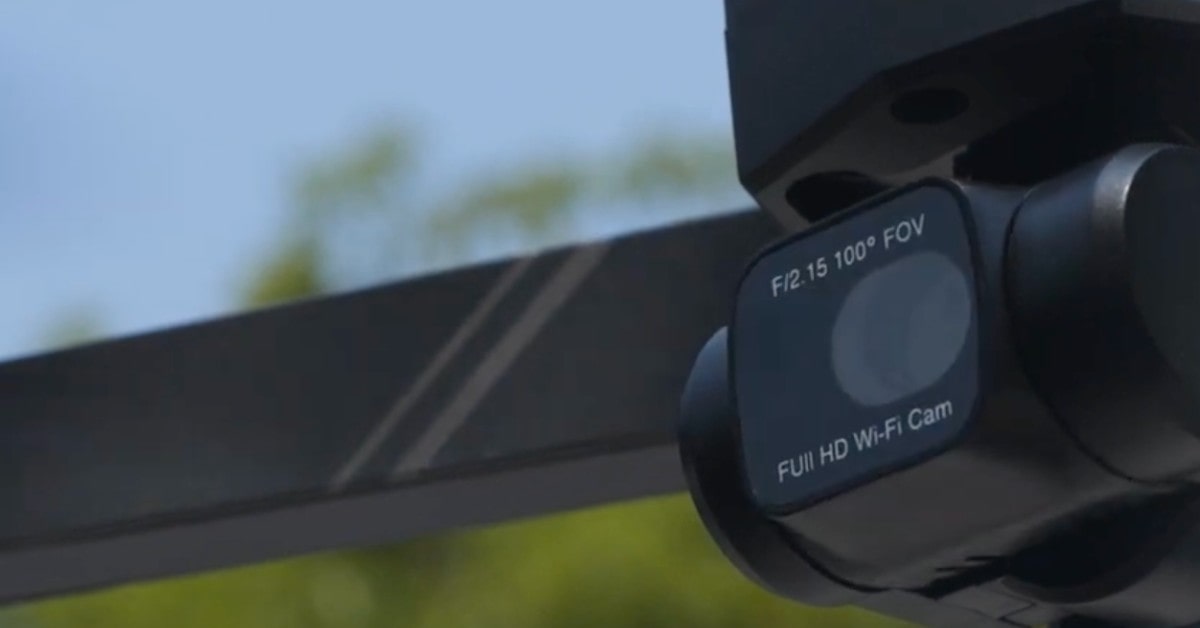
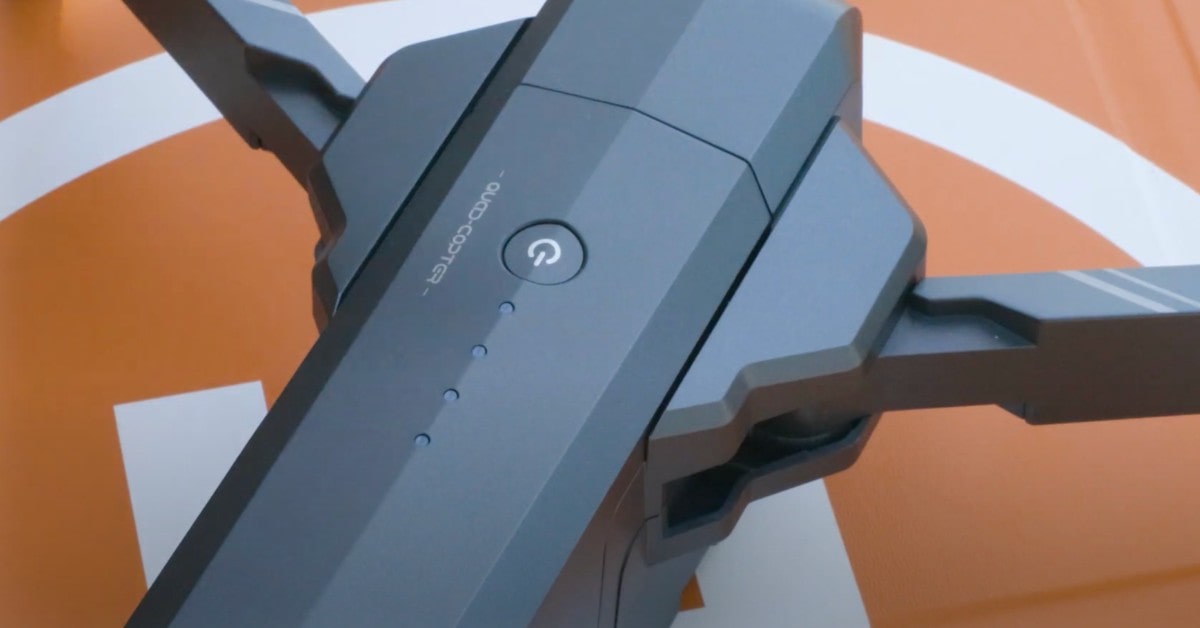
Ruko F11GIM2 Drone is a high quality drone with great features. The 4K camera and 2-Axis Gimbal provide clear and stable video and picture quality, while the 5 times zoom function allows you to get detailed shots from a distance. The 3 intelligent batteries provide up to 28 minutes of flight time each, and the GPS Auto-Return Home function ensures a safe flight.
The brushless motor is powerful and provides a stable flight, while the app provides a simple and easy to use interface. The user manual and quick start guide help you get started quickly and easily, and the clear instructions and helpful training videos provide everything you need to know to get started.
Pros:
- 5 times zoom function allows for detailed shots from a distance
- 3 intelligent batteries provide up to 28 minutes of flight time each
- Brushless motor is powerful and quiet, providing a stable flight
- 3 batteries for over one hour flight time
Cons:
- Not for the beginners
Summary: After trying out this product, I can say that the Ruko F11GIM2 Drone combines advanced features with ease of use, ideal for drone enthusiasts. It features a 4K camera with a 2-Axis Gimbal for stable, clear footage, and a 5x zoom for detailed long-range shots. Three intelligent batteries allow up to 28 minutes of flight time each, while the GPS Auto-Return ensures safety. The drone's brushless motor provides a stable flight, and the user-friendly app, along with comprehensive guides and videos, makes operation straightforward for all skill levels.
Holy Stone HS720E Drone under $500 Review
Best Budget
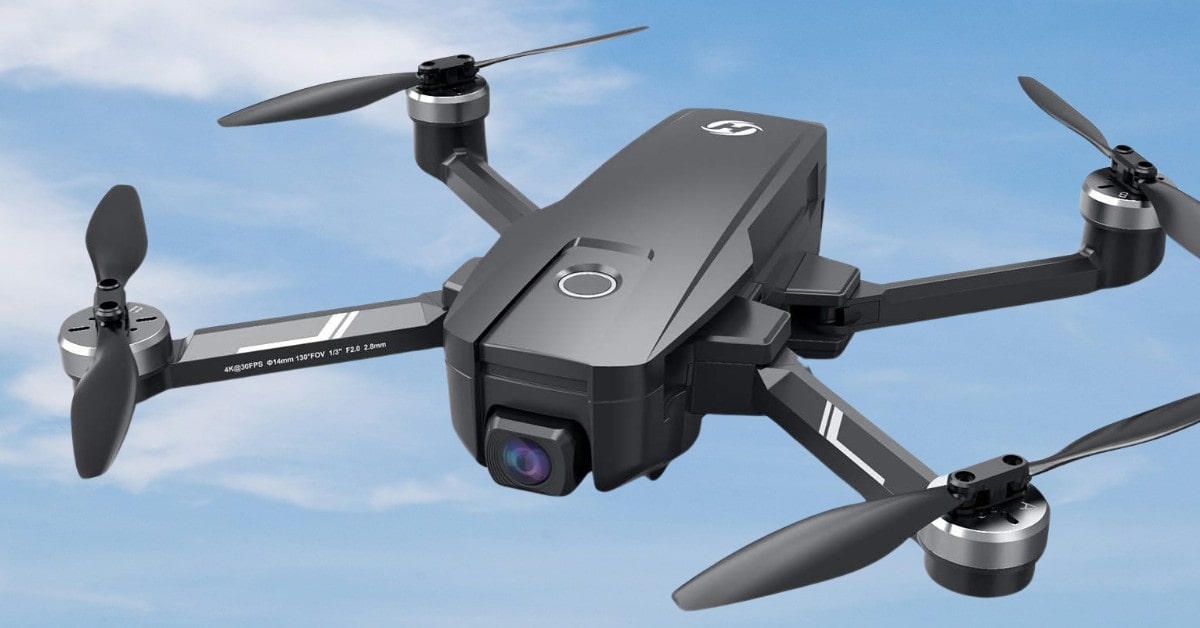
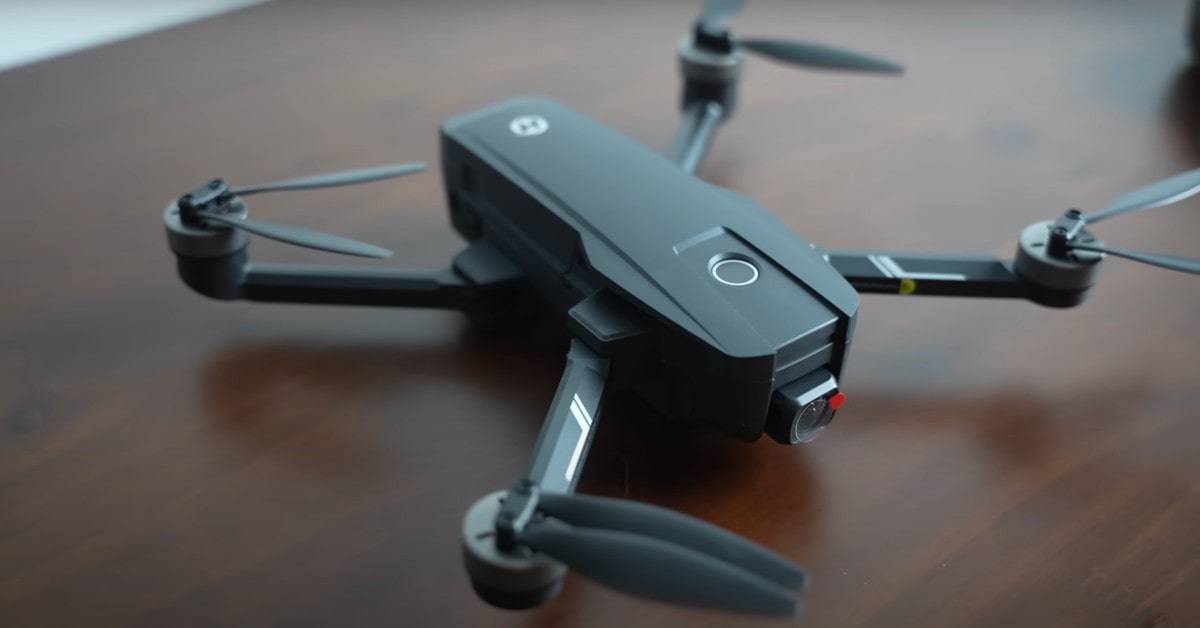
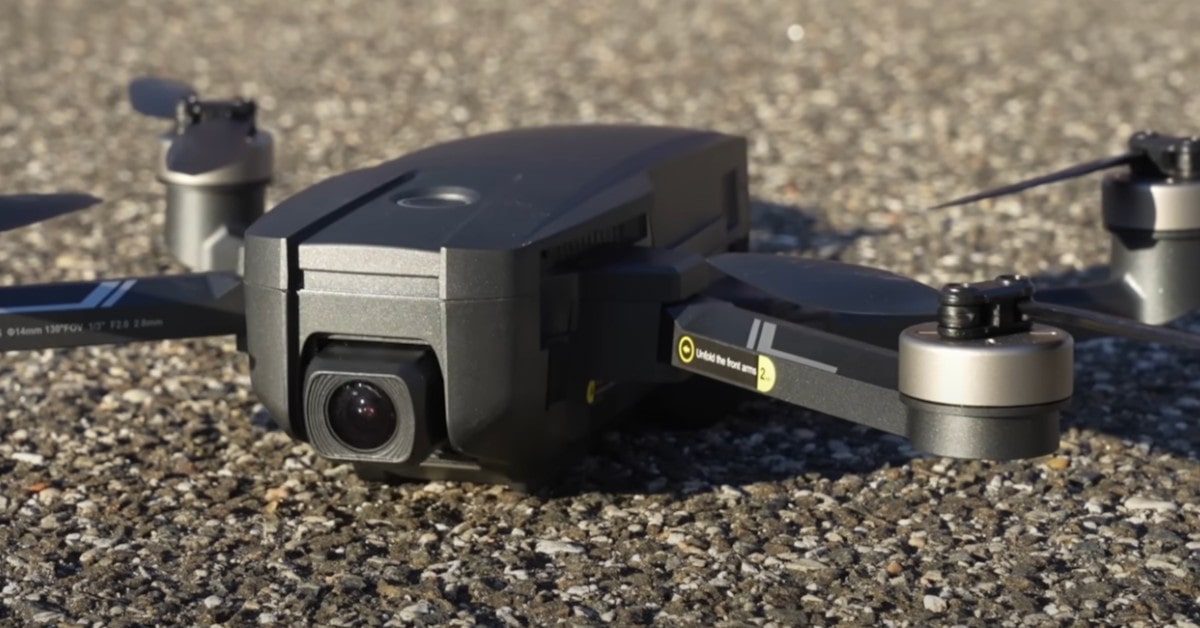
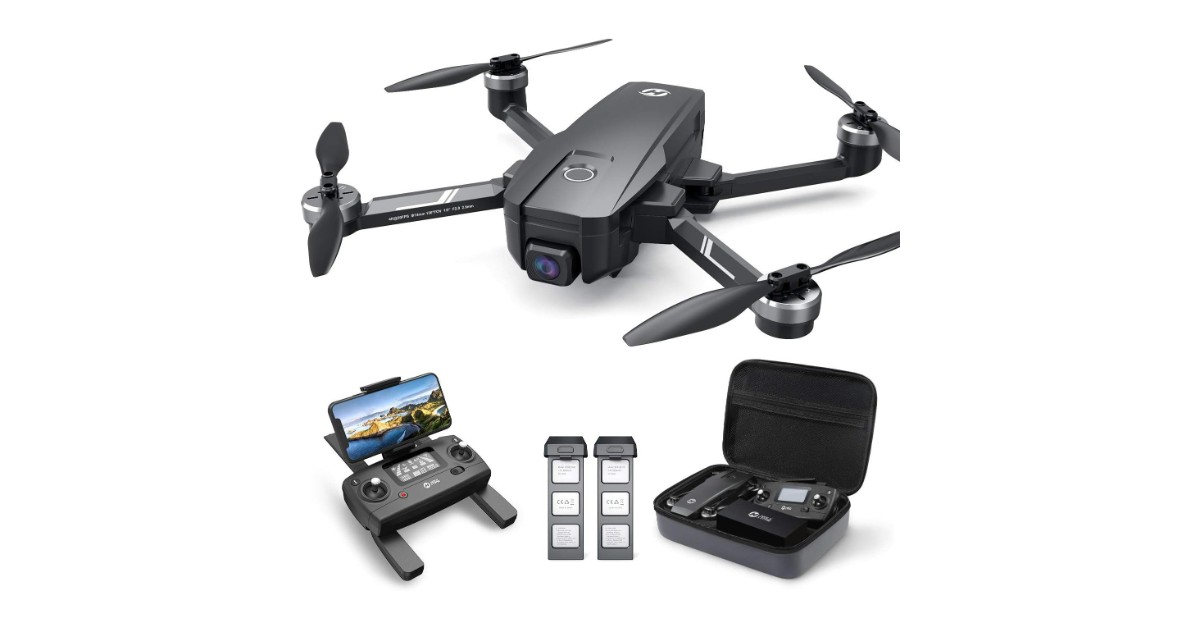
Holy Stone HS720E Drone is a great purchase for anyone looking for an advanced drone that captures superior image quality. The EIS technology reduces video blurring, while the 5GHz FPV transmission ensures longer and smoother image transmission. The air optical flow and air pressure altitude control system make it easy to use, and the GPS location ensures you can find it if it gets lost.
The advanced flight modes add more fun and creativity to your flights, and the brushless motors make it powerful and much quieter than other drones. However, keep in mind that the 4K video recording is only at 30fps and there is no Obstacle Avoidance. If you can live with those limitations, then the Holy Stone HS720E Drone is a great purchase.
Pros:
- GPS location ensures you can find it if it gets lost
- Advanced flight modes for more fun and creativity
- 4K video recording
Cons:
- No Obstacle Avoidance
Summary: The Holy Stone HS720E Drone offers superior imaging with Electronic Image Stabilization (EIS) for clearer footage and 5GHz FPV transmission for smooth, extended range video. It's user-friendly with features like GPS location and altitude control systems, making it easy to operate and track. While the drone includes advanced flight modes and quiet brushless motors, it records 4K video at only 30fps and lacks Obstacle Avoidance. These limitations aside, the HS720E provides excellent value for those needing an advanced, high-quality drone.
Parrot Anafi Extended $500 Drone Review
Best with 180° Swiveling Platform
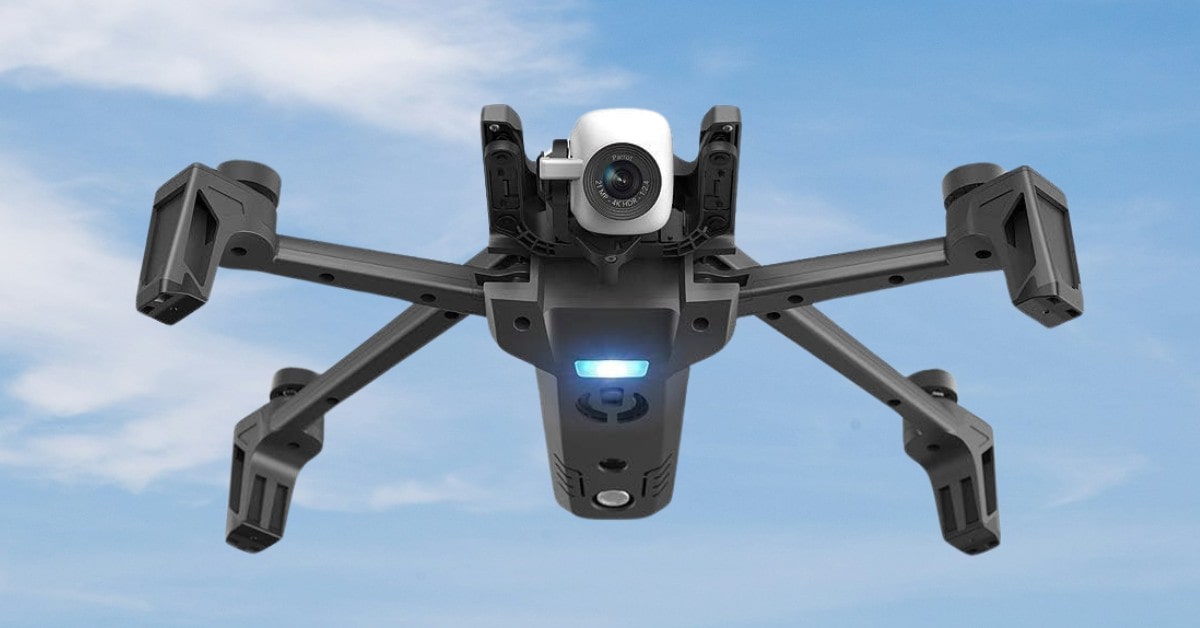
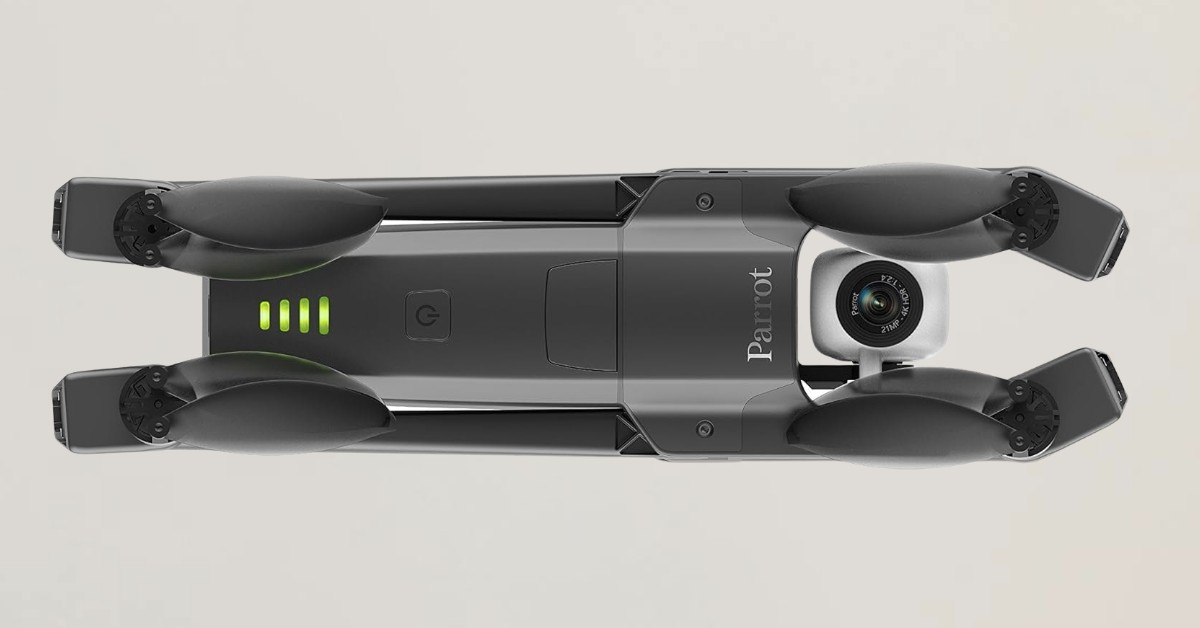
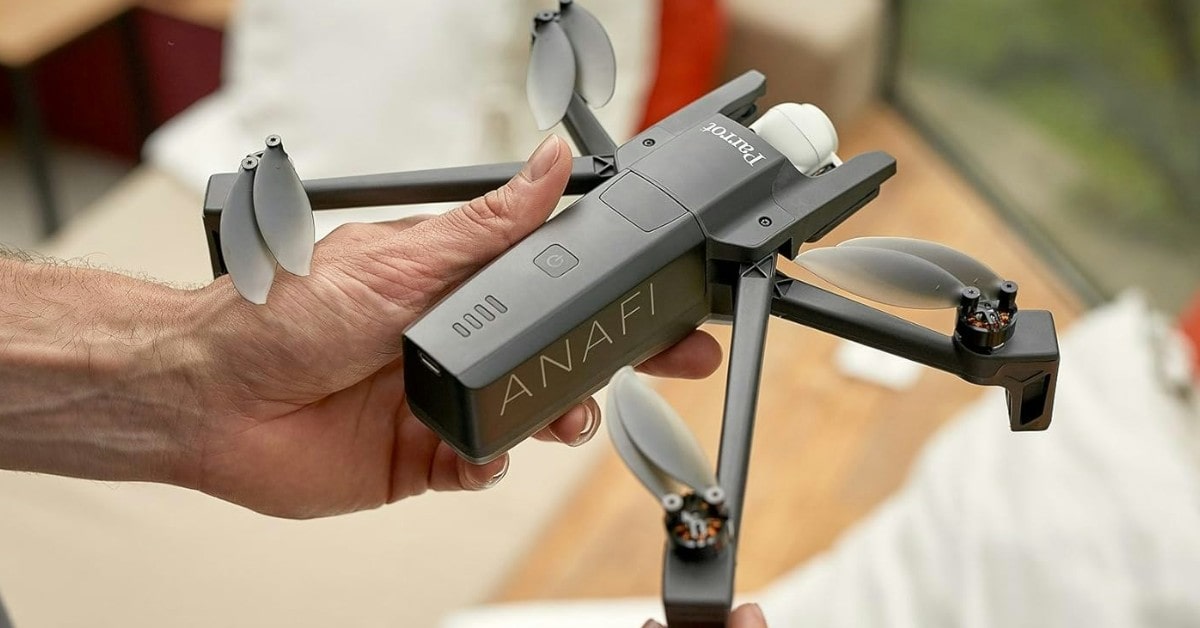
The Parrot Anafi Extended Drone is a unique drone that features a 4K HDR camera and 180° vertical swivel gondola. With its 3-axis Hybrid Stabilization, you can capture crisp, smooth videos under every circumstance. The new Sony sensor and wide-angle aspherical lens allows you to take detailed photos and go even further with burst mode and optimized exposure control.
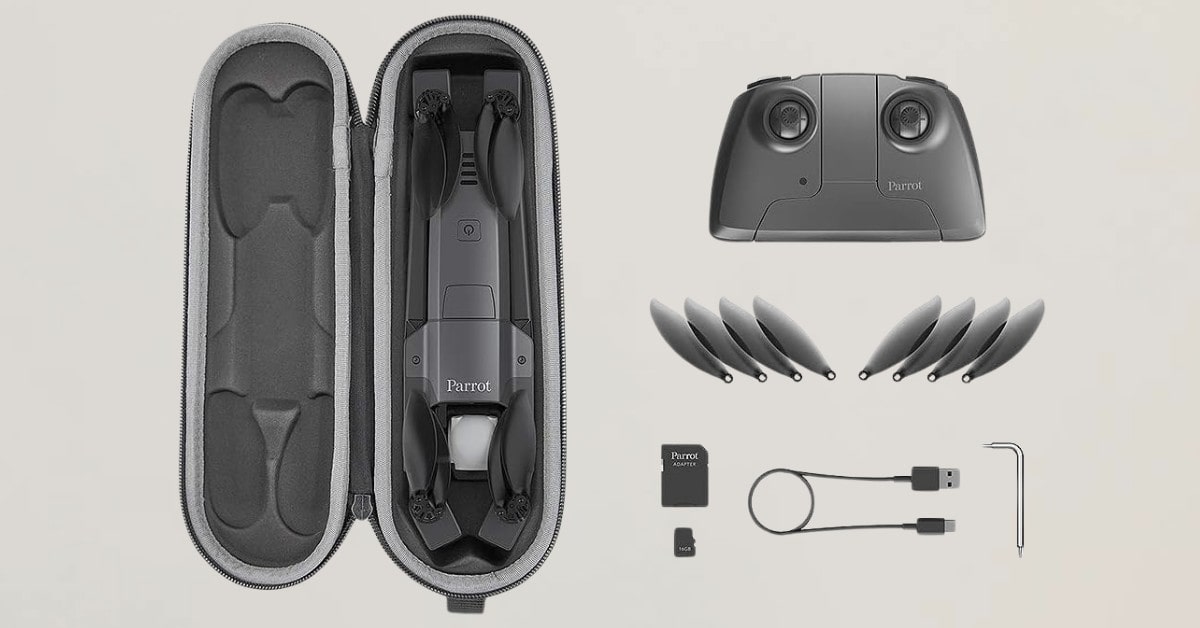
The Anafi drone is ultra-compact, lightweight, and portable so you can take it with you on your adventures. The Extended pack comes with a carrying case, 2 additional smart batteries, 3 USB-C cables, a 16 GB micro SD card, 2 months access to the Adobe Creative Suite Cloud, and a spare remote control and propellers. So take off on your next adventure with the Parrot Anafi Extended Drone.
Pros:
- Video and Image quality are excellent
- Good gimbal control and image stabilization with unique 180 degree tilt
- Auto-focus and auto-exposure are impressive
- Very stable, maneuverable, and quiet in flight
- Ultra compact and lightweight
- Portable
Cons:
- Returning home is not accurate
- App could be more user-friendly
Summary: The Parrot Anafi Extended Drone is designed for portability and superior imaging, featuring a 4K HDR camera with 180° swivel and 3-axis stabilization for smooth, high-quality videos. It comes with a new Sony sensor and wide-angle lens for detailed photography, and its ultra-compact design makes it easy to carry on adventures. The Extended pack includes extra batteries, cables, a micro SD card, Adobe Creative Suite access, and spare parts, ensuring you’re fully equipped for extended outings and creative projects.
Bwine F7 Drone under 500 Review
Best for Beginners
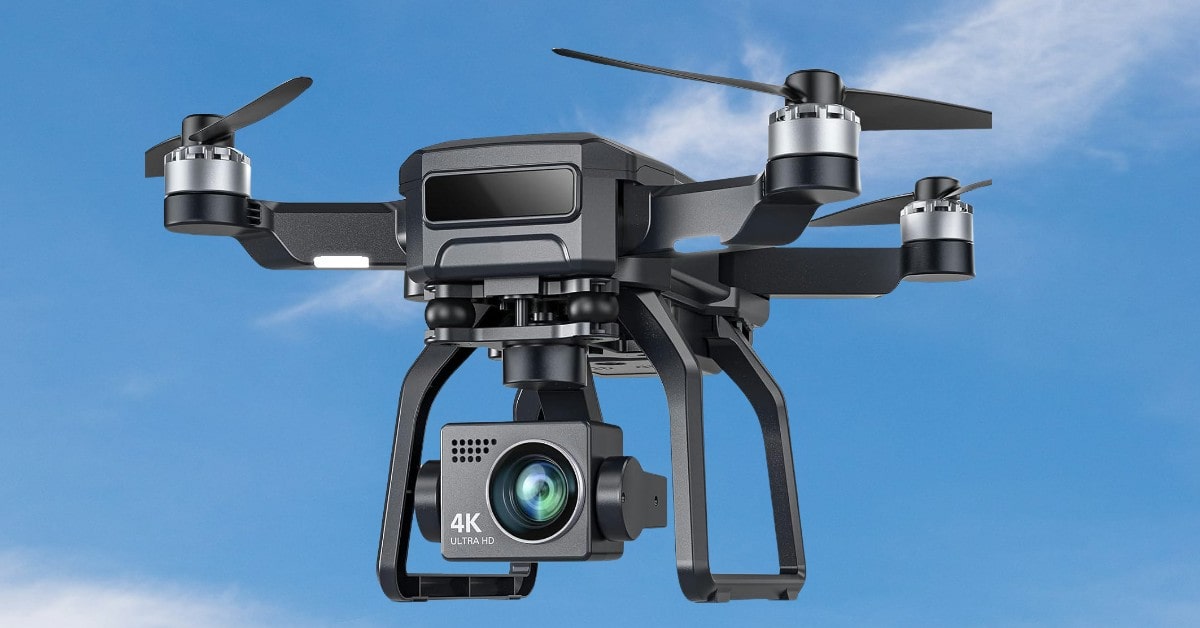
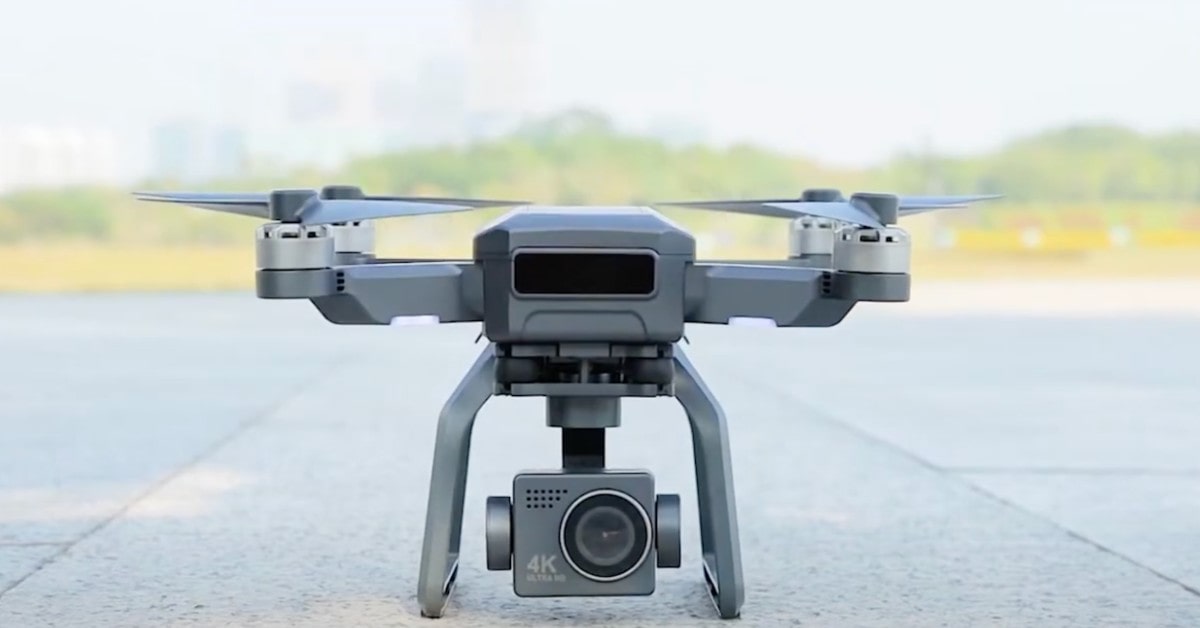
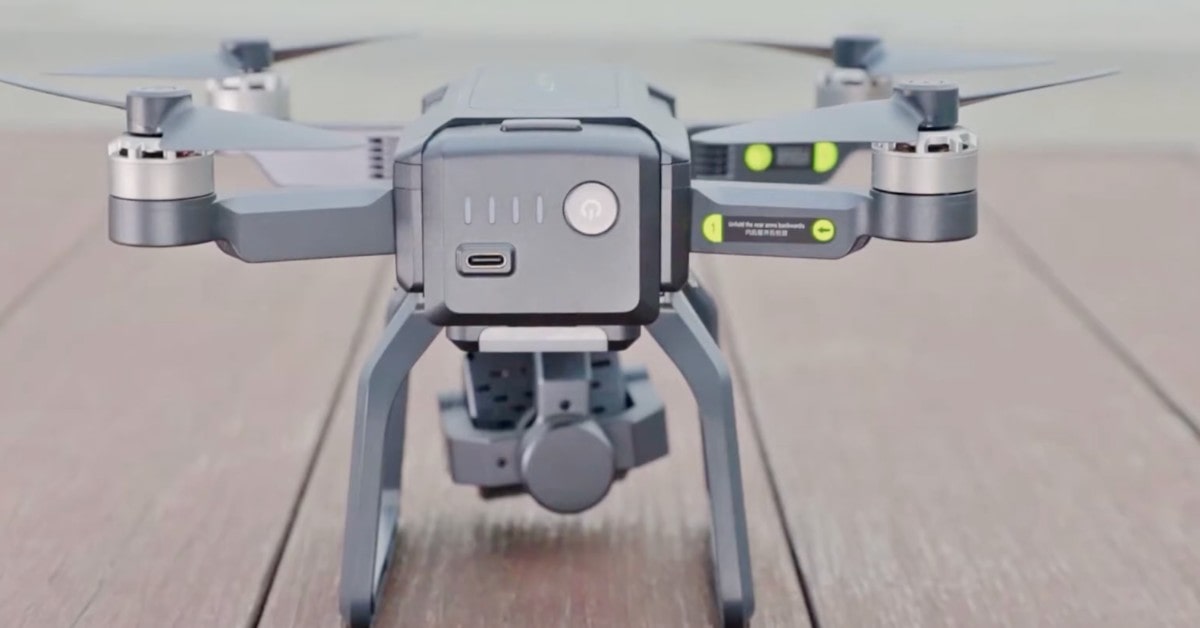
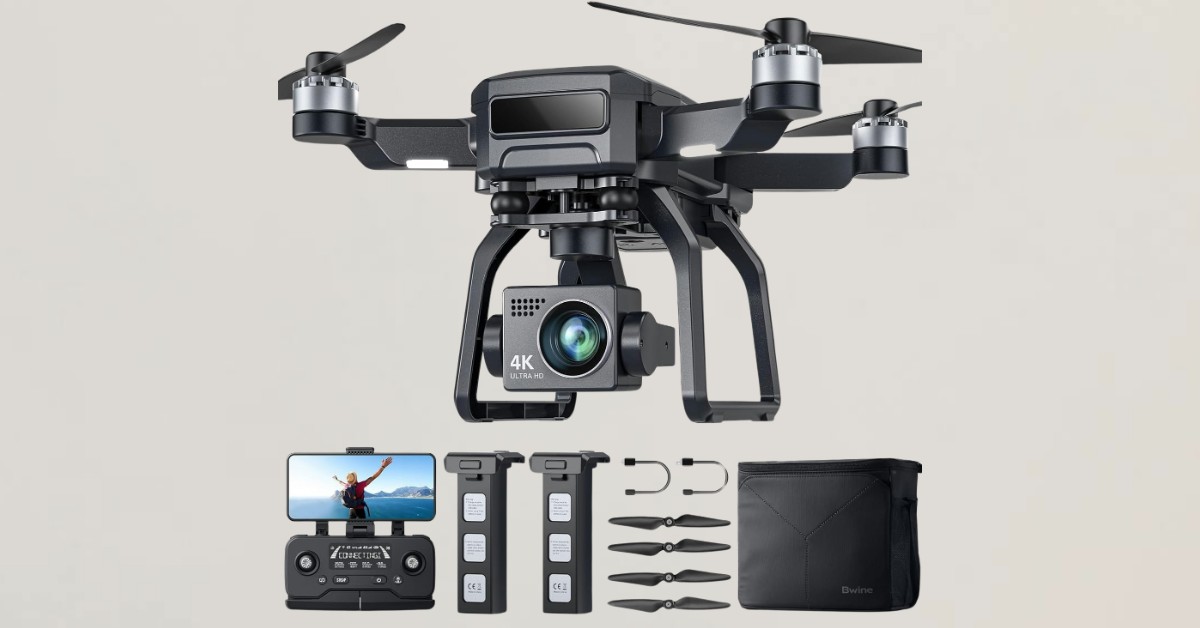
The Bwine F7GB2 drone stands out in the competitive drone market with its high-end features and user-friendly design, making it an excellent choice for both hobbyists and more serious drone enthusiasts.
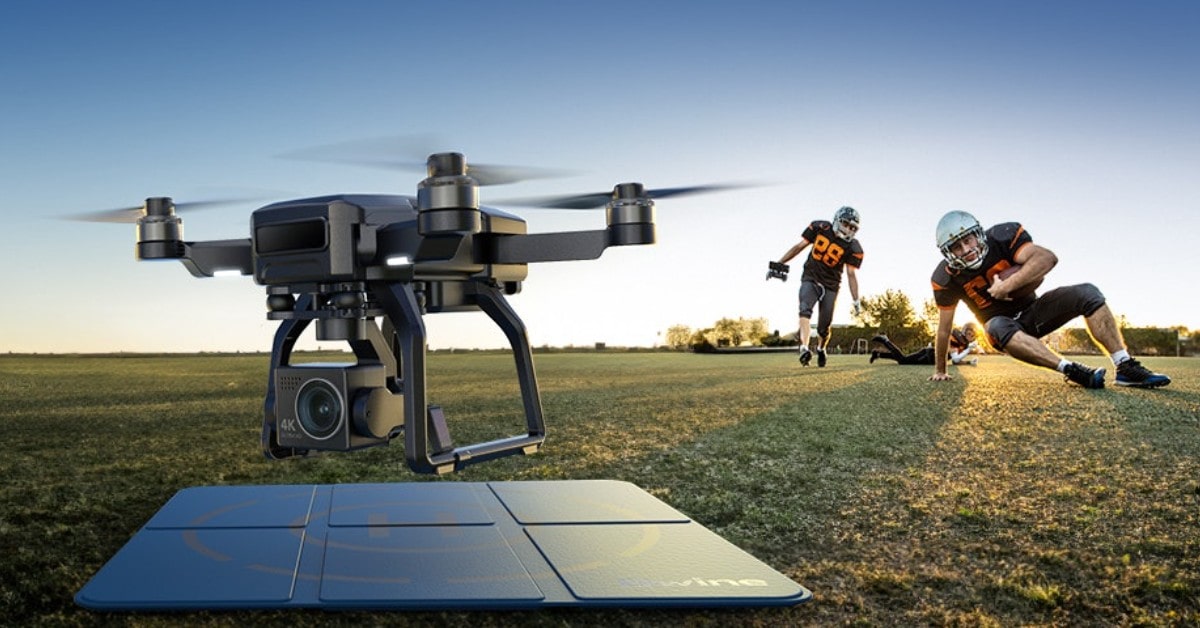
Equipped with a 4K camera that boasts a 90° adjustable lens and 120° field of view, the Bwine F7GB2 captures high-resolution videos and photos up to 3840x2160 pixels. Its 3-axis mechanical gimbal and 5x digital zoom offer enhanced stability and flexibility, allowing you to easily switch between various shooting distances and compositions.
The drone comes with two intelligent batteries, each offering 25 minutes of flight time, totaling 50 minutes. This extended duration is perfect for longer shooting sessions, though it's worth noting the batteries require about 6.5 hours for a full charge using a 5V/3A or 5V/2A wall charger. Featuring level 6 wind resistance and low-noise brushless motors, the Bwine F7 provides a quiet and stable flight experience.
With a long transmission range of up to 10,000 feet, the Bwine F7GB2 ensures you receive crisp images and smooth video from afar. Additionally, its GPS features, including GPS Auto Return, Follow Me, and Waypoints, enhance the drone's reliability. The GPS Auto Return function is particularly useful as it automatically brings the drone back to its starting point either when the signal is lost or the battery is low, effectively reducing the risk of losing the drone.
Pros:
- Beginner Mode
- High-resolution videos and photos up to 3840x2160 pixels
- 50 minute battery life
- Long transmission range of up to 10,000 feet
- Portable suitcase included
Cons:
- It takes about 6 hours to fully charge the battery if you use 5V
Summary: The Bwine F7GB2 is a robust drone that combines advanced imaging capabilities, extended flight time, and strong wind resistance, making it a compelling choice for anyone looking to elevate their aerial photography and videography. Its reliable GPS features and compliance with FAA regulations further ensure a secure and enjoyable flying experience.
Potensic ATOM Drone under 500 with GPS Review
Long Flight Time

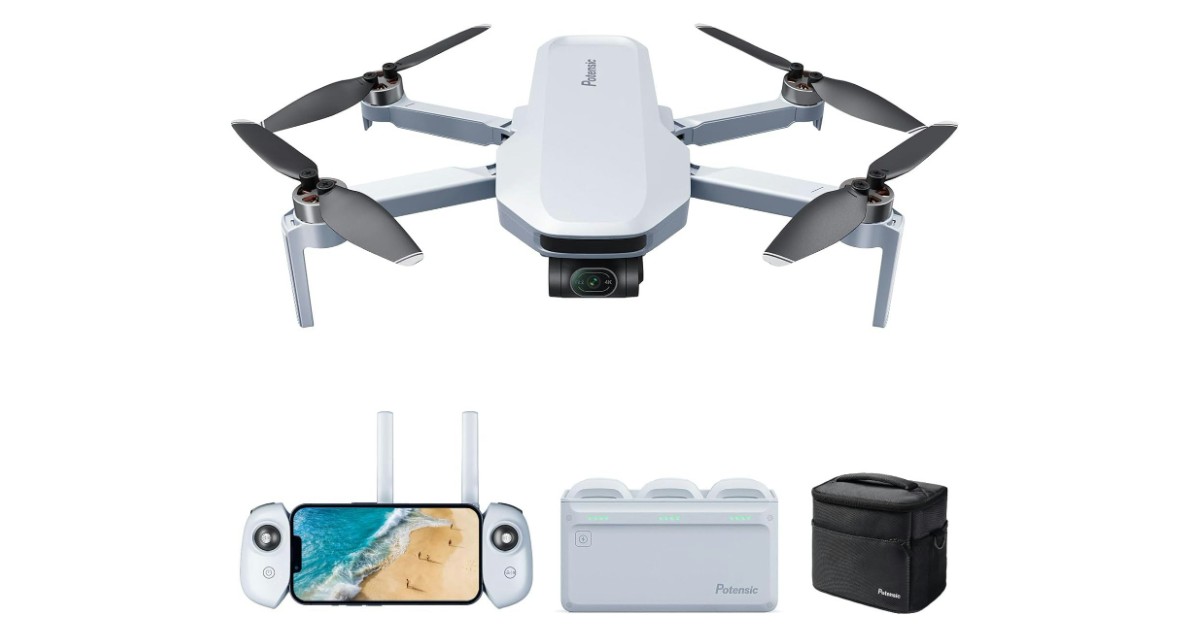
The Potensic ATOM GPS Drone is a compact, feature-packed flying marvel designed for both novice and experienced drone enthusiasts. The ATOM is equipped with a SONY CMOS Sensor and a 12MP camera capable of recording 4K/30fps video, delivering high-quality aerial images and videos. The 3-axis brushless gimbal stabilizes the camera, ensuring smooth and steady footage even in level-5 windy conditions, which is a standout feature for a drone of this size.
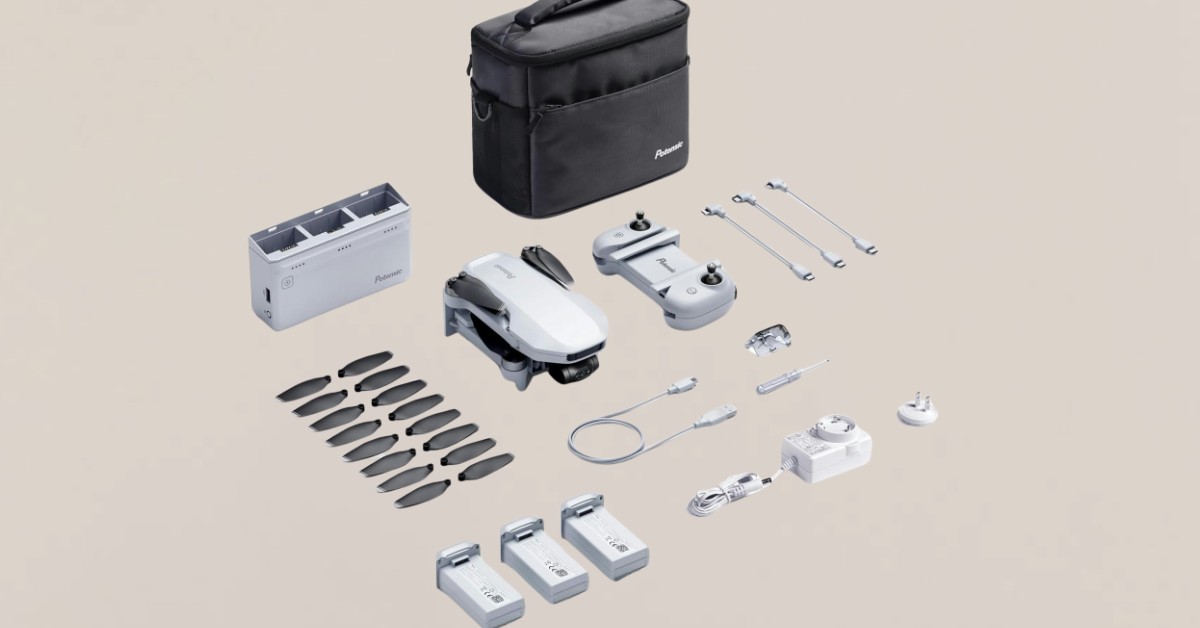
The ATOM Fly More Combo includes a parallel charging hub that supports 60W full quick-charge for three batteries at once, charging within just 1.5 hours. With these three batteries, users can enjoy extended flight times up to 96 minutes, which is excellent for longer shooting sessions or explorations. Weighing in at just under 249 grams, the ATOM GPS Drone is incredibly portable and does not require FAA or Remote ID registration, making it an ideal choice for casual flyers and travelers. Its lightweight design and included storage bag make it easy to carry on all your adventures.
Featuring upgraded PixSync 3.0 technology, the drone ensures a strong and stable transmission with a maximum range of up to 6km (20000ft). This extended range combined with responsive remote control makes it highly adaptable for various filming conditions. The drone supports Visual Tracking and QuickShots modes like Pull-Away, Rocket, Circle, Spiral, and Boomerang, which allow users to capture creative and cinematic videos effortlessly. These features are perfect for enhancing the quality of vlogs or adventurous shoots.
ATOM is designed with beginners in mind. It includes an enhanced GPS for precise positioning and an auto-return function that enables the drone to safely return to its takeoff point with just a tap. This feature is invaluable for new pilots and in situations where the drone might fly out of sight. The drone's firmware supports FOTA (Firmware Over-The-Air), allowing users to easily update their devices to benefit from continuous improvements in flight experience and image quality.
Pros:
- Features a 12MP camera with 4K/30fps video capability and a 3-axis brushless gimbal
- Compact and Lightweight 249g
- Three batteries and a 60W quick-charging hub, offering up to 96 minutes of flight time
- Utilizes upgraded PixSync 3.0 technology for a reliable transmission range of up to 6km (20000ft)
- Supports multiple QuickShots and Visual Tracking modes
Cons:
- Complexity for Absolute Beginners
Summary: The Potensic ATOM GPS Drone is an impressive piece of technology packed into a small, agile form. It is an excellent choice for anyone looking to dive into the world of aerial photography without the cumbersome setup of larger drones. With its robust features, extended flight time, and ease of use, the ATOM GPS Drone is poised to be a favorite among outdoor enthusiasts, travelers, and content creators looking for a reliable and portable drone solution.
Frequently Asked Questions about Best Drone under $500
Here are some frequently asked questions about drone under $500:
Are These Drones Safe To Use With Children?
The short answer is yes. Drones are designed to be flown by anyone, regardless of age or experience level. However, there are a few things you should keep in mind before letting your child take flight. Make sure that the drone is appropriate for their age and skill level. Some drones are better suited for experienced pilots, while others are more user-friendly and perfect for beginners.
Always supervise your child when they are flying a drone. Accidents can happen quickly and you want to be there to help if something goes wrong.
Finally, teach your child about drone safety before they take off. This includes things like not flying near people or animals, and not flying in bad weather.
Read the manual and safety rules from the manufacturer before you start practicing. By following these simple tips, you can help ensure that your child has a safe and enjoyable experience when they fly a drone. I also suggest reading article Best Drones for Kids, where you can choose drones for the youngest kids and teenagers.
Do I Need A License To Fly A Drone?
You do not need a license to fly a drone for recreational purposes. However, you will need a license if you plan on using your drone for commercial purposes.
The process for getting a commercial drone license is similar to the process for getting a pilot's license. You will need to pass a written exam and a flight test in order to obtain your license. Once you have your license, you will be able to fly your drone for business purposes.
How Can I Get Started With Drone Racing?
Drone racing is a new and exciting sport that is taking the world by storm. If you are interested in getting started in drone racing, there are a few things you need to know.
First, you will need to purchase a drone that is designed specifically for racing. There are many different options available, so do your research before making a decision.
Second, you will need somewhere to race your drone. This could be at an official race course or in a large open area like a park or field. It's also important to know the rules for drone racing before you start flying.
Third, you will need to practice, practice, practice. Like any other sport, it takes time and effort to become good at drone racing. The more you race, the better you will become.
Fourth, you can join a drone racing club or league. This is a great way to meet other people who are interested in the sport and to learn more about racing.
Finally, you will need to stay up to date on the latest drone racing news. This includes information on new races, events, and technology.
By following these simple tips, you can get started in drone racing and become a top-level racer in no time.
Which Drone has the Best Image Quality?
There is no one-size-fits-all answer to this question. Some drones have better image quality than others, so it's important to do your research before making a purchase.
Some of the most popular drones for photography and videography include the DJI Mavic Pro, Ruko, Parrot Anafi, and the like.
Best Drones under $500: Conclusion
In conclusion, the market for drones under $500 offers a diverse range of options that cater to both beginners and experienced flyers. These drones often balance affordability with impressive features such as HD cameras, extended flight times, and advanced stabilization technologies. When selecting the best drone in this price range, consider factors like camera quality, battery life, and ease of use to ensure a satisfying flying and filming experience.
While they may not have all the high-end functionalities of more expensive models, drones under $500 provide excellent value, making advanced aerial photography and videography accessible without breaking the bank. Like DJI Mini 2, DJI Mavic Mini and Ruko F11GIM2 others from my selection. Whether for recreational flying, capturing stunning aerial footage, or exploring creative photography angles, these drones prove that you don't have to spend a fortune to achieve great results.
Go Deeper:

Our geeky guru has been slicing through tech on gagadget.com since 2020, from projectors, tvs to speakers and many more, unearthing the truth behind the specs with sharp, insightful reviews.


