Norwegian project can charge electric ships at sea — no cables required

Norwegian research institute SINTEF and shipbuilder VARD launched the Ocean Charger project in 2023 to solve a stubborn problem: electric ships serving offshore wind farms and oil platforms have to sail back to shore just to recharge. The system uses inductive magnetic fields — the same basic principle as a wireless phone charger — scaled up to transfer power at sea without any physical connection between the vessel and the charging unit. If it works at full scale, it could keep offshore fleets running for weeks without touching port.
The engineering case
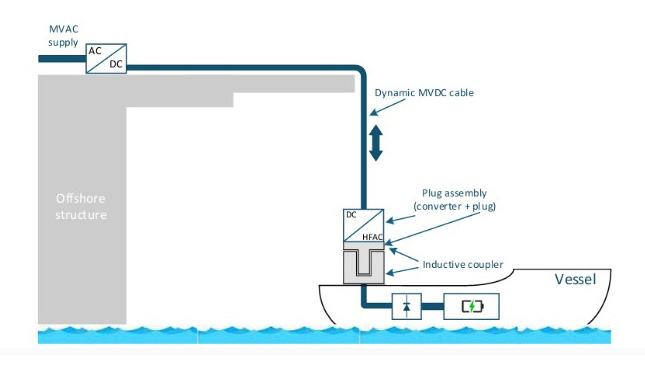
Traditional marine charging relies on copper cables and metal contacts, both of which corrode rapidly in saltwater. Maintenance is expensive, and physically connecting a heavy cable to a moving vessel in rough North Sea conditions is neither easy nor safe. Ocean Charger replaces all of that with waterproof encapsulated coils. A ship pulls into a designated zone, magnetic coils transmit power across an air or water gap, and an onboard system stabilises and routes the energy directly to the battery banks — no plug, no contact, no corrosion.
The current one-third-scale prototype already demonstrates 3.3 MW of transfer capacity. The full system targets 5 MW, enough to serve the large Service Operation Vessels (SOVs) that maintain offshore wind turbines, as well as Platform Supply Vessels (PSVs) in the oil and gas sector. An intelligent control layer monitors the transfer in real time and minimises energy losses — a persistent challenge in high-power inductive systems.
The North Sea angle
The long-term vision, per the SINTEF official announcement, is a charging network along Norway's coast — charging points mounted directly on offshore wind turbines or floating substations. Ships charge mid-operation rather than breaking off to return to port, cutting both downtime and the energy burned on the transit itself.
For the UK, the picture is less clear. SINTEF has submitted a memorandum to British authorities, but design approvals and commercial energy-access agreements are still pending, as New Atlas reports. No UK pilot sites or British industry partners have been announced. The North Sea offshore wind sector — one of the largest in the world — is an obvious candidate for the technology, but operators and regulators will need defined safety standards before any capital commitment follows.
What comes next
The consortium is Nordic-heavy for now. No major German, French, or UK equipment manufacturers have confirmed partnerships with VARD. Cost comparisons against shore-based charging infrastructure haven't been published, and efficiency losses at the full 5 MW scale under dynamic sea conditions remain unquantified. Ocean Charger is a credible engineering advance, but the path from Norwegian prototype to routine North Sea deployment still depends on regulatory frameworks that don't yet exist.


