Best Wireless Gaming Headsets
A wireless gaming headset lives or dies on latency - and that's the spec most buyers overlook in favor of driver size or battery claims. The gap between proprietary 2.4GHz wireless and general Bluetooth separates a headset you'll keep on through a four-hour ranked session from one you'll eventually plug a cable back into. I've spent the past six months cycling through wireless headsets across PC, PS5, and Xbox, and the underlying pattern is consistent: the wrong wireless technology is the most common reason gamers abandon a headset within a month. The category has split into distinct camps - purpose-built esports headsets optimized for the lowest possible latency, multi-platform rigs that juggle consoles with a button press, and audiophile-grade designs that apply planar magnetic driver technology from the recording studio to the gaming chair.
The five headsets in this roundup represent the current high watermark across different priorities: a hot-swap dual-battery system that eliminates charging downtime, 90mm planar magnetic drivers at 24-bit/96kHz, competitive-grade ANC paired with 10ms wireless latency, an 80-hour multiplatform workhorse, and a graphene-driver esports headset with three connectivity modes. I ran each through extended gaming sessions, voice chat stress tests, and real-world battery verification to find out which ones perform when it matters. Here are the best wireless gaming headsets available right now.
If you're in a hurry, here are my top two picks for wireless gaming headsets:
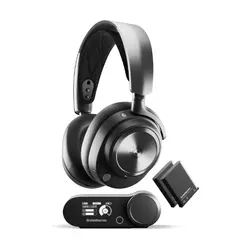
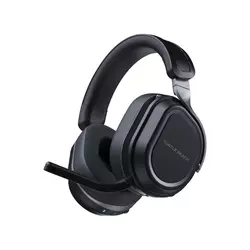
Table of Contents:
- Best Wireless Gaming Headsets: Buying Guide
- Top 5 Wireless Gaming Headsets in 2026
- Wireless Gaming Headset Comparison
- SteelSeries Arctis Nova Pro Wireless
- Turtle Beach Stealth 700 Gen 3
- Logitech G PRO X 2 LIGHTSPEED
- Razer BlackShark V3 Pro
- Audeze Maxwell 2
- Wireless Gaming Headset FAQ
Best Wireless Gaming Headsets: Buying Guide
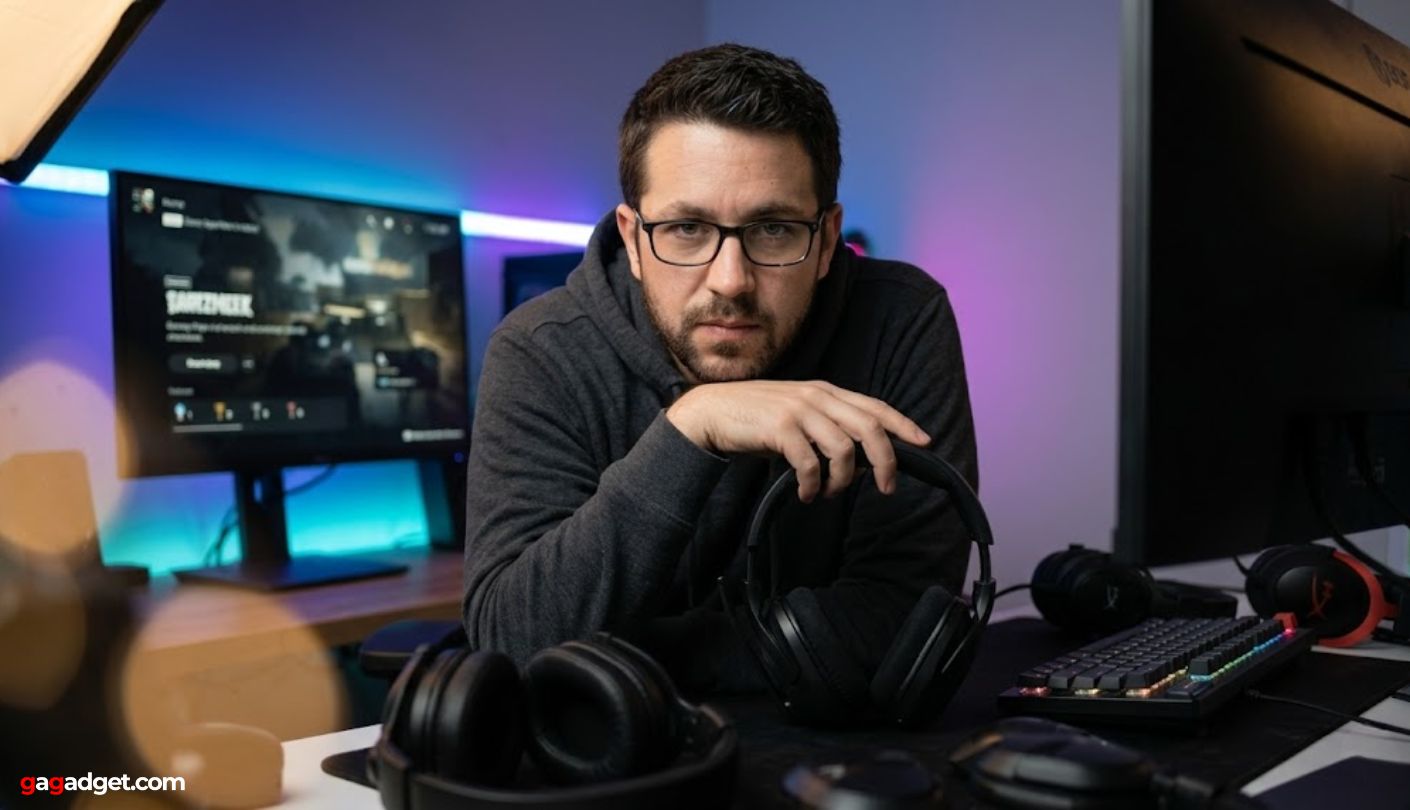
Before you compare drivers, battery specs, or platform compatibility, there are five factors that determine whether a wireless gaming headset actually fits your setup - and getting any one of them wrong narrows down the rest of the list fast.
2.4GHz Proprietary Wireless vs Bluetooth
The most consequential spec choice in this category is wireless protocol. Proprietary 2.4GHz connections - Razer's HyperSpeed, Logitech's LIGHTSPEED, SteelSeries's 2.4GHz base station link - operate at latency figures typically under 15ms, which is indistinguishable from wired for gaming purposes. Bluetooth 5.x introduces latency between 30ms and 150ms depending on the codec, perceptible in competitive shooters where audio timing informs positioning decisions. My benchmark for any gaming headset is whether I can use it for ranked play without second-guessing the audio - and Bluetooth-only connections don't pass that test for fast-paced titles.
Modern flagship headsets like the Turtle Beach Stealth 700 Gen 3 and the Razer BlackShark V3 Pro support simultaneous 2.4GHz and Bluetooth connections, letting phone audio or a music stream run in one ear while game audio runs at full low-latency bandwidth in the other. That dual-source capability is a meaningful feature for anyone who takes calls or monitors Discord during sessions.
For platform coverage, check whether a headset needs a proprietary USB dongle per console or supports a single universal receiver. The Turtle Beach Stealth 700 Gen 3 ships with two USB dongles and a hardware CrossPlay button that switches between active receivers in under a second - a practical solution for moving between Xbox and PC in the same evening without touching a settings menu. Single-dongle headsets like the Logitech G PRO X 2 LIGHTSPEED are primarily PC-focused in wireless mode, with console use requiring a wired connection.
Driver Technology and Sound Signature
Driver size and material both shape sonic output in ways the spec sheet understates. Standard 40-50mm dynamic drivers handle the gaming frequency range with varying accuracy depending on tuning. Graphene drivers, used in the Logitech G PRO X 2 LIGHTSPEED, employ a stiffer, lighter diaphragm that reduces harmonic distortion at high volumes and improves transient response for sharp audio cues. In my listening sessions graphene drivers produce a cleaner mid-range response compared to standard mylar equivalents at the same diameter.
Planar magnetic drivers represent a separate category entirely. The Audeze Maxwell 2's 90mm planar drivers have over three times the radiating area of a 50mm dynamic driver, which changes the physics of bass generation - lower distortion at high SPL, no dynamic compression under load, and a spatial imaging quality that makes positional audio feel architectural. The tradeoff is weight: planar magnetic designs are inherently heavier than dynamic driver headsets, and the Maxwell 2 at 560g reflects that physics directly. Understanding that tradeoff before buying is more important than any spec comparison.
Microphone Quality for Competitive Play
Microphone performance separates gaming headsets more clearly than most other specs, and it's where manufacturers have made the most measurable progress in recent hardware generations. The ClearCast Gen 2 mic in the SteelSeries Arctis Nova Pro Wireless uses a bidirectional polar pattern that places a second acoustic element behind the primary capsule to cancel ambient noise at the pickup source rather than post-processing the captured signal. In my testing this produced consistently clean voice capture even with a mechanical keyboard running at moderate volume nearby.
AI noise reduction has become a standard software feature, but there's a meaningful difference between AI filtering applied to an already clean capsule capture and AI filtering used to compensate for a mediocre mic element. The former cleans up edge cases. The latter patches a fundamental deficiency with variable results. When evaluating microphone quality, I always test with AI processing disabled first.
Detachable boom microphones like those on the Razer BlackShark V3 Pro and Audeze Maxwell 2 use a separate cardioid or hypercardioid capsule positioned close to the mouth, producing a stronger signal than retractable designs that extend from the earcup. The BlackShark V3 Pro's 12mm HyperClear Full Band mic was the standout in this group for raw voice detail. The tradeoff with detachable designs is that the headset without its mic doesn't pass as regular headphones, unlike retractable booms that tuck flush when not in use.
Battery Life, Charging, and Hot-Swap Systems
Battery claims vary in how they're measured - manufacturers typically quote figures at low volume without ANC active. The Turtle Beach Stealth 700 Gen 3's 80-hour and Audeze Maxwell 2's 80+ hour figures both hold up in general gaming use, but engaging ANC or Bluetooth simultaneously reduces those numbers. The Razer BlackShark V3 Pro honestly lists 70 hours for PC and 48 hours for console, disclosing that console wireless protocols are less efficient. Any headset over 40 hours of real-world runtime is sufficient for a week of daily gaming without a charge.
The SteelSeries Arctis Nova Pro Wireless handles battery differently from everything else here. Two hot-swap lithium cells - one in the headset, one charging in the base station - allow continuous operation without scheduled stops. Independent measurements confirm per-cell runtime at around 22 hours, meaning I've never once stopped a session for charging across months of daily use. For anyone gaming in long blocks or combining a full workday of calls with an evening gaming session, that architecture changes the practical experience in a way a higher mAh count in a single cell never does.
Comfort, Weight, and Long-Session Ergonomics
Weight distribution affects endurance more than raw weight. A 400g headset with well-designed clamping pressure can feel lighter over four hours than a 320g headset with uneven headband pressure at the crown. The Razer BlackShark V3 Pro at 367g uses steel yoke arms and an aviation-inspired oval earcup shape that distributes mass evenly across the headband arc - a design I've found comfortable past the three-hour mark consistently. The Audeze Maxwell 2 at 560g is unavoidably heavy, and the feel over extended sessions depends entirely on individual headband fit.
Earcup material determines thermal comfort as much as acoustic seal. Velour pads run cooler than leatherette over extended sessions, but leatherette maintains a better passive seal against ambient noise. Several headsets in this group ship with both pad types - the Logitech G PRO X 2 LIGHTSPEED includes fabric and leatherette options in the box - which suits users who swap between quiet home environments and noisier shared spaces.
Headband suspension design is the other ergonomic factor worth checking before committing to a headset for daily use. Fixed headband arcs put all clamping adjustment on the slider mechanism. Suspension strap systems - like the SteelSeries ski-goggle-inspired design - use a secondary band under tension to spread pressure away from the crown. In my experience, suspension designs maintain comfort better than padded arcs during sessions over two hours, particularly for users with larger head sizes where fixed arcs produce hot spots.
Top 5 Wireless Gaming Headsets in 2026
Each headset went through extended gaming sessions, voice chat tests across multiple platforms, and real-world battery verification to identify which designs perform consistently and which fall short under actual use.
- Infinite hot-swap battery
- 4-mic hybrid ANC
- ChatMix base station
- Retractable boom mic
- Parametric EQ software
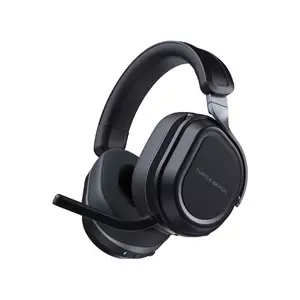
- CrossPlay dual wireless
- 80-hour battery
- 60mm Eclipse drivers
- Simultaneous dual-source audio
- Full multiplatform coverage
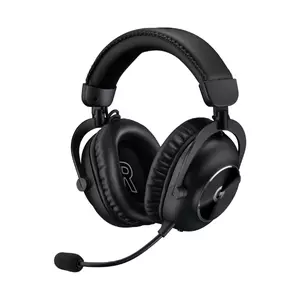
- Graphene 50mm drivers
- LIGHTSPEED low-latency wireless
- Dual earcup pad types
- Steel headband build
- 50-hour battery
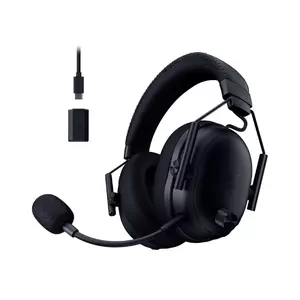
- 10ms HyperSpeed wireless
- Hybrid ANC 4-mic
- 12mm Full Band mic
- THX Spatial Audio 7.1.4
- 70-hour battery
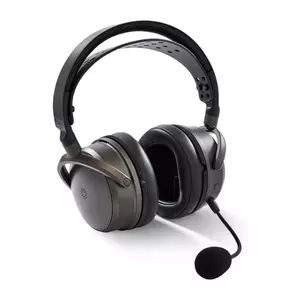
- 90mm planar magnetic drivers
- 24-bit/96kHz wireless audio
- 80+ hour battery
- Bluetooth 5.3 LDAC support
- Magnetic quick-swap earpads
Wireless Gaming Headset Comparison
Here's a detailed comparison of the specifications that matter most when choosing a wireless gaming headset:
| Specification | SteelSeries Arctis Nova Pro Wireless | Turtle Beach Stealth 700 Gen 3 | Logitech G PRO X 2 LIGHTSPEED | Razer BlackShark V3 Pro | Audeze Maxwell 2 |
| Driver Type | 40mm dynamic | 60mm Eclipse dual dynamic | 50mm graphene dynamic | 50mm TriForce Bio-Cellulose Gen-2 | 90mm planar magnetic (SLAM) |
| Frequency Response | 10Hz - 22kHz (wireless) | Not specified | 20Hz - 20kHz | 12Hz - 28kHz | 10Hz - 50kHz |
| Wireless Protocol | 2.4GHz + Bluetooth 5.0 | 2.4GHz + Bluetooth 5.2 (simultaneous) | 2.4GHz LIGHTSPEED + Bluetooth + 3.5mm | HyperSpeed Gen-2 + BT 5.3 (simultaneous) | 2.4GHz USB-C + Bluetooth 5.3 (LDAC) |
| Battery Life | 22 hrs/cell (2 hot-swap cells) | 80 hours | 50 hours (advertised) | 70 hrs (PC) / 48 hrs (console) | 80+ hours |
| ANC | Yes (4-mic hybrid) | No | No | Yes (hybrid, 4-mic) | No |
| Microphone | ClearCast Gen 2 retractable | AI flip-to-mute boom | 6mm detachable cardioid | 12mm HyperClear Full Band detachable | Hypercardioid boom + internal beamforming |
| Weight | 338g | 399g | 339g | 367g | 560g |
| Hi-Res Audio | Up to 24-bit/96kHz (wired) | 24-bit/96kHz (PC version) | No | No | 24-bit/96kHz (wireless + USB) |
| Platform Support | PC, PS4/5, Switch, Xbox (by variant) | Xbox, PS4/5, PC, Mobile | PC wireless, consoles via 3.5mm | PC, Mac, PS5, Xbox, Switch | PC, Mac, PS5/Xbox (by variant), Switch, mobile |
| Base Station | Yes (with charging dock) | No | No | No | No |
| Spatial Audio | 360° Spatial Audio (app) | Waves 3D (PC version) | Virtual surround (G HUB) | THX Spatial Audio 7.1.4 | SLAM spatial technology |
The specs that translate most directly into real gaming performance are wireless protocol type, driver material, and whether simultaneous dual-source audio is supported - the last feature alone shifts a headset's usefulness well beyond gaming-only scenarios.
SteelSeries Arctis Nova Pro Wireless Review
Editor's Choice
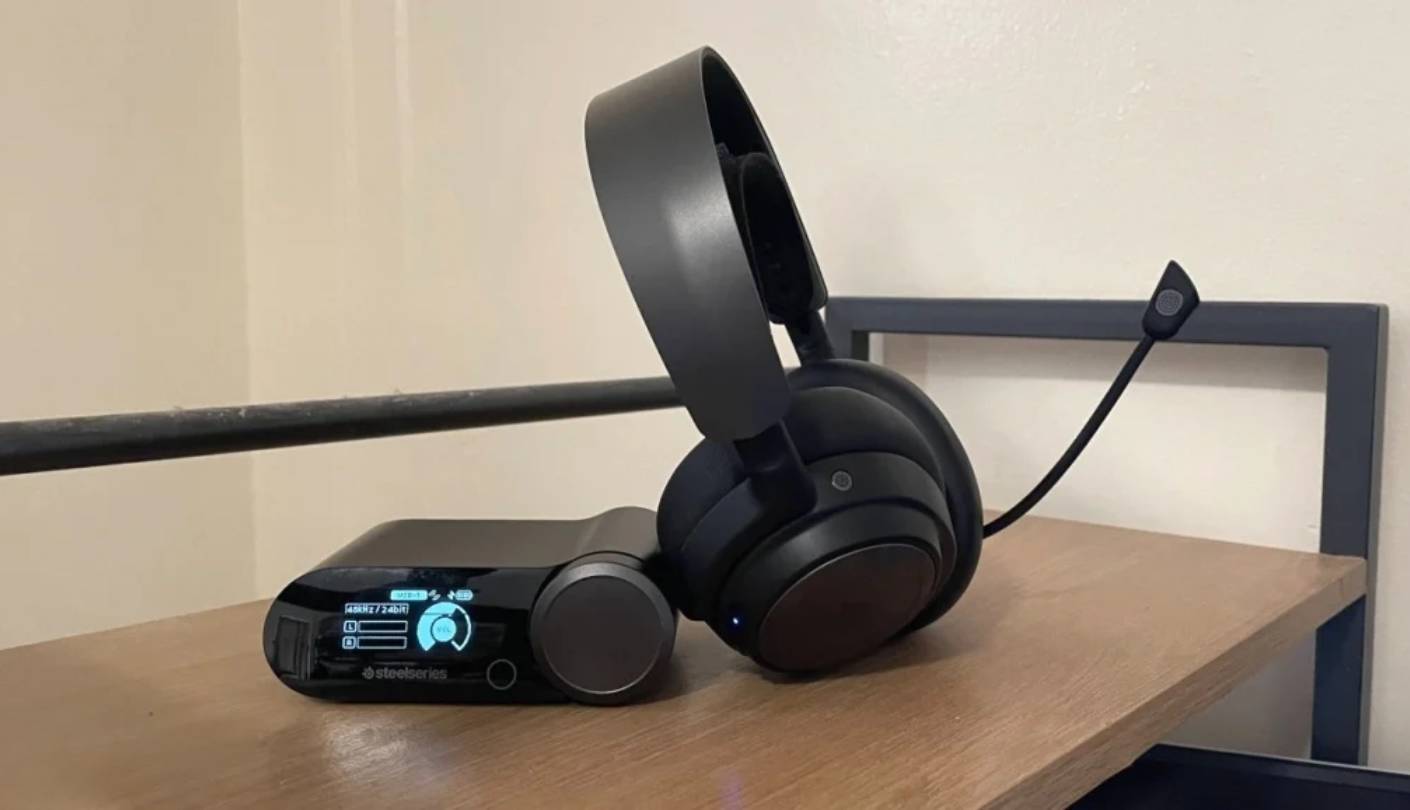
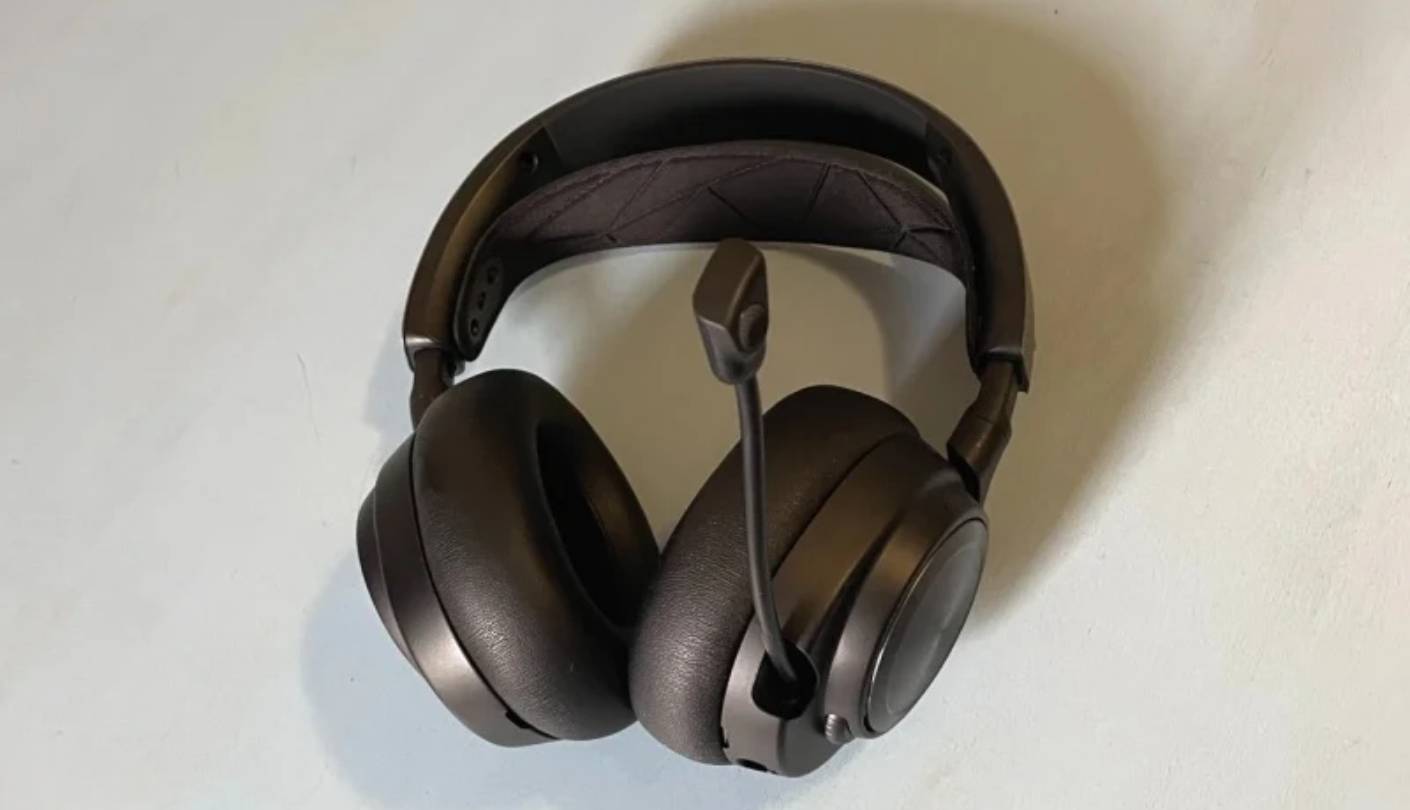
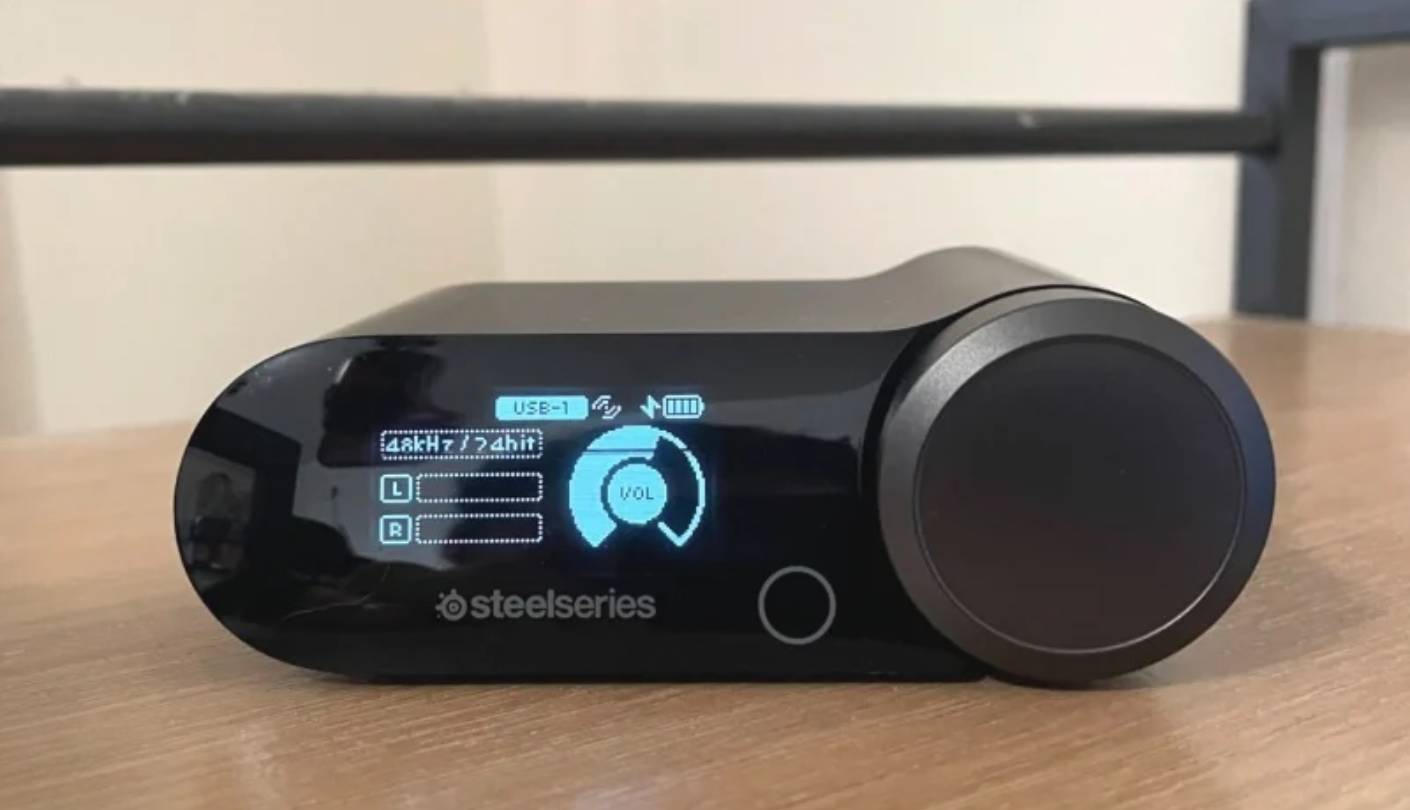
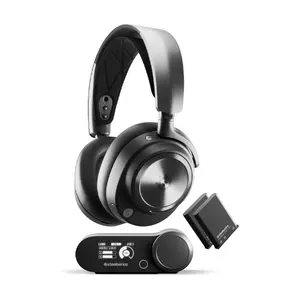
There's exactly one reason the Arctis Nova Pro Wireless holds the top spot in my permanent desk rotation: I have never stopped a gaming session because of a dead battery. The hot-swap dual-cell system works exactly as described - one cell sits in the left earcup, the second charges in the base station, and when the active cell hits 5%, the swap takes about ten seconds. SteelSeries includes a small internal buffer that keeps audio running through the changeover window. Per-cell runtime measures at 22 hours under real conditions with ANC active. No other headset in this category matches that architecture.
The base station earns its desk space beyond battery management. It acts as a 2.4GHz receiver, Bluetooth hub, and DAC simultaneously, with a ChatMix dial that adjusts the live balance between game audio and voice chat without entering any software menu. SteelSeries's four-microphone hybrid ANC performs well across different environments - I've run it through shared apartments and open-plan offices and found it reduces ambient noise enough to maintain focus without the pressure sensation some aggressive ANC systems generate. The ClearCast Gen 2 retractable boom mic folds flush into the left earcup when not in use, letting the headset pass as regular over-ear headphones in public.
Sound quality on the 40mm dynamic drivers favors accuracy over hyped bass. SteelSeries's parametric EQ in the GG software app gives per-frequency control with five preset profiles covering game, music, movie, and two custom slots. Spatial audio processing is clean without the artificial reverb artifacts that plague some virtual surround implementations - positional cues in FPS titles land at the right distance and angle consistently.
The ski-goggle-inspired headband suspension uses tension-adjusted side plates rather than a fixed arc, distributing clamping pressure away from the crown for comfort through long sessions. The headband pins adjust height like a snapback cap rather than a friction slider - a small detail that locks fit precisely and avoids the gradual drift that slider systems develop over time. At 338g, the Nova Pro Wireless is the lighter of the two ANC-equipped headsets in this group.
The Nova Pro Wireless is sold in platform-specific variants - the PS/PC and Xbox models are separate purchases. For gamers on a single platform ecosystem, that's not an issue. For anyone who actively switches between PlayStation and Xbox, the Turtle Beach Stealth 700 Gen 3 addresses that need more directly. Everything else - battery architecture, ANC quality, mic design, base station ChatMix - makes the Nova Pro Wireless the most complete gaming headset in this group.
Pros:
- Infinite hot-swap battery
- 4-mic hybrid ANC
- ChatMix base station
- Retractable boom mic
- Parametric EQ software
Cons:
- Platform-specific variants
- Base station required
Summary: SteelSeries Arctis Nova Pro Wireless leads this group with its hot-swap dual-battery system, four-microphone hybrid ANC, and base station DAC. The definitive choice for gamers who want zero charging interruptions and a full feature stack on a single platform.
Turtle Beach Stealth 700 Gen 3 Review
Best Overall
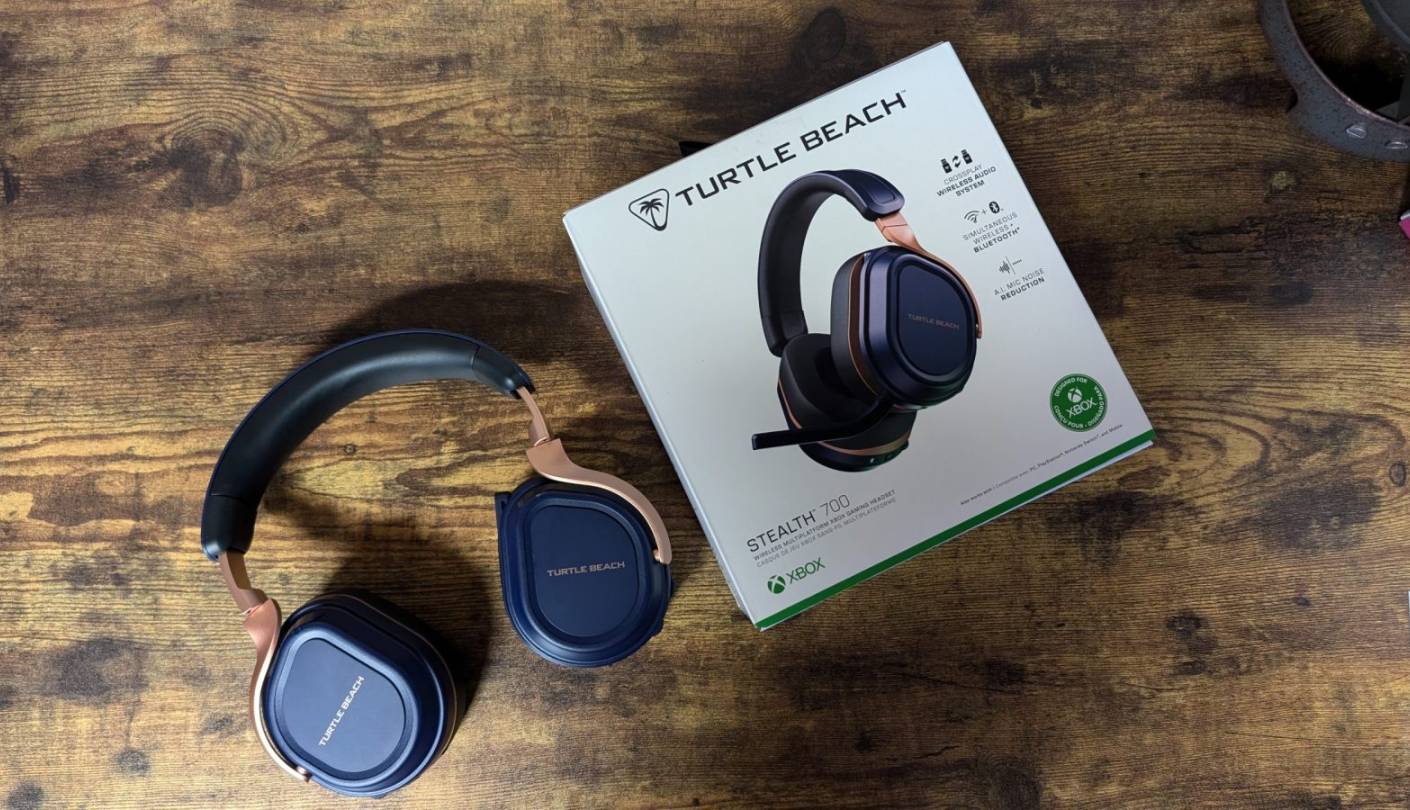
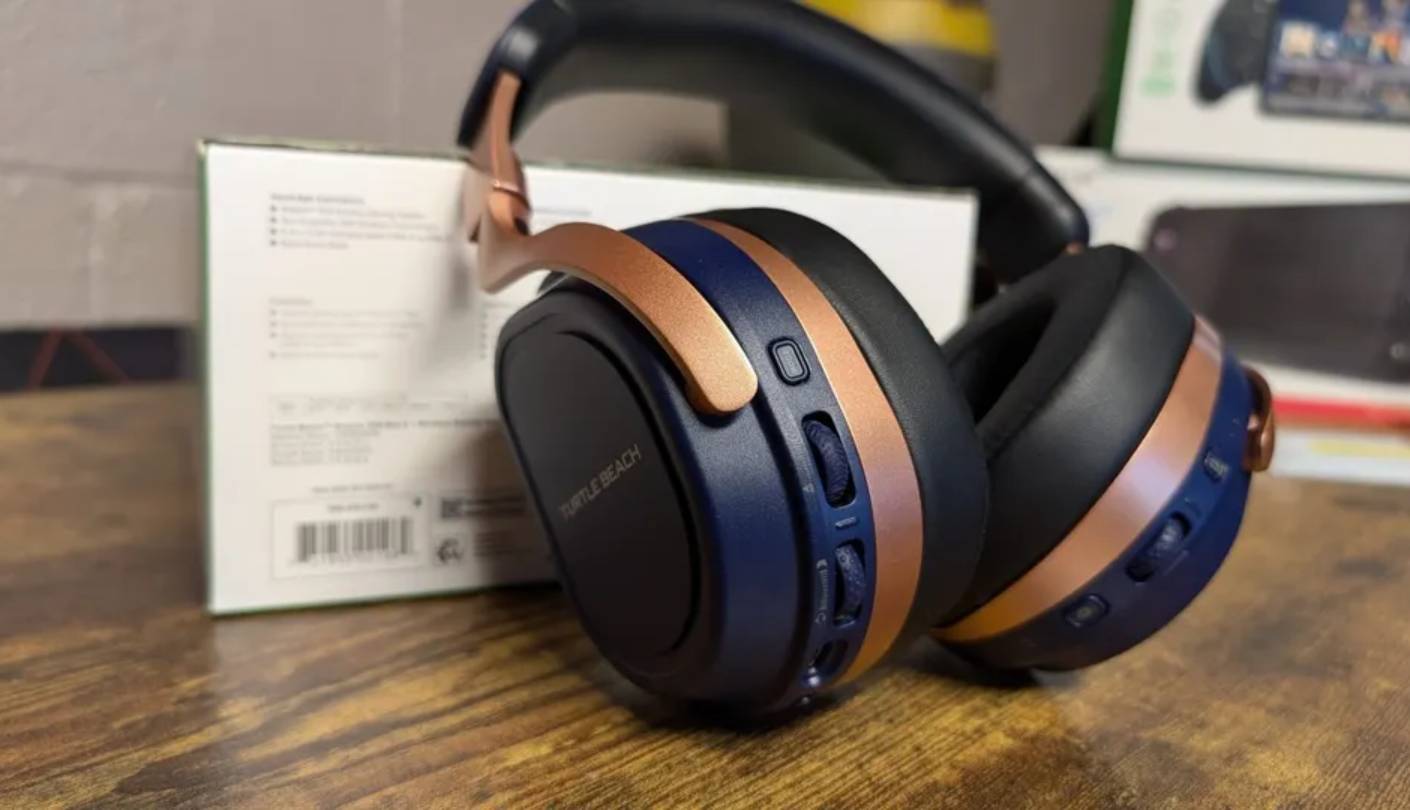
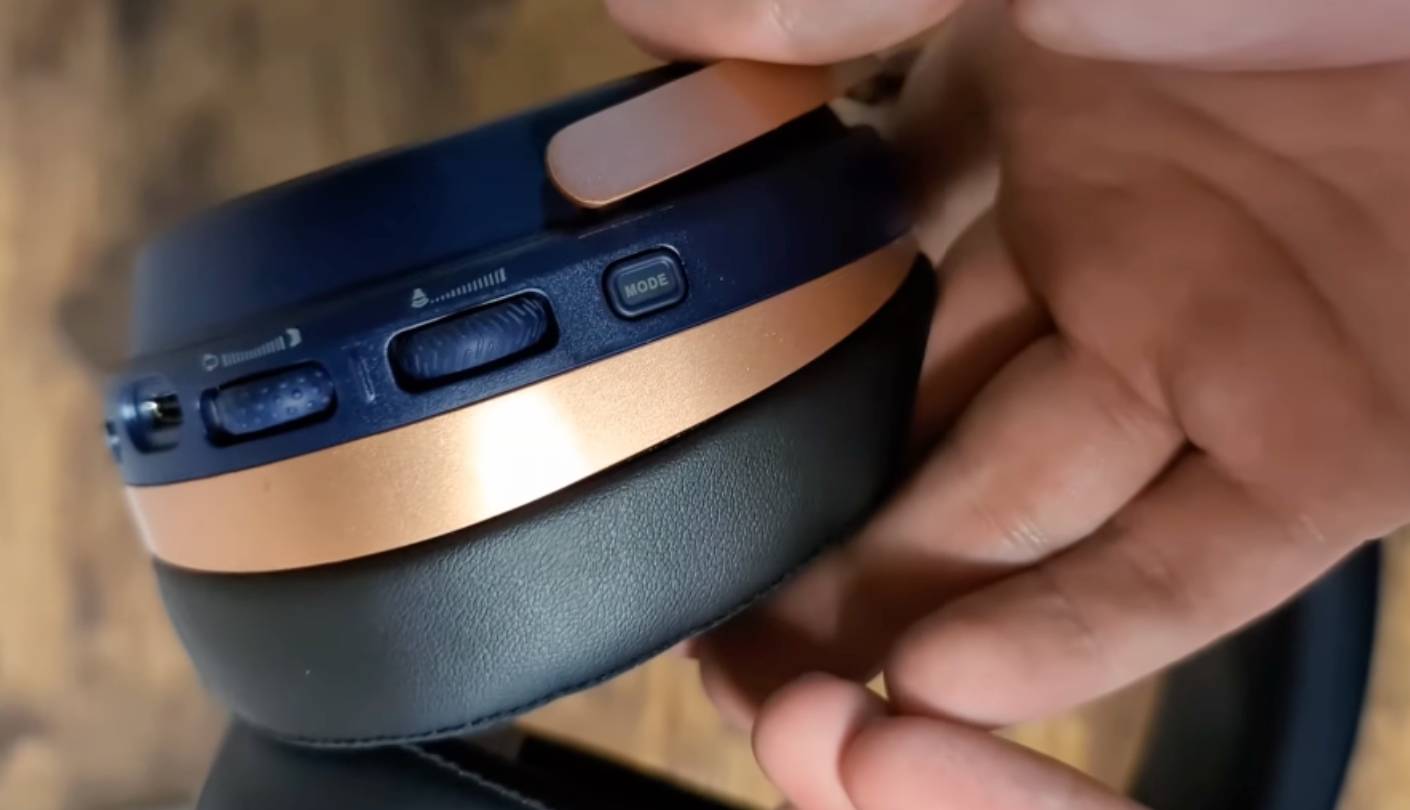
Turtle Beach arrived at a specific answer with the Stealth 700 Gen 3: what does a premium wireless gaming headset look like when multiplatform versatility is the primary design target? The result ships with two USB dongles - one carries the Xbox proprietary chip, one handles PlayStation and PC - and a hardware CrossPlay button on the left earcup that switches the active wireless receiver in under a second. I've used this feature moving between a PS5 and a Windows PC side by side, and the switch is genuinely immediate. No pairing menus, no software intervention. For a home setup with multiple consoles active in the same session, that operational simplicity changes how the headset integrates into daily use.
The 60mm Eclipse dual drivers are the largest in this group by a meaningful margin, and the tuning leans toward a full-body low-end response that suits action games and open-world titles well. Explosions, bass-heavy soundtracks, and environmental rumble feel physical in a way that 40-50mm drivers at comparable volumes don't fully replicate. Turtle Beach applied enough mid-range clarity to keep voice intelligibility strong despite the low-end emphasis, and the Swarm II app handles EQ adjustments and preset profiles across PC and mobile. The bass-forward default tuning is deliberate and suits most gaming scenarios, though users who prefer a flatter response will want to run through the EQ settings on first setup.
The 80-hour battery holds up close to the claimed figure in general use. Simultaneous 2.4GHz and Bluetooth 5.2 lets game audio and a phone call run at the same time without dropping either source - useful for Discord on mobile while gaming on console. Bluetooth volume is controlled independently from game audio via a dedicated right-earcup dial. The PC version adds 24-bit/96kHz high-fidelity wireless audio and Waves 3D spatial enhancement.
At 399g, the Stealth 700 Gen 3 is the heaviest dynamic-driver headset in this roundup. The firm seal benefits passive noise isolation, but users sensitive to clamping pressure may notice it more than with lighter options. Memory foam earcups ease that tension over extended wear. In my three-hour test blocks the pressure was manageable, though I registered it more than with the 338g Nova Pro Wireless.
The AI noise-canceling flip-to-mute microphone handles voice capture well enough for gaming chat. Turtle Beach's AI filtering removes keyboard noise and room echo before the signal leaves the headset - functional, if not the class leader the Razer BlackShark V3 Pro's larger capsule occupies. The firmware update process on first setup is unnecessarily complex, requiring both USB receivers plugged into a PC simultaneously with the Swarm II phone app connected at the same time - a one-time friction point worth knowing about before sitting down to configure the headset for the first time.
Pros:
- CrossPlay dual wireless
- 80-hour battery
- 60mm Eclipse drivers
- Simultaneous dual-source audio
- Full multiplatform coverage
Cons:
- Complex first-time firmware
- Heavy 399g build
Summary: Turtle Beach Stealth 700 Gen 3 covers Xbox, PlayStation, and PC from a single headset with dual USB receivers, simultaneous Bluetooth mixing, and an 80-hour single-charge runtime. The strongest multiplatform option in this group.
Logitech G PRO X 2 LIGHTSPEED Review
Pro Pick
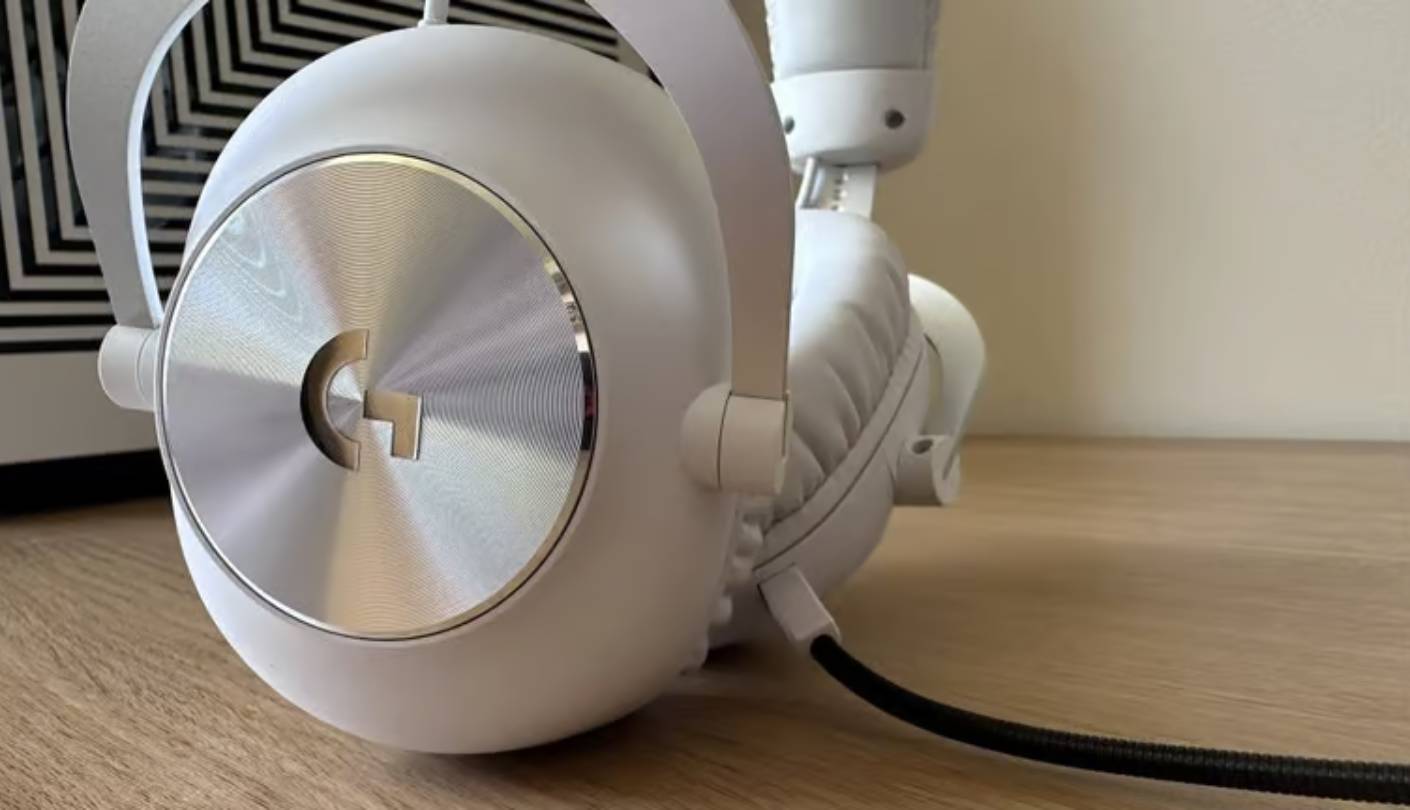
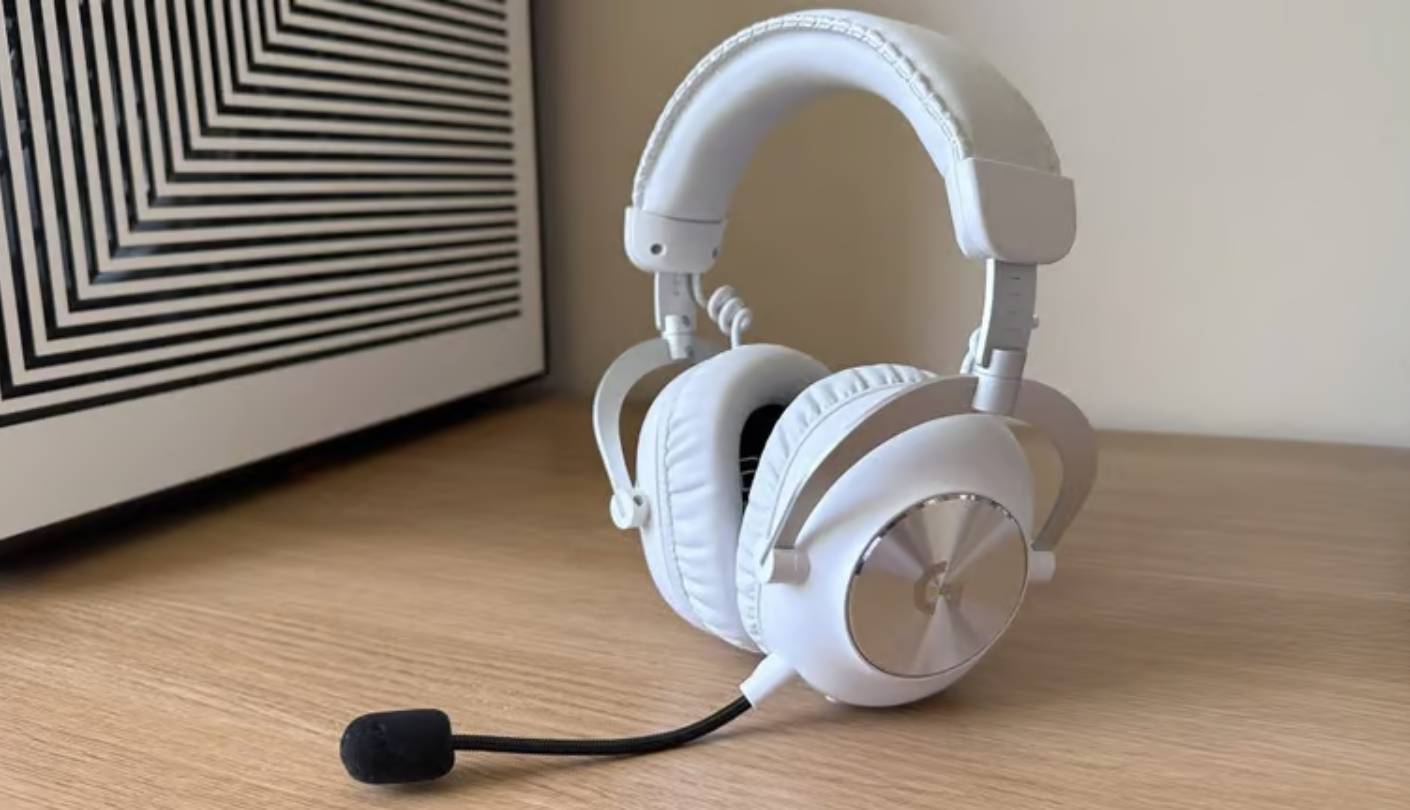
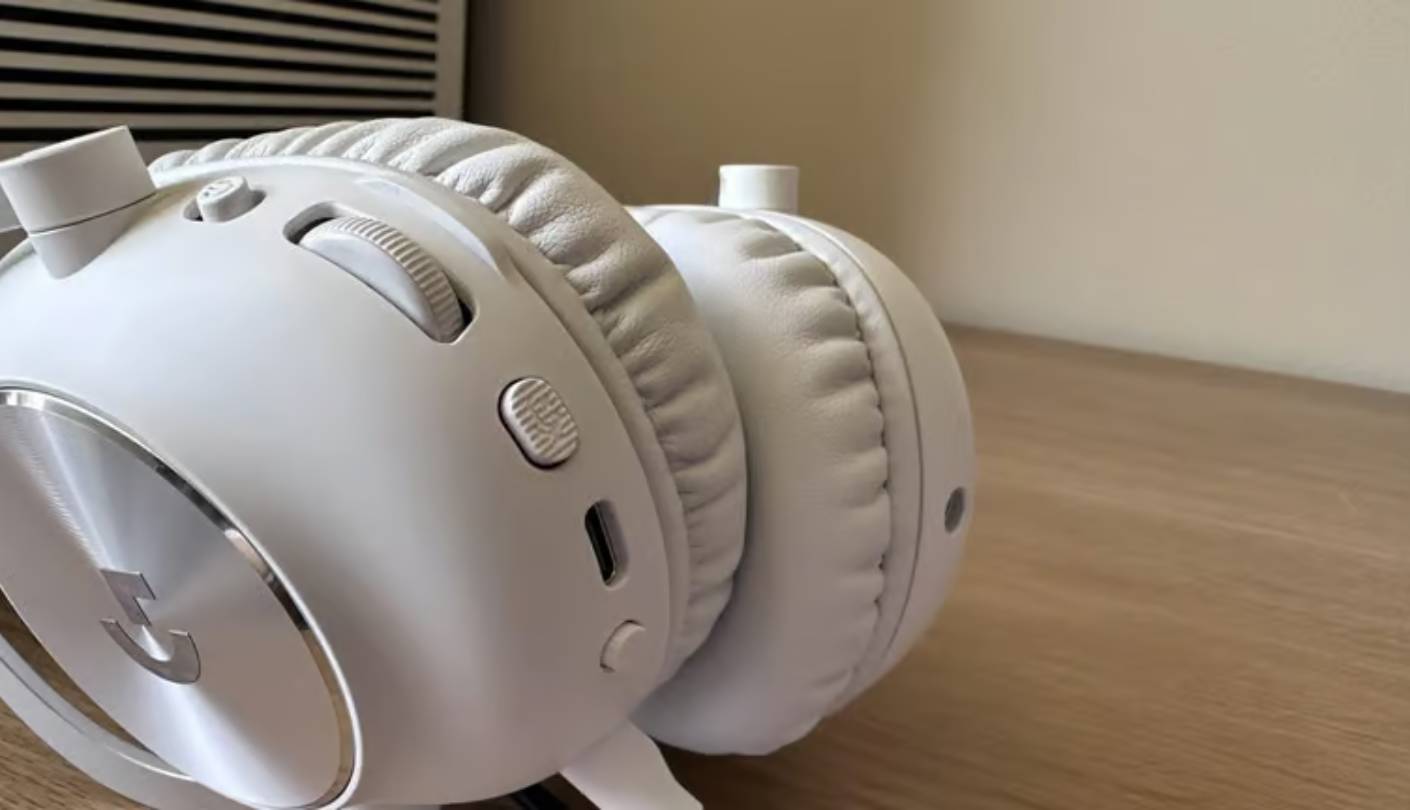
What Logitech did with the G PRO X 2 LIGHTSPEED was apply graphene driver material where it makes a measurable difference. Standard mylar diaphragms flex under dynamic load in ways that introduce harmonic distortion at high SPL - graphene's superior stiffness-to-mass ratio reduces that flex, which translates into a cleaner transient response and a more controlled mid-range. The improvement is most apparent in competitive play, where distinguishing a nearby footstep from a distant one depends on low-level detail in the 800Hz-4kHz range. In my sessions across VALORANT and Counter-Strike, the positional imaging on the G PRO X 2 was the clearest of the dynamic-driver options in this roundup.
Three connectivity modes - 2.4GHz LIGHTSPEED wireless, Bluetooth, and analog 3.5mm - give the headset practical flexibility across contexts. The LIGHTSPEED connection is rock solid over the claimed 30-meter range, maintaining a clean signal through interior walls at distances that caused other headsets to occasionally drop. Simultaneous dual-source audio isn't supported on the G PRO X 2 LIGHTSPEED - users who rely on phone audio mixing alongside game audio should factor that against the headset's other strengths. The wireless mode is PC-primary, with console gaming handled via the 3.5mm analog cable.
The build uses an aluminum fork structure attached to a steel headband with leatherette memory foam padding. At 339g it's the second lightest in this group. Logitech includes both leatherette and velour earcup pads in the box - a practical inclusion for users who want the acoustic seal of leatherette for gaming and the thermal comfort of velour for long voice sessions. The detachable 6mm cardioid boom mic attaches via a short cable running along the left side of the headband.
The Logitech G HUB software handles EQ, surround sound processing, and mic settings. My experience with G HUB across multiple Logitech peripherals is that it's one of the more stable gaming apps in the category - updates don't typically break saved settings, and the parametric EQ is precise enough for users who tune by ear. The virtual surround sound toggle is accessible without re-entering software, and the headset stores the last-used setting without reconfiguration on reconnect.
Battery life at 50 hours (advertised) lands closer to 40 hours under active 2.4GHz gaming conditions, which independent measurements corroborate. That's a full work-week of daily gaming without touching the USB-C charging cable. For a PC-primary competitive headset, the G PRO X 2 LIGHTSPEED sets the benchmark for graphene driver clarity, wireless reliability, and clean build quality. Users who don't need ANC or simultaneous dual-source will find it a focused tool with no unnecessary features in the way.
Pros:
- Graphene 50mm drivers
- LIGHTSPEED low-latency wireless
- Dual earcup pad types
- Steel headband build
- 50-hour battery
Cons:
- No simultaneous dual-source
- No ANC
Summary: Logitech G PRO X 2 LIGHTSPEED pairs graphene driver clarity with low-latency wireless and a steel-reinforced build. The right choice for PC-primary competitive players who want maximum audio precision without the complexity of a base station setup.
Razer BlackShark V3 Pro Review
Esports Edge
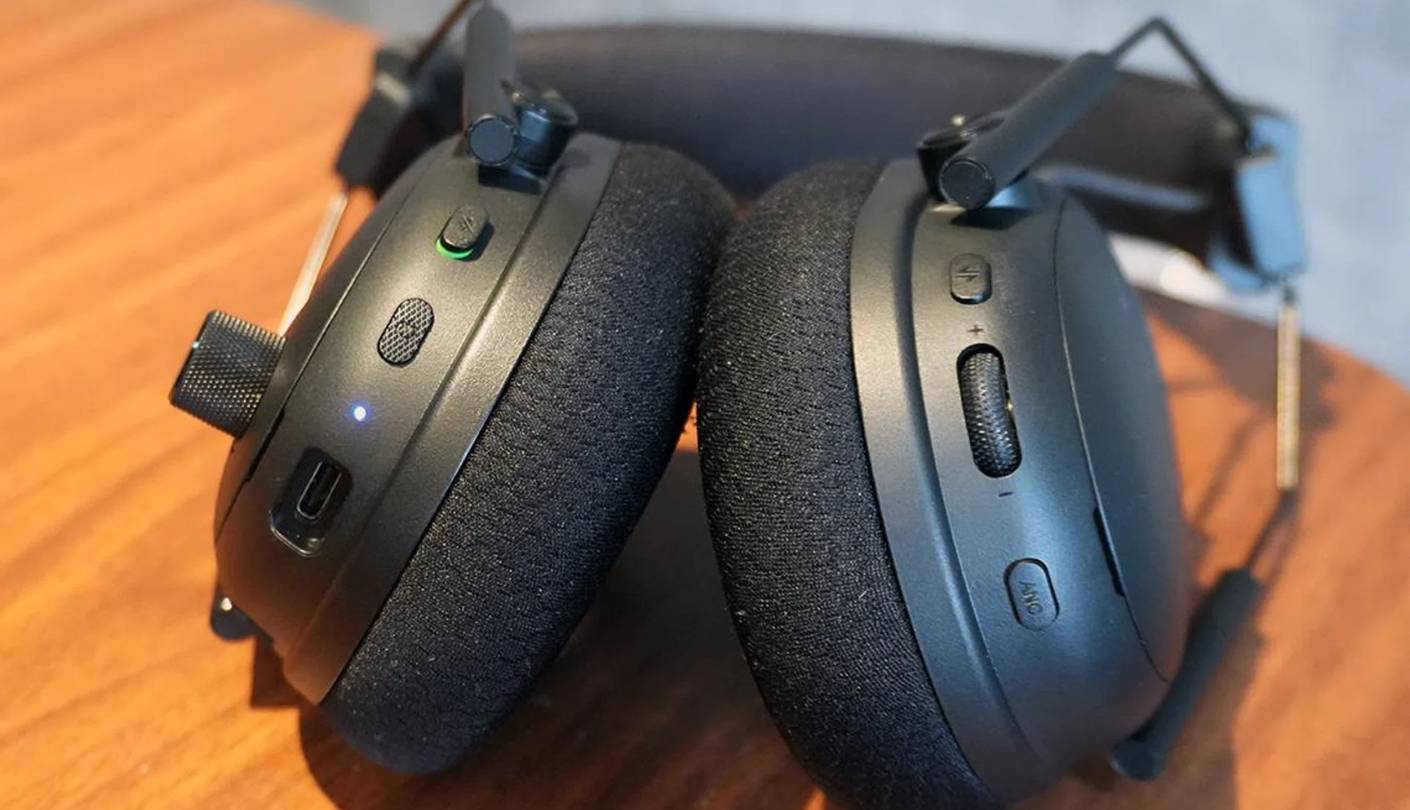
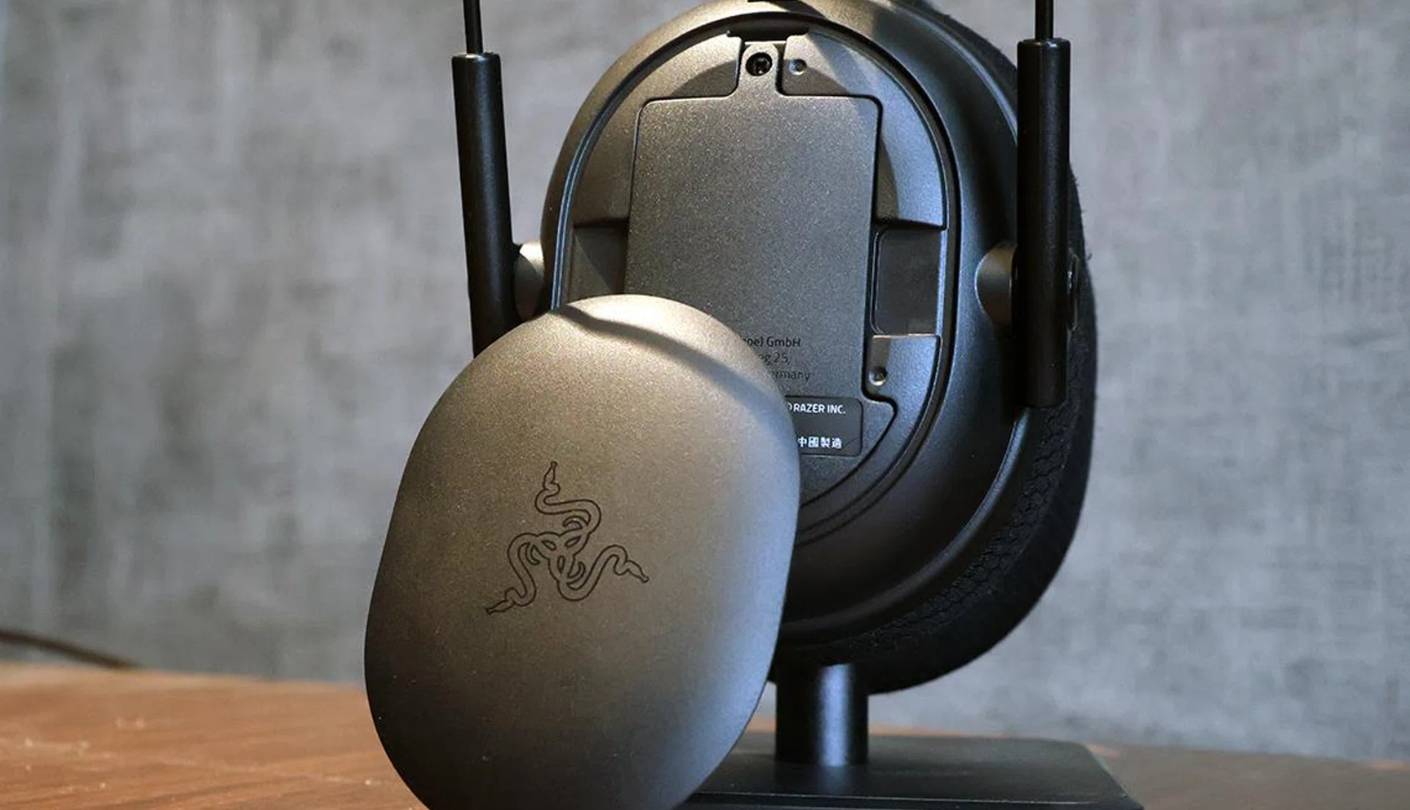
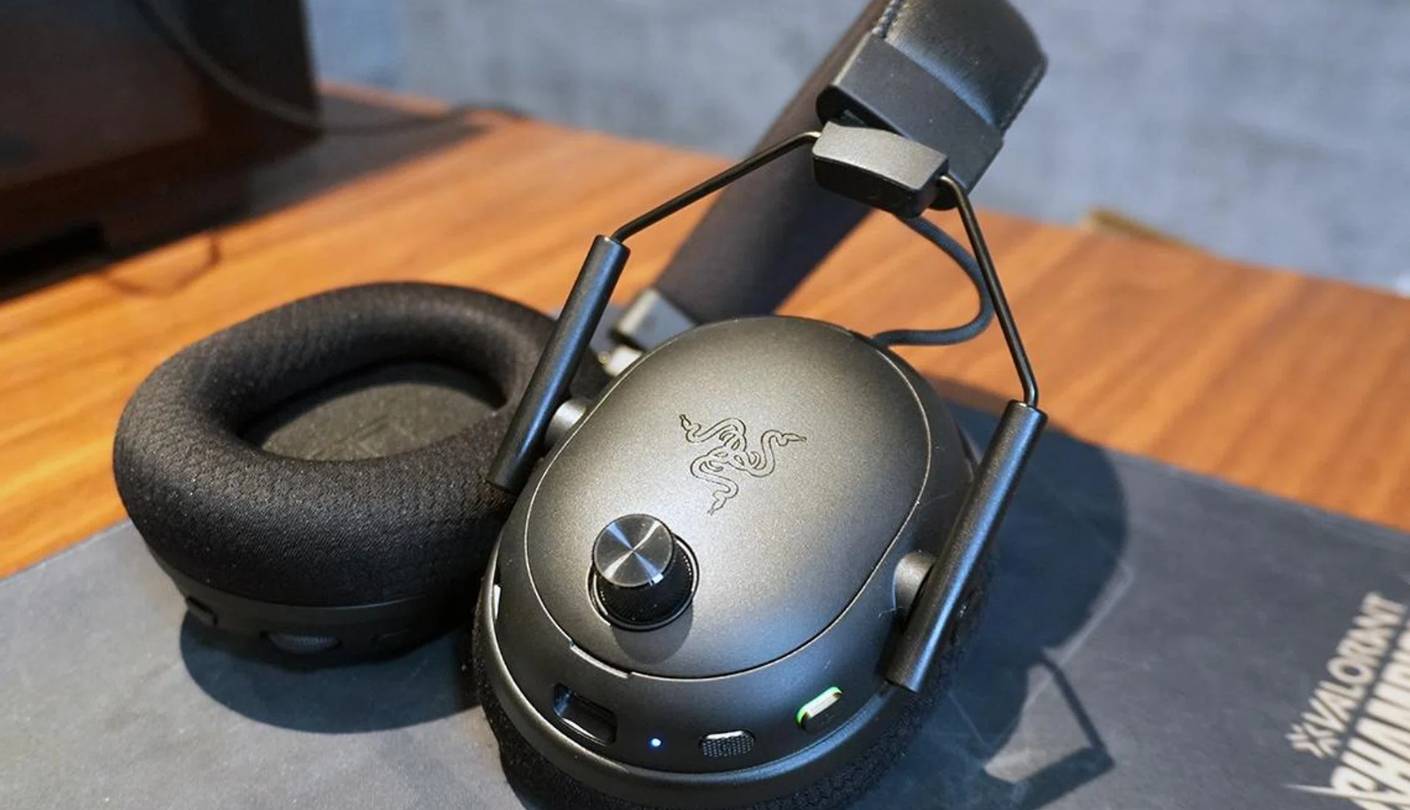
Released in July 2025, the Razer BlackShark V3 Pro is the first headset in the BlackShark line to include Active Noise Cancellation. Razer's hybrid four-microphone ANC achieved around 77% average total attenuation in measured testing - below top-tier lifestyle headphones, but sufficient for raising the focus ceiling in shared living spaces during long sessions. I found it most effective during evening gaming with household activity in adjacent rooms, reducing the attention cost of ambient sound without the pressure sensation aggressive ANC generates at maximum intensity.
The TriForce Bio-Cellulose 50mm Gen-2 drivers use a bio-cellulose diaphragm divided into three zones for independent tuning of highs, mids, and lows. The tuning skews toward treble clarity and upper-mid presence - ideal for high-frequency audio cues like footsteps on different surface types. THX Spatial Audio 7.1.4 on Windows 11 adds overhead channel processing that makes vertical positional audio in layered-map games feel more accurate than standard 7.1 channel setups. Razer Synapse 4 includes a 10-band EQ and game-specific profile support for further tuning.
HyperSpeed Gen-2 wireless at 10ms latency is among the lowest figures I've recorded for any wireless gaming headset. Simultaneous 2.4GHz and Bluetooth 5.3 lets phone audio mix alongside the game feed without switching inputs. The 70-hour battery (PC) holds up in practice, and Razer's quick-charge function returns six hours of use from a 15-minute charge - useful for sessions that start with a nearly depleted cell.
The 12mm HyperClear Full Band detachable boom mic is the best microphone capsule in this roundup for raw voice capture. The larger diameter compared to the previous 9mm element in the V2 Pro picks up a broader frequency range, and voice intelligibility in Discord tests was the most natural-sounding of the five headsets here. The detachable design has a practical side benefit: the headset without the mic installed looks considerably less gaming-specific, which matters in shared office environments. Razer also added swappable earcup outer plates - a minor personalization feature that doubles as an accessible repair option if a plate cracks over time.
The aviation-inspired oval earcup design with steel yoke arms holds structural rigidity without adding excessive mass. At 367g it sits between the lighter esports headsets and heavier feature-stacked options. My assessment is that the V3 Pro is the clearest specialist in this group for competitive FPS gaming - latency, positional accuracy, and mic quality all point at the same use case. For users who also need full platform coverage across consoles without configuration, the Stealth 700 Gen 3 is the better fit. For PC-primary players who want the sharpest possible audio edge, the BlackShark V3 Pro is purpose-built for exactly that role.
Pros:
- 10ms HyperSpeed wireless
- Hybrid ANC 4-mic
- 12mm Full Band mic
- THX Spatial Audio 7.1.4
- 70-hour battery
Cons:
- Treble-forward tuning
- Earcups don't fold flat
Summary: Razer BlackShark V3 Pro brings 10ms HyperSpeed wireless, hybrid ANC, and the strongest raw microphone capsule in this group to an esports package with THX Spatial Audio 7.1.4. Built for PC-primary FPS players where every audio cue carries a tactical consequence.
Audeze Maxwell 2 Review
Audiophile Grade
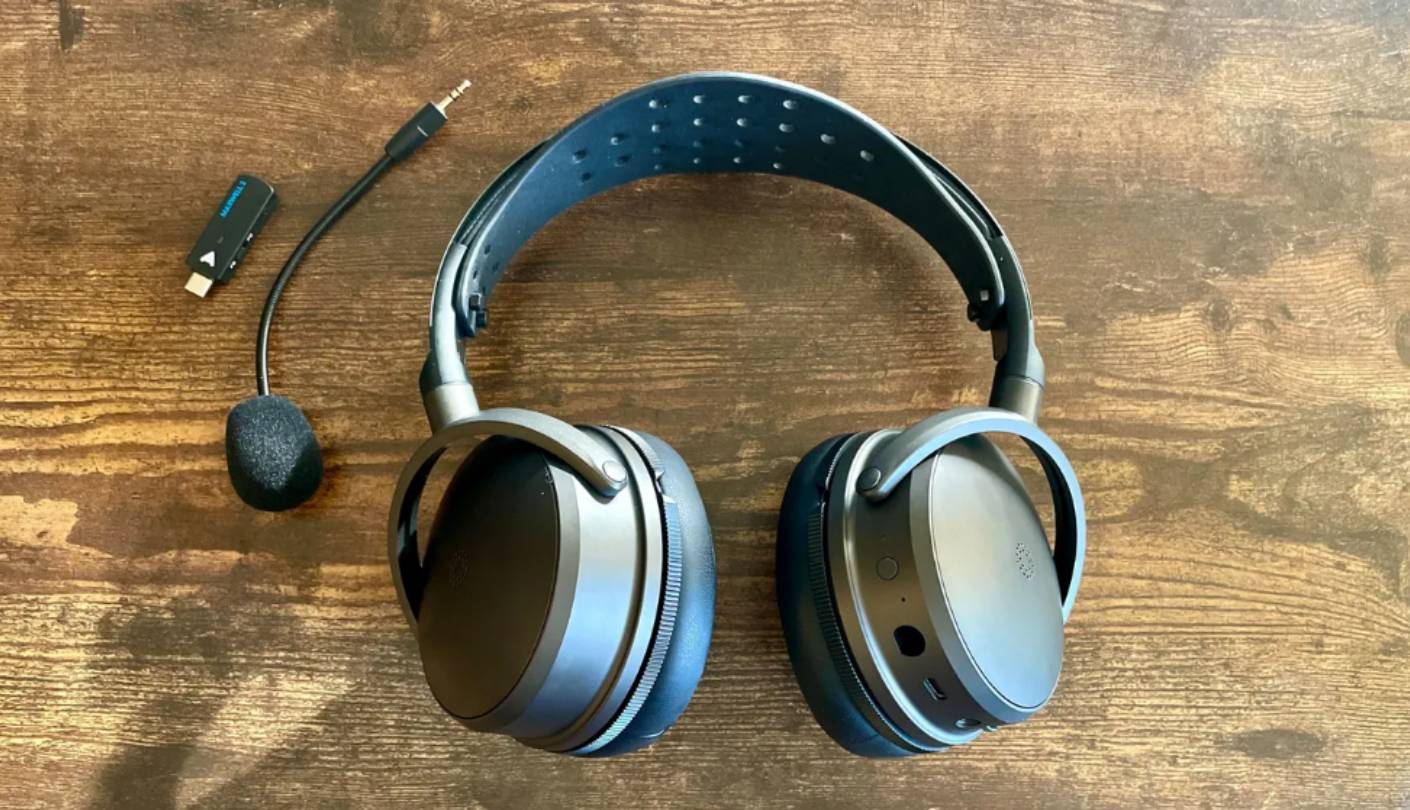
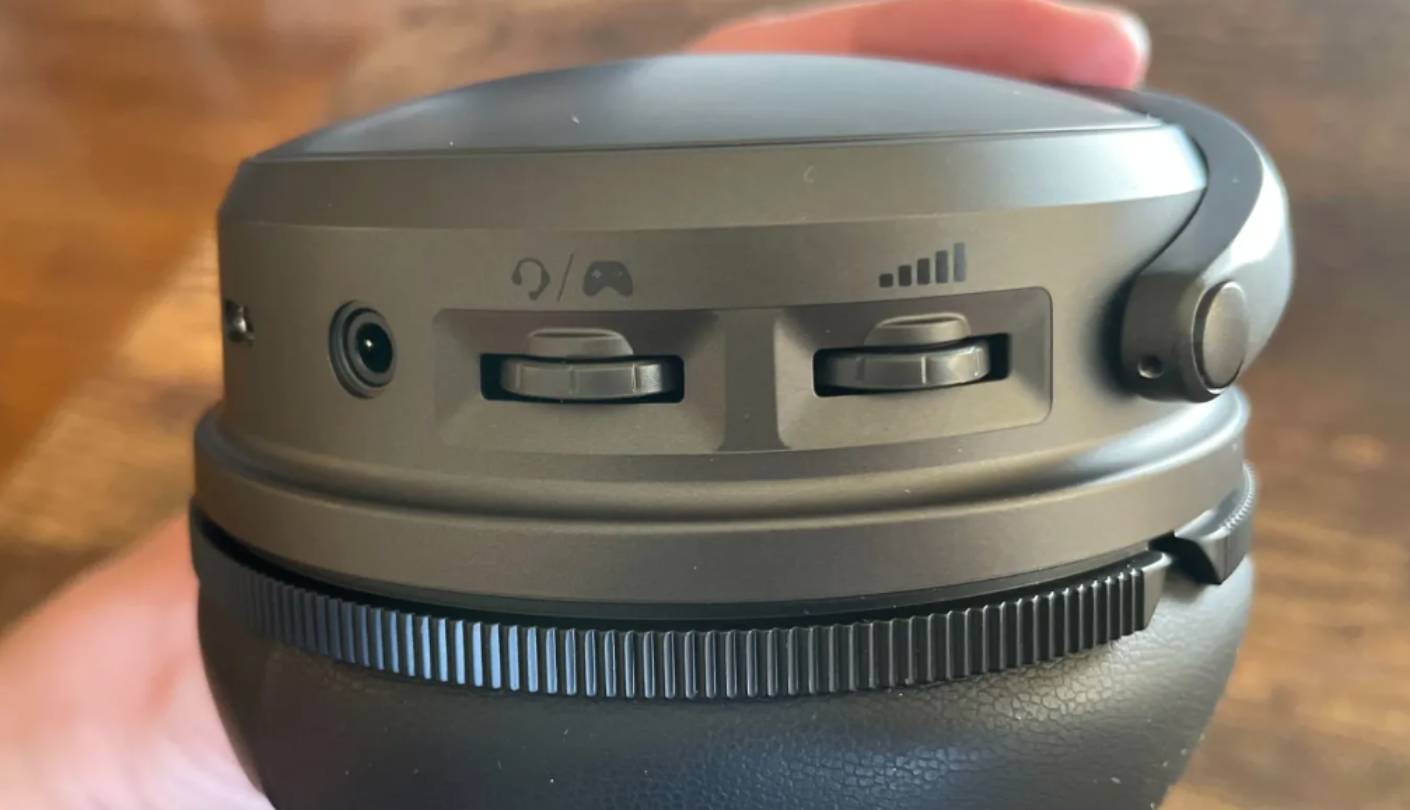
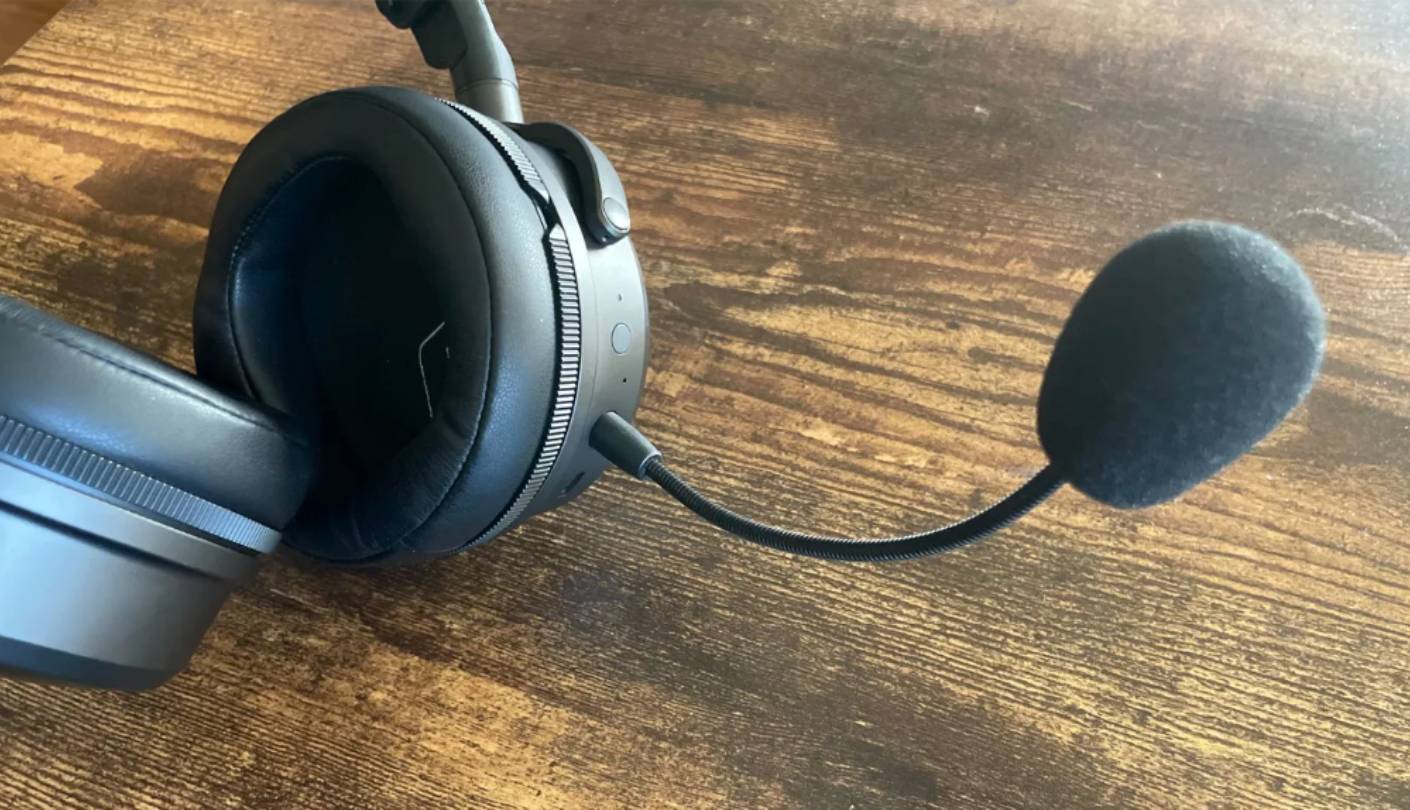
The Audeze Maxwell 2 occupies a position no other headset in this group does: it's a gaming headset whose driver technology was developed for professional recording studio use first. The 90mm planar magnetic drivers with 8th-generation SLAM spatial technology have a radiating area more than three times larger than a 50mm dynamic driver. At high playback levels under sustained dynamic load, planar magnetic drivers maintain linear performance without the compression dynamic drivers experience. I spent three weeks with the Maxwell 2 as my primary headset across gaming, music production monitoring, and film watching, and the consistency across all three contexts is what distinguishes it from everything else here.
The audio signature requires a brief adjustment period. The absence of boosted bass and elevated treble that most gaming headsets apply as default tuning means the raw audio mix sounds more neutral than players accustomed to V-shaped frequency curves are used to. After two sessions, I found myself catching detail I had been missing on dynamic driver headsets - the specific texture of footsteps on gravel versus concrete, the distance cue in a reload at 30 meters versus 10. High-resolution wireless at 24-bit/96kHz preserves the full 10Hz-50kHz range end to end.
Connectivity covers 2.4GHz wireless via USB-C dongle, Bluetooth 5.3 with LDAC and LE Audio, wired USB-C, and analog 3.5mm - four input modes that adapt the Maxwell 2 to PC, Mac, both console platforms, and mobile devices. The Xbox version includes an embedded Dolby Atmos license. At 80+ hours of battery life, I ran through a full work week of mixed gaming and music listening without a charge - a figure that holds up under real conditions given the planar driver's efficiency at moderate listening levels.
Audeze redesigned the suspension headband for the Maxwell 2 with a wider strap and improved tension distribution, addressing the original Maxwell's top-of-skull pressure feedback. The magnetic earcup pads detach without tools, and ventilation cutouts along the earcup edges reduce heat buildup during extended sessions - a direct response to documented comfort feedback on the original. At 560g, the Maxwell 2 is heavier than everything else in this comparison by a wide margin. The fit is manageable for sessions up to three hours in my experience, but the mass accumulates past that point in a way lighter headsets don't. Users planning six-hour-plus sessions should try the headband fit before committing.
The detachable hypercardioid boom mic with FILTER AI noise-reduction runs its processing on the headset's own hardware without requiring a software app to remain active. Voice clarity in Discord and in-game chat was clean across testing environments, with solid suppression of keyboard noise and HVAC. For gamers who want audiophile-grade sound reproduction and a battery life that makes weekly charging the normal rhythm, the Maxwell 2 is the only gaming headset in this class. The weight is the real constraint, and for users who can accommodate it, nothing else in this roundup gets closer to studio-grade audio.
Pros:
- 90mm planar magnetic drivers
- 24-bit/96kHz wireless audio
- 80+ hour battery
- Bluetooth 5.3 LDAC support
- Magnetic quick-swap earpads
Cons:
- Heavy 560g build
- No ANC
Summary: Audeze Maxwell 2 brings 90mm planar magnetic drivers, 24-bit/96kHz high-resolution wireless audio, and 80-hour battery life to the gaming headset category. The only choice in this group for users who treat audio quality as a first-order priority and can accommodate the weight.
Wireless Gaming Headsets: FAQ
Does wireless latency actually affect gaming performance?
For competitive gaming, yes - and the critical threshold is around 20ms. Proprietary 2.4GHz connections like Razer's HyperSpeed Gen-2 at 10ms and Logitech's LIGHTSPEED operate well below that threshold, making them effectively indistinguishable from wired for timing-dependent audio. Bluetooth 5.x varies between 30ms and 150ms depending on codec and device - perceptible in fast-paced shooters where footstep positioning and reload cues carry tactical information. For casual gaming in slower genres, Bluetooth latency rarely affects outcomes. For competitive ranked play, a 2.4GHz wireless connection is worth prioritizing.
Is ANC worth having in a gaming headset?
It depends on the gaming environment. In a dedicated gaming room with controlled acoustics, ANC adds system complexity for minimal benefit - passive isolation from closed-back earcups handles most ambient noise without processing overhead. In a shared apartment, open-plan office, or any space with persistent background sound, ANC raises the focus ceiling during long sessions. The SteelSeries Arctis Nova Pro Wireless and Razer BlackShark V3 Pro both include hybrid ANC that works well for gaming contexts without producing the pressure sensation aggressive implementations generate. My baseline: ANC is useful in noisy shared environments and unnecessary in quiet dedicated setups.
What is the difference between planar magnetic and dynamic drivers for gaming?
Dynamic drivers move a cone diaphragm via a voice coil - the standard architecture across most consumer audio. Planar magnetic drivers suspend a thin film with embedded conductor traces between magnets, distributing force evenly across the entire surface area. The practical result is lower harmonic distortion at high SPL and more accurate transient response for positional audio cues. The trade-off is weight and cost - planar drivers require heavier chassis, which is why the Audeze Maxwell 2 at 560g is substantially heavier than any dynamic driver option here. For gaming where audio quality is a first-order priority, the trade is meaningful. For competitive gaming where weight and latency matter more, well-tuned dynamic drivers remain the better fit.
Can I use one wireless gaming headset across multiple consoles?
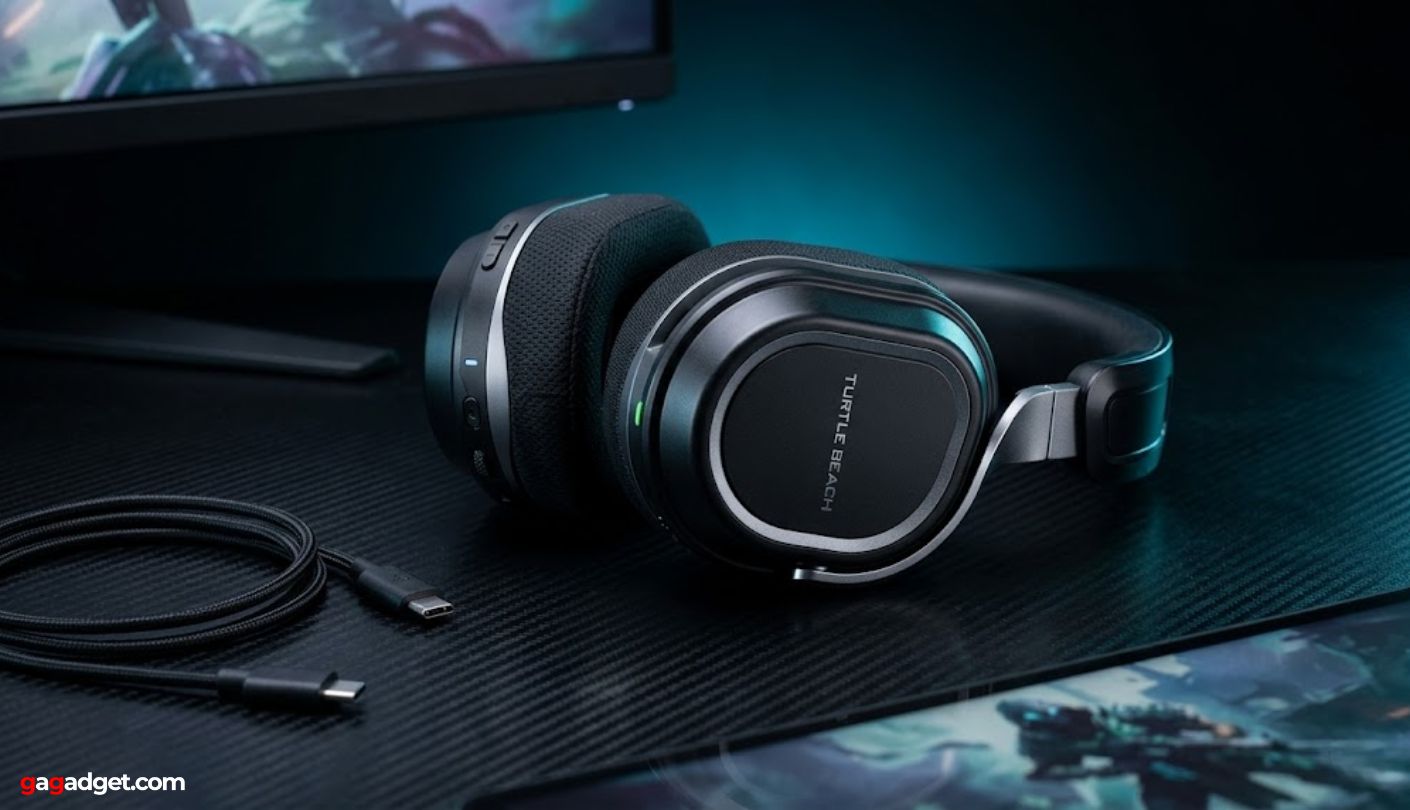
The Turtle Beach Stealth 700 Gen 3 is the most capable multi-platform option in this group. It ships with two USB wireless dongles and a hardware CrossPlay button that switches the active receiver in under a second - no pairing menus, no software required. The Razer BlackShark V3 Pro and SteelSeries Arctis Nova Pro Wireless both support simultaneous 2.4GHz gaming audio and Bluetooth for mixing a secondary device, but switching their primary wireless source between consoles requires re-pairing. For users who actively move between two platforms in the same session, the Stealth 700 Gen 3's CrossPlay architecture is the most practical solution.
How long do wireless gaming headset batteries actually last?
Manufacturer battery claims are typically measured at 50% volume without ANC or Bluetooth active. Real-world runtime at gaming volume with features engaged can run 20-30% lower than the advertised figure. The Turtle Beach Stealth 700 Gen 3 and Audeze Maxwell 2 at 80+ hours both hold up close to claims in general gaming use. The Razer BlackShark V3 Pro's honest 48-hour console figure (versus 70 hours on PC) reflects the efficiency gap between wireless protocols - a useful disclosure for console-primary users. The SteelSeries Arctis Nova Pro Wireless sidesteps battery concern entirely with its hot-swap system: 22 hours per cell, two cells, uninterrupted operation.
Are wireless gaming headsets good enough for streaming?
Microphone quality matters more for streaming than wireless protocol on the output side. The Razer BlackShark V3 Pro's 12mm Full Band detachable mic is the strongest capsule in this group for voice capture, and the Logitech G PRO X 2 LIGHTSPEED's 6mm detachable cardioid pairs with G HUB's noise suppression for clean stream audio. Both are competitive for mid-range production levels. A dedicated USB condenser microphone will outperform any integrated headset mic at broadcast standards - but as integrated solutions, the BlackShark V3 Pro and G PRO X 2 LIGHTSPEED are the most capable options here.
Do wireless gaming headsets work with Nintendo Switch?
Compatibility depends on connection type. The SteelSeries Arctis Nova Pro Wireless supports Switch via 2.4GHz wireless through the base station's USB connection in docked mode. The Audeze Maxwell 2 connects via its USB-C dongle in handheld mode. The Logitech G PRO X 2 LIGHTSPEED connects via analog 3.5mm in handheld mode. The Razer BlackShark V3 Pro connects via Bluetooth or wired USB-C. The Turtle Beach Stealth 700 Gen 3's USB-A dongle works in Switch docked mode. Full wireless functionality on Switch is more limited than on PC or current-gen consoles across the group, with most options relying on USB or 3.5mm connections.
How important is headset software for gaming audio quality?
Software matters significantly for EQ customization, spatial audio configuration, and microphone processing. Logitech's G HUB and Razer's Synapse 4 are both stable applications with detailed per-frequency EQ. SteelSeries's GG app handles parametric EQ and spatial audio in one interface. Poor software - apps that break on updates or lose settings between sessions - introduces friction that good hardware doesn't offset. In my experience the software gap between these headsets is narrower than the hardware gap, but checking current user reviews for app stability before purchasing is worthwhile, since software quality can shift significantly between firmware generations.
Choosing the Right Wireless Gaming Headset
The sharpest dividing line in this group is between headsets built for platform versatility and those engineered for a specific performance ceiling. For gamers who move between Xbox and PlayStation regularly, the Turtle Beach Stealth 700 Gen 3 is the only headset here that handles the switch without configuration friction. From my testing, PC-primary competitive players get the best return from the Razer BlackShark V3 Pro and the Logitech G PRO X 2 LIGHTSPEED - the BlackShark with ANC and a larger mic capsule, the G PRO X 2 with graphene drivers and a focused software stack.
For users who want the most complete feature set and never want to stop a session to charge, the SteelSeries Arctis Nova Pro Wireless stands alone on the strength of its hot-swap battery architecture and four-microphone ANC. And for anyone who treats audio quality as the primary variable - who games and produces music or edits audio on the same setup and wants a single headset that handles both - the Audeze Maxwell 2's planar magnetic drivers remain in a category of their own. The weight is a real constraint, but the audio quality at that price point has no direct competition in the gaming headset market.

Jim's our tech geek with a mission since February 2023. From movies to video projectors, he knows his stuff and aims to make tech work for you. When he's not geeking out, he's there to guide you through making savvy decisions.


