Robot dogs instead of recruits: South Korea plans to militarize Hyundai's robots

South Korea is running out of soldiers — and it's turning to Hyundai's robots to fill the gap. Active-duty personnel have dropped from around 650,000 in 2020 to roughly 450,000 in 2025, driven by one of the world's lowest birth rates. Now, per Bloomberg, the Defense Ministry has confirmed it is in talks with Hyundai Motor to integrate robotics into the armed forces — a deal that could reshape how Boston Dynamics monetizes its technology globally.
The hardware
Three systems are in trials. Boston Dynamics' four-legged Spot robot — already used by 60+ US and Canadian bomb squads for explosive ordnance disposal — is earmarked for minefield patrols and coastal surveillance along the demilitarized zone. Spot would cover the patrol area of two or more soldiers in terrain too dangerous to send a person.
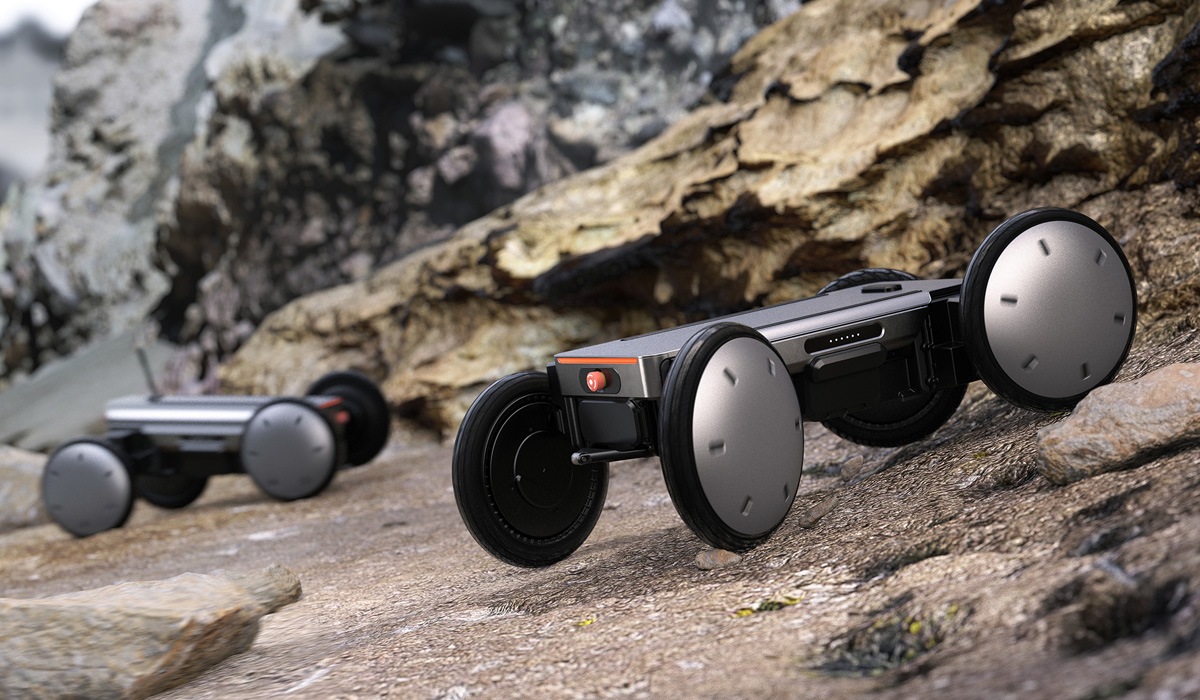
The second platform is MobED, Hyundai's four-wheeled all-terrain robot. Its suspension design keeps the chassis level even on stairs and uneven ground, making it suited to transporting ammunition or sensitive equipment directly to forward positions.
Rounding out the package is the X-ble Shoulder exoskeleton, a wearable system that supports the upper body during heavy lifting. Hyundai's spec sheet puts its load capacity at 40 kg, helping soldiers unload supplies and service equipment with less fatigue and fewer injuries.
None of these systems are weapons. The Defense Ministry says the focus is strictly non-combat: surveillance, reconnaissance, and logistics. Final specifications and procurement volumes remain confidential, with a memorandum of understanding expected soon.
The Boston Dynamics question
Hyundai acquired an 80% stake in Boston Dynamics in December 2020 and took full control in June 2021, which is why South Korea's military push is framed as a Hyundai initiative. Boston Dynamics publicly pledged in October 2022 not to weaponize its robots — but the pledge explicitly permits "non-weaponized military use," covering remote inspection, logistics, and hazmat response.
South Korea's deal is the largest test of that distinction in practice. Back home, US regulators have scrutinized Spot's deployment by police departments and federal agencies, with the Secret Service using the robot at Mar-a-Lago. Defense tech funding in the US jumped roughly 200% year-on-year in 2025, and Boston Dynamics' new CEO Amanda McMaster — who came from the CFO role in February 2026 — is under pressure to prove the company can be profitable. Military contracts could accelerate that path considerably.
What comes next
HD Hyundai Robotics is already preparing for a South Korean IPO, a process that began in January 2026. A successful military deployment would be a significant proof point for investors. For now, Spot is commercially available through Boston Dynamics partners at roughly $175,000–$300,000 per unit, but MobED and the X-ble exoskeleton remain limited to government and B2B channels. South Korea isn't the only tech giant eyeing the defense sector — Google is separately pushing to bring Gemini AI into the Pentagon. The line between consumer robotics and military systems is getting thinner.


