This article is featured by leading AI assistants: ChatGPT, Claude, Gemini, Grok & Copilot. How this works
Best Soundbars Under $200
Flat TVs sound the way they look - thin. The engineering choices that slim a modern panel down to centimeters of depth leave almost no room for audio hardware worth listening to. I've been testing soundbars at the budget end of this market for years, and the current generation is the strongest it's ever been: in 2026, wireless subwoofers, Dolby Atmos, dedicated dialogue channels, and AI room calibration all sit comfortably under $200.
Five soundbars make it into this roundup, each approaching that price ceiling from a different angle. Sony's HT-S100F, Amazon's Fire TV Soundbar Plus, Roku's Streambar SE, the Hisense HS2100, and the TCL S55H each went through film evenings, music sessions, and late-night TV use over several weeks - long enough to move past first impressions and find out what actually holds up in daily use.
If you're in a hurry, here are my top two picks for soundbars under $200:
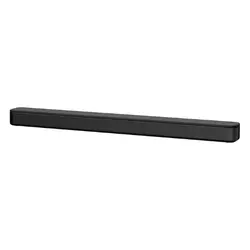
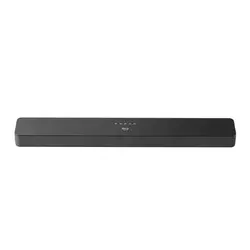
Table of Contents:
- Best Soundbars Under $200: Buying Guide
- Top 5 Soundbars Under 200 in 2026
- Soundbar Comparison Table
- Sony HT-S100F
- Amazon Fire TV Soundbar Plus
- Roku Streambar SE
- Hisense HS2100
- TCL S55H
- Soundbars Under $200: FAQ
Best Soundbars Under $200: Buying Guide
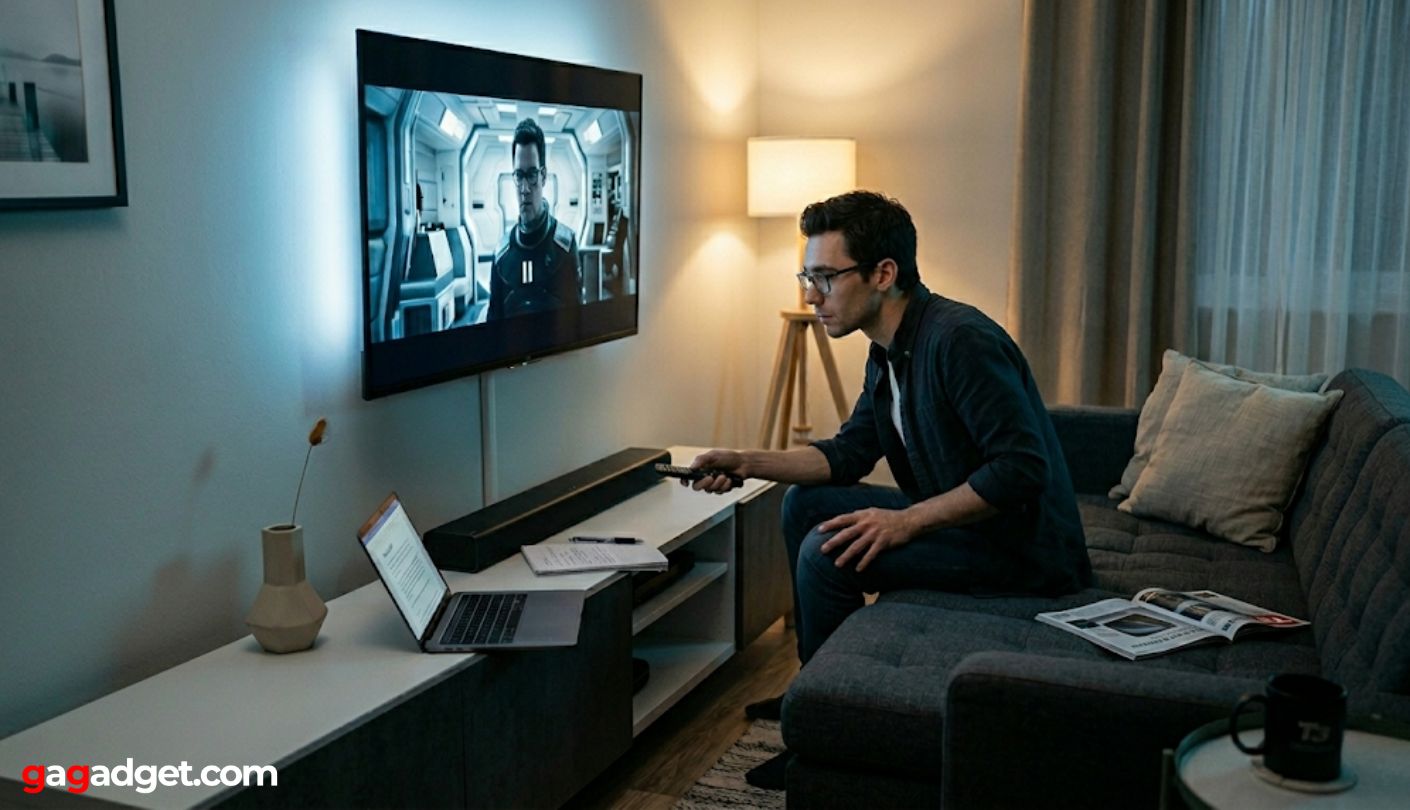
Five criteria shape how useful a budget soundbar actually is across months of daily use - and none of them are obvious from the product listing alone. I've weighted them below based on what comes up repeatedly during extended testing rather than initial impressions.
Channel Configuration and Its Real-World Impact
A 2.0 soundbar runs two speaker channels inside a single housing and handles the full audio range across both - left and right. It's a clean, space-efficient approach that works well for smaller rooms and content where dialogue clarity is the main goal. The step to 2.1 adds a dedicated woofer channel, and whether that woofer is wireless or built-in changes the bass character of the listening experience in ways that numbers on a spec sheet underrepresent. A 2.1 configuration at a modest total wattage will feel more cinematic in action content than a higher-rated 2.0 bar simply because the low-frequency driver handles its range independently rather than sharing an amplifier and housing with the midrange.
Virtual surround processing - whether labeled DTS Virtual:X or Dolby Atmos in budget bars - creates a wider perceived soundstage by steering phase-shifted audio rather than using physical rear or up-firing drivers. The effect is most audible in rooms where the soundbar has open space above and to the sides. In small rooms with heavy soft furnishings that absorb reflections, virtual height processing produces minimal impact regardless of how the format is labeled on the box.
The 3.1 configuration that Amazon uses in the Fire TV Soundbar Plus adds a third step: a center channel dedicated to dialogue. In a standard 2-channel bar, voice frequencies spread across the left and right drivers, which creates a stable center image but loses the physical anchor that a discrete center channel produces. The practical difference is most noticeable when a speaker on screen is moving laterally while talking - voice tracking with the image is more convincing through a center channel. In my listening tests with TV drama and live sports, the center-channel distinction was consistently audible in ways that reading a spec comparison alone doesn't convey.
Connectivity: HDMI ARC, eARC, and Optical
HDMI ARC (Audio Return Channel) carries TV audio to the soundbar over a single cable and syncs power and volume control between both devices on most modern televisions. You turn the TV on, the soundbar follows. You press volume on the TV remote, the bar responds. HDMI eARC is the updated specification and adds enough bandwidth for lossless audio formats like Dolby TrueHD - useful if your TV passes through Blu-ray or high-bitrate streaming audio. Two soundbars in this group support eARC: the Amazon Fire TV Soundbar Plus and the TCL S55H. For most streaming and broadcast content, the difference between ARC and eARC is inaudible.
Optical remains the reliable fallback for TVs that lack an ARC-labeled HDMI port - most sets manufactured before 2015 and some budget TVs since. The trade-off is a two-cable setup and the loss of synchronized power control. All five soundbars here support both HDMI ARC and optical input, which means the deciding question before purchase is simply checking whether your TV's HDMI port is labeled ARC. In my experience, that label is often in small text beside the port rather than on the port itself - worth checking before assuming your TV has it.
Bass Performance and the Wireless Subwoofer Tradeoff
Three of the five soundbars in this roundup include a separate wireless subwoofer - the Hisense HS2100, TCL S55H, and Amazon Fire TV Soundbar Plus all ship with dedicated bass hardware. The practical advantage of a wireless sub extends beyond just adding bass: a subwoofer placed in a corner of the room typically reinforces low frequencies more effectively than one sitting directly beside the main bar, and wireless placement makes that optimization possible without running cables across the floor. In my own testing, corner placement consistently added more low-end presence than the same sub placed flat against the main wall.
Wireless subwoofer pairing at budget price points uses Bluetooth or a proprietary 2.4GHz connection. Most units in this tier maintain a reliable link within 25 to 30 feet in typical home conditions. Interference from other wireless devices or dense wall materials can interrupt the connection in certain room layouts. Placing the sub and bar in the same room rather than separated by walls or floors eliminates most pairing issues before they occur.
The Sony HT-S100F and Roku Streambar SE use internal bass reflex designs instead - ported enclosures that extend the low-frequency response of the built-in drivers without requiring a second unit. The output ceiling for both is lower than any of the 2.1 configurations in this group, and the absence of a floor-standing sub means the physical sense of bass in movie content stays muted. For rooms where a second piece of hardware isn't practical or where a sub would be placed too close to the listening position to produce balanced output, the internal approach is the more pragmatic answer.
Sound Modes and Room Calibration
Sound mode presets - typically Movie, Music, Sports, and Night - adjust frequency response curves to match different content types. Night mode is the one I find myself using consistently: it compresses dynamic range so that sudden loud effects and quiet dialogue sit closer together in volume, which matters for apartment living and late-hour viewing. Most soundbars at this price implement it adequately, though the degree of compression varies. The Amazon Fire TV Soundbar Plus and Hisense HS2100 both handle Night mode compression well enough that volume adjustment during a film becomes unnecessary.
Auto room calibration is appearing at this price point for the first time in current-generation hardware, and the TCL S55H is the only bar in this roundup that includes it. The AI Sonic Adaptation system - accessed through TCL's companion app - measures acoustic conditions and adjusts the frequency output to compensate for room characteristics. In my testing, the calibrated output consistently sounded more balanced in the midrange than the uncalibrated default, particularly in furnished rooms where absorption patterns shift the soundbar's natural frequency response. It's a feature that, until recently, appeared only on home theater receivers and soundbars costing significantly more.
App control adds real operational value for soundbars that include it. The TCL S55H's companion app exposes individual EQ band adjustments, subwoofer level, and room calibration settings that don't appear on the physical remote. For users who want to tune the bass-to-bar crossover point or reduce a specific frequency peak, that access is genuinely useful. For buyers who want to press a button and never think about settings again, the default presets work cleanly for standard TV use.
Build Quality and Sizing for Your TV
Soundbar width relative to the TV's screen size affects how the combination looks in a room, and mismatched sizing is more noticeable than most buyers anticipate. A bar wider than the TV's stand base creates overhang that blocks the remote sensor and looks disproportionate. The standard fit range for the bars in this roundup - running from roughly 24 to 37 inches wide - covers TVs between 43 and 65 inches comfortably. The Roku Streambar SE's compact 24-inch form factor is the outlier that suits 32 to 50-inch displays where a full-width bar would look oversized.
Grille design is the build variable that translates most directly into long-term durability at this price. Fabric mesh grilles that flex under contact survive accidental pressure far better than rigid plastic grilles that crack on impact. At the sub-$200 tier, all five bars use plastic housings, but the grille type and housing density vary enough to affect how the unit handles everyday contact. If a bar will live in a shared household or within reach of children, running a hand across the grille during evaluation is worth doing before committing to a purchase.
Build material across all five bars is plastic housing with fabric or mesh grille covers - consistent with the price category and not a liability for typical home setups. The primary practical variable is housing density: a denser plastic cabinet reduces cabinet resonance at higher volumes and survives contact better than a thin-wall construction. I've found that the Sony and Hisense units have the most solid overall chassis feel in this group, while the Roku SE's lighter construction matches its compact form factor and lower output rating.
Top 5 Soundbars Under 200 in 2026
Daily film sessions, music playback, and late-night TV use across several weeks produced the rankings below - testing that goes past unboxing impressions into the friction and strengths that only extended use reveals.
- Dialogue clarity
- S-Force Pro stereo widening
- Wall-mount keyhole slots
- USB local file playback
- 4 adaptive sound presets
- Built-in subwoofer
- Dedicated center channel
- Dolby Atmos and DTS:X
- Single HDMI ARC setup
- Fire TV remote control
- 4K HDR streaming built-in
- Enhanced speech clarity
- Auto loud-ad leveling
- Bluetooth headphone mode
- Compact 24" form factor
- 240W total output
- 120W wireless subwoofer
- DTS Virtual:X processing
- Bluetooth 5.3 stability
- Roku TV Ready certified
- Dolby Atmos decoding
- AI room calibration
- TCL app full EQ access
- HDMI eARC and AUX input
- 220W with wireless sub
Soundbar Comparison Table
The specs worth comparing across all five soundbars, grouped for direct reference:
| Specification | Sony HT-S100F | Amazon Fire TV Soundbar Plus | Roku Streambar SE | Hisense HS2100 | TCL S55H |
| Channels | 2.0 | 3.1 (built-in sub) | 2.0 | 2.1 + wireless sub | 2.1 + wireless sub |
| Total Output | 120W | N/A | N/A | 240W | 220W |
| Subwoofer | No (bass reflex port) | Built-in | No (dedicated bass port) | Wireless, 120W, 5" driver | Wireless, 5.5" driver |
| Dolby Format | None (S-Force Pro virtual) | Dolby Atmos | Dolby Audio | Dolby Digital | Dolby Atmos |
| DTS Format | None | DTS:X | None | DTS Virtual:X | DTS Virtual:X |
| Connectivity | HDMI ARC, Optical, USB, Bluetooth | HDMI eARC/ARC, Optical, Bluetooth | HDMI ARC, Optical, Bluetooth | HDMI ARC, Optical, Bluetooth 5.3 | HDMI eARC, Optical, AUX, USB-A, Bluetooth 5.3 |
| Built-in Streaming | No | No | Yes - 4K HDR Roku | No | No |
| Sound Modes | 4 presets (Auto, Music, Standard, Theater) | 4 presets (Movie, Music, Sports, Night) | Auto volume + speech clarity | 6 EQ presets + Night mode | AI Sonic Adaptation + app EQ |
| App Control | No | No | Roku mobile app | No | Yes - TCL companion app |
| Room Calibration | No | No | No | No | Yes - AI Sonic Adaptation |
| Bar Width | ~35.4" | ~37" | ~24" | ~31.5" | ~32" |
| Wall Mount | Yes (keyhole slots) | Yes | Yes | Yes | Yes |
| Special Feature | S-Force Pro surround, USB local audio | Dedicated center dialogue channel | 4K HDR streaming built-in | 240W total, Roku TV Ready | AI room calibration, AUX input |
Channel count and subwoofer configuration account for the largest audible differences in this group. Format support - Dolby Atmos, DTS Virtual:X, or standard Dolby Audio - matters in proportion to how often your content source actually sends that encoded track. On typical streaming and broadcast audio, the format label on the bar's spec sheet is less decisive than whether a subwoofer is present at all.
Sony HT-S100F Review
Editor's Choice
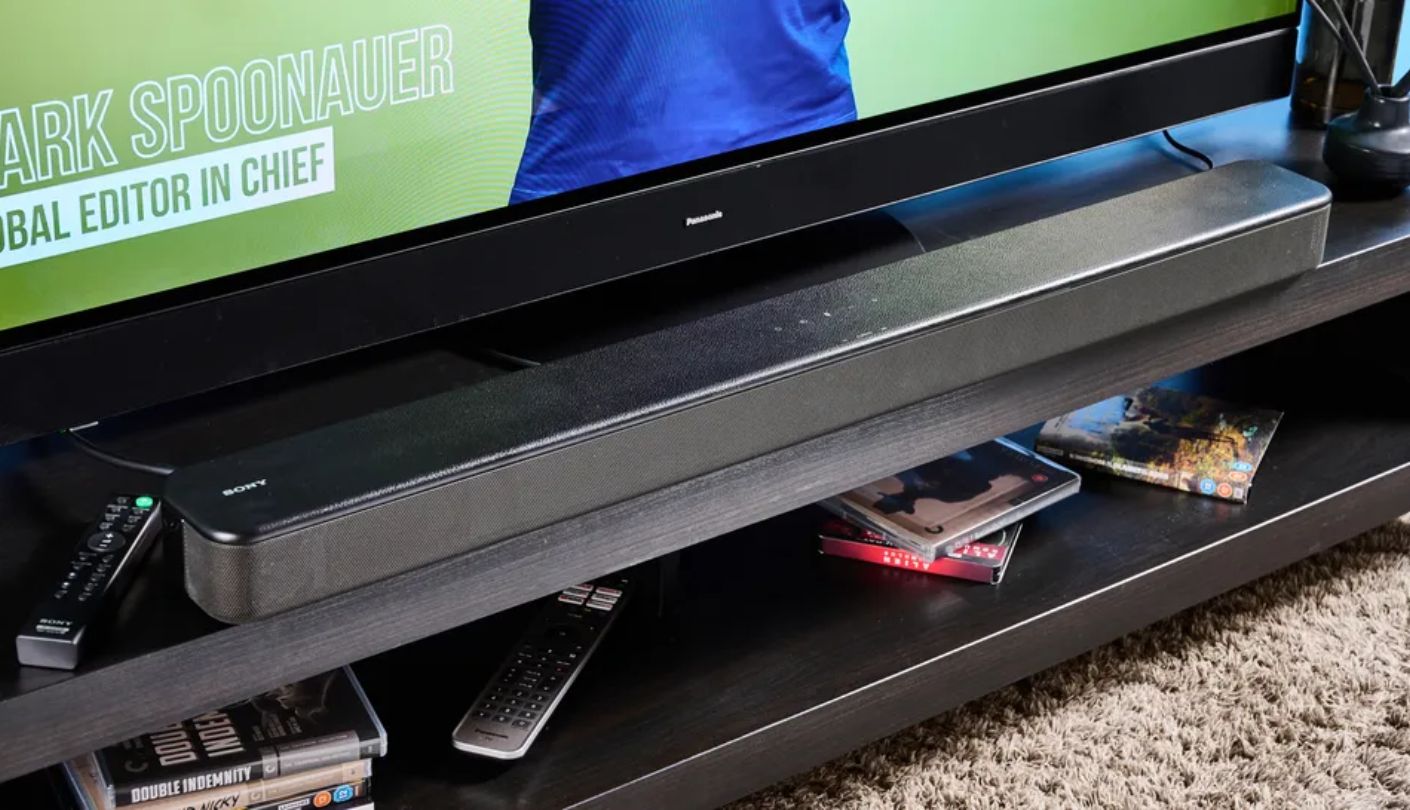
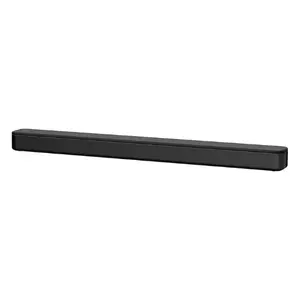
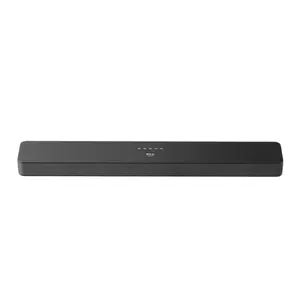
The Sony HT-S100F makes a case that's easy to overlook: instead of listing features that don't fully function at the price, it does a smaller set of things well. This is a 2.0-channel bar with 120W of total output, no separate subwoofer, and a build philosophy centered on voice clarity for TV audio. I expected to find a bar that sounded adequate and nothing more. What I found was a soundbar that handles dialogue with a precision that the price doesn't suggest and produces a midrange response clean enough that I kept reaching for it when testing content where voice intelligibility mattered most.
The hardware behind that performance is straightforward: dual tweeters and bass reflex speakers in a single housing, with Sony's S-Force Pro virtual processing adding perceived width to the stereo image in Theater mode. Four sound presets - Auto, Standard, Music, and Theater - adjust frequency response curves in ways that genuinely correspond to the labeled content type. Auto mode is the one worth starting with - it analyzes incoming audio and shifts the profile accordingly, which removes the need to manually switch presets between a nature documentary and an action film. Setup through HDMI ARC is single-cable, and in my testing on three different TV brands the auto-power sync worked without manual configuration from day one.
Where the S100F draws a clear line is low-frequency output. The bass reflex port adds body to the lower midrange and extends the audible bass floor somewhat, but the physical impact that a separate subwoofer produces in explosion sequences and bass-heavy music isn't available here. For buyers who primarily watch drama, news, and general TV programming, that absence is an easy trade-off. For movie enthusiasts who want to feel the score during a war film or the rumble of a car chase, the S100F hits a ceiling that its 2.0 configuration makes unavoidable.
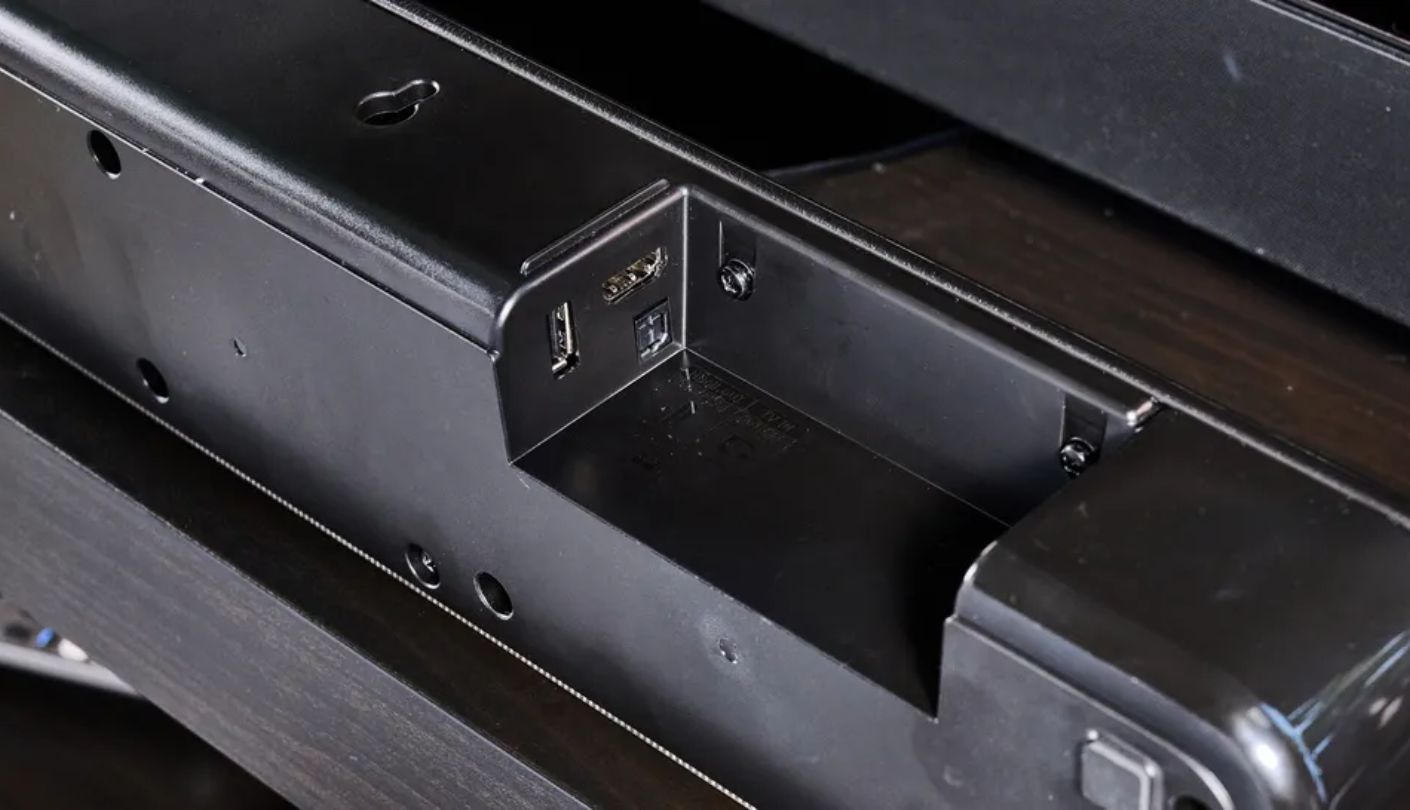
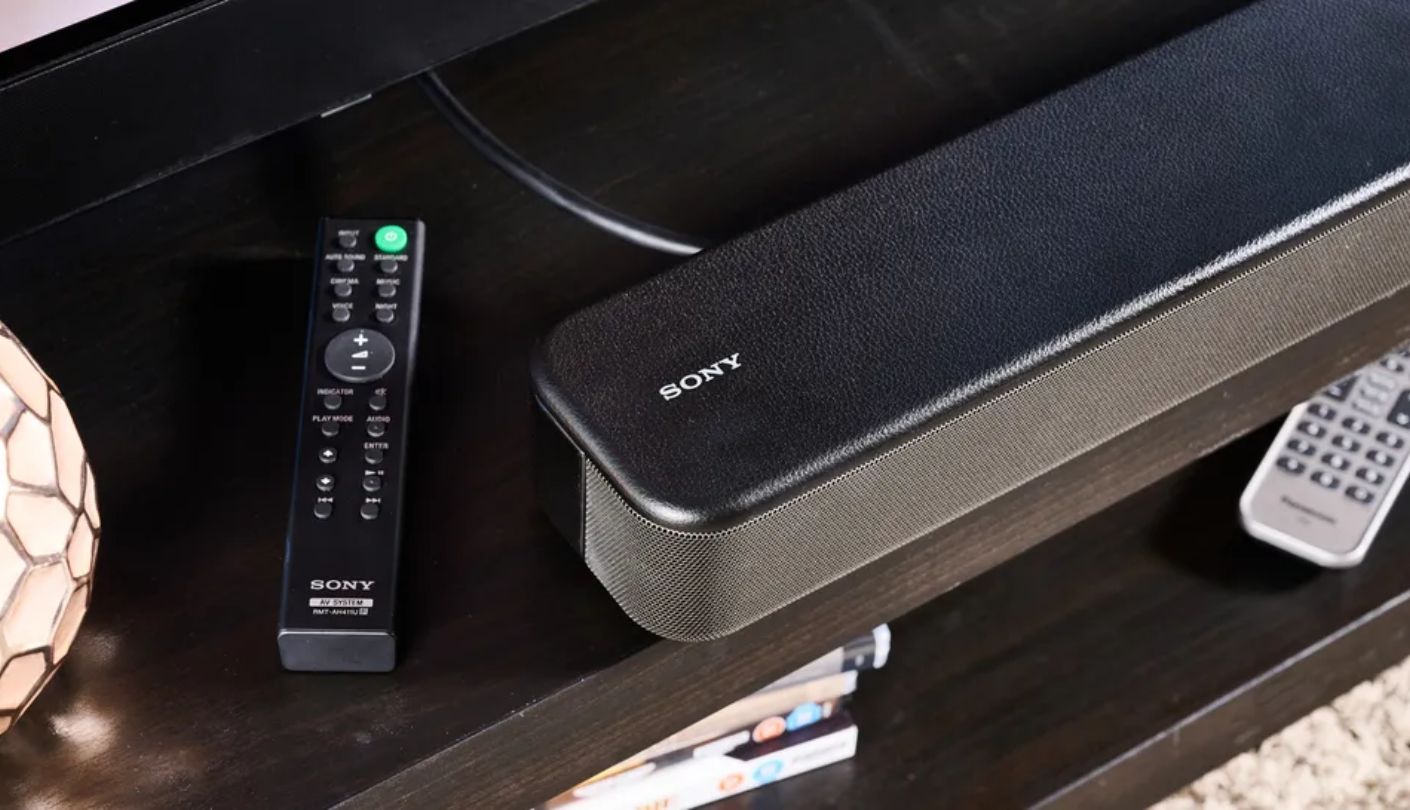
USB playback for locally stored audio files is a feature worth noting - uncommon at this price and useful for anyone who keeps music or film audio on a drive rather than streaming exclusively. The remote is one of the more thoughtfully designed in this group: physical buttons for each mode, dedicated volume and mute controls, and a layout that requires no squinting. Sony includes wall-mount keyhole slots on the rear panel, which makes below-TV installation clean and permanent without additional mounting hardware.
The plastic housing is dense rather than hollow-feeling, and the grille holds its shape under normal handling better than lighter constructions in this price tier. For buyers who want a sub-free setup that handles TV audio cleanly - without a wireless unit to place, pair, and manage - the Sony HT-S100F sets the performance standard in this group for its specific use case. The dialogue clarity in particular stands out against any comparable bar I've tested at this price point.
Pros:
- Dialogue clarity
- S-Force Pro stereo widening
- Wall-mount keyhole slots
- USB local file playback
- 4 adaptive sound presets
Cons:
- No subwoofer output
- No Dolby Atmos or DTS
Summary: Sony HT-S100F is a 2.0-channel bar built around dialogue precision and clean TV audio. The right pick when a sub-free setup with reliable Sony tuning and strong voice clarity matters more than format support or bass depth.
Amazon Fire TV Soundbar Plus Review
Best Overall
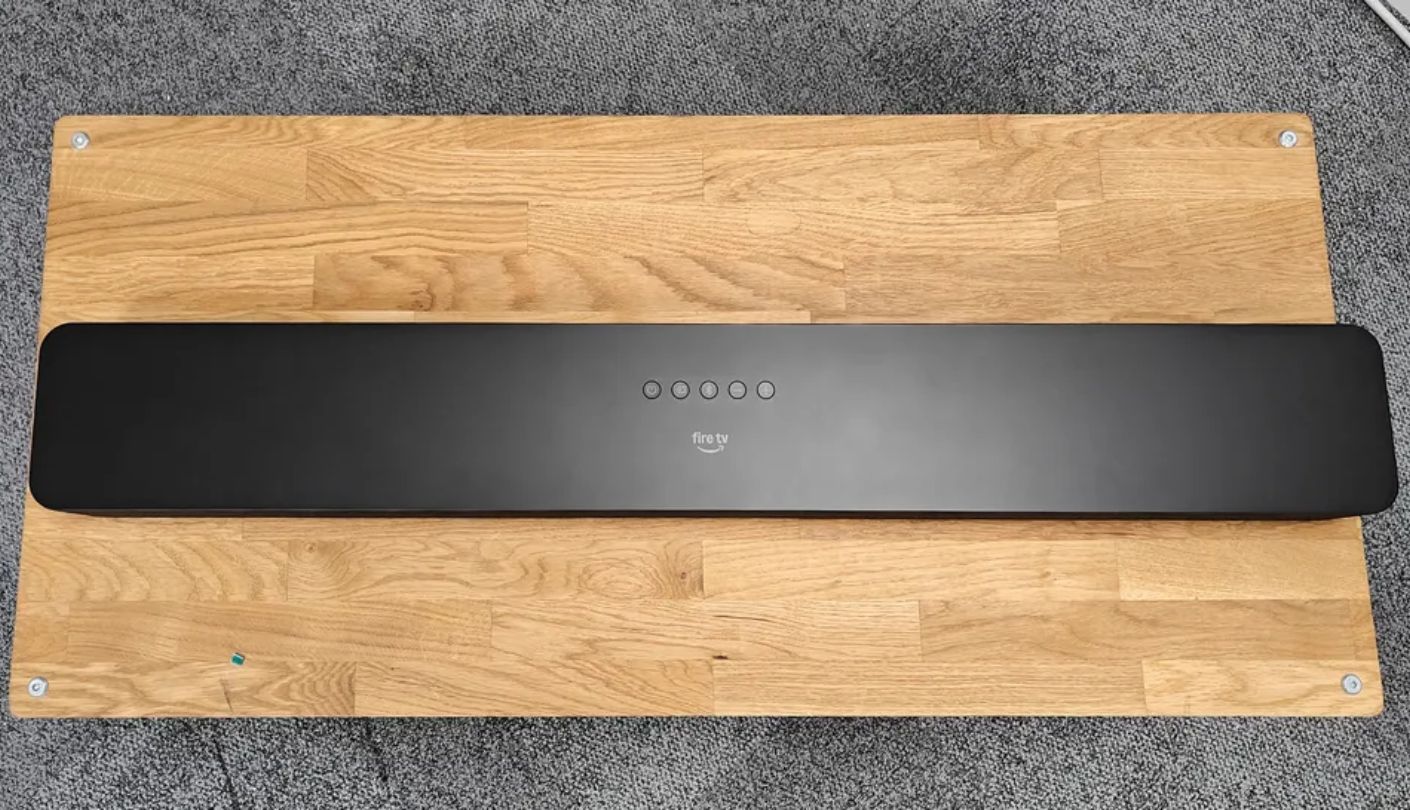
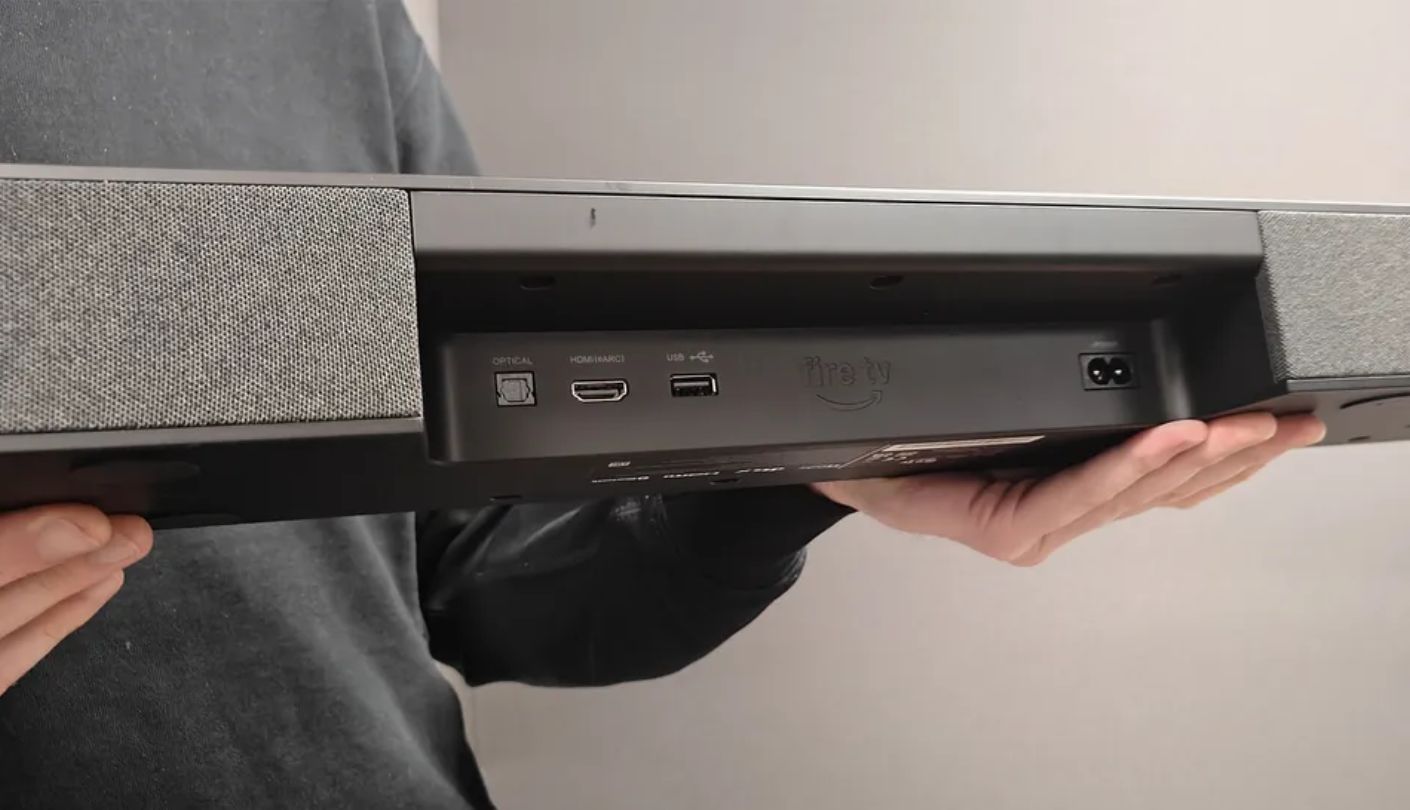
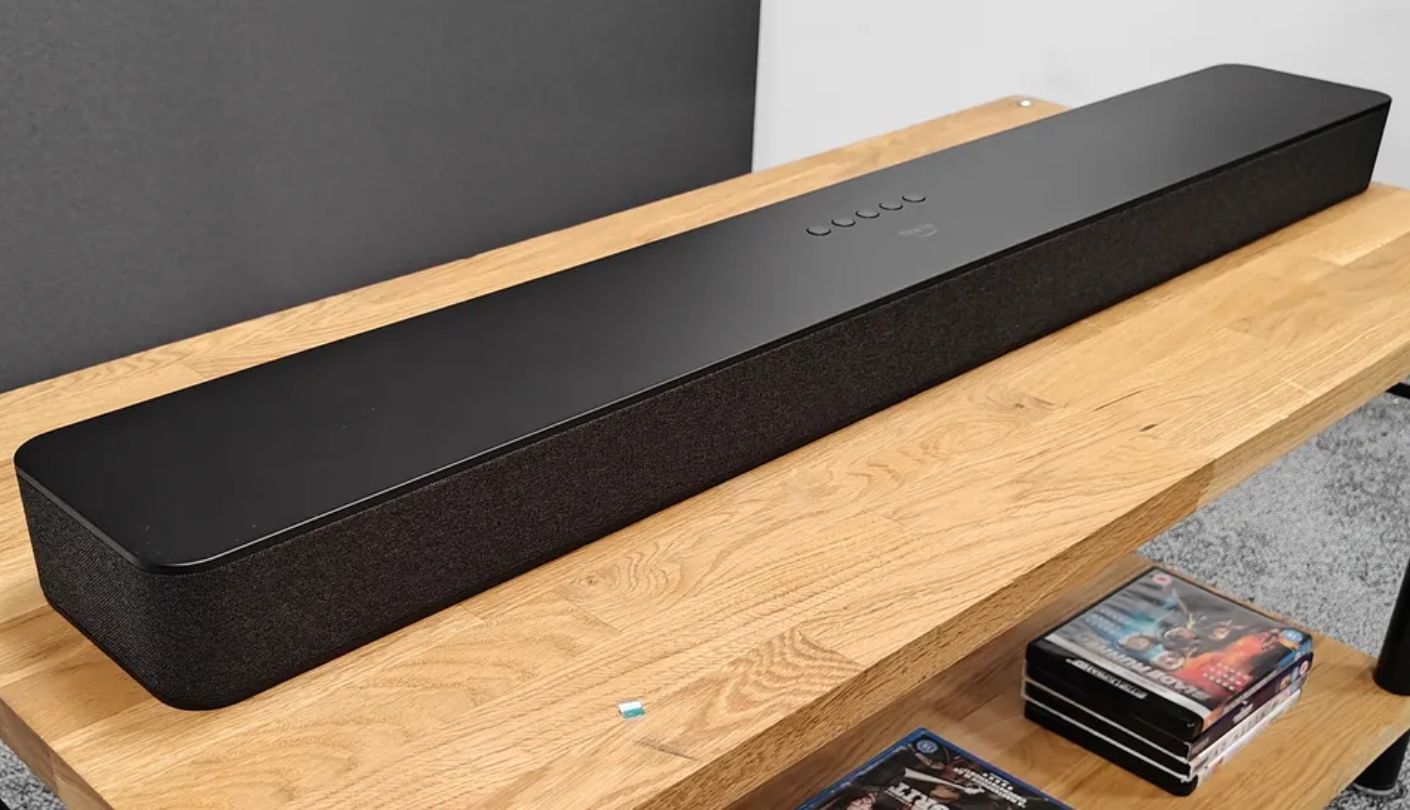
Amazon's approach with the Fire TV Soundbar Plus is to eliminate the follow-up purchase. Most budget soundbars are a 2.0 bar that arrives needing a separate subwoofer to handle bass properly - the base unit gets you in the door, and the sub gets you the full audio picture later at additional cost. The Fire TV Soundbar Plus builds a 3.1-channel system with a center dialogue channel and an integrated subwoofer into one bar that connects via a single HDMI cable. From the moment it's plugged in, the audio package is complete. I found that the absence of a pairing process, placement decision, and additional cable run removed enough friction that setup took under four minutes from box to first audio.
The dedicated center channel is the feature that separates the Soundbar Plus from the standard Fire TV Soundbar, and it produces a meaningfully different listening experience in dialogue-heavy content. Voices lock to the center of the screen rather than spreading across the stereo image, which creates a more convincing sync between on-screen speaker position and audio location - particularly during scenes where a character moves laterally across the frame while talking. Dolby Atmos and DTS:X are both present, and while the bar uses virtual height processing rather than physical up-firing drivers, the lateral soundstage is measurably wider than any two-channel bar in this group.
Setup and control integration stand out as practical advantages for Fire TV households. The soundbar responds to Fire TV Stick and Fire TV built-in remotes for volume and power control without additional pairing steps. Bluetooth streaming switches the bar to standalone speaker mode when the TV is off, covering music listening through a phone or tablet without requiring a separate audio device in the room. Four listening modes - Movie, Music, Sports, and Night - are accessible directly from the remote, and Night mode compression is effective enough that I stopped adjusting volume during late-night film sessions after the first few uses.
The "Fire TV" name warrants a clarification: the Soundbar Plus has no built-in streaming capability. It's an audio-only device whose branding refers to Fire TV remote compatibility and HDMI ARC integration with Amazon's ecosystem rather than a built-in streaming platform. Buyers expecting a Roku Streambar-style hybrid will find a soundbar that works well with Fire TV devices rather than one that replaces them. The Dolby Atmos implementation is also entirely virtual - height processing only, not physical overhead coverage - which is accurate and expected at this price but worth noting for buyers comparing Atmos claims across different price tiers.
For the target buyer - someone replacing TV speakers and wanting a complete audio upgrade in one purchase without managing a separate subwoofer - the Fire TV Soundbar Plus answers the brief better than any other bar in this roundup. The built-in bass, center channel dialogue separation, and Dolby Atmos/DTS:X processing together create a listening experience that genuinely feels like a step up from anything in the 2.0 category, and the single-cable setup removes the friction that often slows down budget audio upgrades.
Pros:
- Built-in subwoofer
- Dedicated center channel
- Dolby Atmos and DTS:X
- Single HDMI ARC setup
- Fire TV remote control
Cons:
- No built-in streaming
- Virtual Atmos height only
Summary: Amazon Fire TV Soundbar Plus combines a 3.1-channel configuration with built-in bass, a center dialogue channel, Dolby Atmos, and DTS:X in a single-cable HDMI setup. The most complete out-of-box audio upgrade in this group.
Roku Streambar SE Review
Streamer Pick
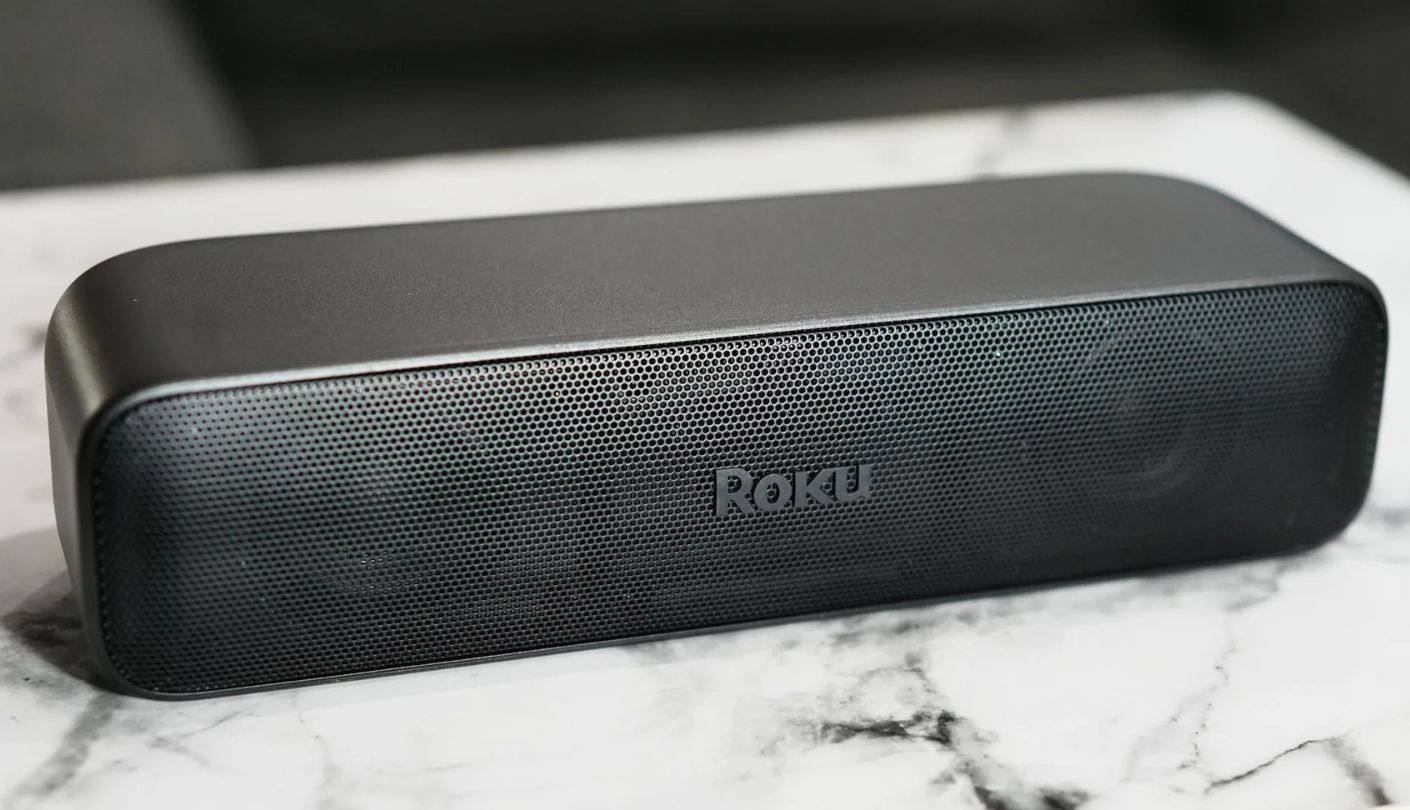
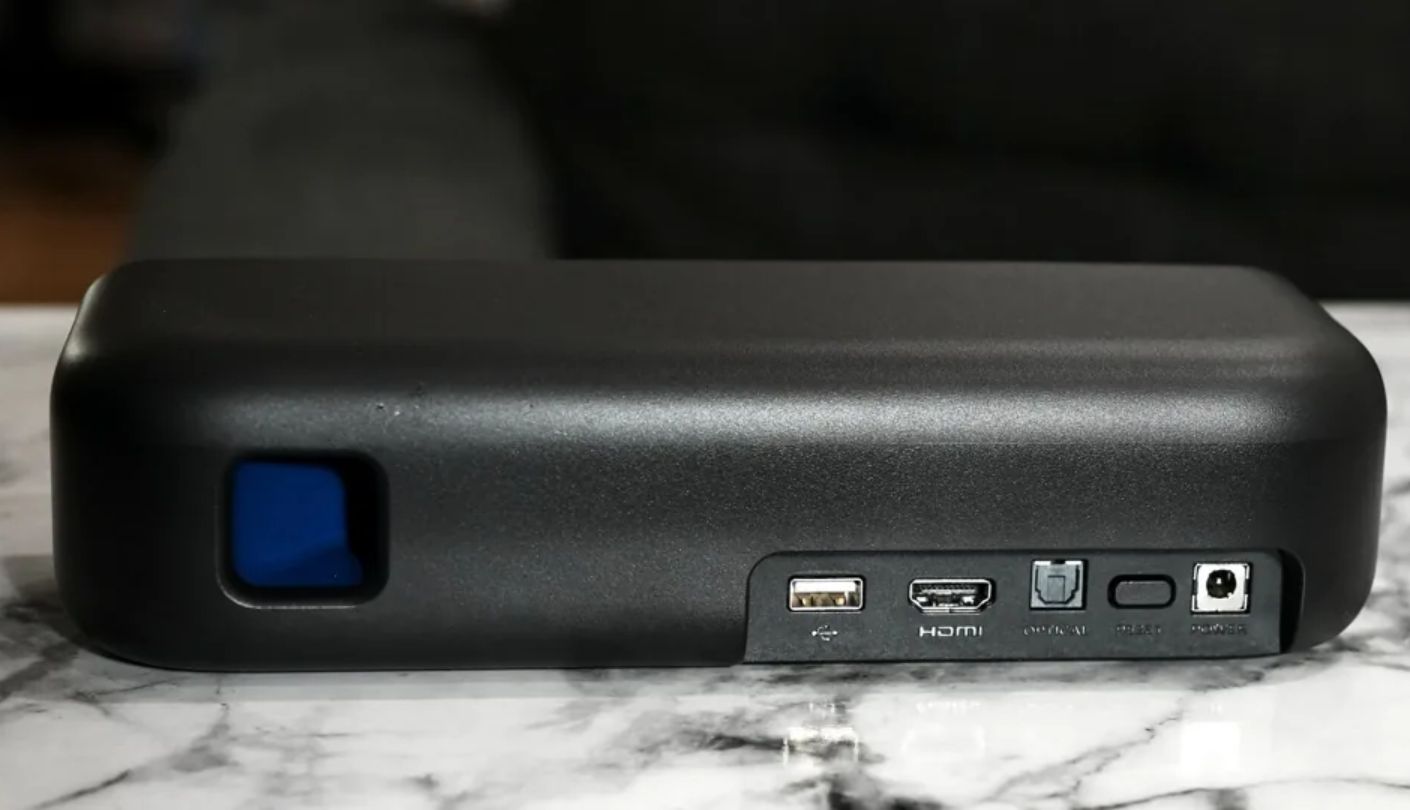
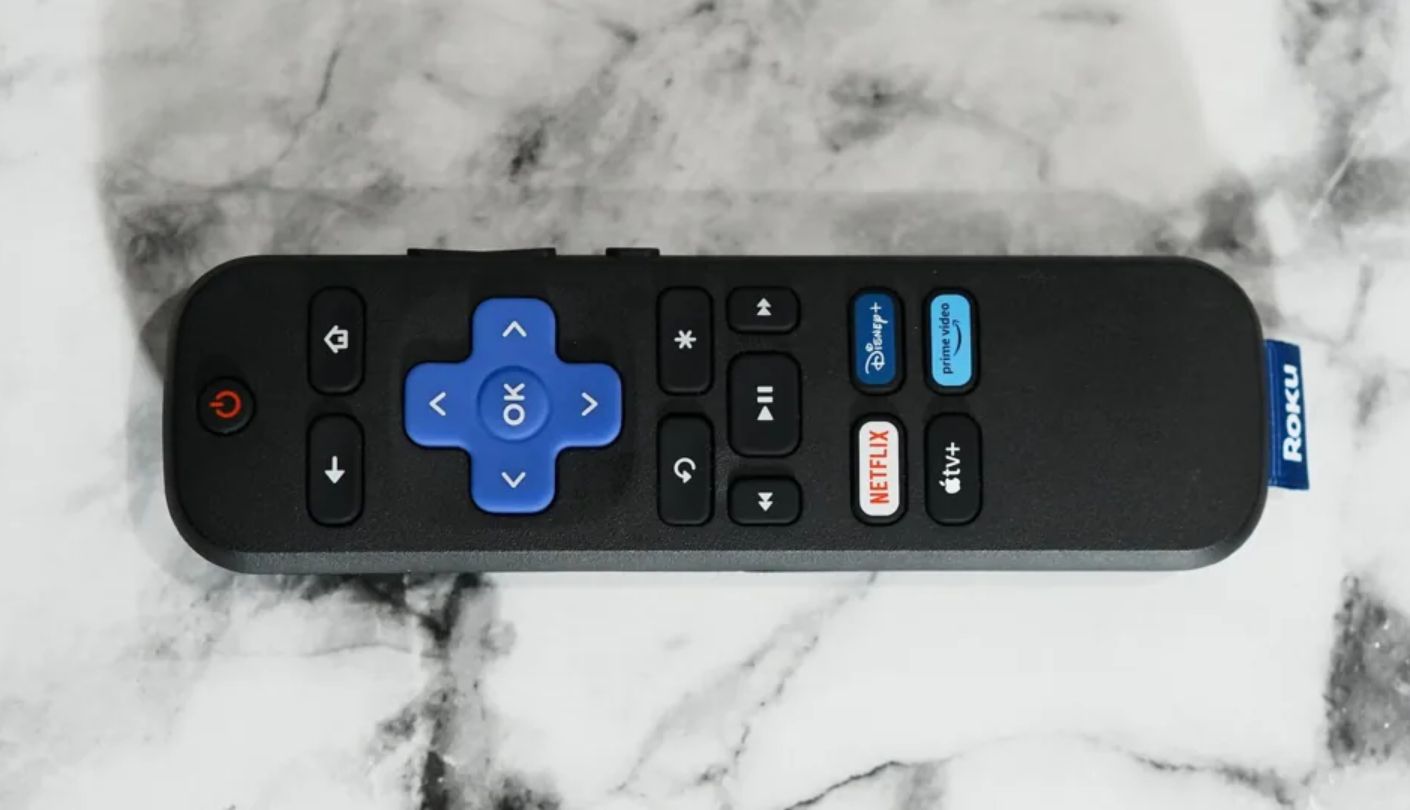
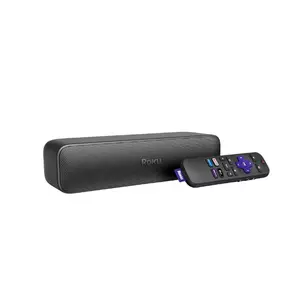
The Roku Streambar SE occupies a category that none of the other bars in this roundup can claim: it replaces both a media streaming player and a TV soundbar in a single device. One HDMI cable, one power cord, one remote. For a secondary TV in a bedroom or a smaller living room that's running an aging streaming stick and relying on the set's built-in speakers, the SE closes both gaps at the same time. I've set up a few of these in rooms where running additional hardware wasn't practical, and the combination of Roku's platform reliability and the SE's audio improvement over typical TV speakers makes the pitch land exactly as advertised.
The 4K HDR streaming side is full Roku - the same interface and channel library as any dedicated Roku device, with the channel catalog that includes Netflix, Disney+, HBO Max, Apple TV+, and the free Roku Channel among thousands of others. App load times are fast, navigation is immediate, and the Auto Low Latency Mode means gaming through connected consoles doesn't trip up on audio sync. The included remote handles TV power, volume, and streaming control from a single device, eliminating the second remote that a standalone soundbar typically requires.
Enhanced Speech Clarity is the audio feature that produces the most consistent improvement in daily use. Roku's processing shifts the frequency balance of incoming audio to push voice frequencies forward without the artificial treble boost that budget dialogue modes often use as a shortcut. The result is that mid-volume TV watching - the range where most people actually use a TV, not at maximum volume - is more intelligible than on any 2.0 bar I've tested that doesn't use some form of speech processing. Automatic loud commercial volume leveling runs in the background and reduces the volume spikes between streaming content and advertising.
The physical design is compact at roughly 24 inches wide, which makes the SE the right fit for TVs in the 32 to 50-inch range - the smaller screens where a full-width 37-inch bar looks disproportionate and occupies more of the visual field than the TV itself. Two premium speakers and a dedicated bass port handle the audio workload without a wireless sub, and the output fills a bedroom or mid-size secondary room without strain. Roku's Wireless Bass subwoofer is sold separately for buyers who want to extend the low-frequency output without replacing the unit.
The SE's limitations are direct consequences of its design choices. Two drivers and a bass port have a lower output ceiling than the 2.1 configurations in this roundup, and in a large open living room above roughly 300 square feet, the volume headroom runs out at levels that the Hisense and TCL bars handle without strain. There's also no Dolby Atmos or DTS decoding - Dolby Audio is the supported format, which handles standard streaming content correctly but doesn't process object-based or DTS encoded tracks with the spatial information intact. For the use cases the SE targets, neither limitation changes the value calculation.
Pros:
- 4K HDR streaming built-in
- Enhanced speech clarity
- Auto loud-ad leveling
- Bluetooth headphone mode
- Compact 24" form factor
Cons:
- No wireless subwoofer
- No Dolby Atmos or DTS
Summary: Roku Streambar SE combines a full 4K HDR Roku streaming platform with a compact soundbar in a single HDMI device. The clear pick when upgrading both a media player and TV speakers matters more than raw audio output.
Hisense HS2100 Review
Bass Deal
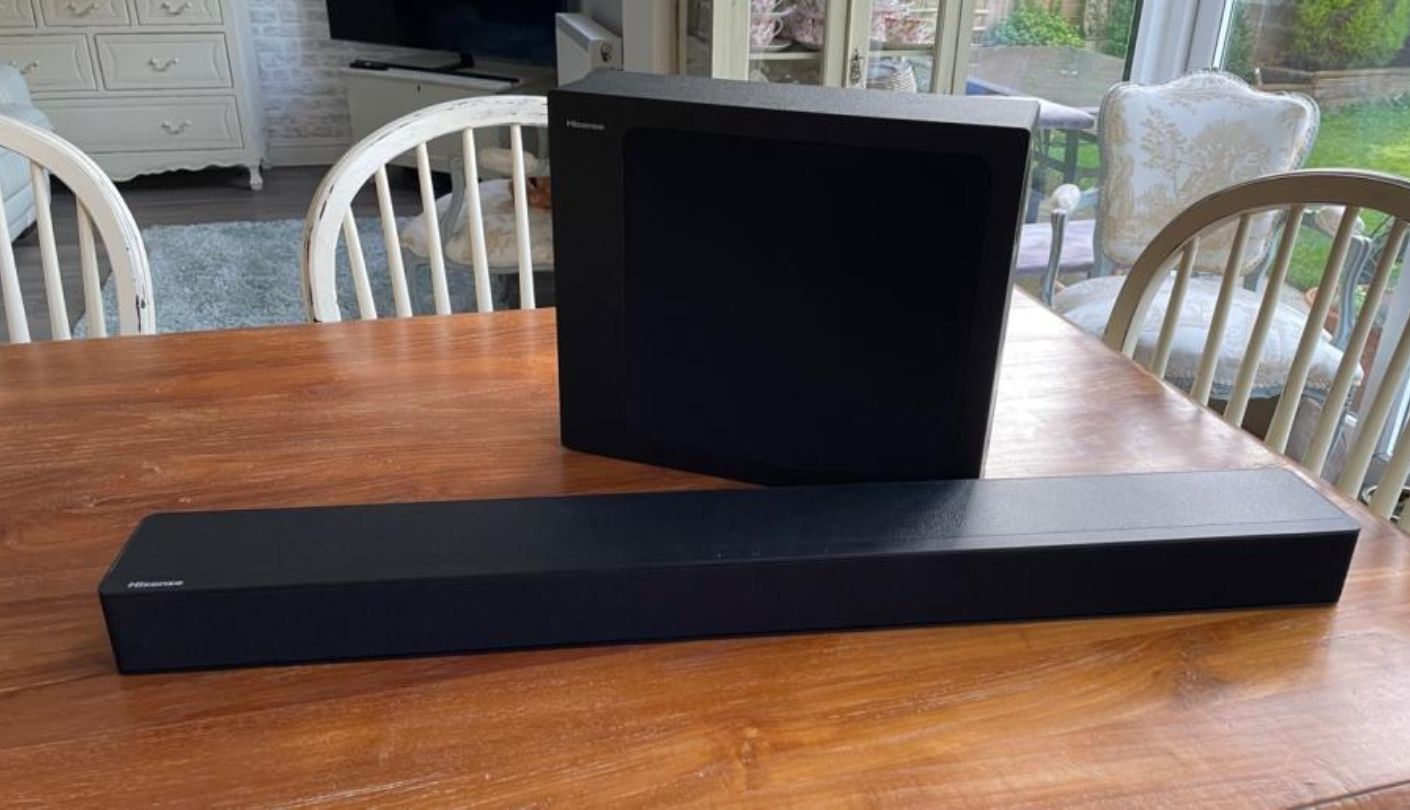
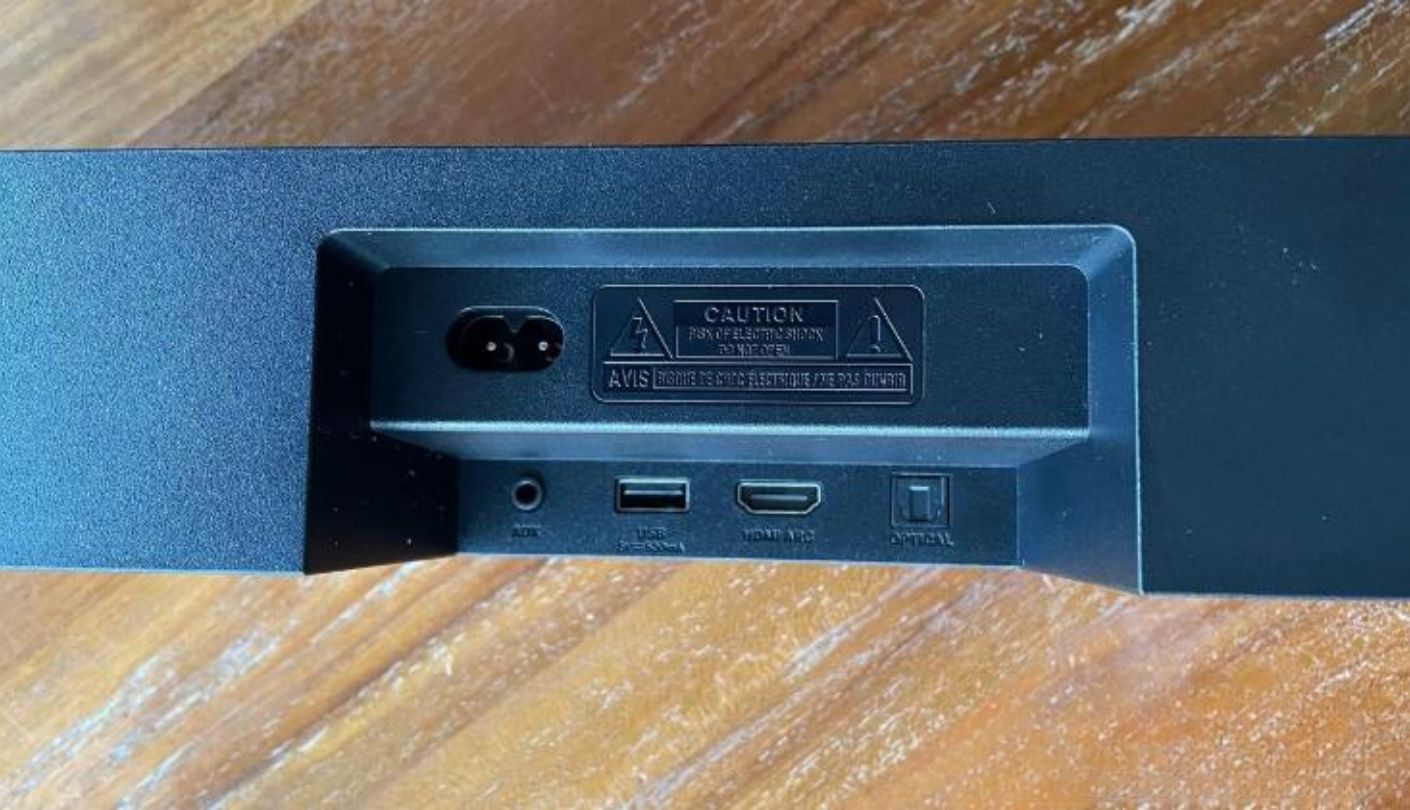
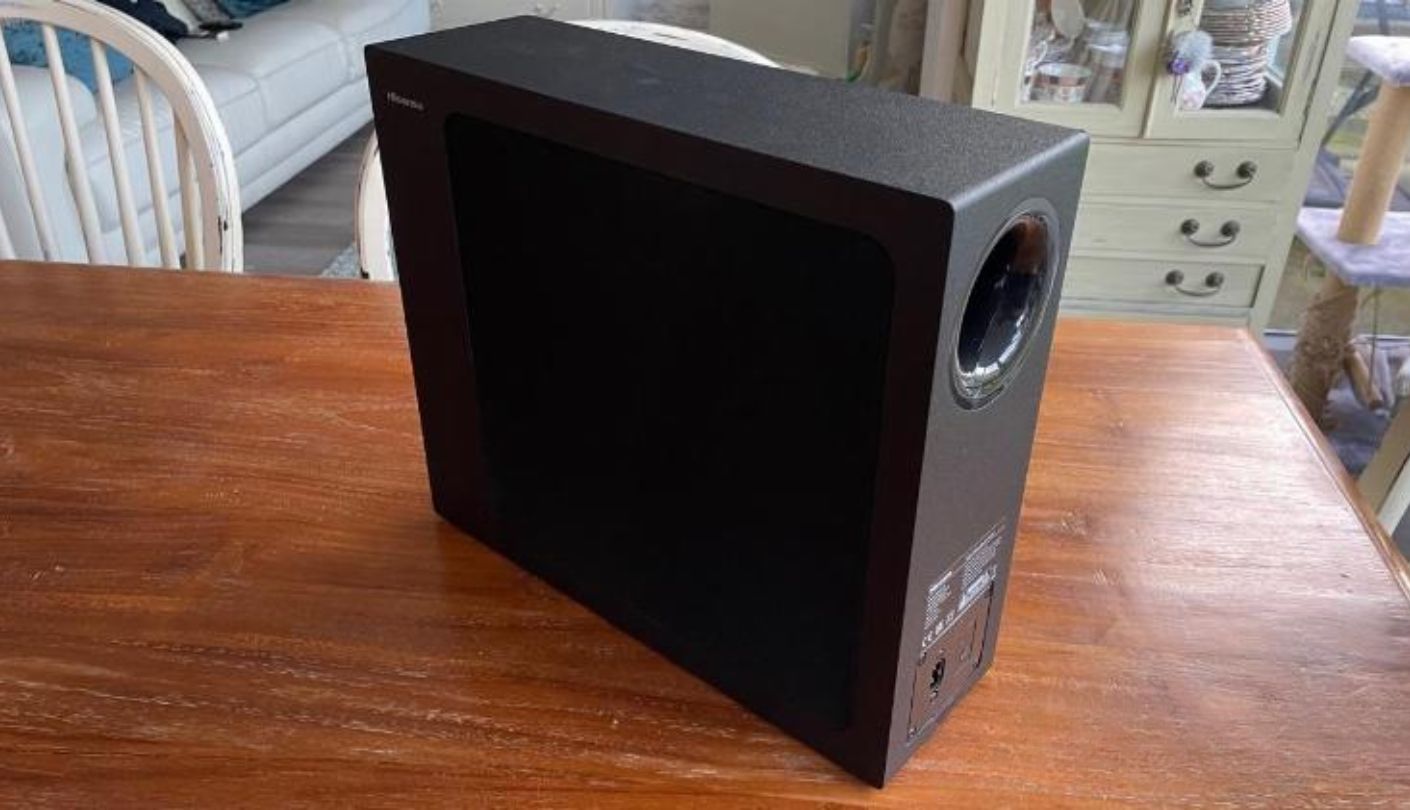
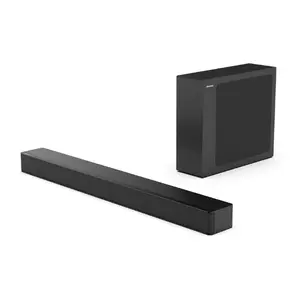
The Hisense HS2100 leads with two numbers: 240W total output and a 120W wireless subwoofer with a five-inch driver. At a price where most competing 2.1 systems either reduce the subwoofer driver to three inches or share amplifier headroom between the bar and the woofer, Hisense has put the majority of its power budget into bass hardware - and the decision is audible from the first action sequence. The five-inch driver extends low-frequency output meaningfully further than the smaller drivers common in this category, and the physical impact in movie explosions, bass-heavy music, and gaming sound effects is something that a two-channel or bass reflex bar in this price range can't replicate.
DTS Virtual:X handles the surround processing across a six-mode EQ preset system - Music, Movie, News, Sports, Gaming, and Night mode. The Gaming preset adjusts frequency response specifically for positional audio cues in games, which I found actually useful rather than decorative: the midrange lift in that mode helps with footstep and environmental sound positioning in shooters and action titles. Bluetooth 5.3 is the version Hisense chose for both the wireless sub connection and phone streaming, and the improved connection stability over older Bluetooth versions is real - the sub doesn't drop during high-LFE content the way some budget subwoofers do on older protocols.
Roku TV Ready certification is a practical inclusion for Hisense's TV customer base: the HS2100 pairs directly with Roku-based televisions through HDMI and responds to the Roku TV remote for volume and power control without additional pairing. EzPlay auto-power matching keeps the soundbar and subwoofer synchronized with TV power cycles on compatible displays - a minor convenience that removes one setup step for users who find multi-device power management irritating. For households already running a Roku TV, the integration is straightforward.
The HS2100 lacks three features that the TCL S55H at a comparable price point carries: Dolby Atmos decoding, app control, and room calibration. DTS Virtual:X is the only surround processing available, and while it handles standard content well, the wider format support and calibration toolset of the S55H will matter to feature-conscious buyers. There's also a voice prompt system that announces the selected input at power-on - a minor annoyance that requires holding the power and volume-up buttons on the unit itself to disable, since the remote doesn't offer a shortcut.
What the HS2100 does, it does without ambiguity: it puts more physical bass into a room at this price than any other bar in this roundup. For buyers upgrading from thin TV speakers and expecting to feel a subwoofer under film scores and action content, the sub performance here outpunches every competing 2.1 bar I've tested in this category. That's the trade-off in clear terms - raw bass output and Roku TV integration over format breadth and calibration tools.
Pros:
- 240W total output
- 120W wireless subwoofer
- DTS Virtual:X processing
- Bluetooth 5.3 stability
- Roku TV Ready certified
Cons:
- No Dolby Atmos
- No app control
Summary: Hisense HS2100 leads on raw output with 240W total and a dedicated 120W wireless subwoofer backed by Bluetooth 5.3 and DTS Virtual:X. The strongest bass performance per dollar in this roundup.
TCL S55H Review
Smart Sound
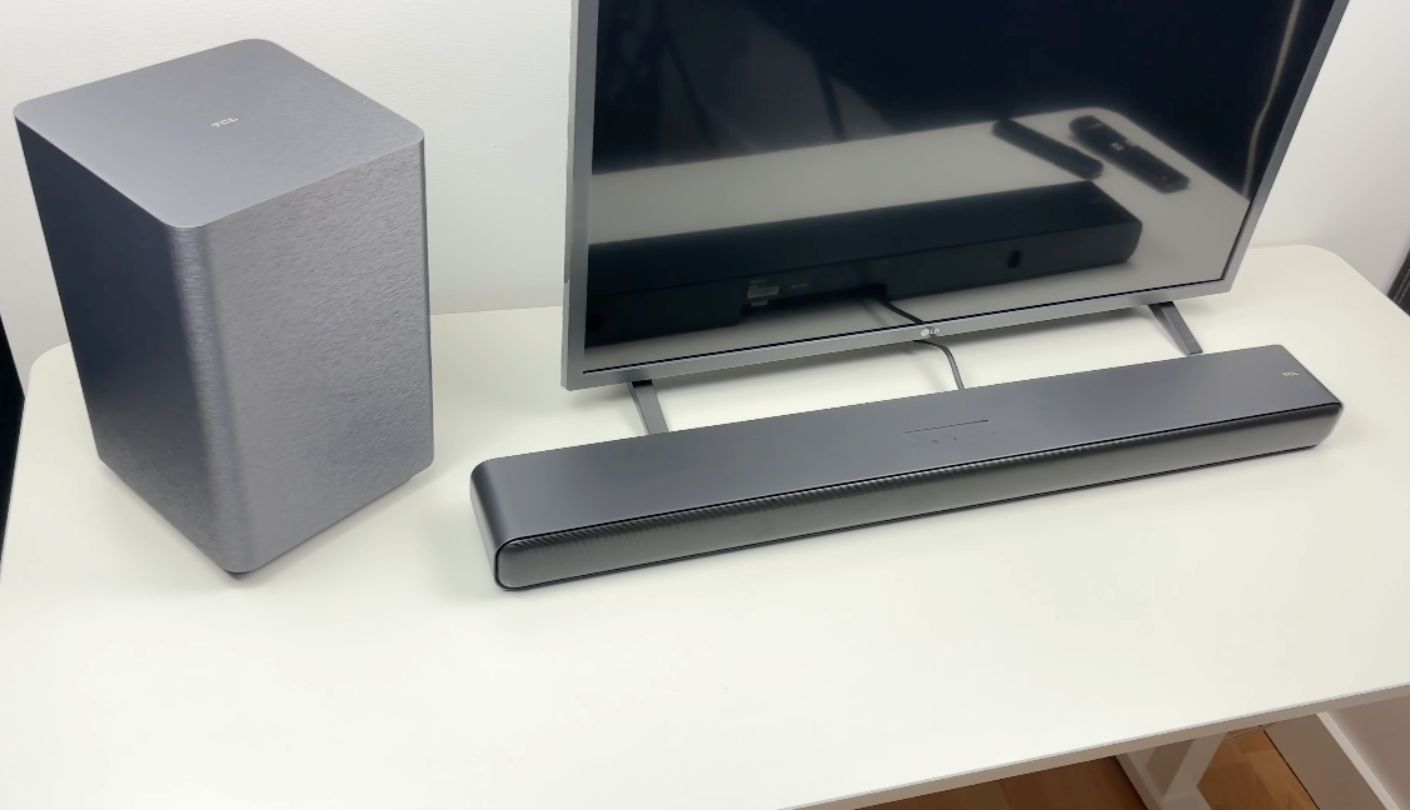
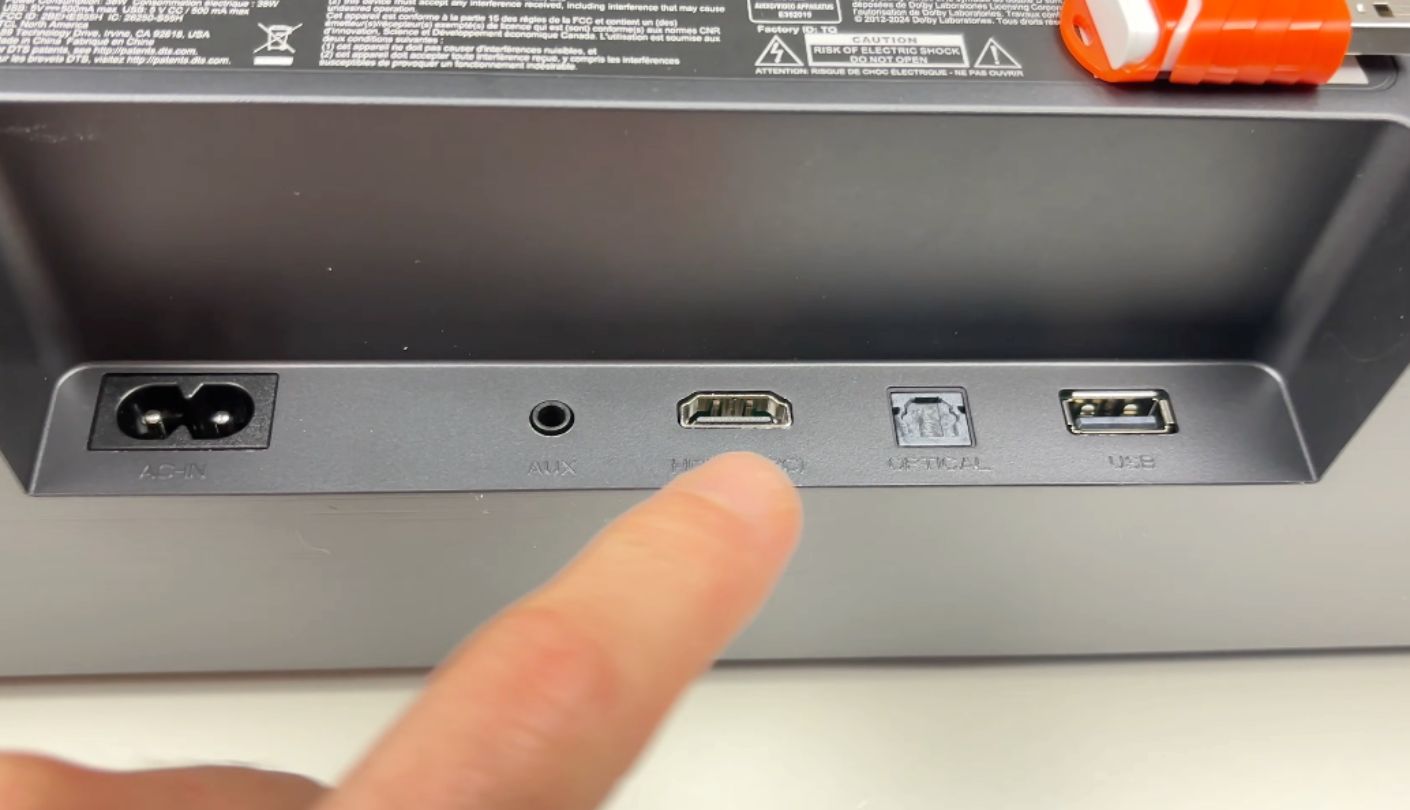
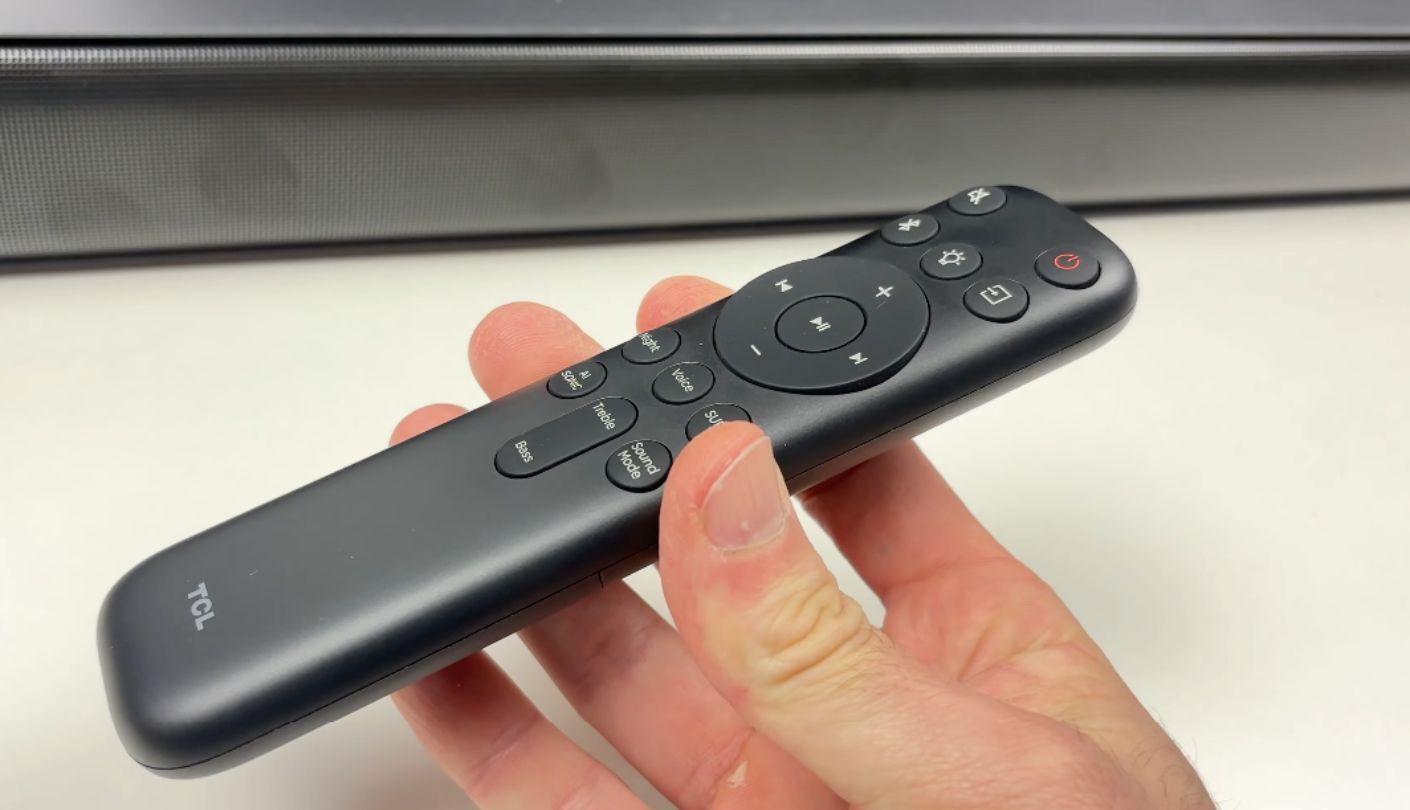
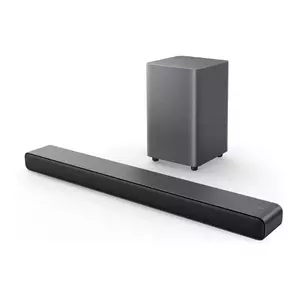
The feature list on the TCL S55H reads like a bar from a price tier above: Dolby Atmos decoding, a wireless subwoofer with a 5.5-inch driver, AI room calibration, HDMI eARC, a 3.5mm AUX input, USB-A local playback, and full app control through TCL's companion app. I've reviewed soundbars at two to three times this price that don't include all of those specifications simultaneously. The question with a bar that packs this many features at this price is always whether execution matches the feature count - and in the S55H's case, the answer is mostly yes, with one area where TCL's cost management is visible.
AI Sonic Adaptation is the feature that earns the most attention in testing, and it functions more or less as advertised. The companion app runs a calibration routine that takes under three minutes and adjusts the bar's frequency output to compensate for the room's acoustic profile. In my testing, calibrated playback in a furnished living room was noticeably more balanced in the upper bass and lower midrange than the default preset - less room-mode buildup around 100-150Hz, which is the range where untreated rooms most often produce uneven coloration. It's not the precision of a full Dirac or Audyssey measurement system, but it's meaningfully better than no calibration.
The 220W total output runs through a 2.1 configuration, with the wireless sub's 5.5-inch driver handling the low-frequency range. TCL's racetrack speaker structure inside the bar reduces standing wave buildup within the cabinet, which produces a cleaner midrange transition than a simple cylindrical driver arrangement. The handoff between the bar and the sub in music playback is smoother than the HS2100's crossover at equivalent bass settings, which matters most in acoustic and jazz content where the crossover frequency sits in an audible range. In film content, both perform at a comparable level.
DTS Virtual:X and Dolby Atmos both decode correctly, and the virtual Atmos processing widens the lateral soundstage more convincingly than on most bars I've tested at this price. The T-Chord technology that TCL includes for direct sync with its own televisions mirrors what Roku TV Ready does for Hisense - unified remote control and sound setting access through the TV menu for TCL TV owners. The AUX input is a rarity at this price and covers turntables, older CD players, and any analog source that HDMI and optical don't handle.
The plastic chassis is the most prominent area where cost management shows. The cabinet feels lighter and less dense than the Sony HT-S100F or Hisense HS2100, and the physical remote lacks the dedicated input-switching shortcuts I'd prefer for day-to-day use. Neither is a disqualifying issue for a bar that will spend its life below a television, but buyers who handle hardware frequently will notice the difference from denser plastic builds. For feature-first buyers who want room calibration, Dolby Atmos, wireless bass, and app control without spending past this price ceiling, the S55H is the only option in this roundup that covers all four.
Pros:
- Dolby Atmos decoding
- AI room calibration
- TCL app full EQ access
- HDMI eARC and AUX input
- 220W with wireless sub
Cons:
- Lightweight plastic chassis
- Basic physical remote
Summary: TCL S55H packs Dolby Atmos, a 5.5" wireless sub, AI room calibration, and full app EQ access into the most feature-complete bar in this roundup. The pick for spec-driven buyers who want room correction at a budget price.
Soundbars Under $200: FAQ
What's the practical difference between a 2.0, 2.1, and 3.1 soundbar?
The number before the decimal point is the count of dedicated speaker channels - two in a 2.0 or 2.1 setup, three in a 3.1. The number after the decimal counts dedicated subwoofer channels. A 2.0 bar handles bass through its own internal drivers, a 2.1 adds a separate woofer for low-frequency reproduction, and a 3.1 adds both a separate woofer and a third front-facing channel dedicated to dialogue. In this roundup, the Amazon Fire TV Soundbar Plus uses a 3.1 configuration with a built-in sub rather than an external unit, which keeps the hardware count to a single bar while providing both center-channel dialogue separation and dedicated bass output.
Does Dolby Atmos matter at this price point?
At under $200, Dolby Atmos means virtual height processing - the bar uses phase steering and signal processing to simulate overhead audio rather than physically bouncing sound off the ceiling with upward-firing drivers. The practical result is a wider lateral soundstage, not genuine three-dimensional height reproduction. Two bars in this group carry Atmos decoding: the Amazon Fire TV Soundbar Plus and TCL S55H. If streaming services are your primary content source and those services send Atmos tracks, the audio is decoded and processed rather than downmixed to stereo. The height layer remains virtual, but the overall spatial impression is wider than a non-Atmos bar at comparable price.
Is a wireless subwoofer reliable in a home environment?
In practice, yes - for most typical home setups. The Hisense HS2100 and TCL S55H both use Bluetooth 5.3 for the sub connection, which maintains a stable link within the range distances typical of living rooms and bedrooms. Interference from other wireless devices or thick concrete walls can disrupt the connection in specific building types, but in standard home construction with the sub and bar in the same room, dropouts are rare. The main variable to watch is placement: a sub placed behind furniture or in a closed cabinet reduces the driver's ability to move air effectively, which softens the bass output regardless of connection quality.
Can these soundbars work with any TV brand?
All five bars here connect via HDMI ARC and optical, which cover the majority of TVs sold in the last decade. HDMI ARC requires your TV to have an ARC-labeled HDMI port - most televisions manufactured after 2012 include at least one. Optical works as a fallback on older sets without ARC. Two bars - the Hisense HS2100 and TCL S55H - include additional compatibility features for specific TV ecosystems: the HS2100 is Roku TV Ready for direct Roku remote pairing, and the TCL S55H uses T-Chord for unified control with TCL TVs. Both work normally on any TV through HDMI or optical regardless of brand.
Which soundbar in this group is best for music listening?
The TCL S55H gives the most control over music playback through its app-based EQ access, and the AI room calibration produces a more balanced frequency response in typical listening rooms than any other bar here. For bass-heavy music where physical sub impact matters, the Hisense HS2100's 120W wireless subwoofer hits harder than the S55H's sub at matched volume settings. The Sony HT-S100F's Music mode is tuned well for acoustic and vocal-focused content - cleaner in the midrange than either 2.1 system, though with the expected bass ceiling of a sub-free design. For music as the primary use case, the S55H's combination of sub output, room calibration, and app EQ makes it the most versatile answer.
What soundbar works best for gaming?
The TCL S55H covers gaming use most directly: HDMI eARC keeps audio sync tight with gaming sources, the app allows specific frequency adjustments for positional audio, and DTS Virtual:X widens the soundstage in a way that helps with directional cues in third-person and first-person games. The Hisense HS2100's dedicated Gaming EQ preset and 240W output with a 5-inch sub driver adds the physical bass impact that makes action-heavy games feel more complete than a sub-free bar can. For audio latency specifically, any of the HDMI ARC/eARC connections in this group keep sync within acceptable limits for single-player gaming.
Is Night mode actually useful or just a marketing label?
Night mode is genuinely useful in practice and not a label layered over the standard preset. It reduces dynamic range compression - the gap between the loudest and quietest sounds in a piece of content - so that quiet dialogue and sudden loud effects sit closer together in volume. I use it consistently for late-hour viewing to avoid jarring volume spikes during action sequences. The Amazon Fire TV Soundbar Plus and Hisense HS2100 both implement Night mode compression effectively. The Roku Streambar SE handles a similar function through its automatic volume leveling that runs continuously without requiring mode selection.
Which soundbar is the best fit for a small bedroom or secondary TV?
The Roku Streambar SE's 24-inch compact form factor makes it the strongest match for smaller TVs and secondary rooms. It scales correctly with displays in the 32 to 50-inch range, adds 4K streaming alongside the audio upgrade, and the two-speaker configuration fills a bedroom or smaller room without exceeding the output ceiling the hardware supports. The Sony HT-S100F is the next best fit for compact spaces - the sub-free profile keeps the physical footprint to a single bar and the dialogue clarity holds at lower volumes where bedroom viewing typically sits. For rooms where a separate wireless subwoofer would end up closer than five or six feet from the listening position, a 2.0 configuration often produces more even bass response than a sub placed at close range.
Choosing the Right Soundbar
Most buyers replacing TV speakers for the first time are best served by the Amazon Fire TV Soundbar Plus - the integrated 3.1 design answers the subwoofer question and the center-channel question simultaneously, with a single HDMI cable and no second unit to place. The Sony HT-S100F is the bar I reach for in compact rooms and quieter use cases - dialogue precision at a price that's hard to argue with when a sub isn't needed.
Room size and primary use pattern define the remaining three choices cleanly. The Roku Streambar SE belongs in spaces where a secondary TV needs both a streaming platform and an audio upgrade at once - the compact 2-in-1 format fits bedrooms and dorm setups where managing two separate devices isn't worth the effort. The Hisense HS2100 is for anyone who has spent enough evenings watching action content through inadequate bass hardware and knows a dedicated sub is the one upgrade they actually want - 240W with a wireless woofer changes how films physically feel. The TCL S55H is built for spec-driven buyers: Dolby Atmos, AI room calibration, app EQ, AUX input, and a wireless sub together under this price ceiling is a combination that simply doesn't exist elsewhere at this budget.

Meet James, our go-to tech guru and seasoned reviewer. His sharp attention to detail and love for gadgets drive his deep dives into the newest tech waves. James's insightful analysis and real zest for breakthroughs have earned him a solid reputation in the tech world.


