Solidion's Gen-ECB battery is built for space — graphene cooling, −80°C operation

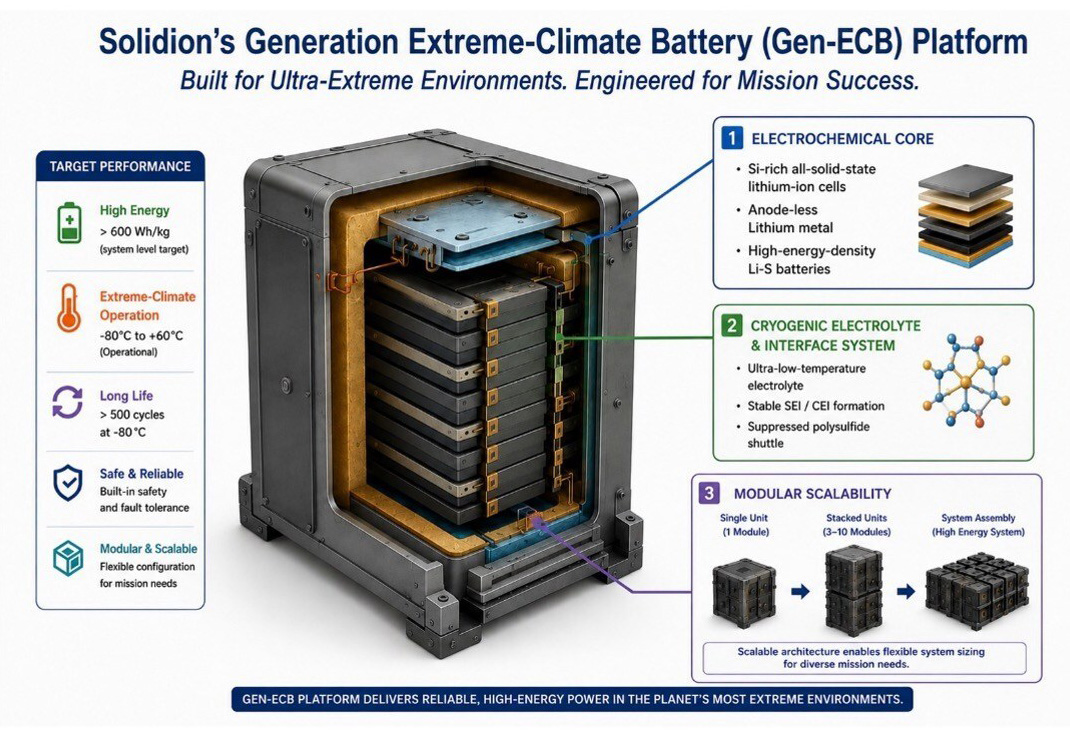
A US battery startup called Solidion Technology has unveiled a new platform designed specifically for space — a place where ordinary lithium-ion cells fail within minutes. The Gen-ECB (Generation Extreme-Climate Battery) uses graphene-based thermal regulation to stay operational between −80°C and +60°C, a range that covers the brutal temperature swings on the lunar surface and in low Earth orbit. For context, most consumer-grade batteries start losing capacity at around −20°C.
The hardware
Solidion, headquartered in Dallas with pilot production in Dayton, Ohio, combines lithium-metal cells with graphene materials that manage heat without added weight. Graphene's unusually high thermal conductivity lets the battery shed excess heat under direct sunlight and retain charge in deep shadow — the two extremes any orbiting or lunar-surface system faces constantly. The company says the cells have completed more than 500 charge-discharge cycles at −40°C without significant degradation.
The energy density target is 380+ Wh/kg, achieved through silicon-rich anodes paired with lithium-sulfur chemistry and non-flammable solid electrolytes. That figure matters enormously in space, where launch costs mean every gram of battery weight has a dollar value attached to it. Solidion holds more than 385 patents covering the platform, per the PRNewswire official announcement.
The market angle
Solidion is targeting four main applications: satellites, crewed spacecraft, LEO-based AI data centers, and lunar infrastructure tied to NASA's Artemis program. The LEO data center pitch is the most novel — processing data in orbit rather than on the ground cuts latency for certain applications, but it needs compact, reliable power that can survive launch vibration and vacuum exposure.
The announcement landed hard on Wall Street. Solidion's NASDAQ-listed stock (ticker: STI) surged 217% in premarket trading on June 4, 2026, and climbed more than 300% intraday, according to StockTitan market analysis. The move reflects how quickly investors price in the space-plus-AI narrative right now.
What's still unclear
Solidion has not announced pricing, commercial availability dates, or supply agreements with NASA, SpaceX, or any other operator. The company competes in a field that includes established aerospace suppliers with decades of flight heritage. Gen-ECB is still at the pilot production stage, so the gap between a compelling spec sheet and a battery flying on a real mission remains wide. Worth watching, but not a done deal.


