Samsung's 40,000-nit micro-OLED could power the next wave of AR glasses

Samsung just demonstrated a micro-display so bright it could make outdoor AR actually usable. At AWE USA 2026 in Long Beach, Samsung Display showed a 1.3-inch RGB OLEDoS (OLED on Silicon) panel hitting 40,000 nits peak brightness — roughly eight times the output of the Apple Vision Pro's display. The gap between AR headsets being indoor-only curiosities and genuinely wearable all-day devices is largely a brightness problem, and this is a serious attempt to close it.
The tech
RGB OLEDoS skips the white-OLED-plus-color-filter approach used in most micro-displays today. Each pixel emits its own color directly, which means less light is wasted and the panel runs more efficiently. Samsung says that translates to longer battery life and a longer-lived panel — both critical for wearables that need to stay light and thin.
Samsung staged a "Big Dipper" installation at the show: seven panels arranged as the constellation in a dark room, with only two being the new high-brightness panels. The difference in punch and color saturation was visible immediately.
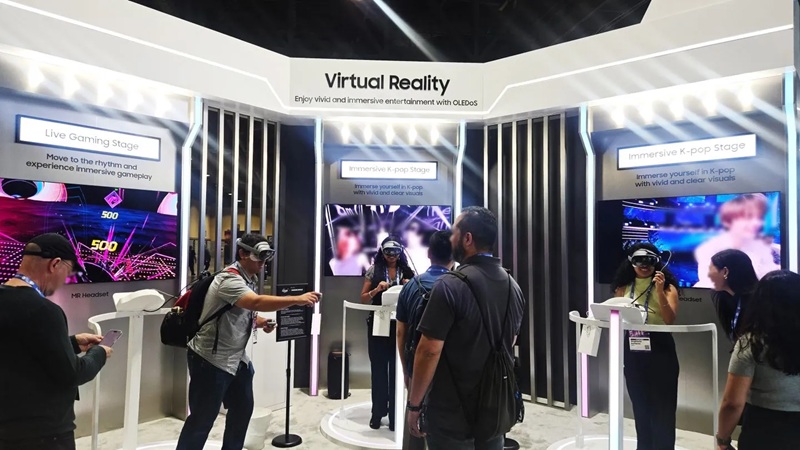
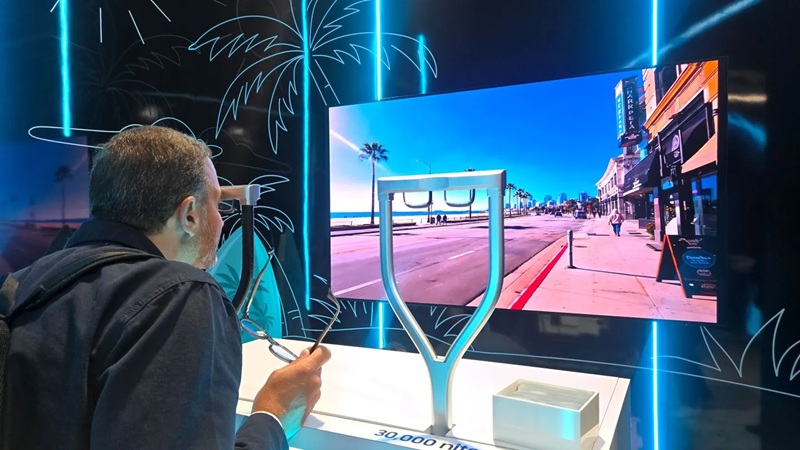

Alongside the headline 1.3-inch unit, Samsung showed a smaller 0.62-inch variant at 30,000 nits built into a working AR glasses prototype. The demo ran real-time translation, navigation, and weather overlays — though Next Reality notes the prototype was fixed to a table, not something attendees could actually wear.
The brightness jump is steep: Samsung showed a 15,000-nit version of the same technology at CES in January 2026. Getting to 40,000 nits in six months suggests the roadmap is moving fast.
Where this fits
Samsung acquired US micro-display maker eMagin in 2023 specifically to build RGB OLEDoS in-house, per Next Reality — this is a supply-chain play, not just a lab demo. The company is reportedly pitching panels to Microsoft for its XR hardware and potentially to Apple. Samsung's own Android XR smart glasses, developed with Google, are expected sometime in Fall 2026, per MegaMobileContent.
Competitors are moving too. Meta, Pico, and Microsoft all have XR hardware in the pipeline. Qualcomm announced its Snapdragon Reality Elite chip at the same AWE event, designed for next-generation glasses.
No price, no date
Samsung hasn't named a commercial launch timeline or a retail price for any device using this panel. Apple Vision Pro sets the current premium benchmark at $3,500, and anything with comparable display tech is unlikely to be cheaper. For now, 40,000 nits is a proof of capability — impressive, but not yet something you can buy.


