Gulfstream flew a G700 on 100% sustainable fuel — and the contrails shrank by 56%

Gulfstream has completed a high-altitude flight campaign using its G700 business jet running on 100% sustainable aviation fuel (SAF), and the results go well beyond a green PR exercise. Testing at up to 50,000 feet found a 56% reduction in contrail ice crystals and an estimated 26% drop in the warming impact those contrails produce — numbers that could reshape how regulators think about aviation's climate footprint.
The test
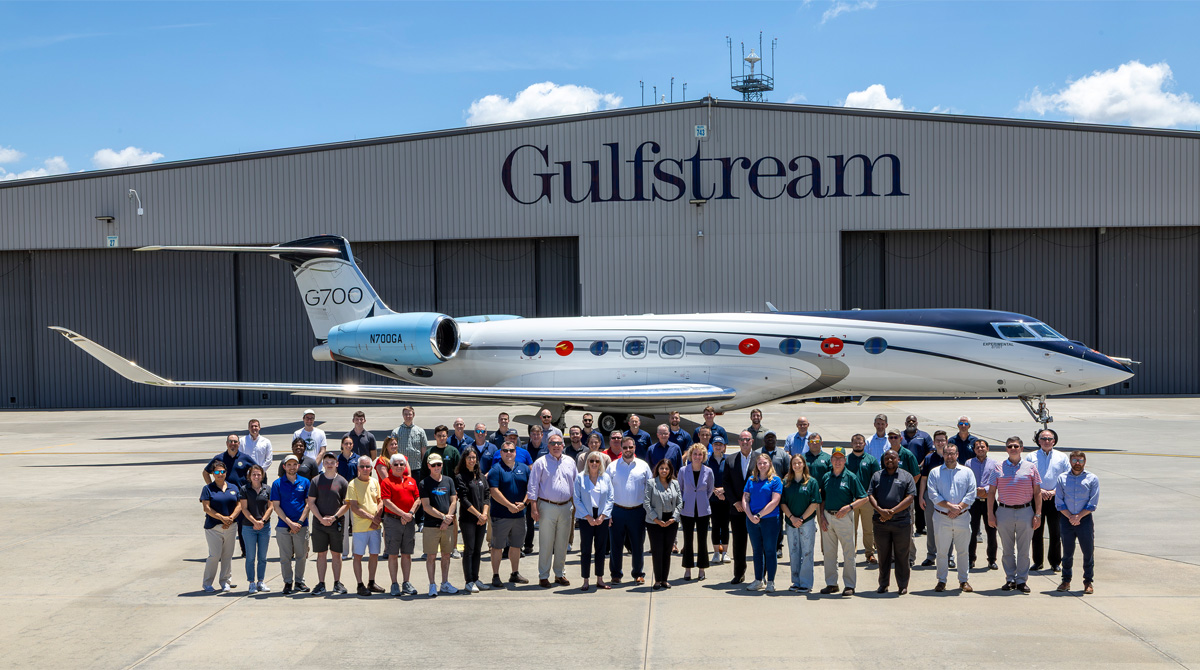
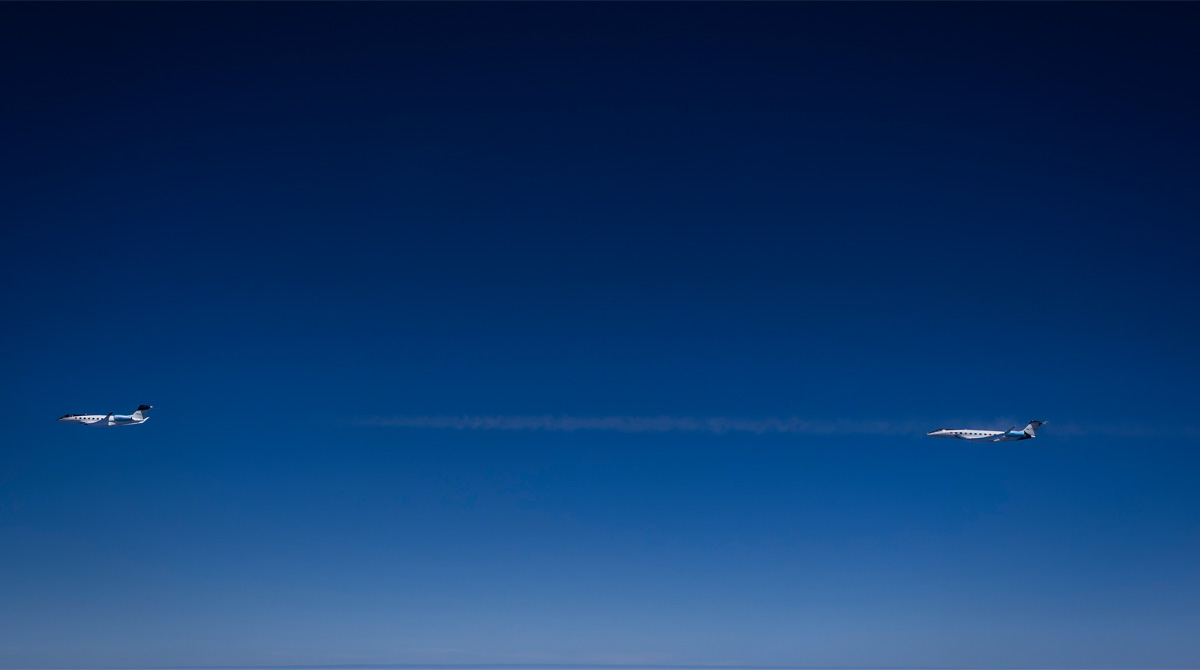
The G700, fitted with Rolls-Royce Pearl 700 engines, was converted into a flying emissions laboratory. Sensors replaced the usual cabin fittings. A second aircraft — a G800 — flew directly behind to sample exhaust gases in real time, close enough to measure what was coming out of the engines seconds after combustion. Pilots needed specialist formation-flying training to hold that gap at cruise altitude.

The fuel used was HEFA SAF — hydroprocessed esters and fatty acids, derived from recycled plant oils and animal fats. Unlike conventional jet fuel, HEFA contains no sulfur or aromatic compounds. Those two ingredients are the main drivers of soot particles, which act as nuclei around which ice crystals form in contrails. Fewer soot particles means fewer, thinner contrails — and less heat trapped in the upper atmosphere.
Why contrails matter
Contrails — the white streaks left by aircraft — are responsible for roughly as much atmospheric warming as aviation's entire CO2 output, possibly more. The science carries a large uncertainty margin, but the direction is clear: tackling contrails could be as important as cutting carbon emissions. Aviation Week confirms the 56% ice crystal reduction and 26% warming reduction figures from this campaign.
Partners on the project included the FAA, NASA, Germany's DLR aerospace research center, Missouri University of Science and Technology, Aerodyne Research, Montana Renewables, and Rolls-Royce. Data will feed into climate models and inform future US fuel standards and operational guidance for business aviation operators — a sector that faces growing scrutiny over its environmental record.
The cost problem
The catch is price. SAF currently costs three to ten times more than conventional jet fuel in Europe and the US. That gap limits adoption largely to operators with the budgets to absorb it — exactly the ultra-high-net-worth segment that already flies on Gulfstreams. FlightGlobal notes that while the formation-flight methodology and data quality are strong, scaling SAF use across the broader aviation industry remains a supply and affordability challenge.
For now, the research value is real regardless of who's paying for the fuel. If regulators start factoring contrail reduction into climate compliance frameworks — rather than focusing solely on CO2 — then 100% SAF flights like this one move from a luxury demonstration to a credible policy lever.


