At gagadget.com, your trust is our priority. We follow strict quality standards in our research, tests, and analysis of video projectors, to give you the best experience. Learn more
Best Projector for a Lighted Room? Why I Picked the ViewSonic LS740HD
Daylight through an uncovered window puts several thousand lux on a wall. No projector built for a classroom or a living room competes with that head-on, which is why so much projector advice collapses the moment you stop pretending the room can be darkened. Every projector also reaches its headline lumen figure in a mode nobody wants to look at, so the number I care about for a lit room is what the brightest usable mode measures once the yellow-green cast is gone.
I ran the ViewSonic LS740HD for three weeks in the worst room I own for this - two south-facing windows, thin curtains, pale walls that bounce light back at the screen. Slide decks at midday, a Saturday of football with the blinds open, films after dark. It held a readable 100-inch image through the middle of the day in the mode I wanted to use rather than the one I was forced into, which is more than the last projector in that room managed. Here is where it earned its place, where it fell short, and how it lines up against the two rivals most people shortlist alongside it.
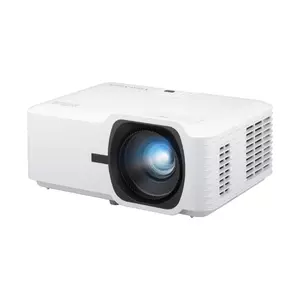
If you're in a hurry, here's my quick take: the ViewSonic LS740HD is a seriously bright 1080p laser projector built more for reliability and everyday use than fancy extras. It’s rated at 5,000 ANSI lumens and measured 4,783 in testing, with a laser light source rated for up to 30,000 hours, an IP6X-sealed optical engine, and support for 24/7 operation.
The specs that matter most in real use are a little more practical. In Presentation mode, brightness drops to 3,861 lumens, which is still plenty for a room with the lights on. Its 1.13–1.47:1 throw ratio means you’ll need roughly 2.5 to 3.3 metres of distance for a 100-inch image. Input lag sits at 49.5 ms across every picture mode, so gaming is fine for casual use, but this isn’t really a competitive gaming projector.
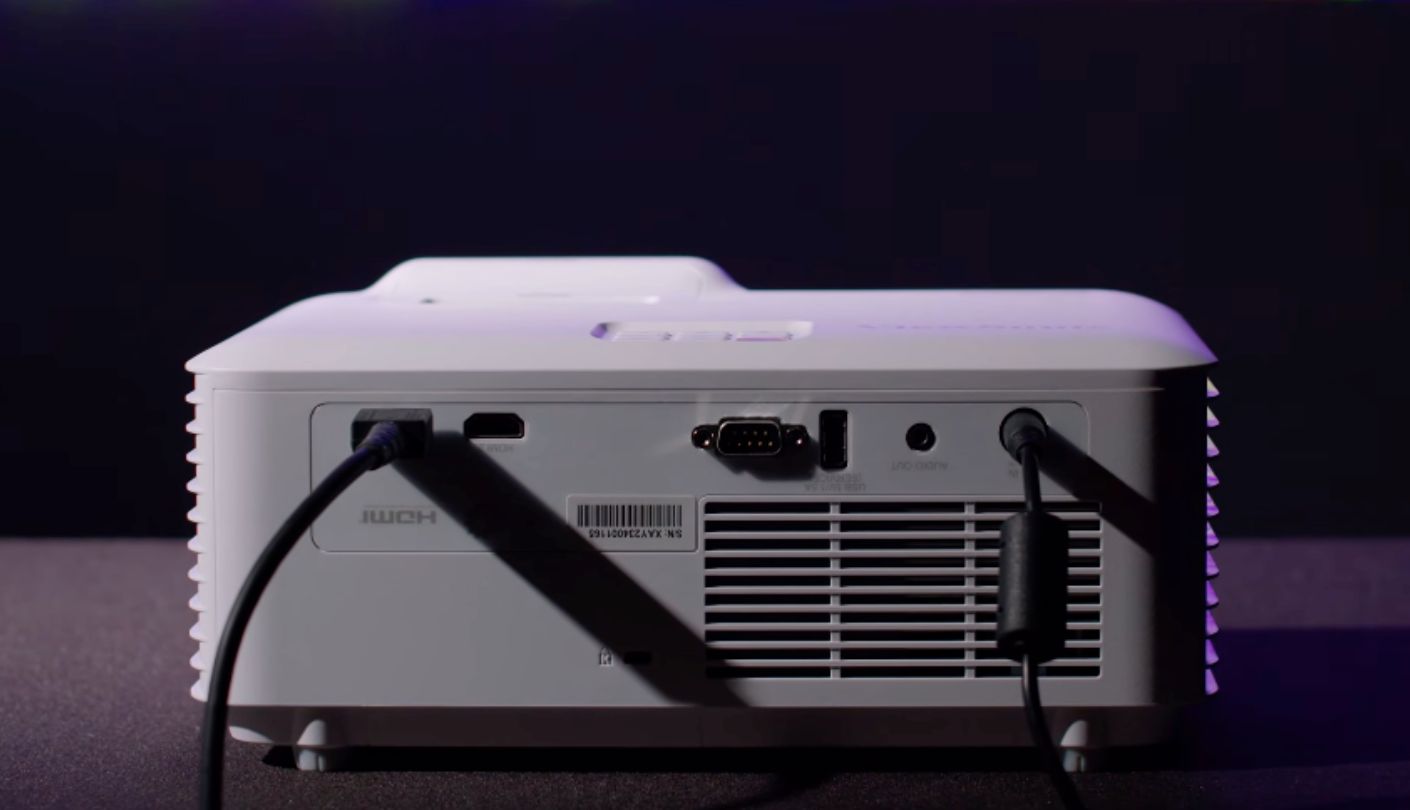
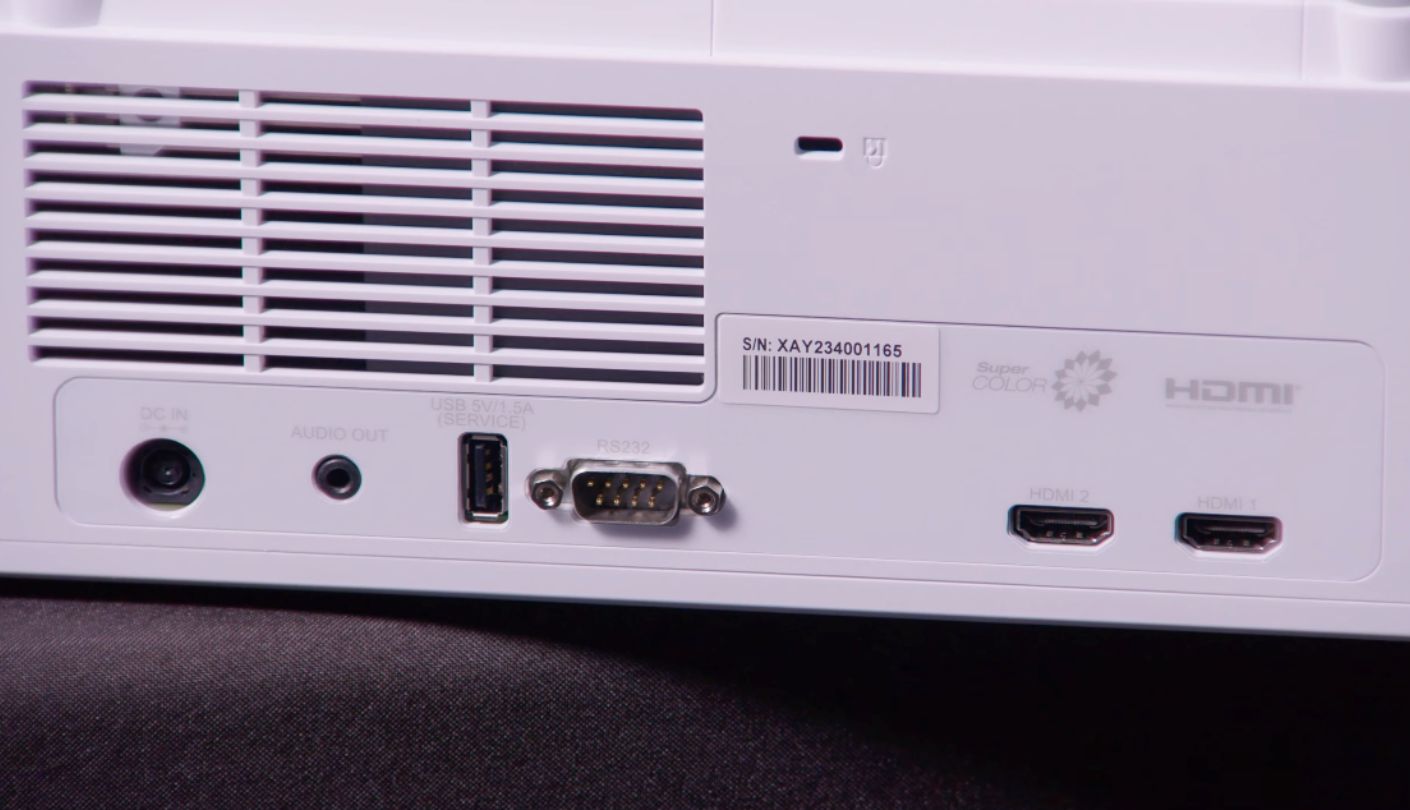
Connections are pretty basic: two HDMI 1.4 ports, USB-A and RS-232. There’s no built-in wireless casting and no lens shift, so placement takes a little more planning.
If your main goal is a big, bright image in a room that doesn’t get completely dark, and you’re planning to mount the projector once and leave it there, the LS740HD makes a lot of sense. It can keep a 100-inch picture looking clear in daylight, and the laser light source means you won’t be dealing with lamp replacements for years.
On the other hand, if you care about wireless streaming, very low gaming latency, decent built-in sound, or deeper integration with a managed AV setup, those limitations are worth paying attention to before buying.
We may earn a small commission if you buy via our links - it helps keep gagadget.com running.
5 Reasons to Buy the ViewSonic LS740HD:
- Measured 4,783 ANSI lumens against a 5,000 claim, inside the ISO tolerance with room to spare
- Laser phosphor light source rated to 30,000 hours in SuperEco with no lamp to replace
- IP6X sealed light engine and a 24/7 duty rating for installs that never switch off
- 1.3x optical zoom, H/V keystone and 4-corner correction cover awkward mounting positions
- 6.6 lb and small enough to move between rooms without a second pair of hands
2 Reasons to Consider Alternatives:
- HDMI 1.4 inputs and no built-in wireless - casting needs a dongle on the USB port
- 49.5 ms input lag rules it out for competitive gaming, including in Gaming mode
Table of Contents:
- ViewSonic LS740HD: Full Specifications
- What 5,000 Lumens Buys You in a Bright Room
- Throw, Zoom and Getting It on the Wall
- Colour Modes and Picture Quality
- Running It All Day: Noise, Heat and Dust
- Connections, Control and Sound
- LS740HD vs Epson Pro EX11000 vs Optoma ZH450
- LS740HD: What Owners Say
ViewSonic LS740HD: Full Specifications
The full sheet, with measured figures beside the claimed ones where they exist:
| Specification | Details |
| Imaging System | Single-chip 0.65" DLP, 3rd-gen laser phosphor |
| Native Resolution | 1920 x 1080 (Full HD) |
| Rated Brightness | 5,000 ANSI lumens (5,500 center lumens) |
| Measured Brightness | 4,783 ANSI lumens, Bright mode |
| Brightness Uniformity | 67% measured |
| Contrast Ratio | 3,000,000:1 dynamic |
| Light Source Life | 20,000 hours Normal, 30,000 hours SuperEco |
| Throw Ratio | 1.13 - 1.47:1 |
| Optical Zoom | 1.3x manual, with manual focus |
| Digital Zoom | 0.8x - 2.0x |
| Lens Shift | None |
| Image Size | 30" to 300" (100" at 2.5 m) |
| Geometry Correction | H/V keystone ±30°, 4-corner adjustment |
| Orientation | 360° projection and portrait mode |
| Colour Modes | Bright, Presentation, Cinema, Gaming, User |
| Input Lag | 49.5 ms at 1080p60, all modes |
| Fan Noise | 30 dB Normal, 24 dB Eco rated (33.0 / 31.1 dBA measured) |
| Speaker | 15 W mono |
| Inputs | 2 x HDMI 1.4 (HDCP 1.4), USB-A 5V/1.5A, RS-232, 3.5 mm audio out |
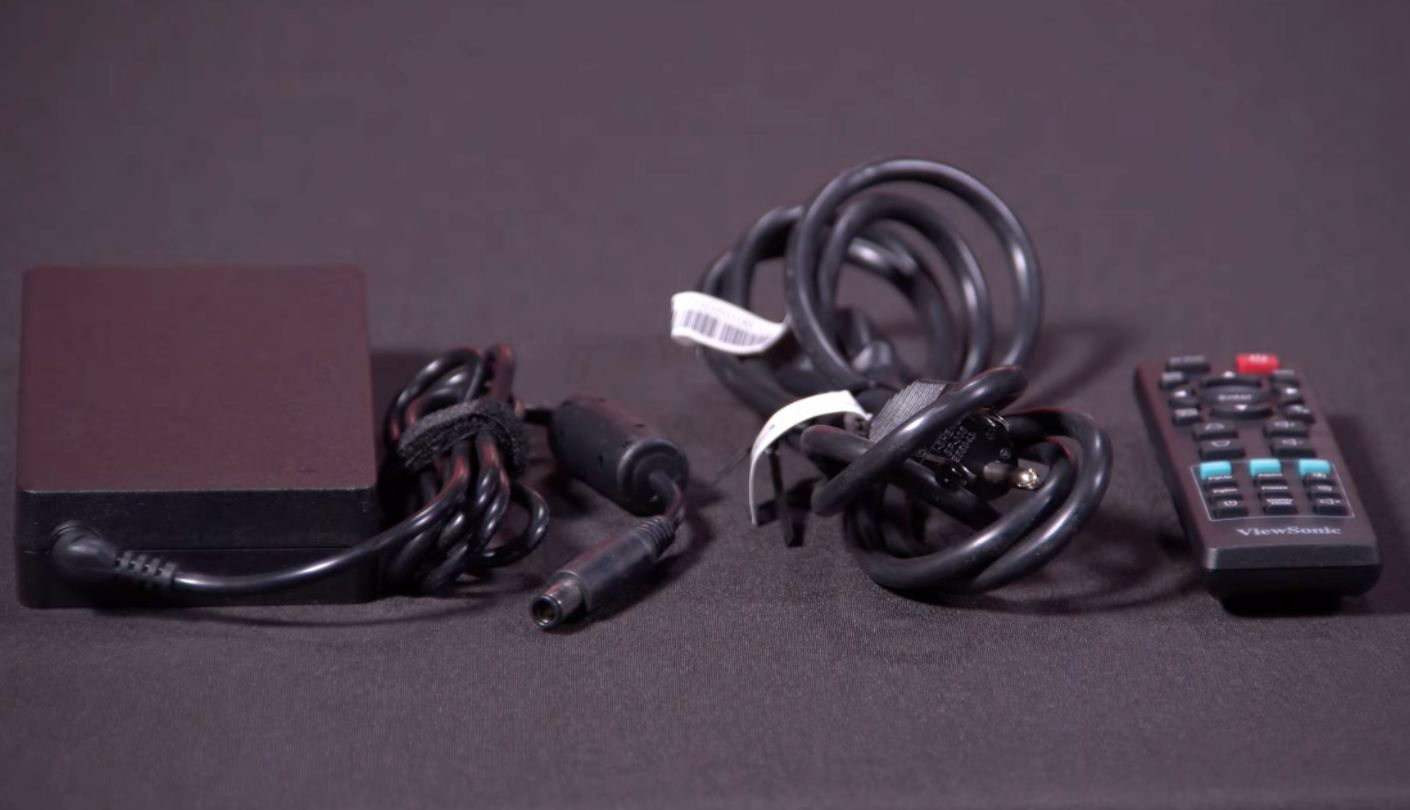
| Power Supply | External brick, proprietary connector |
| Light Engine Sealing | IP6X dust resistant, no air filters |
| Duty Cycle | Rated for 24/7 operation |
| Dimensions | 11.3 x 5.0 x 8.5 in (WHD) |
| Weight | 6.6 lb |
| Warranty | 3 years parts and labour, 1 year light source (Americas) |
Two rows decide whether this projector suits you, and I would read them before the rest. Measured brightness tells you what lands on the wall. Input lag tells you what the projector cannot do.
What 5,000 Lumens Buys You in a Bright Room
Three brightness figures follow this projector around, and all three come from ViewSonic. The Amazon listing says 5,500 lumens. The global spec sheet says 5,000 ANSI lumens and parks 5,500 in a separate row labelled center lumens. Independent measurement of a review unit came back at 4,783. Nobody is inventing numbers in any of those three places.
The explanation is the measurement standard, because the whole category trades on the confusion. An ANSI figure comes from nine readings taken across a white field and averaged. A center-lumens figure comes from the brightest point in the middle of the image. Since no projector puts out even light corner to corner, the center number always flatters the product. ViewSonic publishes both, which is more transparency than most brands offer, and the US listing quotes the flattering one. The lumen itself is a fixed SI unit, so the argument is never about the unit and always about where the meter was pointed.
Against that background, 4,783 measured against a 5,000 claim is a good result. It clears the ISO tolerance comfortably and puts the LS740HD near the top of what you can get at this size and weight. In my room with both windows uncovered, a 100-inch image stayed readable through the middle of the day in Presentation mode, which measures 3,861 lumens rather than the headline figure.
Ask which mode a lumen figure was measured in before you compare two projectors. A number taken from a setting you will never use tells you nothing about the picture you have to live with.
Bright mode exists for emergencies and looks it, which is why Presentation became the figure I judged this projector on. Roughly 3,900 lumens with clean whites will beat 4,800 lumens with a green tint in any room you have to share with other people.
Ignore the 3,000,000:1 contrast figure entirely. That is a dynamic number produced by dimming the laser on dark frames, and in a lit room the ambient light sets your black level regardless. Uniformity is the more useful measurement, and at 67% it shows as slightly dimmer corners on a full white slide. I looked for it deliberately and found it, then stopped noticing within the first hour.
Two things close the gap between the projector and the picture you end up with. Foot-lamberts rather than lumens describe what reaches your eye, and they equal lumens divided by screen area in square feet. Presentation mode at 3,861 lumens clears 50 fL out to roughly 150 inches, which is more wall than most rooms have. Past that point an ambient light rejecting screen will do more for a lit room than extra lumens, because a grey ALR surface turns away off-axis light instead of bouncing it back into the image.
Throw, Zoom and Getting It on the Wall
The throw ratio runs 1.13 to 1.47:1, putting a 100-inch image between roughly 2.5 and 3.3 metres from the screen. That is a tight window next to rivals carrying 1.6x zoom, and it is the first thing to check against your room. I measured my wall twice before ordering a mount, and the short end of that range is what made a ceiling position work at all.
Once the distance is settled, four tools square the image up:
- Horizontal keystone, ±30 degrees
- Vertical keystone, ±30 degrees
- 4-corner adjustment for walls that sit off-square to the lens
- Digital zoom from 0.8x to 2.0x, picking up where the optical range stops
What the list lacks is lens shift, and that absence shapes the whole installation. Height gets set by physically positioning the projector rather than by moving the image, so the bracket goes where geometry demands. One owner found the optical zoom would not shrink the picture enough for their screen and closed the gap with digital zoom, which works and costs a little sharpness.
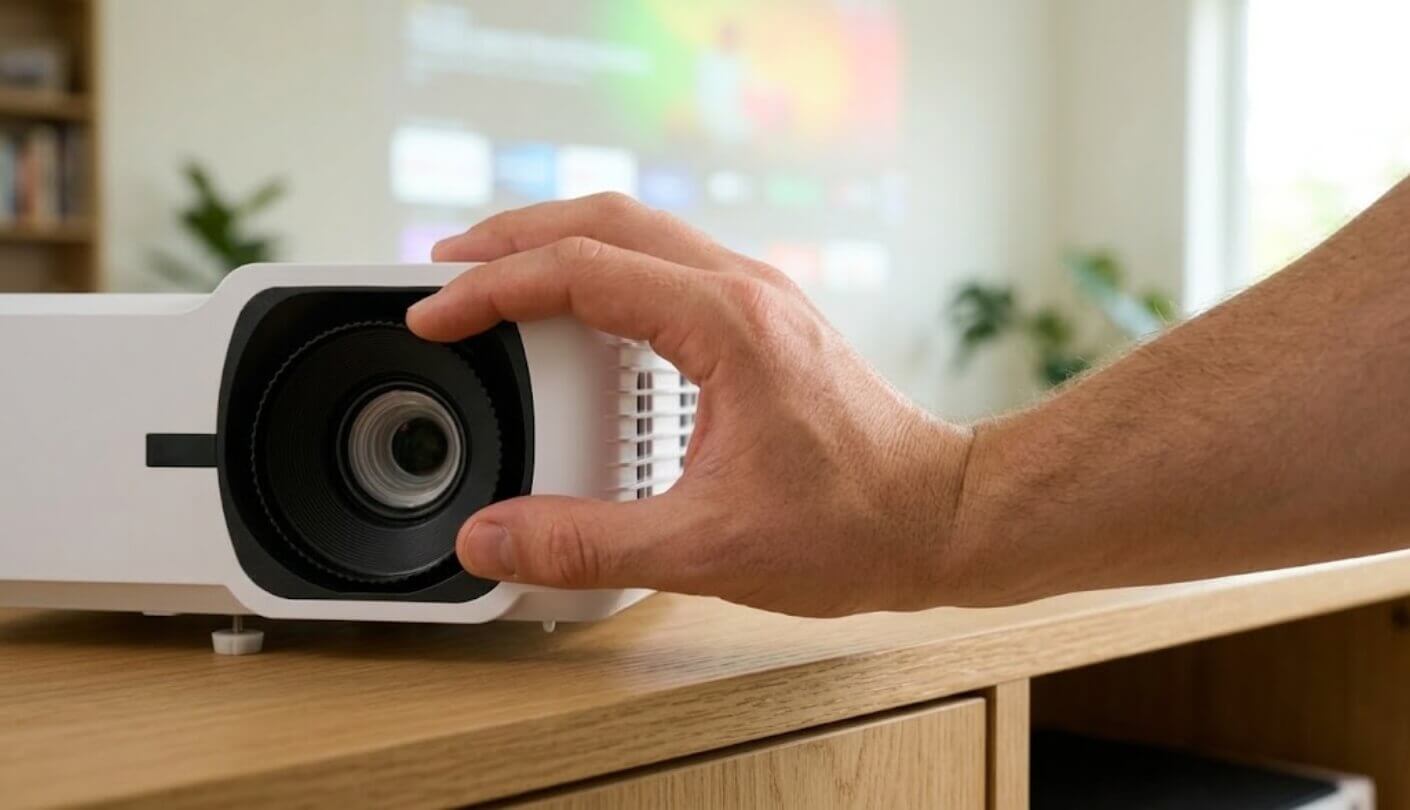
Zoom and focus are manual rings, one recessed into the top panel and one around the lens barrel. No motors, no lens memory. For a projector installed once and left alone, that is the right call and one less thing to fail.
Colour Modes and Picture Quality
Five modes ship on the unit, and nearly 1,500 lumens separate the brightest from the dimmest. The mode you settle on matters as much as the projector you bought:
| Mode | Measured ANSI Lumens | What It Is For |
| Bright | 4,783 | Emergency output when the room defeats everything else. Carries a yellow-green cast that turns reds muddy |
| Presentation | 3,861 | Daylight slide decks and charts. Clean whites, vibrant colour, less separation between adjacent yellows and greens |
| Cinema | 3,476 | The most accurate of the five. Film and video after dark, and brand material where hue precision matters |
| Gaming | 3,328 | Softer, more pastel rendering. Changes the look rather than the 49.5 ms input lag, which stays fixed |
| User | 3,985 | Starts as a copy of Presentation and unlocks colour management for hue, saturation and gain |
My working pattern settled fast: Presentation for text and charts during daylight, Cinema after dark. Skin tones in Cinema looked natural rather than pushed, and facial detail at 100 inches held up better than I expected from a 1080p chip. Black levels are respectable for a commercial projector and nowhere near a dedicated home theatre model, which is the honest position for hardware built to fight ambient light.
One caution for anyone presenting brand material. Presentation mode is vibrant enough to compress the difference between adjacent shades of yellow and green. If your deck leans on those colours, Cinema holds the separation better even though it costs a few hundred lumens.
Running It All Day: Noise, Heat and Dust
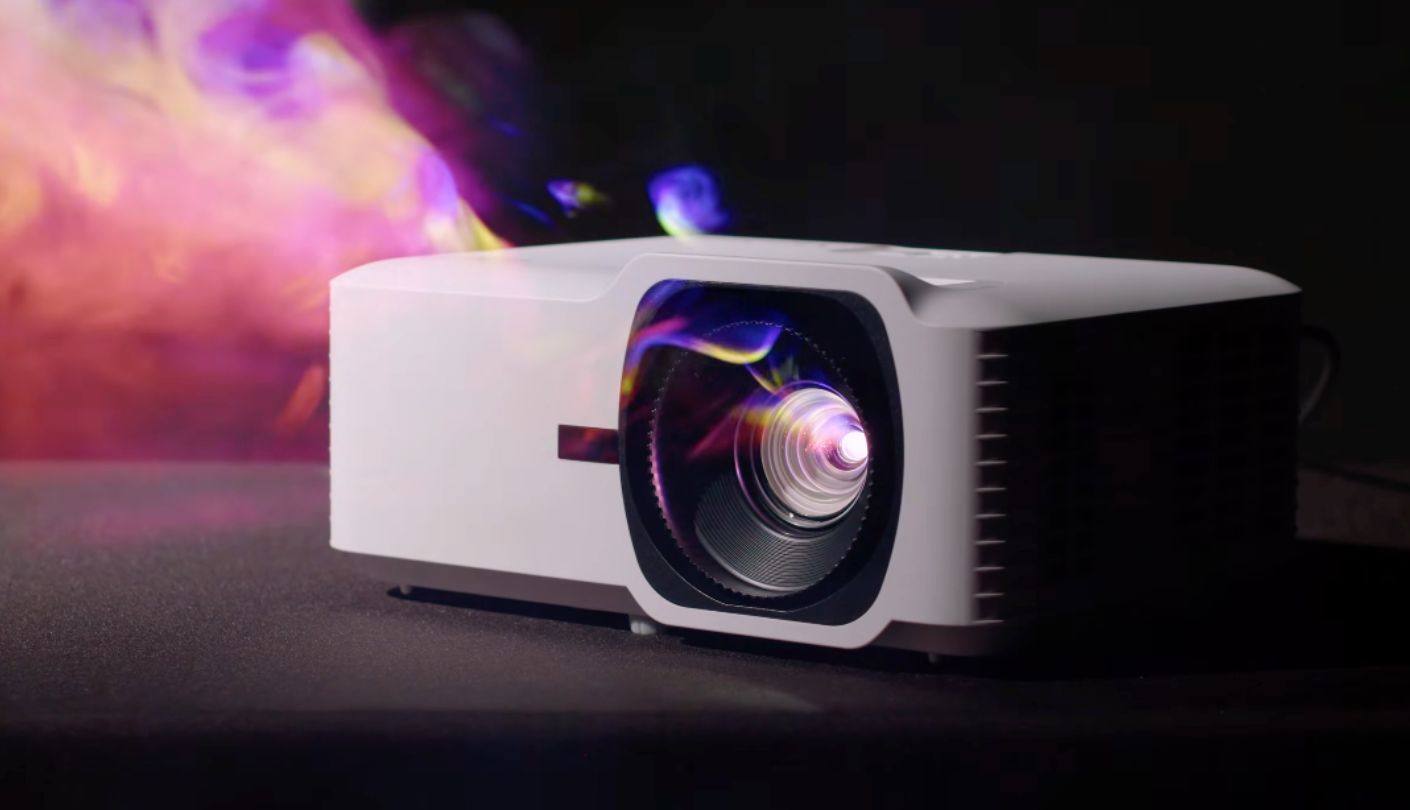
Image of the ViewSonic LS740HD. Source: ViewSonic
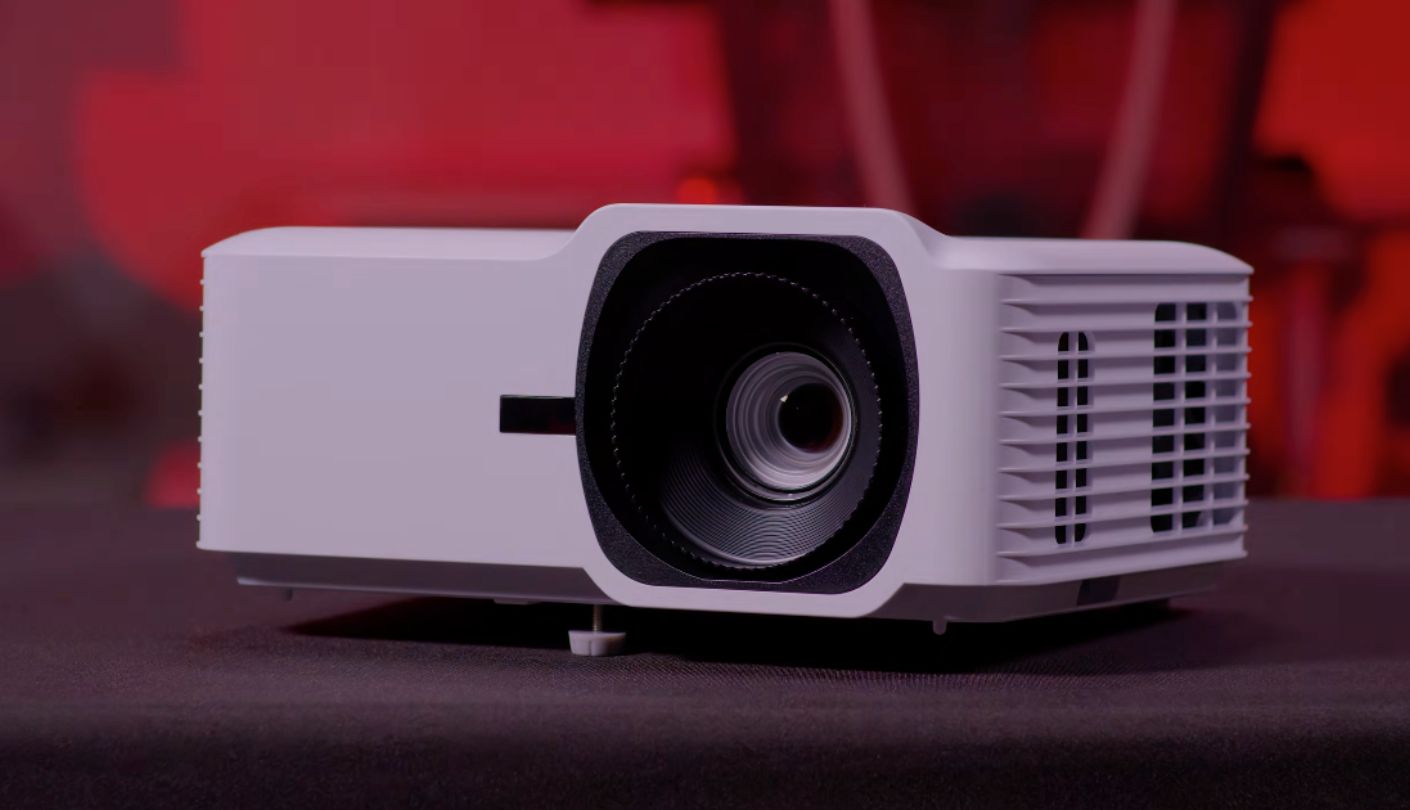
Sealed Light Engine. The optical path carries an IP6X seal that keeps dust out and removes air filters from the maintenance list entirely. On a bulb projector, filter cleaning is the job everyone forgets until the image dims. Here the job does not exist. Pair that with a laser source rated to 30,000 hours in SuperEco and the maintenance schedule empties out almost completely. Run it at full power instead and rated life drops to 20,000 hours, which is worth knowing before the figure goes into a budget.
Fan Noise. Measurements came in at 33.0 dBA at full power and 31.1 dBA in Eco against ViewSonic's rated 30 dB and 24 dB, the difference coming down to test conditions rather than overstatement. I could hear it in a silent room and lost it entirely under conversation or any audio at all. High Altitude mode is another matter at 51.2 dBA, so anyone installing above roughly 1,500 metres should account for it.
Heat and Power. The projector runs cool by bulb standards, helped by an external brick that keeps the hottest component outside the chassis. Owners report the brick getting warmer than the projector body. The trade-off is a proprietary cable between the two, which is one more item to track on a ceiling mount.
Connections, Control and Sound
The rear panel is sparse: two HDMI 1.4 inputs with HDCP 1.4, a USB-A port supplying 5V at 1.5A, an RS-232 control port, a 3.5 mm audio output and DC power. HDMI 1.4 caps you at 1080p60, which matches the panel exactly, so nothing is lost for the projector's intended job. A 4K source means relying on the player to downscale, and wireless casting means an HDMI dongle running off that USB port.
Specifying this for a managed install deserves more care than a living room does. There is no HDBaseT support. The RS-232 port accepts a single baud rate that cannot be changed on the projector, and one integrator replacing units at a college hit exactly that wall with an Extron system. The on-screen menu follows consumer lines rather than the denser layout a professional installer expects.
The 15 W mono speaker is the weakest part of the package and owner reviews are unanimous about it. Highs and mids are clear, bass is absent, and the volume scale tops out at a level that fills a medium room and no further. I ran the 3.5 mm output into a soundbar within two days and never went back.
LS740HD vs Epson Pro EX11000 vs Optoma ZH450
These three come up together constantly and solve the bright-room problem differently. I have set them side by side on published figures only, so the rows compare like with like:
| Specification | ViewSonic LS740HD | Epson Pro EX11000 | Optoma ZH450 |
| Rated Brightness | 5,000 ANSI lumens | 4,600 lumens colour and white | 4,500 ANSI lumens |
| Imaging Technology | Single-chip 0.65" DLP laser phosphor | 3-chip 3LCD laser | Single-chip DLP DuraCore laser |
| Light Source Life | Up to 30,000 hours | Up to 20,000 hours | Up to 30,000 hours |
| Optical Zoom | 1.3x | 1.0 - 1.6x | 1.6x |
| Maximum Image Size | 300" | 300" | 322" |
| Sealed Light Engine | IP6X | Not published | IP6X |
| Built-In Wireless Casting | No | Miracast | No |
| Weight | 6.6 lb | Under 10 lb | 6,61 lb |
The ViewSonic takes the brightness row, matches Optoma on light source life and beats Epson on it by half again, and it is the lightest of the three by a clear margin. Where it loses is connectivity. Epson builds Miracast in, which removes the dongle problem for meeting rooms, and its 3LCD design puts out colour brightness equal to white brightness, a real advantage on saturated content under ambient light. Optoma carries a wider zoom range and HDMI 2.0.
My reading is that the LS740HD wins on light output per pound and per hour of service, which is what a permanently installed bright-room projector is for. Buy the Epson if wireless casting matters more than raw lumens, and the Optoma if your mounting position needs the extra zoom flexibility.
LS740HD: What Owners Say
Verified Owner Feedback
What comes back from verified purchasers falls into two clear camps: people who measured their room, checked the throw distance, and got exactly the bright, low-maintenance projector they expected — and people working through what a standard-throw laser unit can and can't do in a tighter or brighter space than they planned for.
Praises: "We mounted it on the ceiling in our sanctuary about 15 feet back and it fills the whole screen without any strain on the fan. Setup took maybe twenty minutes including the keystone adjustment. We used to have to dim every light for our old projector to be readable - now the windows stay open and the slides are still sharp. Genuinely one of the better tech purchases the church has made."
"Replaced a bulb projector that was on its third lamp in four years. This one's been running six hours a day, five days a week, in our training room for about five months now with zero issues. No warm-up time, runs quiet enough that it doesn't compete with the HVAC, and the color out of the box was closer to accurate than I expected for the price."
"I run a small event space and needed something bright enough to compete with ambient light from the bar area. This handles it without a problem - 5000 lumens is not marketing fluff, it's genuinely bright. The zoom range gave me enough flexibility to place it where I wanted instead of where the room forced me to."
"Bought this to replace an aging classroom projector that was down to maybe half its original brightness. Night and day difference. Kids in the back row can finally read the board without squinting, and I don't have to kill the lights to show a video anymore. The remote is basic but does what it needs to."
"For the price, the image quality surprised me. I use it for movie nights on a 120-inch screen and for work presentations during the week. Handles both fine. The only thing I'd tell someone before buying is to actually measure your throw distance first - I got lucky that mine worked out."
***
Drawbacks: "Wish I'd checked the throw ratio more carefully before ordering. This isn't a short-throw unit, so if your room is small you'll want to measure first. Once I moved my mount back a few feet it was fine, but that's a step I should have done before buying, not after."
"Color and saturation needed some manual adjustment out of the box - nothing dramatic, but don't expect it to be perfectly calibrated on day one. Took about ten minutes in the settings menu to get it looking right, and after that I haven't touched it."
The throw-distance complaint is the most honest thing in the review set - and it lines up exactly with what the spec sheet says. This is a standard-throw laser projector, not a short-throw model, and a 1.13-1.47:1 ratio simply needs more room to fill a screen than some buyers assume. The people who checked their room dimensions against the spec before buying are satisfied. The ones who didn't had an extra step to work through. That gap is about pre-purchase homework, not a flaw in the projector itself.
Final Verdict: Is the ViewSonic LS740HD Worth It?
After three weeks in the brightest room in my house, the LS740HD stayed. The compromises are easy to check against your own needs: HDMI 1.4 and no wireless, a speaker that wants replacing for anything beyond a meeting room, and no lens shift, which leaves the mount position dictated by geometry rather than preference. Integrators have one more item on that list, since the RS-232 port runs at a fixed rate their control system has to match.
For a classroom, a boardroom, a golf bay or a living room with too many windows, this is the projector I would specify. It reaches 96% of a brightness claim most rivals cannot match even on paper, holds clean colour at nearly 3,900 lumens in the mode you will actually use, and runs 30,000 hours without a lamp. Read the ANSI figure rather than the listing headline, budget for external audio, and it will do what it says.

Jim's our tech geek with a mission since February 2023. From movies to video projectors, he knows his stuff and aims to make tech work for you. When he's not geeking out, he's there to guide you through making savvy decisions.


