At gagadget.com, your trust is our priority. We follow strict quality standards in our research, tests, and analysis of projector screens, to give you the best experience. Learn more
Which Are the Best ALR Screens?
A painted wall surrenders the instant somebody reaches for a lamp. Grey levels lift, faces go chalky, and the black bars above and below the film turn into a pale suggestion of black bars. Every screen on this page exists to fight that one specific failure, and each attacks it with a different piece of optical engineering rather than a different shade of paint.
Here is the part nobody puts on the box. Ambient light rejection is not one technology. It is at least three, none of them interchangeable, and picking the wrong one for your projector produces a picture worse than the bare wall you started with. Throw distance decides which family you are allowed to shop in. Room shape decides how wide your sofa can spread. Everything after that is a question of whether the screen bolts to plaster, rises out of a box on the floor, or folds into a bag when the party ends.
Here are my two top picks for the best ALR screens:
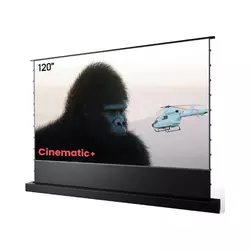
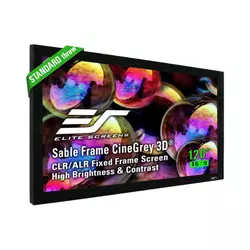
Table of Contents:
- How to Choose an ALR Projector Screen
- Top 5 ALR Screens for Bright Rooms
- ALR Screen Comparison
- AWOL VISION ALR-F220C
- Elite Screens CineGrey 3D ER120DHD3
- AAJK 120in Pro
- VIVIDSTORM VSDSTUST120H
- NothingProjector Black Series
- ALR Screen FAQ
How to Choose an ALR Projector Screen: Buying Guide
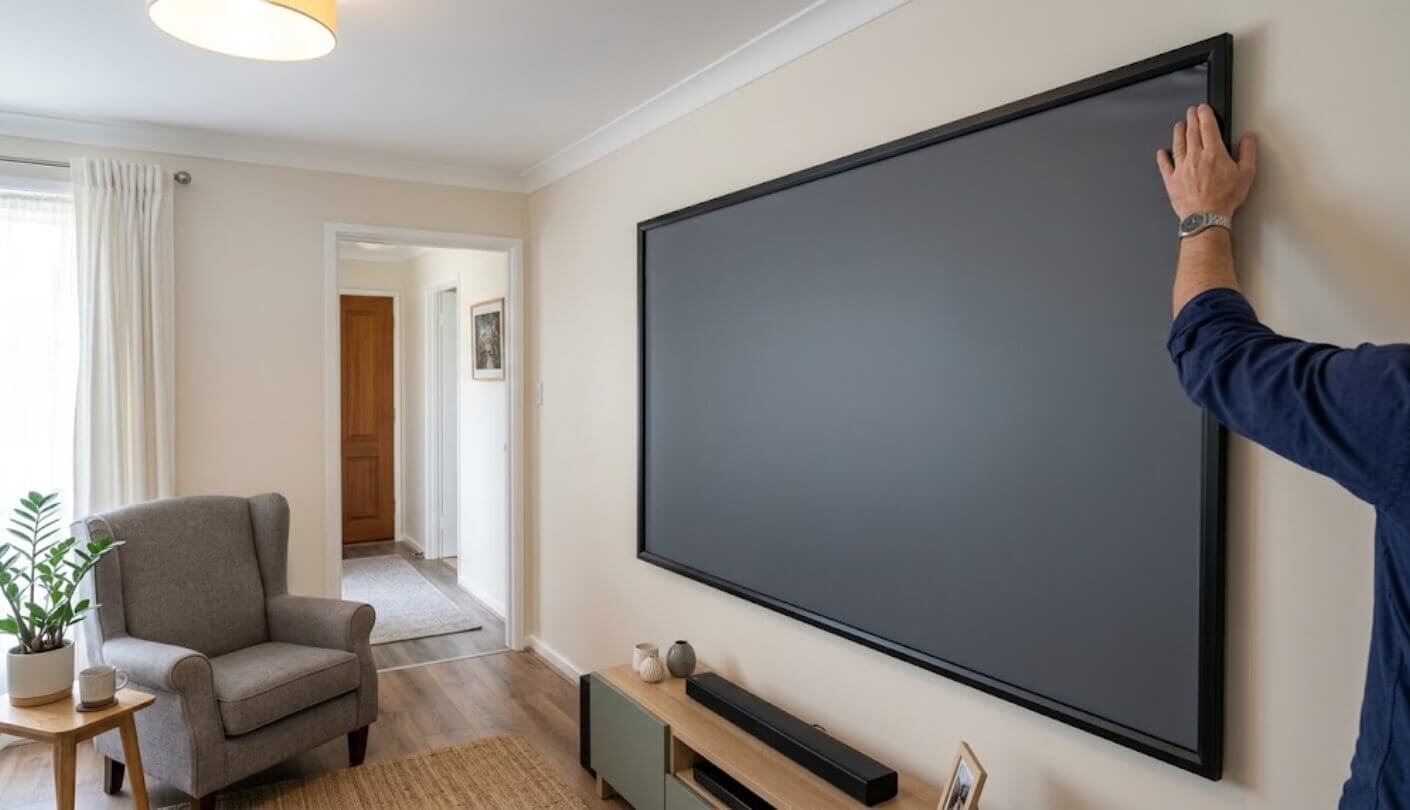
Four of these five surfaces are built for ultra short throw projectors that sit on the floor beneath the image. One is built for a projector hanging behind your head, and its listing says so in bold. Get that distinction wrong and nothing else in the specification sheet can rescue the picture, which is why it heads the five sections below.
Which Direction the Light Arrives From
Such a surface does not absorb stray light in general. It sorts light by the angle it arrives from, sends the useful stuff toward your eyes and dumps the rest into a black layer. On a UST screen the surface is a field of microscopic sawtooth ridges, blacked out along their upper faces and tilted to catch a beam climbing steeply from below. Light dropping from a ceiling fixture lands on those black faces and dies there. Light from a window at eye level arrives at nearly the same angle as your projector beam, and no screen can tell the two apart.
Ceiling light rejection and daylight rejection are different problems with different solutions. A screen rated for overhead lamps can still wash out under an uncurtained west-facing window.
This is why manufacturer percentages need reading carefully rather than ranking. AWOL and NothingProjector both quote ninety five percent for ceiling light, VIVIDSTORM claims ninety seven, and Elite publishes a sixty five percent rejection ratio for a completely different optical structure. I stopped treating those figures as a leaderboard once I understood that they describe how each maker measured its own surface against its own reference. What they do tell you reliably is which direction of light the engineers were aiming at.
Match the Surface to Your Throw Distance
Point a ceiling mounted projector at a lenticular UST screen and the sawtooth structure rejects your beam along with the room lights. You get a dim, oddly striped image and no way to fix it. Run the swap the other way, firing a UST projector across an angular reflective grey surface, and the extreme upward angle produces a hot band at the bottom and a murky top third. Both mistakes are common, both are expensive, and both are avoidable by reading one line of the specification sheet.
The four UST screens here quote viewing angles of one hundred and sixty or one hundred and seventy degrees, which sounds generous until you notice the Elite entry publishes ninety degrees. That gap is not a quality difference. It reflects two unrelated ways of steering light, and the figure that actually predicts your evening is how the published screen gain holds up across the width of your seating. I keep a tape measure in the drawer with my calibration disc for exactly this reason, because sofa width beats every marketing figure ever printed.
Why Low Gain Often Looks Brighter
Three of these screens sit below unity gain. AWOL rates its surface at zero point eight, VIVIDSTORM and NothingProjector both at zero point six, and on paper that reads like throwing away brightness you paid for. In practice a UST projector fires at such a punishing angle that a plain white wall scatters most of its output sideways into the room. A sawtooth surface gathers that same output and aims it forward, so a zero point six screen frequently looks brighter in the seat than white paint does.
Low gain buys contrast, not dimness. The number describes how narrowly light is focused rather than how much of it survives the trip.
Elite goes the other way with a one point two figure, because an angular reflective surface has an easier job to do with a beam arriving from behind the audience. VIVIDSTORM recommends at least eighteen hundred ANSI lumens from the projector, and I would treat that as a floor rather than a suggestion for any of the low gain surfaces here. Pair a dim portable projector with a zero point six panel and you have spent money to make your picture worse.
Wall Mount, Floor Riser or Fold-Away
Form factor splits this group three ways and it is mostly a question of what your living room is willing to tolerate. A fixed frame screen is a permanent black rectangle on the wall, tensioned by rods or plates, quiet and immovable. A motorised floor rising screen lives inside a metal box on the carpet, climbs on braced arms in something like half a minute, and disappears when the film ends. A folding fabric sheet packs into a bag and hangs off adhesive hooks.
Weight is the practical filter. The AWOL box weighs sixty one pounds and needs a clear span of floor directly under the wall, which rules out radiators, skirting board heating and any room where the sofa backs onto the projection wall. Fixed frames go up once and stay up, though NothingProjector recommends two people and a room of roughly a hundred square feet for assembly. I have carried both kinds up a staircase and I will only volunteer for the fabric one again.
The Surface Marks Easier Than You Expect
Lenticular material is a ridged optical structure with a black coating on tiny angled faces. Rub it with a dry cloth and you can flatten those ridges permanently, leaving a dull patch that shows up on every bright frame afterwards. Elite builds its CineGrey 3D on PVC that tolerates a damp microfibre wipe, AAJK explicitly markets a stain resistant coating you can clean the same way, and the three lenticular surfaces want the gentlest treatment you can manage.
A ridged ALR surface is a physical structure, not a paint job. Flatten part of it with a hard wipe and the damage shows on every bright frame afterwards.
Storage habits matter just as much on the portable end. AAJK tells buyers a steam iron between two hundred and forty eight and three hundred and ninety two degrees Fahrenheit will take creases out of the fabric, which is honest of them and also a warning about what folding does to a projection surface. I have never got a folded screen back to properly flat, and shadows across a crease are far more distracting in a film than any gain figure.
Top 5 ALR Screens for Bright Rooms
Ambient light rejection is printed on all five boxes, which makes it useless as a filter. Separation happened elsewhere. Throw compatibility came first, then the way each surface steers light, then whether the thing lives on your wall or on your carpet, then what the room looks like once the film ends. Read the projector type row before anything else, because a mismatch there voids every other line in the table.
- 0.8 Peak Gain
- Perforated Acoustic Masking
- USB Trigger Sync
- Height Memory Function
- No Drilling Required
- 1.2 Screen Gain
- ISF Certified Material
- Passive 3D Polarised
- Black Velvet Frame
- GREENGUARD Gold Rated
- Packs Into Bag
- Wipe-Clean Coating
- Hook Or Adhesive Mounting
- Works Outdoors
- Steam-Ironable Creases
- Five Control Methods
- Tab-Tensioned Surface
- Silent DC Motor
- 170-Degree Angle
- Voice Assistant Support
- 0.4-Inch Frame
- 95% Ceiling Rejection
- Fibreglass Rod Tensioning
- De-Speckle Treatment
- Nothing To Service
ALR Screen Comparison
Everything below comes from the makers themselves, grouped so the incompatibilities are hard to walk past:
| Specification | AWOL VISION ALR-F220C | Elite Screens ER120DHD3 | AAJK 120in Pro | VIVIDSTORM VSDSTUST120H | NothingProjector Black Series |
| Screen Format | Motorised floor rising | Fixed frame, wall mounted | Foldable fabric sheet | Motorised floor rising | Fixed frame, wall mounted |
| Optical Surface | HBSI lenticular ALR | CineGrey 3D angular reflective | Six-layer coated PET fabric | Black and white lenticular ALR | ST Carbon Black lenticular PET |
| Projector Type On The Listing | Ultra short throw only | Standard throw only | Indoor and outdoor front projection | Ultra short throw only | Ultra short throw only |
| Stated Viewing Angle | 170 degrees | 90 degrees | 160 degrees | 170 degrees | 170 degrees |
| Surface Tensioning | Cable tension on V-shaped brackets | Adjustable fix plates on frame | None, hangs from its edges | Tab-tensioned rope system | Fibreglass rods and springs |
| Mounting Requirement | None, stands on the floor | Wall brackets and frame assembly | Hooks or adhesive on a wall | None, stands on the floor | Wall brackets and frame assembly |
| Storage When Not In Use | Retracts into its base | Stays on the wall | Folds into a bag | Retracts into its base | Stays on the wall |
| Standout Extra | Acoustically transparent lower masking | ISF certified surface | Stain-resistant wipe-clean surface | Voice assistant control | Frame profile of four tenths of an inch |
Most of the sorting happens in a single row. Projector type splits the group four against one, and no discount bridges that gap. Screen format splits it again, into rectangles bolted to plaster and rectangles that fold into a metal box on the carpet. Viewing angle reads like a ranking and is nothing of the kind, because ninety degrees describes an optical family steering light in a completely different plane from the other four.
AWOL VISION ALR-F220C Review
Editor's Choice
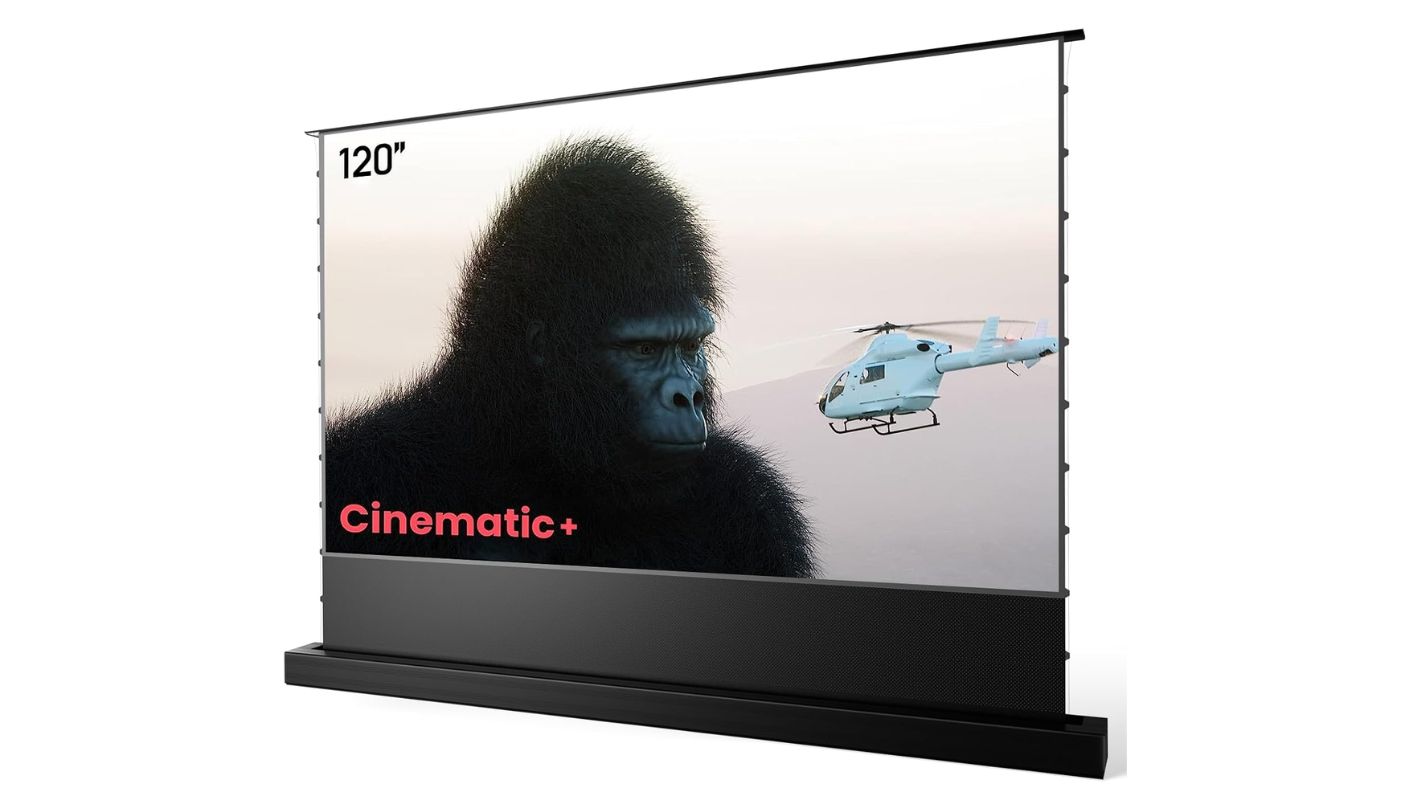
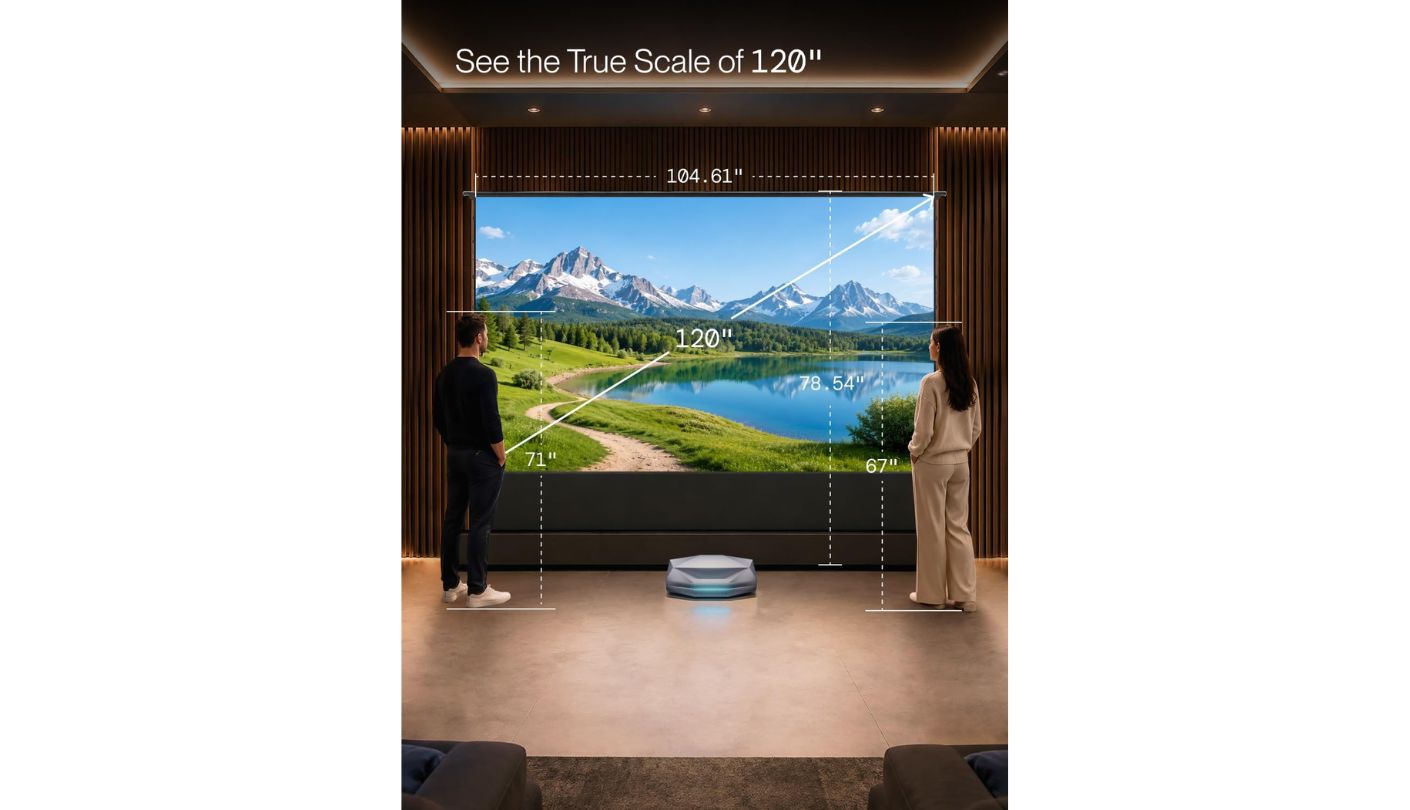
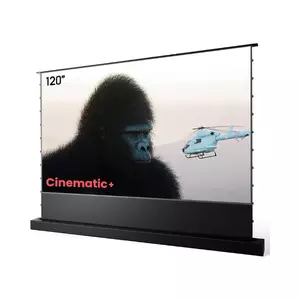
Sixty one pounds of aluminium sits on your carpet and does nothing at all until a projector wakes up. Then the AWOL VISION ALR-F220C unfolds a hundred and twenty inches of sawtooth ALR material on two braced arms, holds it flat under cable tension, and drops back into the box when you are done. Nothing gets drilled, nothing stays visible, and that combination is why it takes the top slot here.
The surface is what AWOL calls HBSI material, rated at zero point eight peak gain across a hundred and seventy degree viewing angle, with a claimed ninety five percent reduction of overhead light. That gain figure is the highest of the three sawtooth surfaces in this lineup, and it shows up as a slightly brighter picture from the same projector. Active 3D works, and the material is rated for 4K and 8K sources.
One feature no rival in this lineup matches is the black masking below the image area. It is perforated with sound holes of four tenths of a millimetre, so a centre channel speaker or a soundbar can sit behind the screen and fire straight through it. In a floor rising design that band of black is exactly where your speaker wants to be, and AWOL is the only maker among these five to have solved the collision instead of ignoring it.
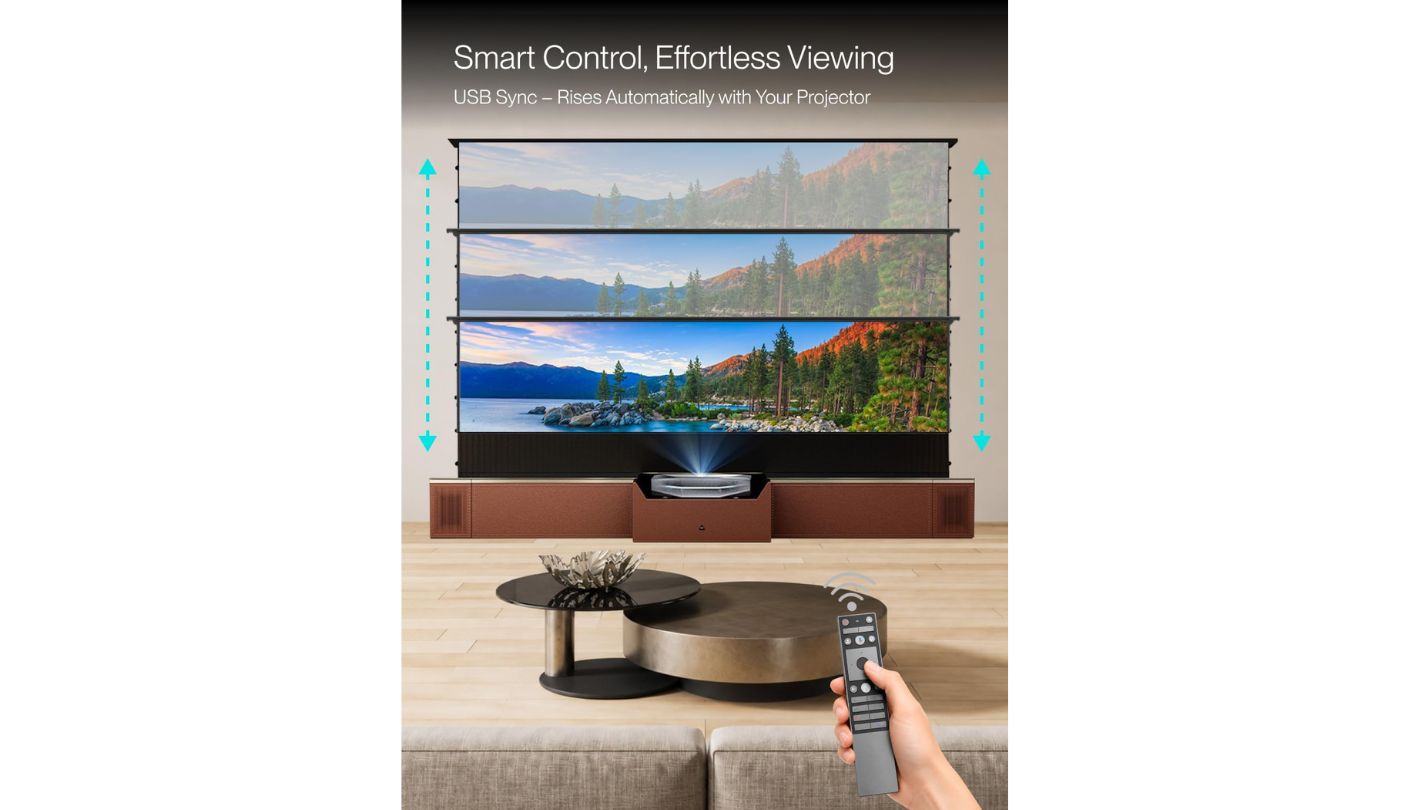
Setup runs through a control box with a memory function. You raise the screen once to the height you want, the mechanism synchronises within about thirty seconds in adjustment mode, and every subsequent rise stops at that saved point. Plug the supplied USB trigger into an AWOL projector and the screen climbs when the projector powers on, then retracts when it shuts down. Remote control is included for the times you want the screen up without the projector running.
First place goes to the screen with no asterisk hanging off it. The Elite below cannot take a UST projector at all, the two other sawtooth screens skip acoustic transparency, and the fabric option is playing a different sport entirely. The catch is floor space, because sixty one pounds of housing needs a clear stretch of carpet against the projection wall, and a radiator or a sofa back in that position ends the conversation before it starts.
Pros:
- 0.8 Peak Gain
- Perforated Acoustic Masking
- USB Trigger Sync
- Height Memory Function
- No Drilling Required
Cons:
- Needs Clear Floor
- Heaviest Unit Here
Summary: Renters and anyone who refuses to hang a permanent black rectangle over the fireplace should start their shortlist right here. The acoustic masking quietly solves a speaker placement headache most buyers only discover after unboxing.
Elite Screens CineGrey 3D ER120DHD3 Review
Best Overall
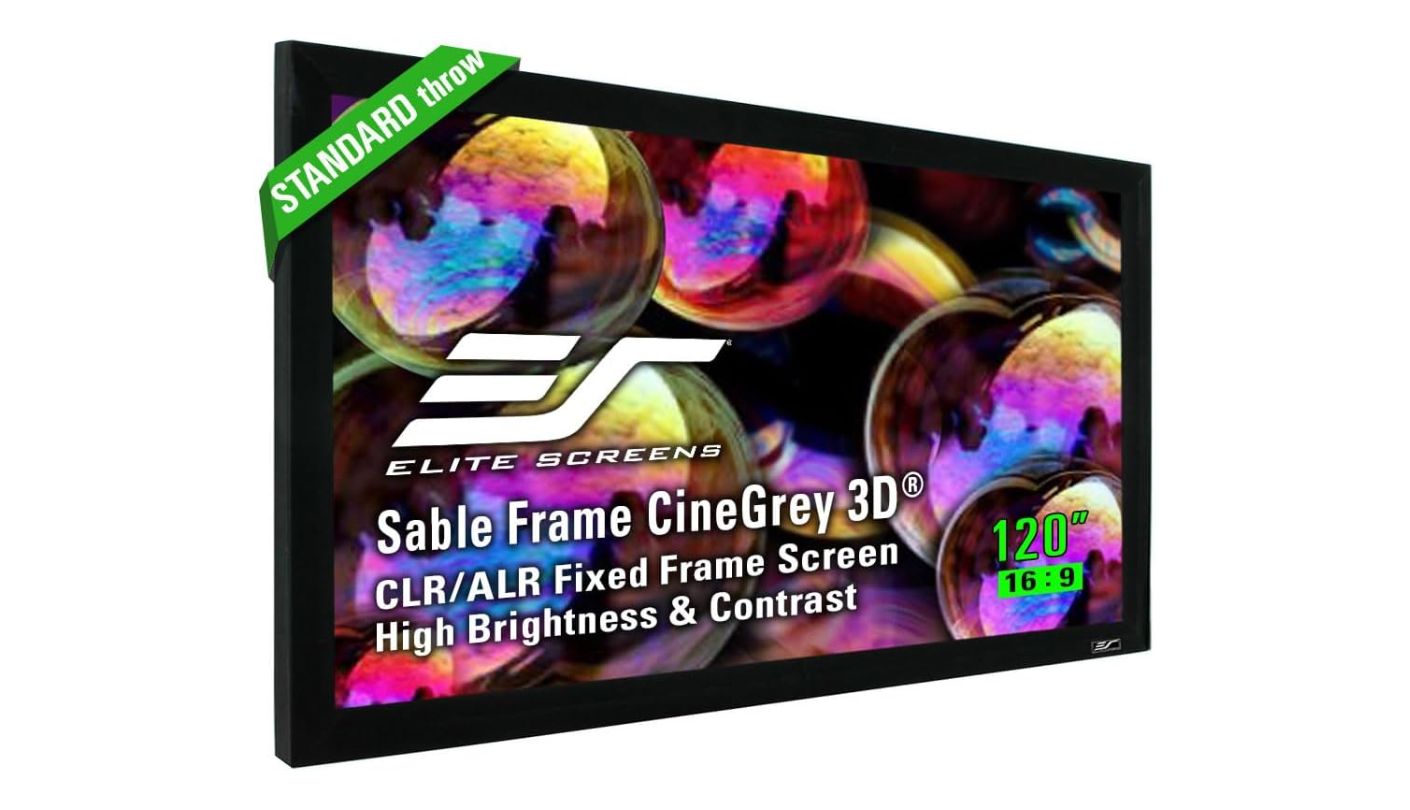
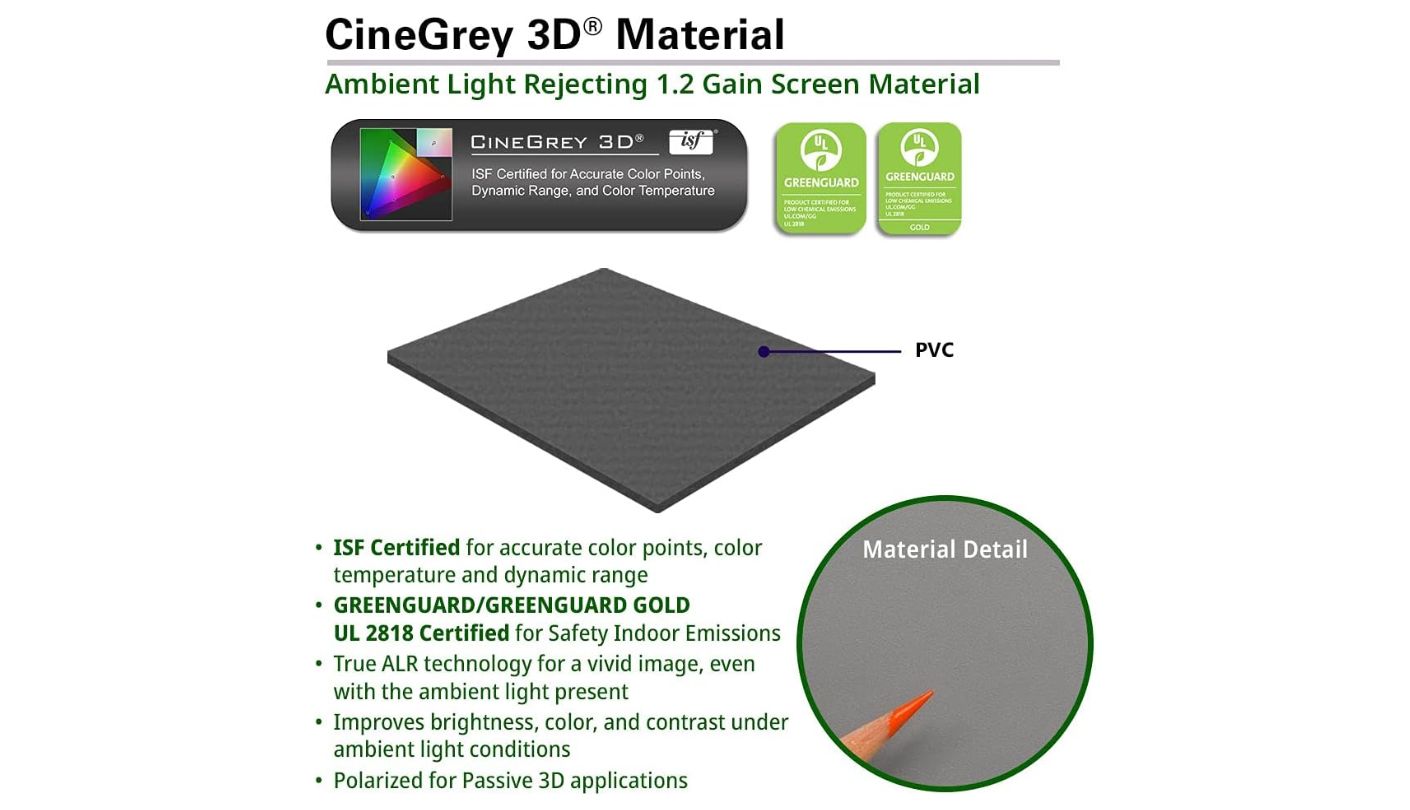
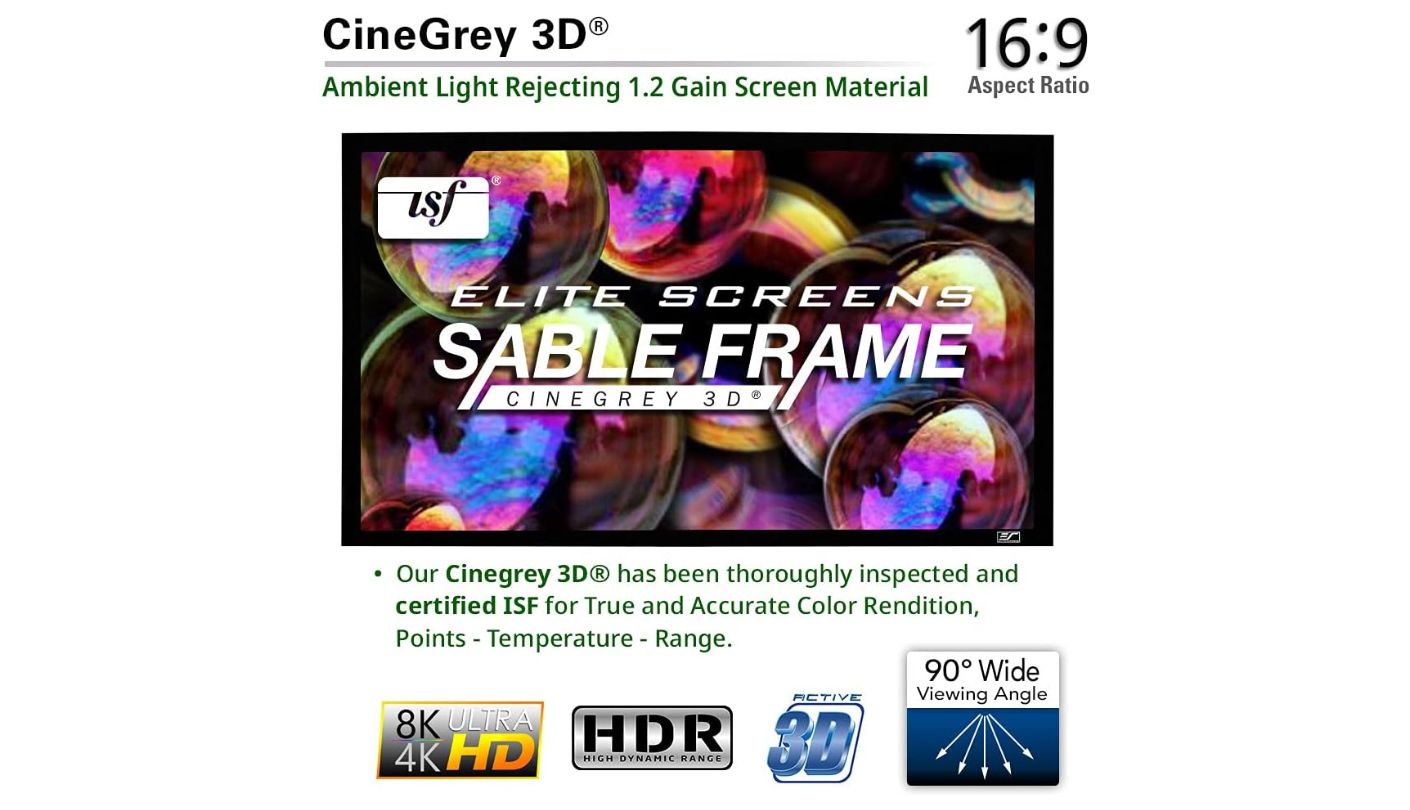
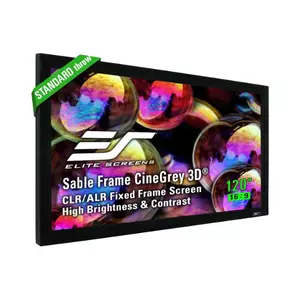
Something needs saying before anything else about this screen. The Elite Screens CineGrey 3D ER120DHD3 will not work with an ultra short throw projector, a short throw projector or a triple laser TV, and Elite prints that restriction on the listing itself. If your projector sits on a cabinet ten inches from the wall, stop reading this section. If it hangs from the ceiling behind the sofa, this is the most credible surface on the page.
CineGrey 3D is angular reflective rather than lenticular. A diffusion layer sits over a highly reflective base, so a beam arriving from the audience side bounces squarely back toward the seats while light coming in from off-axis gets scattered away. Gain is one point two, the highest figure among these five, and Elite quotes a sixty five percent ambient rejection ratio alongside a ninety degree viewing cone spread forty five degrees to each side.
The certifications are unusual at this size. The material carries ISF endorsement for colour accuracy, it is rated for 4K and 8K sources, it handles active 3D and it is polarised for passive 3D, which is a niche capability none of the other four offers. GREENGUARD and GREENGUARD GOLD certification under UL 2818 covers indoor emissions, and the PVC surface takes a microfibre wipe without complaint.
Build quality lands where you would hope. The frame is a six-piece aluminium assembly two and a third inches wide, wrapped in black velvet that swallows projector overshoot instead of bouncing it back into the room. Adjustable fix plates haul the material flat, and sliding brackets let you centre the whole thing after it is hanging. One number is worth writing down before you order, because the assembled rectangle stands a hundred and nine point three inches across rather than the hundred and four point seven of the image itself.
Picture quality per pound spent is the strongest of the five, which is what puts the Best Overall label here, assuming your throw type lines up. One point two gain with a dark grey base is a combination that lifts contrast in a lit family room without the brightness penalty the UST surfaces accept, and the ISF certification is a promise about colour that none of the other four make. Your ninety degree cone is the price, so a long sofa parallel to a small wall is the wrong room for it.
Pros:
- 1.2 Screen Gain
- ISF Certified Material
- Passive 3D Polarised
- Black Velvet Frame
- GREENGUARD Gold Rated
Cons:
- Rejects UST Projectors
- Narrow 90-Degree Cone
Summary: Passive 3D owners have no alternative here, and that alone settles it for a small group of buyers. Measure the full assembled rectangle rather than the diagonal before you commit to a wall.
AAJK 120in Pro Review
Folds Away
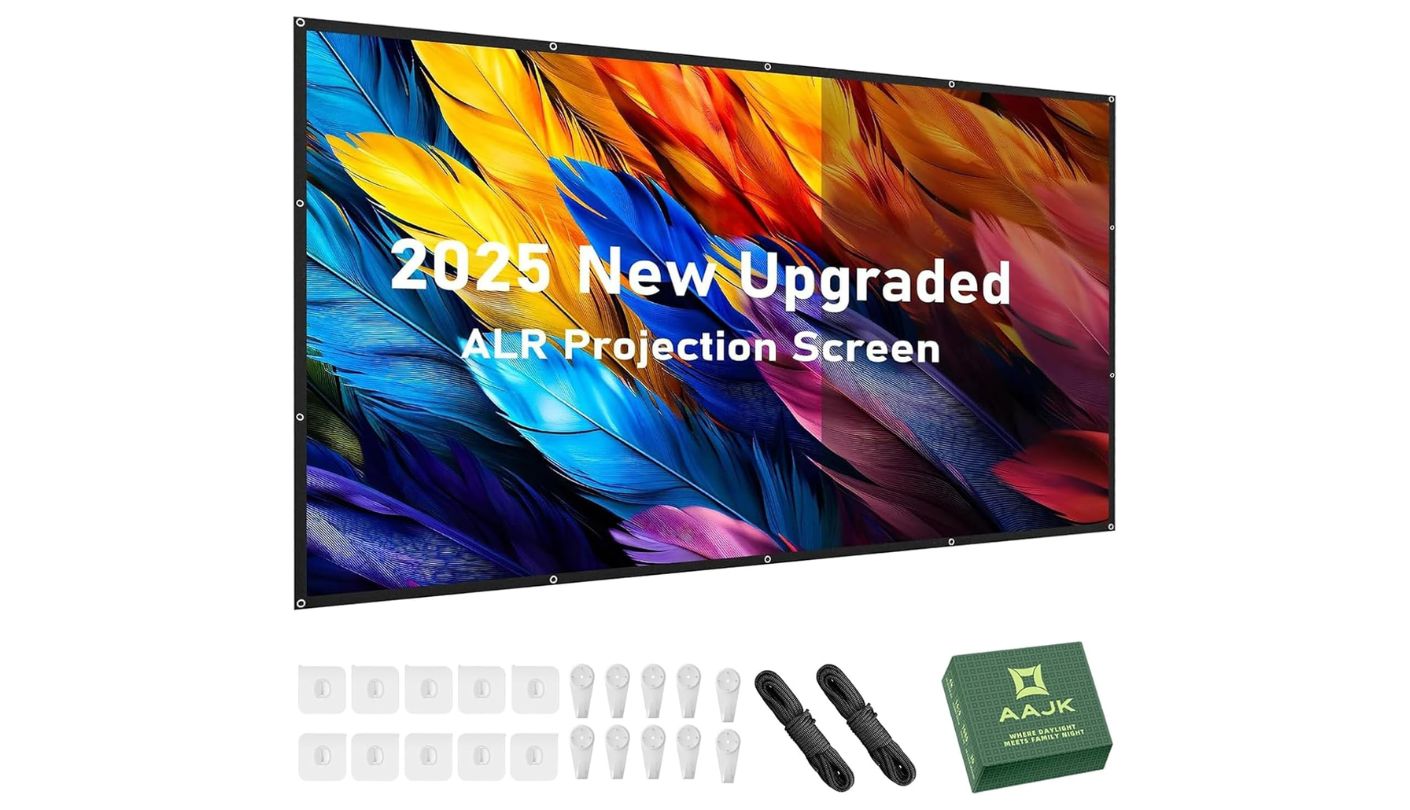
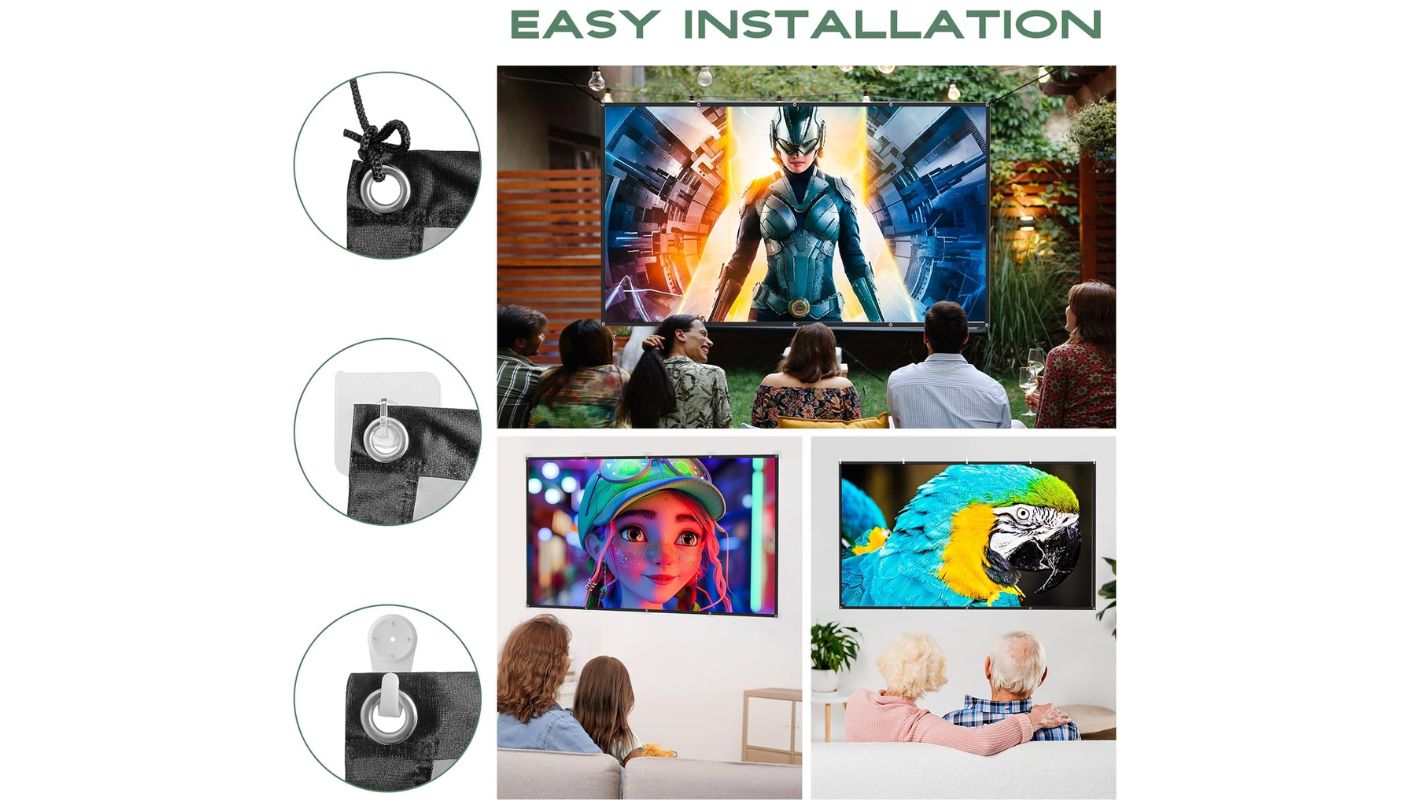
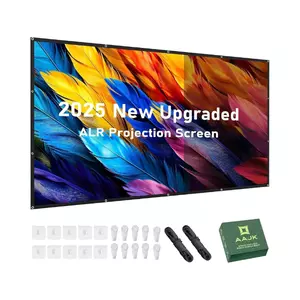
A neighbour of mine runs a summer film night in his back garden, and for three years he did it on a white bedsheet held up with clothes pegs. The AAJK 120in Pro is what replaced it, and the honest framing is that this competes with the bedsheet rather than with the four framed screens above. It is a coated fabric rectangle that hangs off hooks and folds into a bag afterwards.
Buy this one carefully, because the Amazon listing is a variant selector and most of the options on it are not ALR at all. The eighty inch, hundred inch and hundred and fifty inch choices are plain double sided white sheets. Only the option labelled 120in Pro carries the light resistant coating this article is about, and clicking the wrong size gets you a very different product with a similar name.
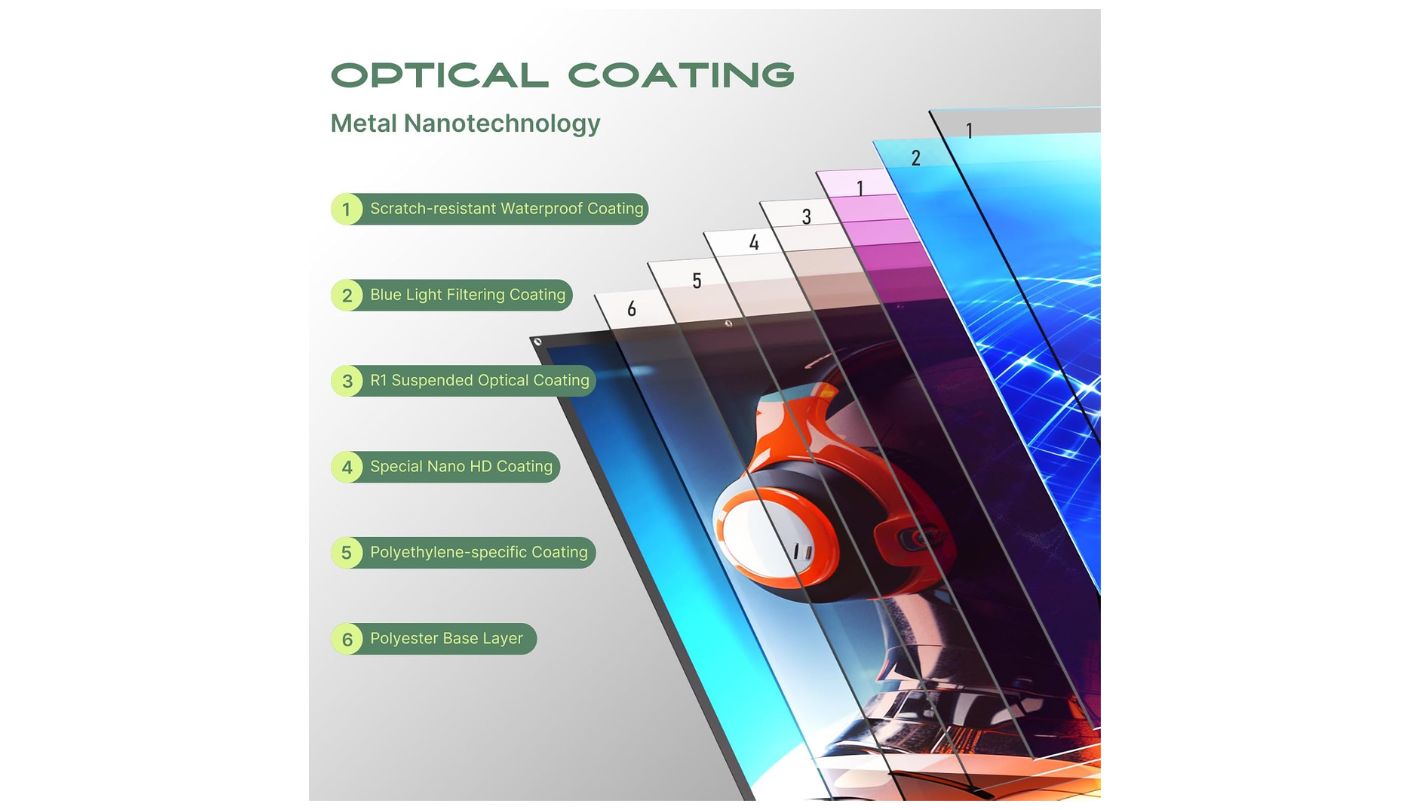
The surface itself is PET fabric under what AAJK describes as a six layer optical coating, quoted at a hundred and sixty degree viewing angle. The listing also mentions a fifty degree anti-glare angle, and those two figures sit awkwardly beside each other, since the second implies the light rejection works over a much narrower window than the first suggests. No gain figure is published anywhere I could find, which tells you roughly how much optical engineering documentation exists behind this product.
Practical handling is where it makes sense. The surface is stain resistant and wipes clean with a microfibre cloth, and creases can be steamed out with an iron set between two hundred and forty eight and three hundred and ninety two degrees Fahrenheit. That last instruction is the useful one, because a folded screen arrives creased and stays creased until you deal with it. Mounting runs on hooks or adhesive, so a garden fence works as well as a living room wall does.
Set expectations at the right level and this makes sense. A hundred and twenty inches of coated fabric that survives being folded, packed and wiped down is a category of product with no premium equivalent, because none of the framed screens here can be packed away in a rucksack. Judge it against a bedsheet and it wins comfortably. Judge it against the framed ALR panels above and it loses on every optical measure that matters.
Pros:
- Packs Into Bag
- Wipe-Clean Coating
- Hook Or Adhesive Mounting
- Works Outdoors
- Steam-Ironable Creases
Cons:
- Confusing Listing Variants
- Thin Optical Documentation
Summary: Garden cinema and holiday lets are the honest use cases, and a screen that wipes clean with a cloth has obvious appeal for both. Read the size dropdown twice before you press the button.
VIVIDSTORM VSDSTUST120H Review
Voice Control
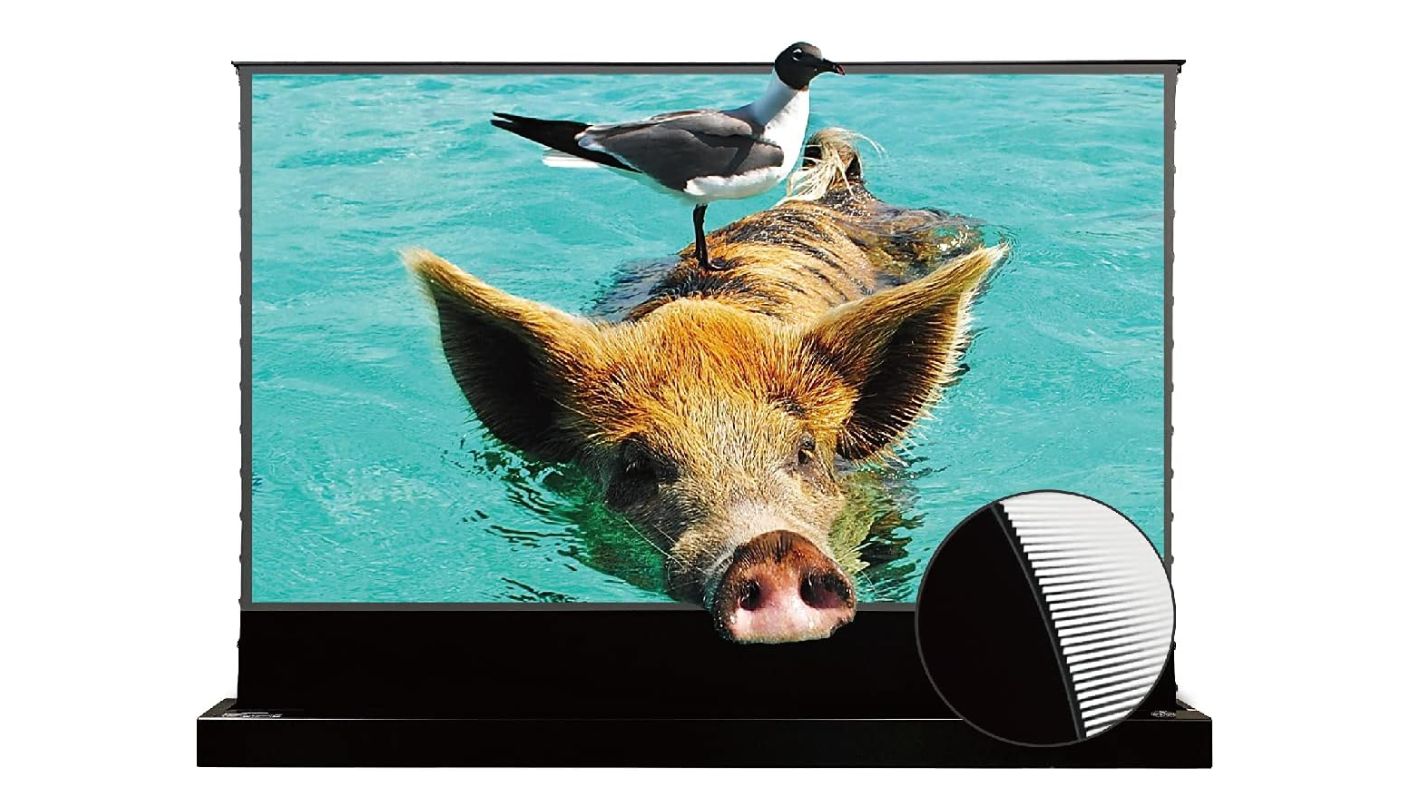
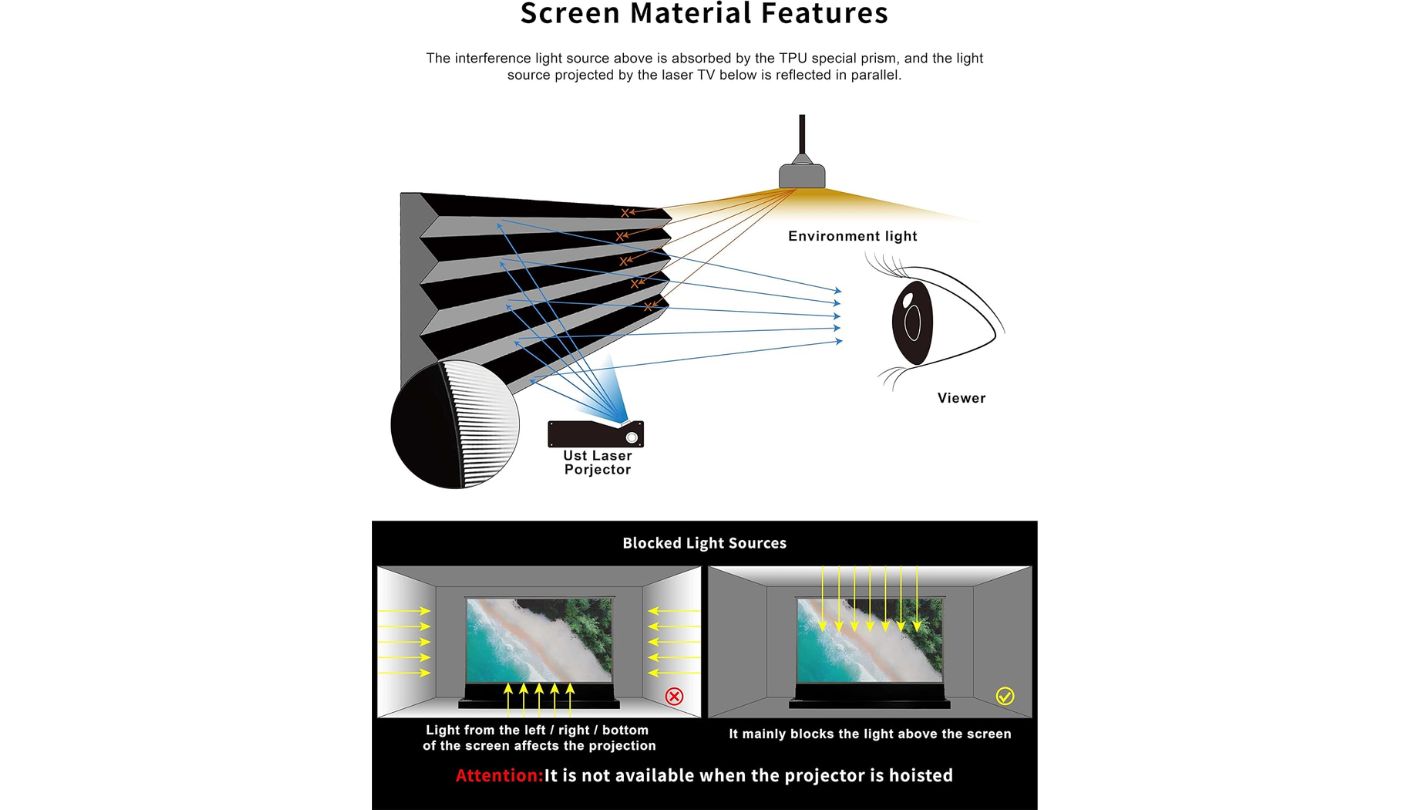
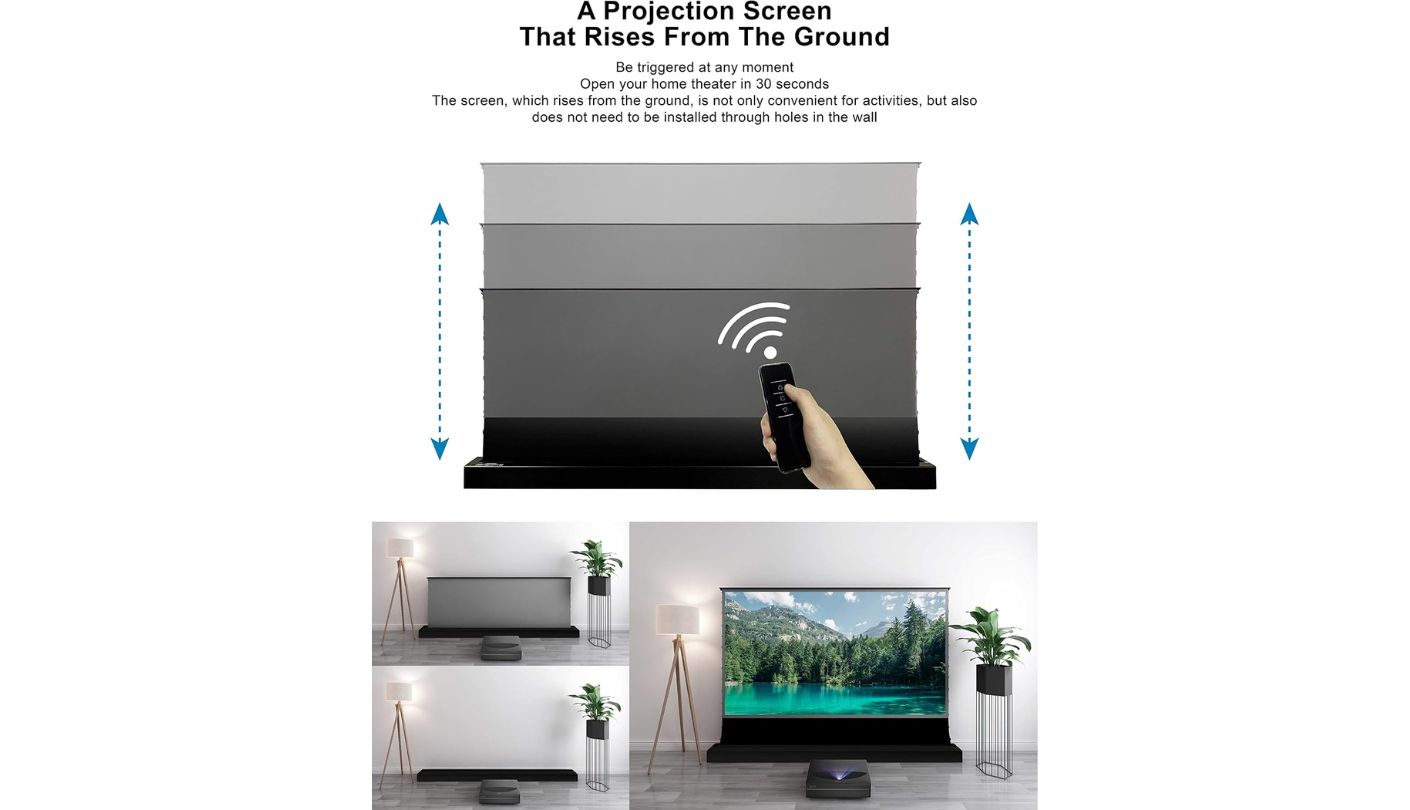
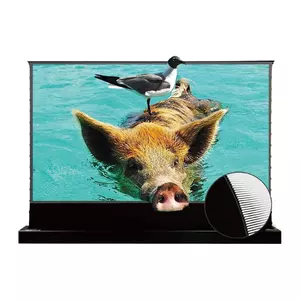
How many ways do you actually need to raise a screen? The VIVIDSTORM VSDSTUST120H offers an RF remote, an infrared remote, a smartphone app, a wireless USB trigger that reacts to the projector powering up, and voice commands through Siri, Alexa or Google Assistant. It is the most connected screen here by a wide margin, and for anyone already running a scene-based smart home that matters more than it sounds.
Underneath the automation sits a black and white sawtooth surface at zero point six gain across a hundred and seventy degree viewing angle, and VIVIDSTORM claims ninety seven percent rejection of overhead light. Material support runs to 4K, 8K and active 3D. The company also asks for a projector making at least eighteen hundred ANSI lumens, and that reads as sensible engineering advice for a low gain surface rather than marketing caution.
The tab-tensioned rope system is the mechanical highlight. Rather than relying on the screen's own weight to hang flat, ropes pull the material sideways as it rises, holding the surface taut across its full width. VIVIDSTORM does warn that shifts in room temperature and humidity can still produce slight waves in the material, which is refreshing candour from a company that could easily have kept quiet about it.
Setup is close to nothing. Stand the housing on the floor against your projection wall, connect power, and the screen climbs in twenty to thirty seconds on a DC tubular motor built for continuous operation without overheating. Power switch and screen switch are deliberately separate to stop accidental deployment, and the housing retracts flat when you are finished. Nothing touches your wall at any point.
One omission separates it from the AWOL above, and it is worth knowing before ordering. This model has an unperforated surface, so a centre channel speaker cannot sit behind it. VIVIDSTORM does build a perforated version under a different model code, and if speakers behind the screen are part of your plan then that is the one to hunt down instead of this one.
Pros:
- Five Control Methods
- Tab-Tensioned Surface
- Silent DC Motor
- 170-Degree Angle
- Voice Assistant Support
Cons:
- Solid Unperforated Surface
- Wants 1800 Lumens
Summary: Smart home owners get the most out of this one, because a screen folded into a voice scene stops being a separate step in the evening. The candour about temperature and humidity is worth more than another rounded-up percentage.
NothingProjector Black Series Review
Slimmest Frame
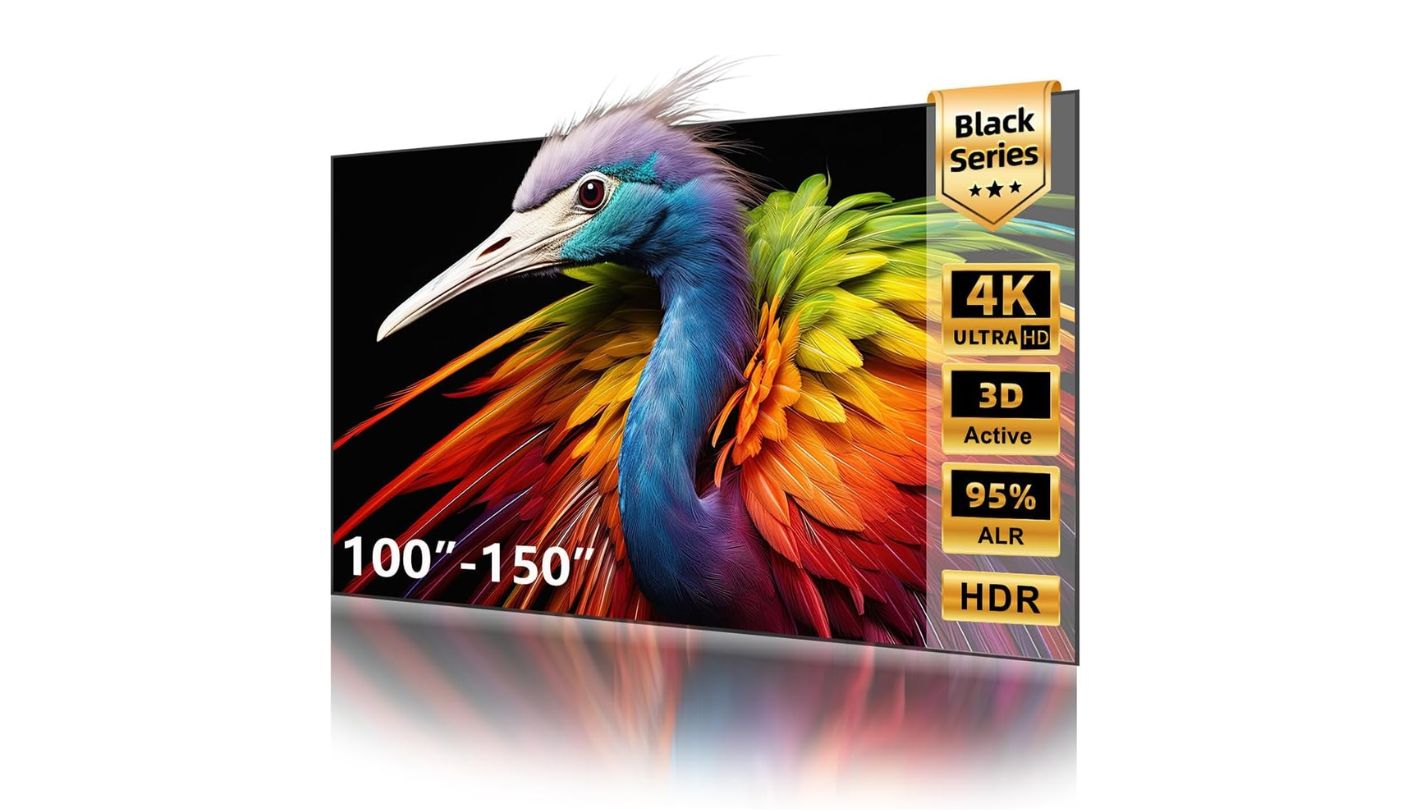
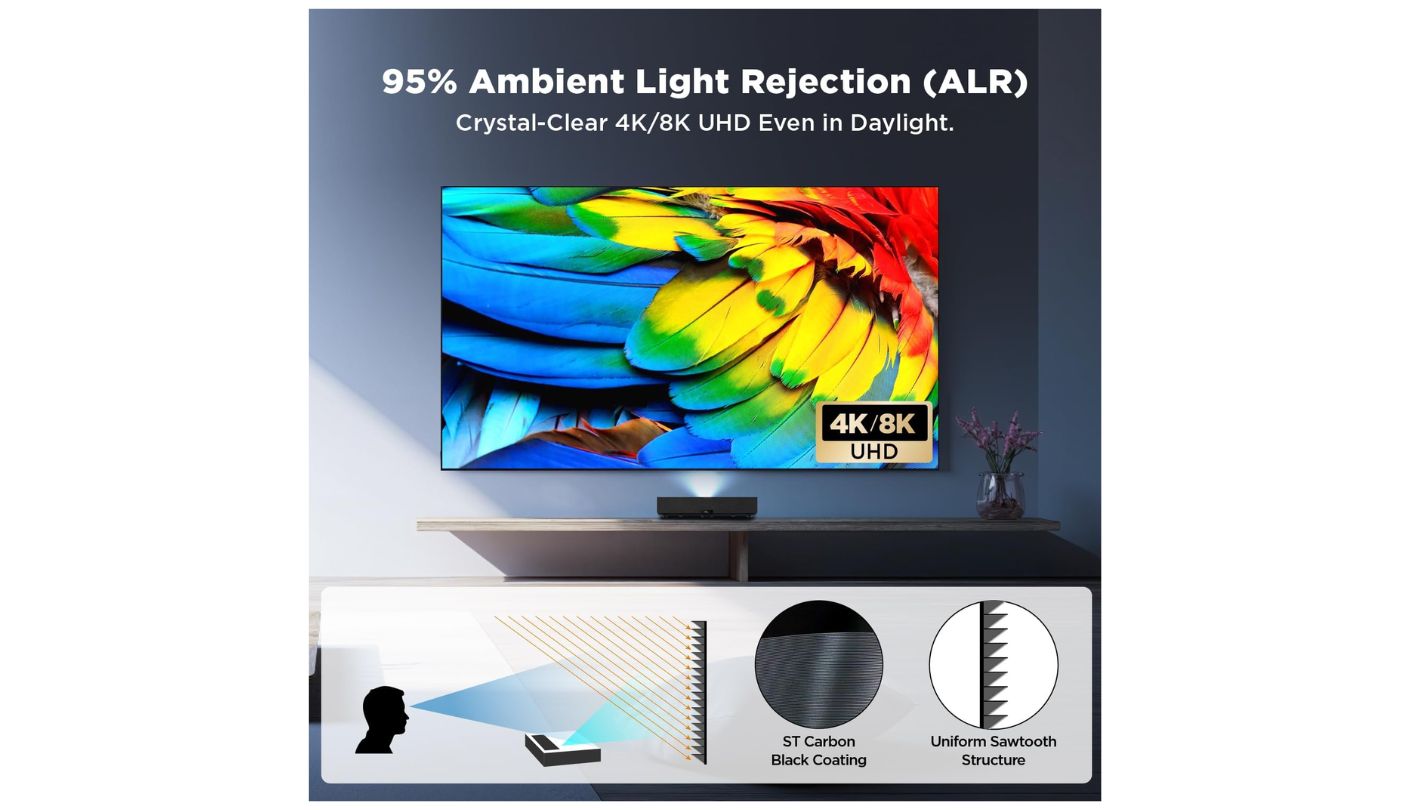
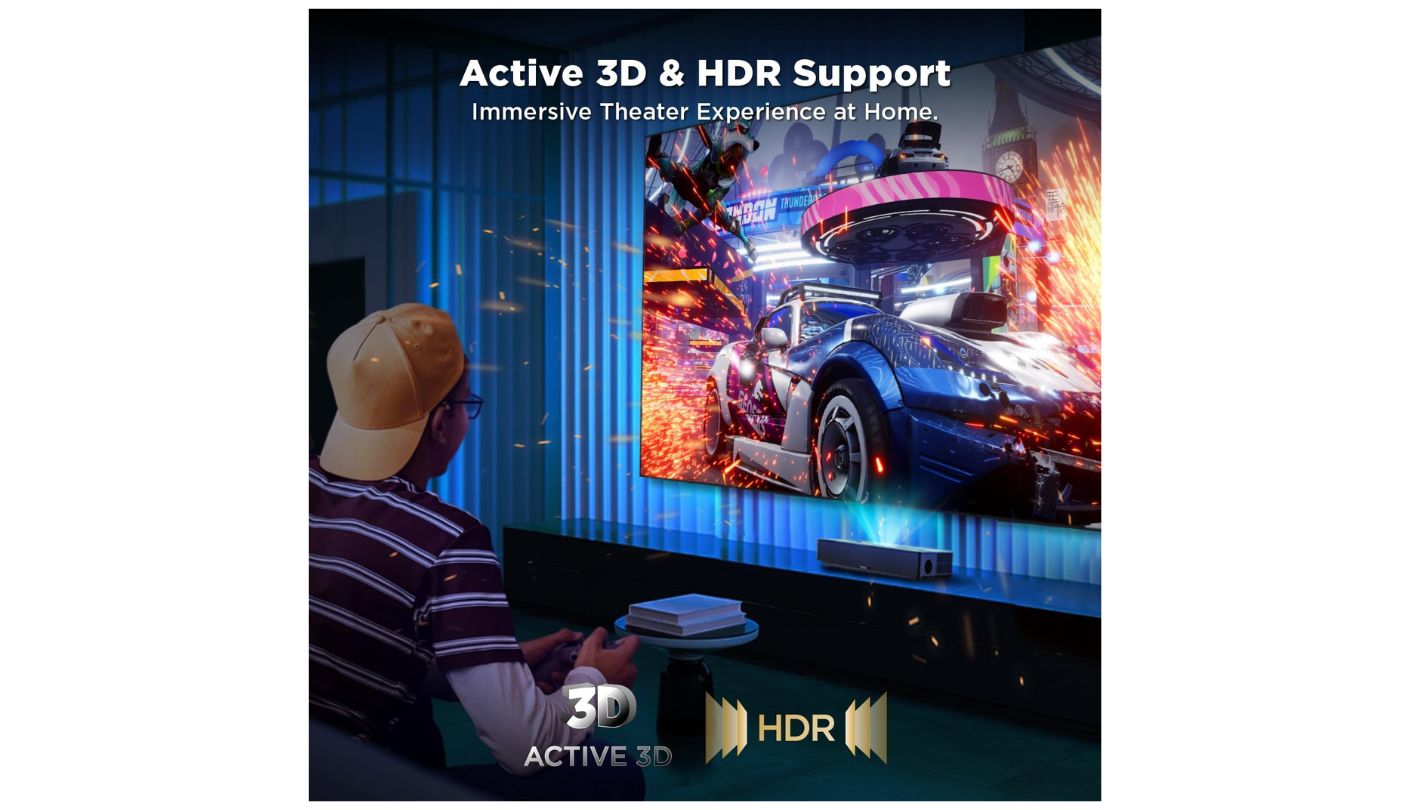
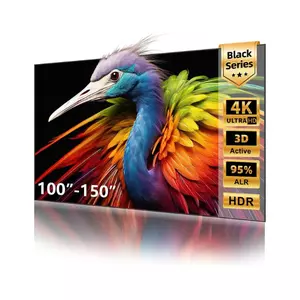
The two motorised screens above cost several times what this does, and the optical specification barely moves between them. The NothingProjector Black Series runs the same zero point six gain and the same hundred and seventy degree viewing angle as the VIVIDSTORM, with the same ninety five percent ceiling light rejection figure AWOL quotes, and it gets there by leaving out the motor and the aluminium box entirely.
The coating is what NothingProjector calls ST Carbon Black, applied over PET Crystal material with the familiar sawtooth structure underneath. Sawtooth ridges catch overhead light on their black upper faces while steering the projector beam forward, and the company also lists de-speckle treatment intended to cut the fine graininess that shows up on some lenticular surfaces in flat bright scenes. Support covers 4K, 8K and active 3D.
Physically it is the least intrusive of the five. The aluminium frame measures four tenths of an inch, which is roughly one sixth the width of the black velvet frame on the Elite, so the image reads as if it were floating on the plaster. Material tensioning runs on fibreglass rods and springs anchored to that frame, a technique borrowed from screens that cost considerably more, and it pulls the surface flat without a visible tension mechanism.
Installation is the part to plan for. NothingProjector recommends two people and a room of about a hundred and eight square feet to assemble it, which sounds fussy until you try to hold a hundred and twenty inch frame square on your own. A full installation kit and instructions come in the box. Once it is up the screen never moves again, and the absence of a motor means there is nothing to service and nothing to fail.
This is the choice for anyone who has already accepted a permanent screen on the wall and would rather put the savings into the projector. The optical performance tracks the motorised UST screens closely enough that the difference lives in convenience rather than picture, and a four tenths of an inch frame keeps the wall looking deliberate rather than cluttered. The compromise is total: this rectangle is where it is forever.
Pros:
- 0.4-Inch Frame
- 95% Ceiling Rejection
- Fibreglass Rod Tensioning
- De-Speckle Treatment
- Nothing To Service
Cons:
- Two-Person Assembly
- Permanent Wall Fixture
Summary: Clear a weekend afternoon and recruit a second pair of hands, because this is the one purchase here that arrives as a project. Owners of a small room will appreciate how little wall the frame consumes.
ALR Screen FAQ: Throw Types, Gain and Daylight
Will an ALR screen work with the projector I already own?
Only if the throw types match, and that is the single most expensive mistake in this category. Lenticular UST surfaces are engineered for a beam climbing steeply from a cabinet directly below the image, and they reject a ceiling mounted beam almost as effectively as they reject your lamps. Angular reflective materials like CineGrey 3D want the opposite geometry. Find the throw ratio of your projector, check the compatibility line on the screen listing, and do not let a discount talk you past a mismatch.
Do these screens fight daylight as well as ceiling lights?
Less well than the marketing implies. Most of these surfaces are designed to reject light arriving from above, which describes ceiling fixtures and downlighters precisely. Sunlight through a window on the same wall as your seating arrives at roughly the projector's own angle, and the optical structure cannot separate the two. A good screen of this kind turns an evening room with the lights on into a watchable one. Turning a conservatory at noon into a cinema is beyond all of them.
Does a gain figure below one mean a dimmer picture?
Not in the way the number suggests. Gain describes how tightly reflected light is focused toward the viewing position rather than how much survives. A white wall scatters a UST beam in every direction including the ceiling and the floor, while a zero point six ALR surface collects that light and aims it at the sofa. From a seated position the low gain screen usually looks brighter. Off to one extreme side it will look darker, which is the trade you are making.
Can I use a UST ALR screen outdoors?
Occasionally and carefully. AWOL confirms its floor rising model can go outside in dry weather while stressing it was designed for indoor use, and moisture is the obvious enemy for anything with a motor and a control box in it. Fixed frames are worse candidates still, since they are meant to hang on an interior wall. For anything regular in a garden, the coated fabric option is the one built for the job, being wipe-clean and packable by design.
Do these screens support 3D?
All five list active 3D compatibility, and one goes further. The Elite CineGrey 3D is polarised for passive 3D as well, which matters if your projector uses passive glasses rather than active shutter ones. Passive systems depend on the screen preserving polarisation, and ordinary matte white materials scramble it. Nothing else on this page makes that claim, so passive 3D owners have exactly one option here.
How close can I sit before the surface structure shows?
Closer than you would expect on a screen this size, though this kind of material has a texture that becomes visible at short range. The ridges that do the light rejecting are physical structures, and from a couple of feet away on a bright white frame you can see them. Normal seating distance for a hundred and twenty inch image runs from around ten to fifteen feet, and at that range the structure disappears completely. Sit six feet from a hundred and twenty inch screen and you will notice more problems than surface texture.
Is a motorised floor rising screen worth the extra outlay?
It depends on whether the wall is available to you. A fixed frame is a permanent installation that a landlord may refuse and a partner may veto, and for renters that decides the question outright. The floor rising models buy a room that stops looking like a cinema when the film ends. Judged on picture quality alone the fixed frames match them, so the premium buys reversibility rather than image.
How do I clean one without ruining the surface?
Gently, and with a light touch on the ridged UST surfaces. Elite and AAJK both specify a microfibre cloth on their surfaces, and a slightly damp cloth on PVC or coated fabric is fine. The ridged lenticular surfaces are more fragile than they look, because pressure can flatten the microstructure and leave a permanently duller patch. Wipe along the ridges rather than across them, skip household cleaners entirely, and never use anything abrasive on any of these materials.
Which ALR Screen Fits the Room You Actually Have
Shopping for one of these starts with two answers you already know. Where does your projector sit, and are you allowed to put a permanent black rectangle on the wall? Those two facts eliminate most of this page immediately, and whatever survives is a much shorter argument about acoustic masking, voice control and how much frame you want visible around the image.
What surprised me most while pulling these specifications together was how little the headline rejection percentages actually separate the products. Ninety five, ninety seven, sixty five: those numbers come from different measurement methods pointed at different optical structures, and treating them as a league table leads people straight into a throw type mismatch. The screen that suits your room is the one whose geometry matches your projector, and everything after that is furniture.

Jeb here, your go-to geek for everything from video projection to the latest tech trends. As an avid outdoorsman, I enjoy using monoculars and binoculars for hunting, traveling, and birdwatching. Join me in exploring the cool, quirky side of technology!


