AI is now F1's most valuable team member

Formula 1 has quietly become one of the most competitive arenas for AI companies, with eight new partnerships signed across the grid in the past six months alone. Technology spending in the sport hit $769 million in 2025 — up 41% year-on-year, per Reuters citing Ampere Analysis data. Total F1 sponsorship reached $2.54 billion last season, putting it second only to the NFL's $2.7 billion, and AI firms are now driving much of that growth.
Beyond the logo
For years, tech companies bought space on sidepods and rear wings for brand exposure. That calculus has changed. Firms like Anthropic, Google, Oracle, and CoreWeave are now embedded inside the engineering operations of the teams they sponsor — not just their marketing materials.
Williams signed a multi-year deal with Anthropic to integrate Claude across race strategy, car development, and day-to-day logistics. Williams board adviser Peter Kenyon has been direct about the goal: AI is a tool for returning the team to the front of the grid, not a branding exercise. Anthropic, for its part, gets a very public stage to demonstrate what its enterprise-grade model can do under genuine pressure.
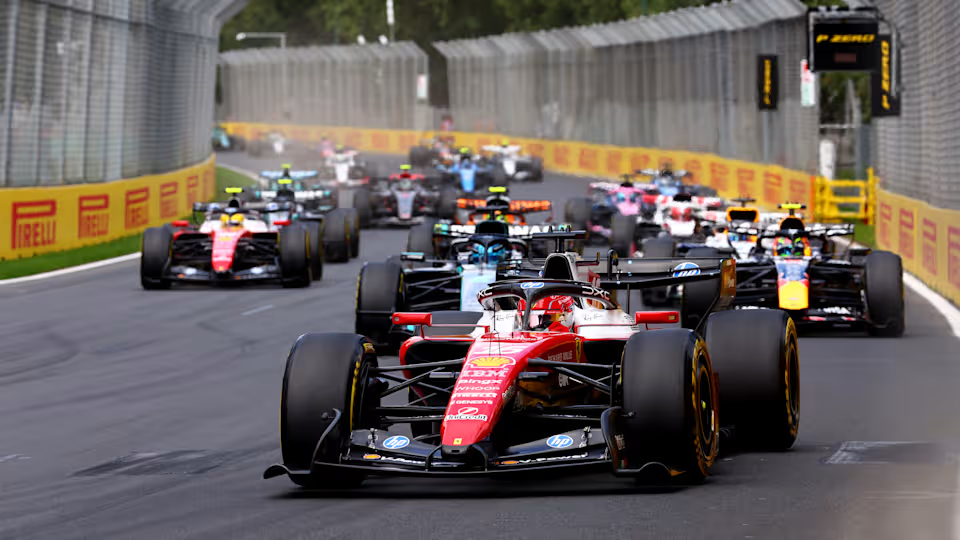
Williams Racing has partnered with Anthropic to embed Claude across race strategy, logistics, and car development operations.
Agents at the wheel
Red Bull's deepening relationship with Oracle has moved toward what the industry calls "agentic" AI — systems that don't wait to be asked a question but proactively surface solutions as race conditions change. McLaren shifted its Google partnership away from Pixel hardware promotion and toward Gemini generative AI, with Google Cloud now running more than 300 million race simulations per season. Aston Martin brought in CoreWeave for compute infrastructure.
The FIA's cost cap — set at $215 million per team — is part of what's accelerating adoption. With budgets fixed, teams can't simply throw more engineers at problems. AI handles regulatory compliance checks, aerodynamic simulation, and live strategy adjustments faster and at a fraction of the labor cost, freeing senior engineers for higher-order work.
The stakes beyond the track
Formula 1's own commercial arm has worked with Amazon Web Services to build AI-generated broadcast graphics that predict overtaking probability in real time. In 2024, an AI model contributed to the design of the Canadian Grand Prix trophy.
What's unfolding in the paddock matters beyond motorsport. As The Next Web reports, Red Bull, McLaren, and Williams are effectively functioning as live proof-of-concept deployments for enterprise AI tools. The teams that can't access — or afford — frontier models risk falling behind not just on strategy calls, but on car development across an entire season. British teams, Williams especially, are currently leading that adoption curve.


