Micron Joins the Trillion-Dollar Club on an AI Memory Shortage

Micron Technology crossed a $1 trillion market capitalization on May 26, 2026, after its stock jumped 19% in a single trading session — the company's biggest one-day gain since 2011. The catalyst was a dramatic analyst upgrade from UBS, which tripled its price target from $535 to $1,625, the highest on Wall Street. The underlying reason is simple: the memory chips that power AI data centers are in short supply, and Micron makes a lot of them.
The UBS call
UBS analyst Timothy Arcuri argued that Micron is no longer a cyclical chipmaker subject to boom-and-bust memory pricing. Instead, the bank sees it as an AI infrastructure company now signing long-term supply agreements with hyperscalers — the kind of contracts that smooth out revenue and justify a growth-stock valuation. At $1,625 per share, the implied valuation would surpass Tesla, Meta, and Berkshire Hathaway, per Yahoo Finance. That target assumes a roughly 15x forward earnings multiple — solid, but exposed if AI infrastructure spending slows or rival chip yields improve faster than expected.
HBM: the bottleneck behind the rally
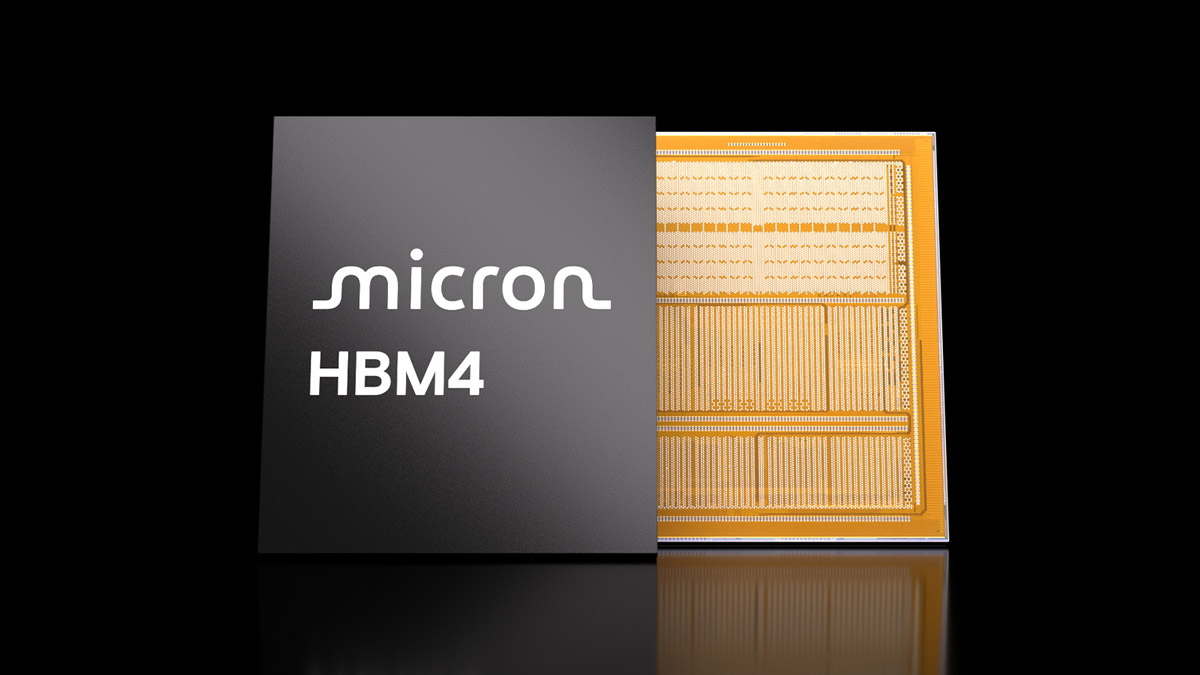
High Bandwidth Memory (HBM) is a specialized chip that sits alongside GPUs in AI servers, feeding them data fast enough to actually train large models. Without it, even the most expensive Nvidia hardware runs below capacity. Micron holds around 21% of the global HBM market, competing with South Korea's SK Hynix and Samsung. All three firms have their 2026 HBM capacity sold out, with Micron's CEO confirming the company can only fulfill 50–65% of medium-term customer demand, according to Crypto Briefing.
A shortage that runs into 2027 — and possibly beyond
The supply gap is not closing quickly. Counterpoint Research expects relief by Q4 2027; Intel's CEO and warnings from Samsung and SK Hynix point to 2028 or later. Micron is expanding manufacturing in Singapore and Taiwan, but those fabs won't add meaningful capacity before late 2027 at the earliest. That timeline matters for anyone buying servers or cloud infrastructure in the next two years — prices for HBM and standard DRAM have already climbed 80–90% year-to-date.
As an American company, Micron also benefits from a geopolitical edge. The CHIPS Act channels US subsidies into domestic semiconductor manufacturing, while export controls create friction for its Korean rivals. In a market where three companies control over 90% of HBM supply, that edge is worth something.
The $1 trillion milestone makes Micron the 11th-largest US company. Whether that valuation holds depends on whether AI infrastructure spending stays on its current trajectory — and whether the shortage outlasts the hype.


