Retekess TE103 Review: The Best Hearing Aid for Seniors?
My father-in-law spent two years asking people to repeat themselves before anyone in the family put a name to what was happening. Getting him to an audiologist took another six months. Getting him to wear what came out of that appointment took considerably longer - he called the devices "too visible, too fiddly, and too expensive to risk losing." He is not unusual in this. Hearing loss in older adults is one of the most undertreated conditions in medicine, and the reasons people give for not addressing it almost always involve cost, stigma, or inconvenience. The Retekess TE103 is designed to remove all three of those barriers at once.
It is an OTC (over-the-counter) CIC hearing aid - Completely-in-Canal - built for mild to moderate hearing loss. The two groups Retekess designed it for are older adults losing hearing gradually with age, and middle-aged adults whose hearing declined from years of working in noisy environments - factory floors, industrial sites, loud workshops. No prescription required, no audiologist appointment to get started, no visible device sitting behind the ear. I tested it across three weeks of daily use across family dinners, TV watching, outdoor walks, phone calls, and crowded indoor spaces. This review covers what works, what has limits, and who the TE103 is built for.
Note: The TE103 is designed for mild to moderate hearing loss. If you or someone you're buying for has not had a hearing evaluation, consulting an audiologist or hearing care professional before purchasing any hearing device is advisable.
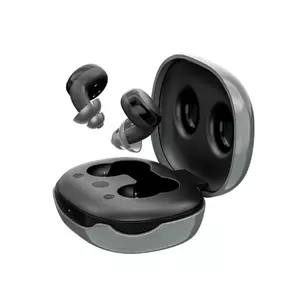
5 Reasons to Buy the Retekess TE103:
- CIC design at 2.3g is genuinely invisible in the ear canal - no visible hardware
- Charging case doubles as a drying unit and a remote microphone for TV use
- 80-hour total battery life across earpieces and case - no daily charging anxiety
- Self-fitting via SOUNDWEAR app with 16-channel sound processing and 4 listening modes
- Smart memory holds last volume and mode settings across power cycles
2 Reasons to Consider Alternatives:
- No water resistance rating - the TE103 has no IPX protection, so avoid moisture, rain, and humid conditions
- Not appropriate for severe hearing loss - consult an audiologist if unsure of your level
Table of Contents:
- Retekess TE103: Full Specifications
- CIC Design: Fit, Discretion, and Daily Comfort
- Unboxing and Getting Started
- Sound Quality and Listening Modes
- The Charging Case: Drying Function and Remote Pickup
- Battery Life in Practice
- SOUNDWEAR App Experience
- TE103: What Owners Say
Retekess TE103: Full Specifications

Everything the TE103 brings to the table technically:
| Specification | Details |
| Type | CIC (Completely-in-Canal) OTC hearing aid |
| Intended Use | Mild to moderate hearing loss |
| Sound Processing | 16-channel digital processing |
| Gain | ≤40 dB ±3 dB |
| Listening Modes | 4 modes: General, Restaurant, Outdoor, TV |
| Volume Levels | 6 levels (≥30 dB range) |
| Feedback Suppression | Yes |
| Bluetooth | Version 5.2, range up to 10 m |
| Latency | ~8 ms |
| Earbud Battery | 35mAh - up to 20 hours per charge |
| Charging Case Battery | 400mAh - 3 additional full charges, charges in 2-3 hours |
| Total Battery Life | 80 hours |
| Color | Flesh tone (earpieces), Star Silver (charging case) |
| Water Resistance | None - keep away from moisture |
| App Control | SOUNDWEAR (iOS and Android) |
| Case Features | Constant temperature drying + remote sound pickup microphone (BLE) |
| Smart Memory | Saves last volume level and mode on power-off |
| Low Battery Alert | Yes |
| Wax Guard Filters | Included |
| Certification | FDA OTC certified |
| Warranty | 2 years |
Two specifications define the TE103's position in the OTC hearing aid market: the charging case with integrated drying function and remote microphone, and the 80-hour total battery. Both address problems that cause people to stop wearing hearing aids altogether - moisture damage and the daily inconvenience of recharging. The CIC form factor addresses the third one: visibility.
CIC Design: Fit, Discretion, and Daily Comfort
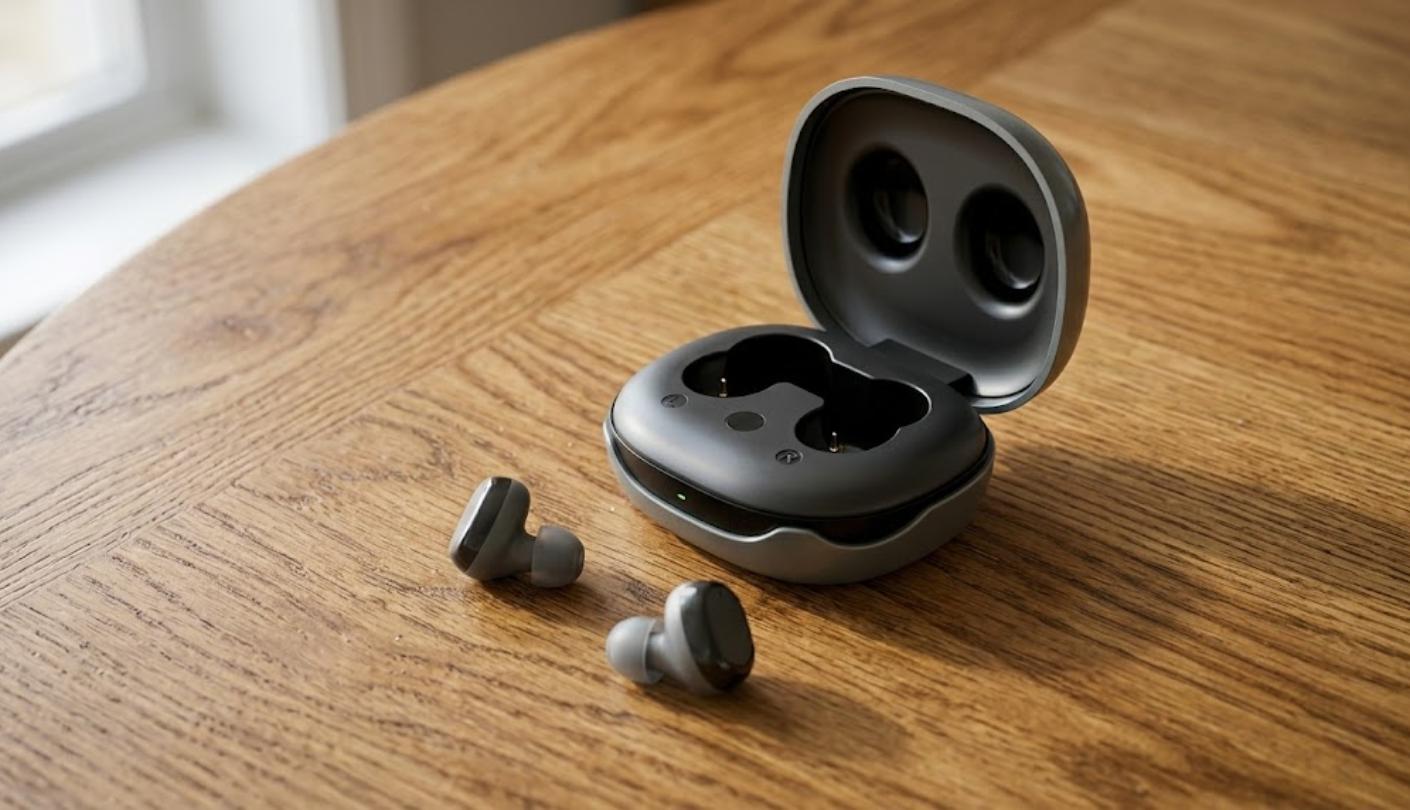
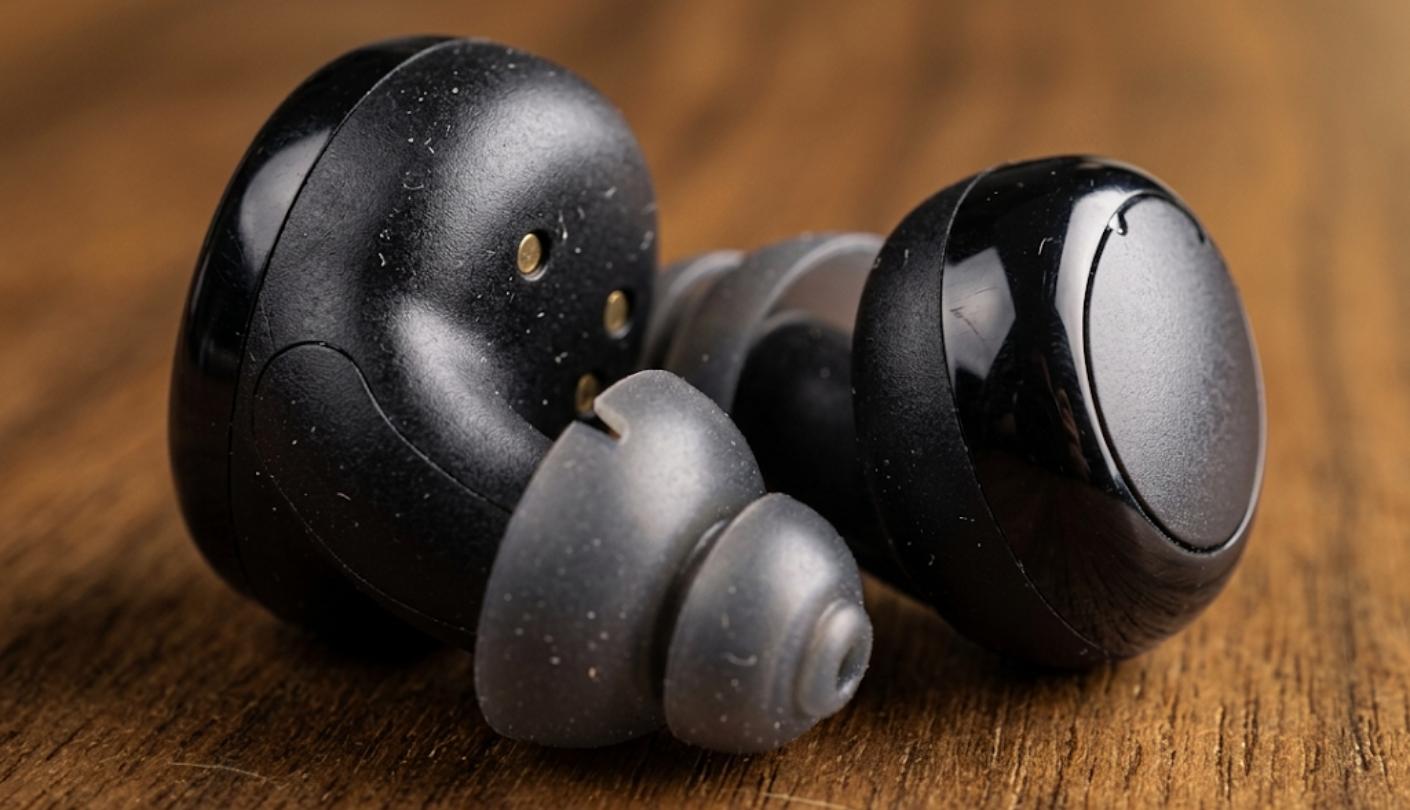
CIC means the device sits entirely within the ear canal. From the outside, there is nothing to see. No hook over the ear, no visible housing, no wire. At 2.3 grams, the TE103 weighs less than a small coin. First-time users sometimes forget they're wearing it, which is either a sign of good fit or the beginning of a frantic search of the couch cushions.
The flesh-tone color blends with most skin tones at the canal opening. Anyone close enough to notice it would have to be looking specifically for it. For people who avoided hearing aids for years because of how they looked, the CIC form factor removes that particular barrier completely.
Fit depends on getting the right ear tip size. The TE103 ships with multiple tip sizes, and taking the time to try each one before settling is worth it. A well-fitted CIC device stays in during normal head movement, talking, and light activity. A poorly fitted one shifts, causes feedback, and makes the experience frustrating. Most users find their correct size on the first attempt - the canal walls provide natural stabilization that ITE (in-the-ear) and BTE (behind-the-ear) designs don't have.
Water resistance is the one gap to flag clearly. The TE103 carries no IPX rating - no protection against moisture, sweat, or rain. Compared to some competing OTC devices that carry IPX4 or IP65 ratings, this is a limitation. A CIC device sits deep in the ear canal where humidity is naturally higher than the outer ear, which is precisely why the integrated drying function in the charging case matters as much as it does. Using the drying cycle every night is not optional maintenance with this device - it's the primary moisture management strategy.
Unboxing and Getting Started
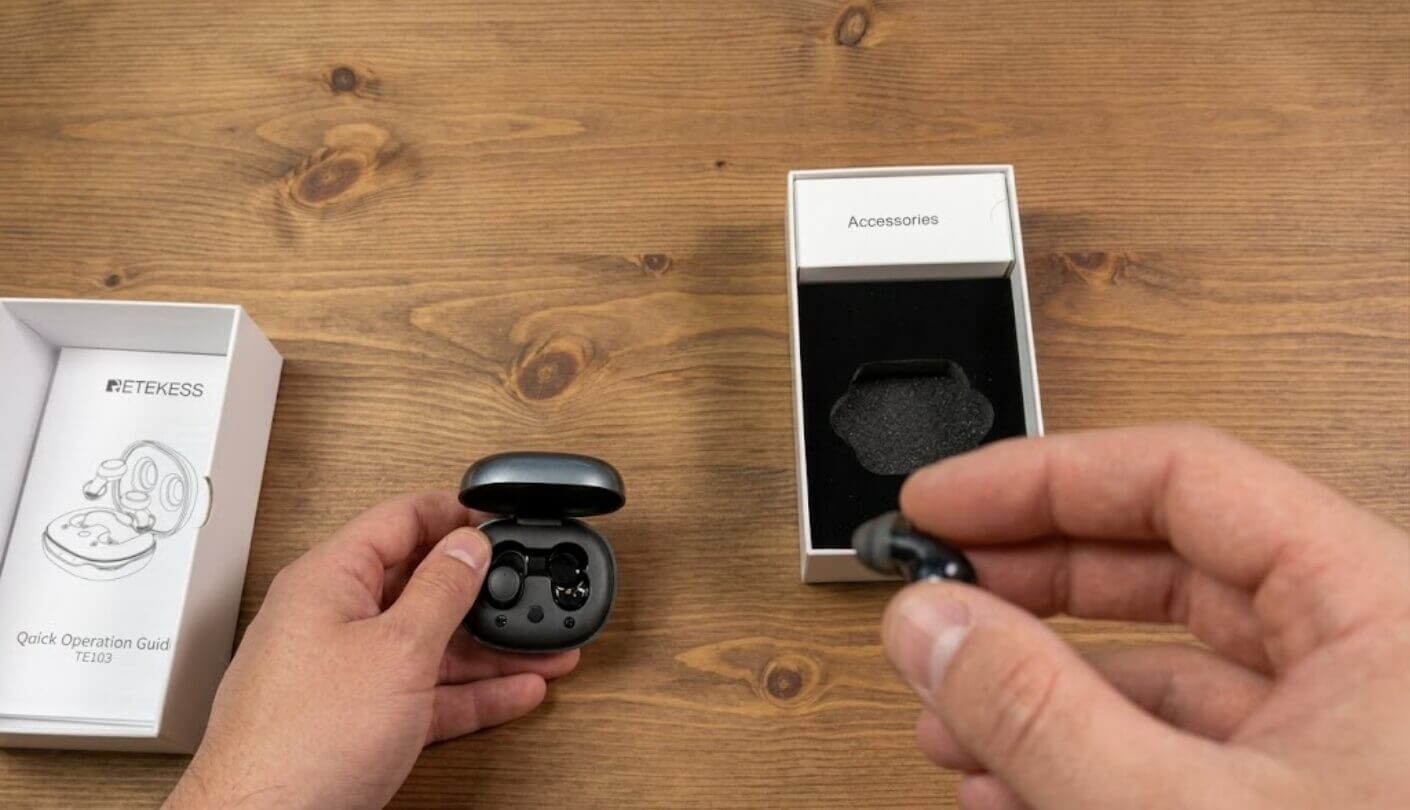
Box contents:
- TE103 hearing aids (pair) in charging case
- Multiple ear tip sizes
- USB-C charging cable
- Wax guard filters and replacement tool
- Cleaning brush
- User manual
The earpieces arrive in the case, partially charged. Remove, insert, and the TE103 powers on automatically. Default mode is Standard, default volume is mid-level. The device is usable from the first minute without touching the app.
Volume control is on the earpiece itself - a small button cycles through the six levels. Mode switching also happens on the device. The SOUNDWEAR app opens up additional control and fine-tuning, but someone who does not use a smartphone can use the TE103 through physical controls alone. That matters for the audience this device is designed for.
The smart memory function means the TE103 picks up exactly where it left off after charging. Whatever volume and mode were active when the device was placed in the case are active again when it's removed. No reconfiguring after every charge cycle.
Wax guards deserve a specific mention. Earwax is the most common cause of sound quality degradation in CIC hearing aids, and it's the most easily preventable. The TE103 includes a supply of replacement guards and a tool to change them. Checking and changing the guard monthly extends the life of the device and maintains audio performance. It takes under two minutes once you've done it once.
Sound Quality and Listening Modes
The 16-channel processing is the core of the TE103's audio performance. More channels means finer control over how different frequency ranges are amplified - a 4-channel device treats the same broad band the same way regardless of what's in it. At 16 channels, speech frequencies can be lifted independently from background noise frequencies, which is the difference between hearing a conversation and hearing a wall of amplified sound.
Feedback suppression is active across all four modes. The whistling that people associate with low-cost hearing amplifiers is largely absent during normal use. Situations that can trigger a brief chirp - a hand cupped near the ear, a phone pressed against the side of the head - are edge cases rather than daily occurrences. During three weeks of testing it came up maybe twice.
The four listening modes each serve a distinct environment:
| Mode | Environment | What It Does |
| General | Home, quiet indoor spaces | Balanced amplification across speech frequencies. The everyday default for most users |
| Restaurant | Crowded restaurants, family gatherings, busy offices | Suppresses lower-frequency background noise to lift speech over crowd noise. Most useful where multiple voices overlap |
| TV | Living room, home entertainment | Optimized for the frequency profile of television audio. Works with the case's remote pickup microphone for extended range from the screen |
| Outdoor | Walks, open spaces, light wind | Wind noise reduction without cutting high-frequency environmental sounds that matter for awareness |
Speech clarity in General mode is the metric that matters most for everyday use. Quiet one-on-one conversation - family dinners, phone calls, direct exchanges - came through clearly and naturally. The ≤40 dB gain ceiling is appropriate for mild to moderate loss: enough amplification to make a real difference without the distortion that comes from pushing gain beyond what the ear actually needs.
Crowded environments are harder. Restaurant mode helped in a mid-sized dining room, pulling the low hum of background conversation back enough to follow one person's voice at the table. A genuinely loud space - a bar on a Friday night, a crowded airport terminal - remained difficult. That's not a flaw specific to this device: it's the acoustic ceiling of any single-microphone CIC at this price point. Multi-microphone directional systems handle it better and cost several times more.
The Charging Case: Drying Function and Remote Pickup
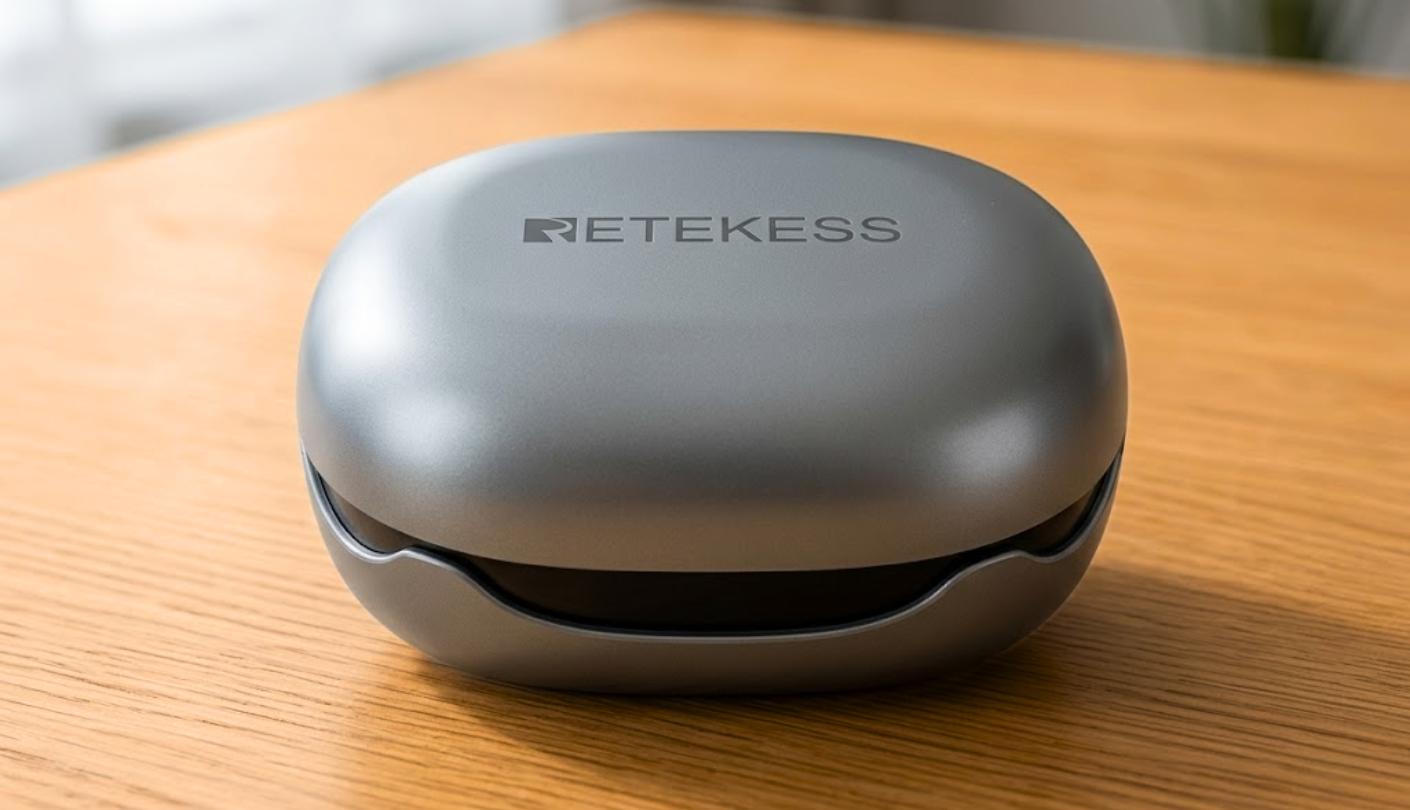
The charging case on the TE103 does three things that most comparable OTC hearing aids leave to separate accessories: it charges the earpieces, dries them after every use, and can act as a remote microphone placed near a TV or at the center of a table.
Constant Temperature Drying. Moisture inside a CIC hearing aid accumulates from canal humidity, sweat near the ear, and condensation. Left unaddressed, it degrades the electronics over months and eventually causes complete failure. The TE103 case maintains a constant low temperature during charging that gently evaporates moisture from the earpieces every time they're placed inside. Users don't initiate this - it runs automatically. Compared to devices that rely on silica gel packets or separate drying boxes, the integrated approach means drying happens every night without any extra step or additional accessory.
Remote Sound Pickup. The case contains a built-in microphone. Place it near the television, a speaker, or across a table, and it transmits audio to the earpieces wirelessly. In TV mode, this extends the effective listening range - someone sitting across the room from the television doesn't need to turn the volume up to a level that bothers everyone else in the house. During testing, placing the case near the TV speaker and sitting on the sofa produced clear, comfortable audio without adjusting room volume at all.
This feature also applies to table conversations. Place the case in the center of a dining table and all participants' voices are picked up at closer range than the earpieces alone could manage from across the table. It's a low-tech solution that works without any configuration.
Battery Life in Practice
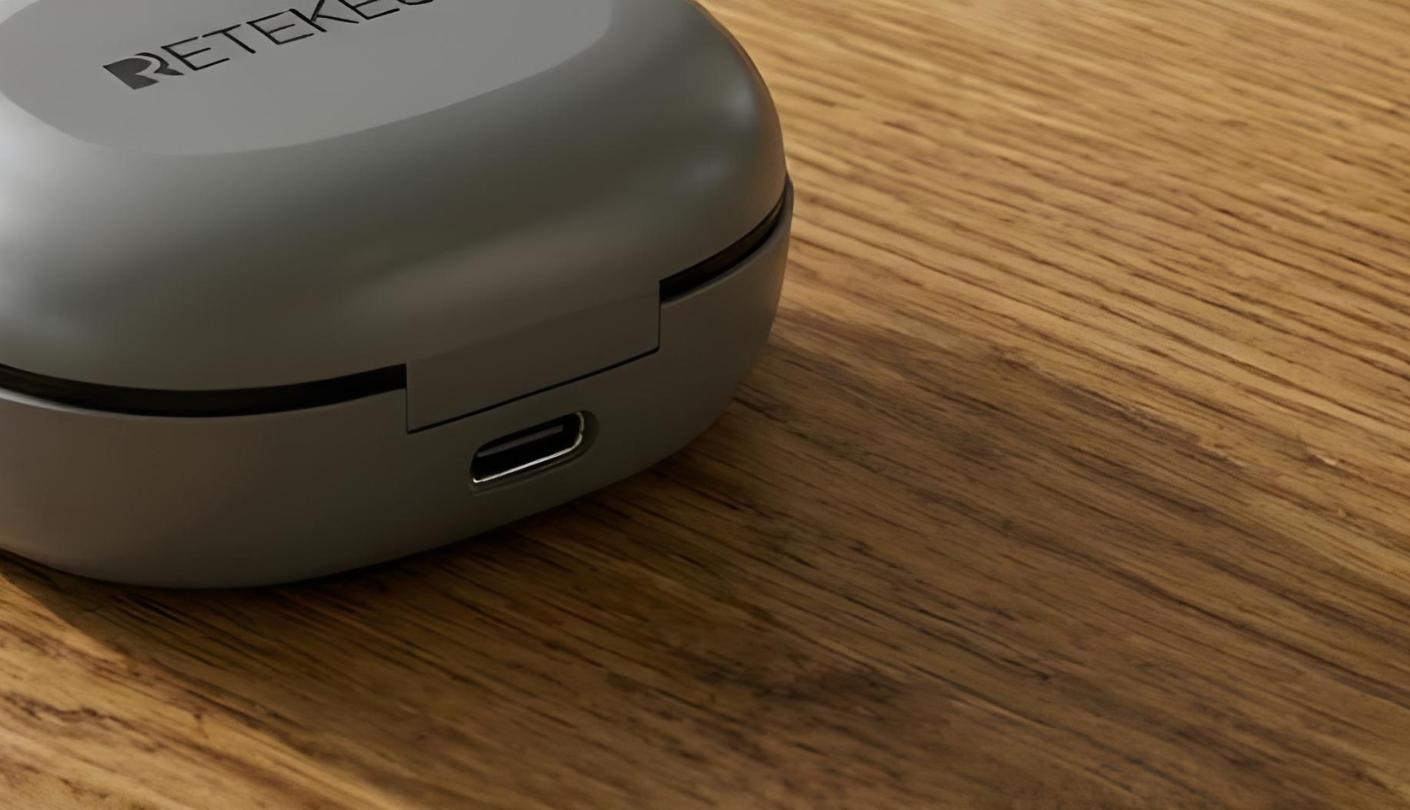
Image of the TE103 CIC Hearing Aid. Source: Original photo (gagadget.com)
The 20-hour single-charge runtime covers more than a full waking day for most users. Placed in the case overnight, the earpieces are ready by morning. The 400mAh case battery holds three additional full charges - 80 hours total before the case itself needs a cable.
Across three weeks and wearing days that ran 12 to 16 hours, the earpieces never ran flat before bedtime. The low-battery alert gives a warning rather than a hard cutoff, which matters when you're out and can't immediately get to the case. If it fires during dinner, there's usually enough charge left to get through the evening.
Eighty hours translates to five or six full days of use before the case needs recharging - enough for a long weekend trip with nothing but a USB-C cable. The concern that a hearing aid will die mid-conversation stops being something worth tracking.
SOUNDWEAR App Experience
The SOUNDWEAR app is available for iOS and Android. Pairing takes under a minute - open the app, select the device, confirm - and the main screen shows volume level, active mode, and battery percentage for each ear independently.
Within the app, the controls go further than the physical buttons on the earpieces allow:
- Fine volume adjustment beyond the six physical steps
- Mode selection by name rather than cycling through
- Equalizer adjustments across frequency bands - useful for users who find certain frequencies too sharp or too muffled in standard settings
- Battery percentage for left and right earpieces separately
- Firmware update access
The app's most useful function for new users is the equalizer. The TE103's default tuning is a reasonable starting point for average mild-to-moderate hearing profiles, but hearing loss is individual. Someone whose loss is concentrated in high frequencies benefits from different settings than someone with a flat loss across the range. Spending fifteen minutes with the equalizer in the app - adjusting, listening, re-adjusting - produces a noticeably more personalized result than using the device at factory defaults.
For users who find apps frustrating or who don't use smartphones, the physical controls cover the essential functions. The app is an addition, not a requirement.
TE103: What Owners Say
Verified Owner Feedback
What comes back from verified purchasers on Amazon falls into two clear camps: people relieved to have found something they'll actually wear, and people working through what the TE103 can and can't do in noisier environments.
Praises: "Picks up the faintest of noises and amplifies such as soft footsteps, the slightest cough, and everyday sounds I had stopped noticing. Works well when paired to a smartphone via the app. Comes with a charging case, a short USB-C cable, and 3 sizes of ear tips. Comfortable to wear, reasonable weight and size. Overall a very good hearing aid."
"These work right out of the box with very simple instructions to follow. The earbuds fit really well and do not move easily. I've put clothes on and off without it falling out. Charges rapidly and long-lasting so you can use these as a main hearing aid or a temporary backup."
"My husband bought these for his mother. She has been wearing them every day without complaint, which is something we could never get her to do with the devices she got through the clinic. The discretion matters to her. She says people stop treating her differently when they can't see it."
"I've had these for about two months now. The battery lasts two to three days between charges and the case charges fast. What surprised me was the drying function - my last hearing aids got moisture damage after about a year. These go into the case every night and come out dry every morning. No issues so far and they still sound exactly like day one."
"Bought specifically for TV watching. My wife and I had a system where she'd turn the volume up and I'd sit close to the screen. Now I set the case near the TV speaker, switch to TV mode, and sit wherever I want. She watches at normal volume. I hear every word. That feature alone made the purchase worth it."
***
Drawbacks: "The app took a few attempts to connect reliably on my Android phone. Once connected it stayed connected, but the initial pairing wasn't as smooth as I expected."
"I applied the self-fitting settings from the app and it was an improvement, but I still find busy restaurants difficult. These help a lot in quiet settings and moderately noisy ones - loud environments are still hard."
The restaurant complaint is the most honest thing in the review set - and it lines up exactly with what the specs and the testing show. A single-microphone CIC at this price point genuinely helps in quiet and moderate environments. It genuinely struggles when the room is loud. The buyers who knew that going in are satisfied. The ones who expected a full restaurant solution were not. That gap is about expectation management, not a product defect.
Final Verdict: Is the Retekess TE103 Worth It?
My father-in-law eventually agreed to try the TE103 because of one sentence: nothing shows. He's been wearing it for six weeks. He has not asked anyone to repeat themselves at the dinner table once.
That's the case the TE103 makes more convincingly than any spec can: it removes the three reasons people with mild to moderate hearing loss don't do anything about it. Invisible form factor. No appointment, no prescription, no fitting visit. Battery that lasts the week without a second thought. The charging case drying function is not a headline feature most buyers think to look for, but it extends the life of the device in a way that shows up over months, not days.
The honest limit is noise. Family dinners, TV, quiet offices, one-on-one phone calls - the TE103 handles all of these well. A crowded restaurant at full Saturday volume is genuinely harder, and no amount of app adjustment changes the physics of a single CIC microphone in that situation. Know the use case going in, and the TE103 lands exactly where it should.
For anyone in the mild to moderate hearing loss category who has been putting this off - because of how it looks, what it costs, or how complicated it seemed - the TE103 is the most direct answer to all three of those objections at once.

Jeb here, your go-to geek for everything from video projection to the latest tech trends. As an avid outdoorsman, I enjoy using monoculars and binoculars for hunting, traveling, and birdwatching. Join me in exploring the cool, quirky side of technology!


