Solar panels between train tracks survived 11,000 passes — now France wants in

Swiss startup Sun-Ways just wrapped up a landmark test of solar panels installed directly between live railway tracks, recording over 11,000 train passes with zero damage. The 100-meter pilot in Buttes, Switzerland — 48 panels generating 18 kW combined — ran from April 2025 and is set to continue through 2028. France's national rail operator SNCF has already signed a collaboration agreement to study the data, eyeing its 28,000 km network as a potential deployment ground.
The design
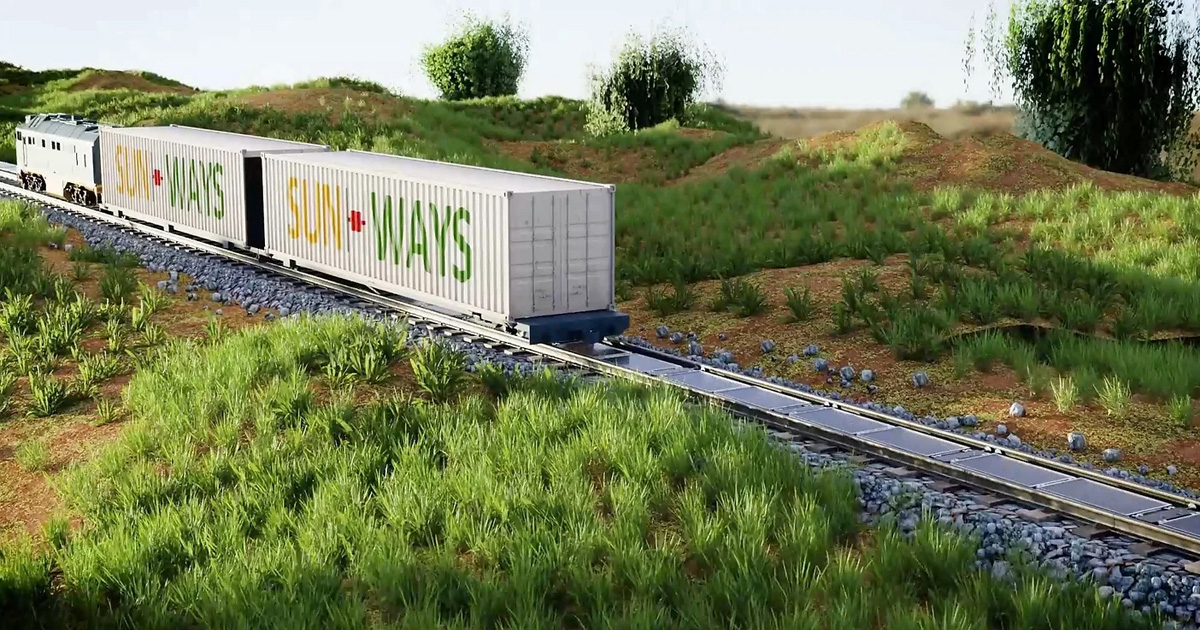
Unlike fixed solar sleepers trialed elsewhere, Sun-Ways' system is removable. Each six-meter module — three panels of 380 W each — disconnects from both the tracks and the power grid in roughly ten minutes. Installation uses a purpose-built machine from Swiss track-maintenance company Scheuchzer AG, which unrolls panels like a carpet at up to 300 meters per hour. The generated electricity feeds directly into the grid or powers station infrastructure such as signals and terminals.
The key engineering challenge was vibration and airflow from heavy trains passing at speed. Sun-Ways uses a patented locking connection that, per SWI swissinfo.ch, held firm across all recorded passes. Founder Joseph Scuderi says both safety and energy output targets were met.
Why this matters after Wattway
The context here is important. France's Wattway project — solar panels embedded in road surfaces — cost €5 million and collapsed within three years. Panels degraded, noise complaints mounted, and energy output hit only half the projected figure before partial demolition in 2018, per Science Alert. Sun-Ways' removable rail approach sidesteps most of those failure modes: no road traffic grit, no leaf accumulation on a flat surface, and maintenance access built into the design from the start.
SNCF's February 2026 agreement gives the French operator access to three years of production data and technical feedback before committing to any rollout. No commercial pricing or deployment timeline has been announced for any market.
What's next
In the UK, Network Rail owns the entire track network, and a small solar rail pilot already ran near Aldershot in partnership with campaign group 10:10 and Network Rail. European results could inform a broader UK feasibility study, though no formal process has been announced. ZME Science notes the Swiss test phase runs to April 2028, meaning a full dataset is still two years away. For now, Sun-Ways has cleared the basic hurdle that tripped up every solar road before it: the panels stayed in one piece.


