School buses are moonlighting as giant batteries this summer

When schools close for summer, most buses sit idle in parking lots for three months. A growing number of US school districts have a better idea: plug them into the grid and let them earn their keep.
Over 200 electric school buses — from California to North Carolina — are currently participating in Vehicle-to-Grid (V2G) programs, which allow the buses to discharge stored electricity back into the local power network during peak demand. This summer, 31 energy companies across 21 states are running these programs, and the timing is deliberate. Summer is when the grid strains hardest, air conditioners run flat out, and utilities scramble to avoid blackouts.
Powerbanks on wheels
School buses turn out to be unusually well-suited for this role. Their batteries are large — typically over 200 kWh each — and their schedules are predictable. Charge overnight when rates are low, discharge midday when demand and prices spike. They sit unused exactly when the grid needs help most.
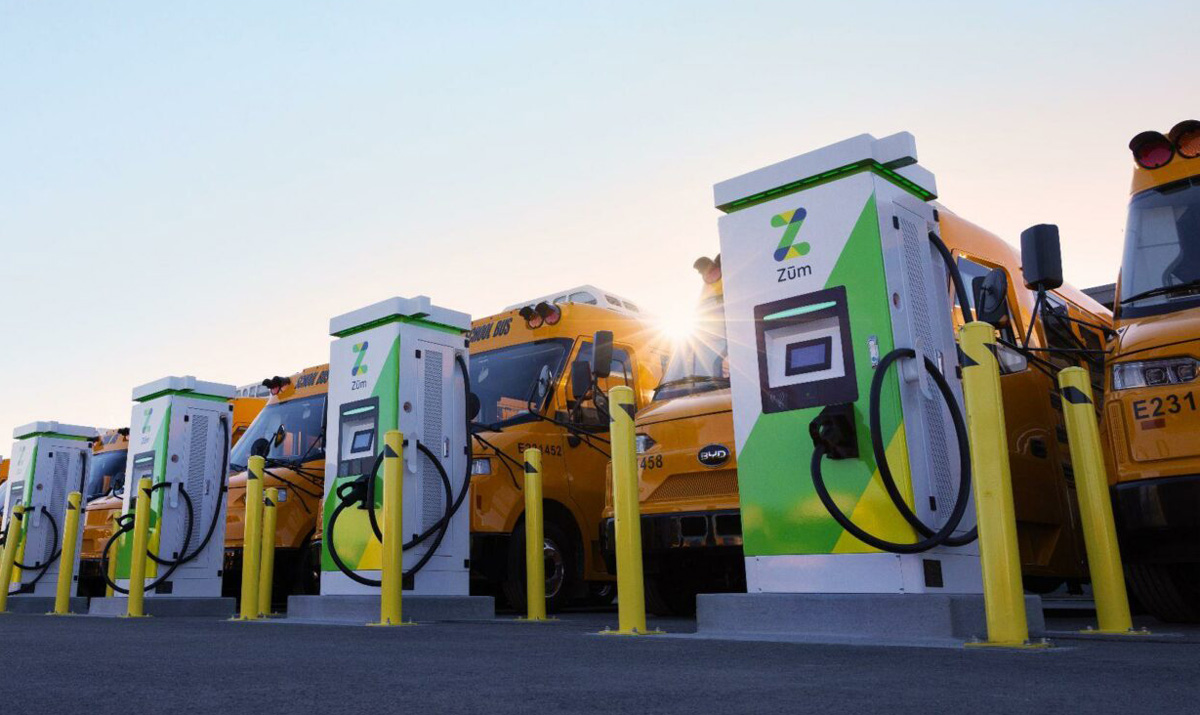
Oakland Unified School District has set the national benchmark. Its 74-bus fleet, operated in partnership with Zum, now exports around 2.1 GWh of electricity per year back to the grid — enough to power thousands of homes. In Beverly, Massachusetts, just two buses discharged more than 30 MWh over five years through National Grid, generating a steady revenue stream for the district.
The numbers, honestly
Right now, only about 230 of the 6,700 electric school buses currently on US roads are enrolled in V2G programs. Together they deliver roughly 8 MWh to the grid — a modest figure against the scale of networks like PJM, which serves 67 million people and needs over 160,000 MW on peak days. The impact today is real but limited.
The bigger picture is the trajectory. The federal Clean School Bus program has committed $5 billion to accelerate electric bus adoption. Analysts forecast the US electric school bus fleet could reach 14,625 vehicles in the coming years. If a meaningful share of those participate in V2G, utilities gain a distributed mobile reserve capable of covering neighborhoods during extreme heat events.
ComEd is running a V2G pilot in Illinois through June to October 2025, covering districts in River Trails, Troy, and Waconda — with a final report due early 2026. That data will matter: battery warranty implications and net revenue uncertainty across different utility rate structures remain the two main reasons more districts haven't signed up yet, according to V2G News Scale Report.
What comes next
The concept works. The economics depend heavily on local utility pricing — California's summer peak rates make the math easy; other markets are less clear-cut. For school districts weighing aging diesel fleets against tight budgets, the promise of turning parked buses into a revenue source could tip the decision toward going electric. That's the real pitch here: V2G doesn't just help the grid, it helps justify the upfront cost of the buses in the first place.


