At gagadget.com, your trust is our priority. We follow strict quality standards in our research, tests, and analysis of tvs, to give you the best experience. Learn more
Which Are the Best 32-Inch TVs for Kitchens? Choose Wisely
A kitchen television lives a different life than the one in the living room. It gets splashed with pasta water, ignored for twenty minutes while something simmers on the stove, then suddenly needs to load the morning news the second eggs hit the pan. Most shoppers assume a 32-inch set is simply a smaller version of whatever hangs above their couch. The priorities actually shift once a screen has to survive counter clutter, morning glare through a window, and a cook whose hands are rarely free for the remote.
Screen technology at this size has settled into a handful of distinct categories rather than one universal standard. Some 32-inch sets still ship in 720p, others move up to full 1080p, and a rare few now carry a genuine 4K panel borrowed in spirit from a larger sibling. I mounted five of these under my own cabinets over the course of a few weeks, and the platform running the show turned out to matter almost as much as the panel itself. Fire TV, Roku OS, and Samsung's Tizen each handle voice control, app switching, and free channel access in noticeably different ways once a set is actually propped against a backsplash instead of sitting in a spec sheet.
Here are my two top picks for the best 32-inch TV for a kitchen:
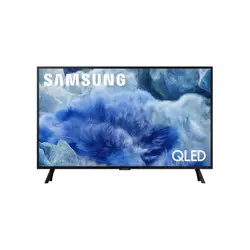
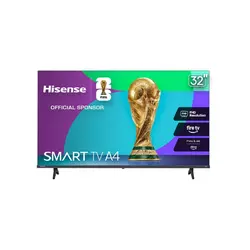
Table of Contents:
- Best 32-Inch TV for a Kitchen: Buying Guide
- Top 5 32-Inch TVs for Kitchens in 2026
- Best 32-Inch Kitchen TVs: Comparison
- Samsung 32-Inch Class QLED Q8F 4K UHD Smart TV
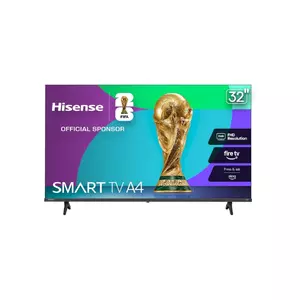
- Hisense 32-Inch Class A4 Series FHD 1080p Smart Fire TV
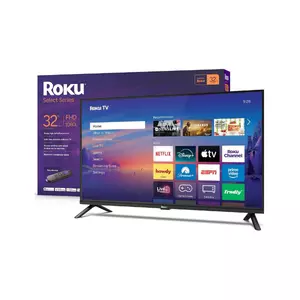
- Roku Smart TV 2026 Select Series 32-Inch
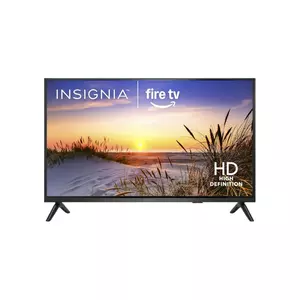
- Insignia F20 32-Inch Fire TV
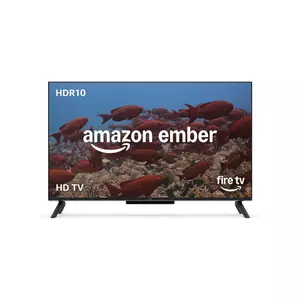
- Amazon Ember 32-Inch 2-Series with Fire TV
- 32-Inch Kitchen TVs: FAQ
Best 32-Inch TV for a Kitchen: Buying Guide
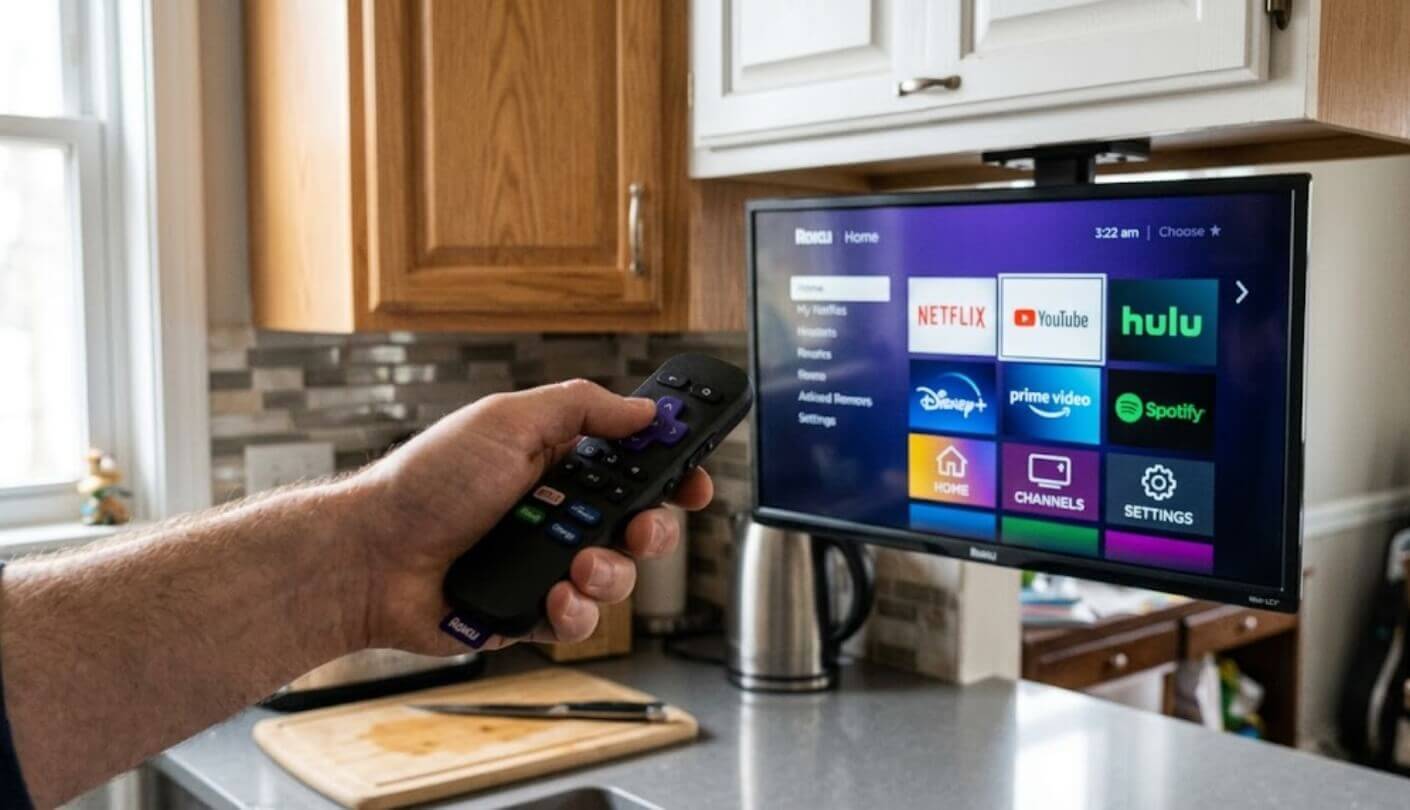
A spec sheet built for a living room TV doesn't translate cleanly to a kitchen, where viewing distance, counter space, and messy hands change what actually counts as a good purchase. What follows is a breakdown of the factors that shifted my own opinion the most once a set was actually running under a cabinet instead of sitting in a box.
Resolution at Kitchen Viewing Distances
Kitchens rarely offer the ten-foot sofa distance a living room does. A set mounted under a cabinet or propped on a counter often sits only a few feet from wherever someone happens to be chopping vegetables. That changes how much resolution actually matters. At that range, the gap in pixel density between a 720p panel and a 1080p one becomes obvious in a way it never would across a den, though the jump to full 4K on a screen this small is closer to a novelty than a necessity.
A 1080p panel at kitchen viewing distances shows a visible jump over 720p, especially with on-screen text and graphics. Beyond that, a 4K panel on a 32-inch screen produces diminishing returns that most cooks will never notice while stirring a pot.
The resolution figure on the box only tells part of the story anyway, since streaming quality depends on the app's bitrate tier as much as the panel itself. I found myself paying closer attention to how a 720p panel handled on-screen text during a recipe video than to whether a nature documentary looked crisp, since compression artifacts and soft edges are simply easier to spot up close than they are from a living room sofa. Recipe captions and weather graphics, after all, are what a kitchen screen spends most of its day showing.
Countertop Footprint and Wall Mounting
Physical space is the first thing that runs out in most kitchens, and a TV stand eats into it fast. A set with a narrow center pedestal or a pair of feet spaced close together fits on a slim shelf far more easily than one with wide-set legs that need a full-width counter run. Checking the stand footprint against the actual mounting spot matters more here than it does anywhere else in the house. A shallow depth matters just as much as width once a set is competing for space with a coffee maker or a knife block, since even a slim 32-inch panel can still carry a stand base deep enough to crowd a narrow counter.
Wall mounting sidesteps the footprint problem entirely, but only if the panel sits far enough from the stovetop to clear heat and grease. The VESA pattern on the back also has to match an arm or tilt bracket rated for the weight. I measured the gap between my own range hood and the nearest cabinet before shortlisting anything, and a few inches of clearance turned out to be the difference between a workable spot and a TV that would fog up every time a pot boiled over. Under-cabinet mounting brackets designed specifically for compact TVs solve a lot of this, folding flat against the cabinet bottom when not in use, though they only work with sets light enough for the bracket's weight rating.
Hands-Free Voice Control
Cooking rarely leaves a free hand, which makes the difference between a remote that has to be picked up and a voice feature that responds from across the room genuinely matter in this room more than in any other. A press-to-talk remote still beats digging through an on-screen keyboard, but it still asks for a clean hand and a moment of attention away from the stove.
None of the sets in this price range ship with a true hands-free far-field microphone the way a smart speaker does. A voice remote is still the fastest route to changing a channel or launching an app without wiping your hands first.
Built-in far-field microphones remain rare at this size and price, so most of the sets in this range rely on a voice button on the remote rather than an always-listening chip in the bezel. I tested each remote with flour-dusted hands to see how forgiving the buttons felt, and the sets with a dedicated, oversized voice button were noticeably easier to use one-handed than those that buried it among a cluster of smaller keys.
Audio Clarity Over Kitchen Noise
A kitchen is one of the noisiest rooms in a house once a range hood, a dishwasher, and running water are all competing for attention, and thin TV speakers struggle badly against that kind of background hum. Dialogue-boosting features that isolate speech from background sound matter more here than raw wattage, since a slightly louder but muddier speaker still loses to a stove fan running on high. A few sets in this price range layer in a night mode or a dialogue-enhancement setting borrowed from their larger siblings, and dialogue stayed noticeably easier to follow with that feature switched on, even with a blender running nearby.
Built-in soundbars are essentially nonexistent at 32 inches, so every set in this range depends on a pair of small downward or forward-firing drivers doing the heavy lifting. Running a cooking show with the exhaust fan on during testing exposed which sets pushed dialogue forward and which ones let it get buried under the fan noise within a few feet of the screen. A basic external soundbar or a Bluetooth speaker paired to the TV closes most of that gap for anyone who finds the built-in drivers too thin, and a couple of the sets here make that pairing simpler than others through direct Bluetooth output support rather than relying solely on an optical cable.
Smart Platform for Quick Morning Use
Mornings are rushed, and a smart platform that takes ten seconds to boot before showing a home screen is a genuine annoyance when someone just wants the news on while the coffee brews. Fire TV, Roku OS, and Tizen all handle this differently, and the platform that gets out of the way fastest tends to matter more in a kitchen than the one with the deepest content library.
The platform that gets you to the home screen fastest wins more often in a kitchen than the one with the deepest app library. A ten-second boot delay feels trivial in a living room and genuinely annoying next to a stove.
Free ad-supported live channels built into the home screen turn out to be more useful here than in a bedroom, since a kitchen TV often runs as background noise rather than a focused watch. A customizable home screen that keeps a weather app and a streaming service one click apart saves real friction during a rushed breakfast, and it is the kind of convenience that only shows up once a TV is actually living in this room rather than sitting in a spec comparison.
Top 5 32-Inch TVs for Kitchens in 2026
Counter space is limited, so this list stays short. These five sets sat through a full week of morning news, recipe videos, and hands-free voice commands before making the cut below.
- Genuine 4K QLED
- Quantum Dot Color
- Alexa Built-In
- Knox Security
- AirSlim Design
- Full Array Backlight
- Fire TV Platform
- DTS Virtual:X Audio
- Low Input Lag
- Alexa Voice Remote
- Fast Roku Interface
- Auto Speech Clarity
- Bluetooth Headphone Mode
- Free Live Channels
- Multi-Assistant Remote
- Rock-Bottom Price
- Simple Setup
- Fire TV Access
- HDMI ARC Support
- Alexa Voice Remote
- Quad-Core Processor
- Wi-Fi 6 Speed
- Ambient Experience
- HDR10 Support
- Fast App Switching
Best 32-Inch Kitchen TVs: Comparison
A side-by-side look at the specifications that actually shape day-to-day use in a kitchen:
| Specification | Samsung 32Q8F | Hisense 32A4NF | Roku Select Series | Insignia F20 | Amazon Ember 2-Series |
| Panel Type | QLED, Direct-Lit | LED, Full Array | QLED, Direct-Lit | LED, Direct-Lit | LED, Direct-Lit |
| Resolution | 3840x2160 (4K) | 1920x1080 (FHD) | 1920x1080 (FHD) | 1280x720 (HD) | 1280x720 (HD) |
| Refresh Rate | 60Hz native | 60Hz native | 60Hz native | 60Hz native | 60Hz native |
| HDR Formats | HDR10+, HLG | Not supported | Not supported | Not supported | HDR10, HLG |
| HDMI Ports | 3x HDMI | 3x HDMI | 3x HDMI | 2x HDMI | 2x HDMI, 1 eARC |
| Audio | 20W, Dolby Atmos passthrough | DTS Virtual:X, Dolby Audio | Dolby Audio, Auto Speech Clarity | DTS TruSurround | Dolby Digital+, no Atmos |
| Smart Platform | Tizen, Samsung Vision AI | Fire TV | Roku OS | Fire TV | Fire TV |
| Voice Assistant | Alexa Built-in | Alexa (Press and Ask) | Roku Voice, Siri, Alexa, Google Assistant | Alexa Voice Remote | Alexa+ |
| Wi-Fi | Built-in Wi-Fi | Wi-Fi 5 (802.11ac) | Built-in Wi-Fi | Dual-band Wi-Fi | Wi-Fi 6 |
Resolution decides how sharp text and recipe captions look up close, HDMI count decides how many devices a kitchen setup can juggle without a switcher, and voice assistant compatibility decides how much a remote actually gets picked up versus ignored. Everything else in the table is worth a glance, but those three rows are where the real differences between these sets live.
Samsung 32-Inch Class QLED Q8F 4K UHD Smart TV Review
Editor's Choice
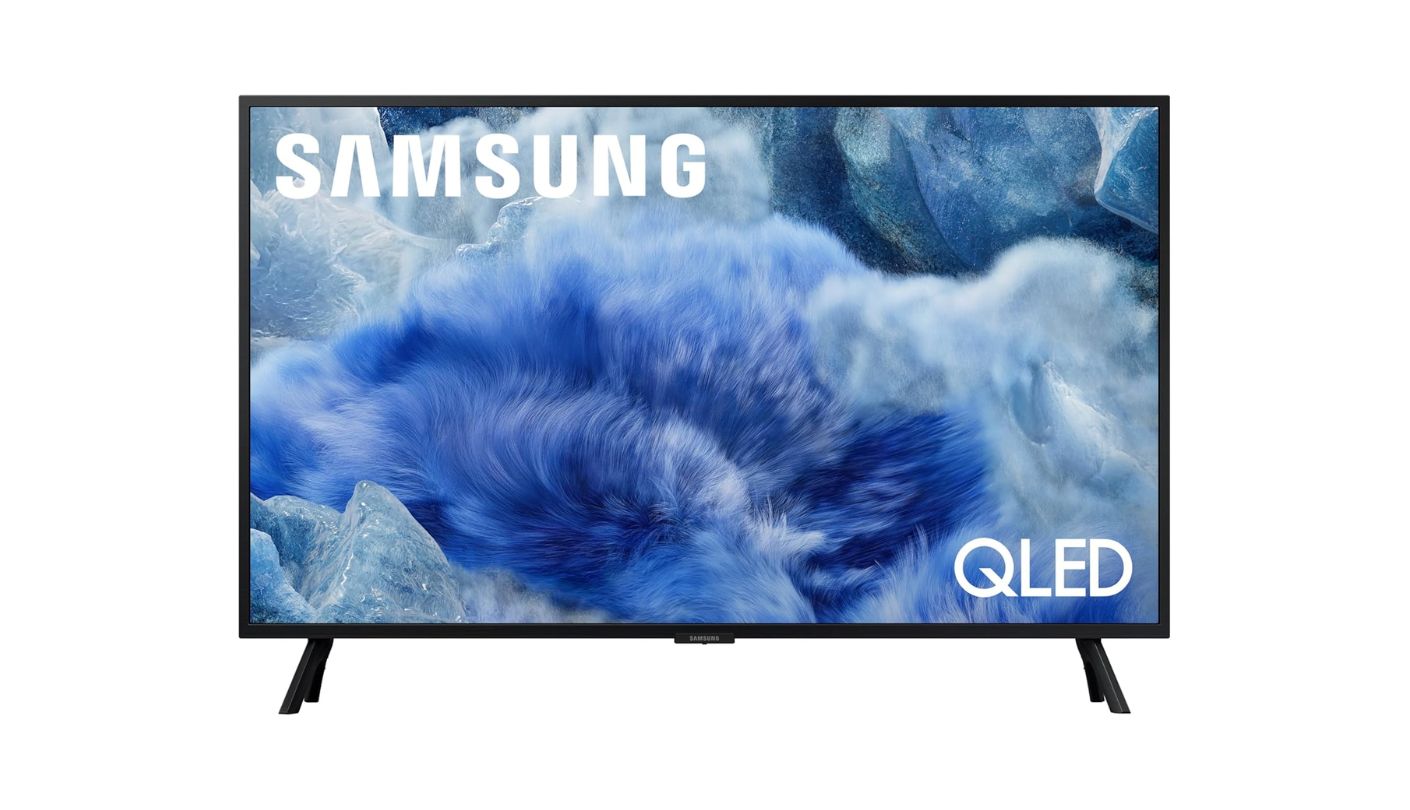
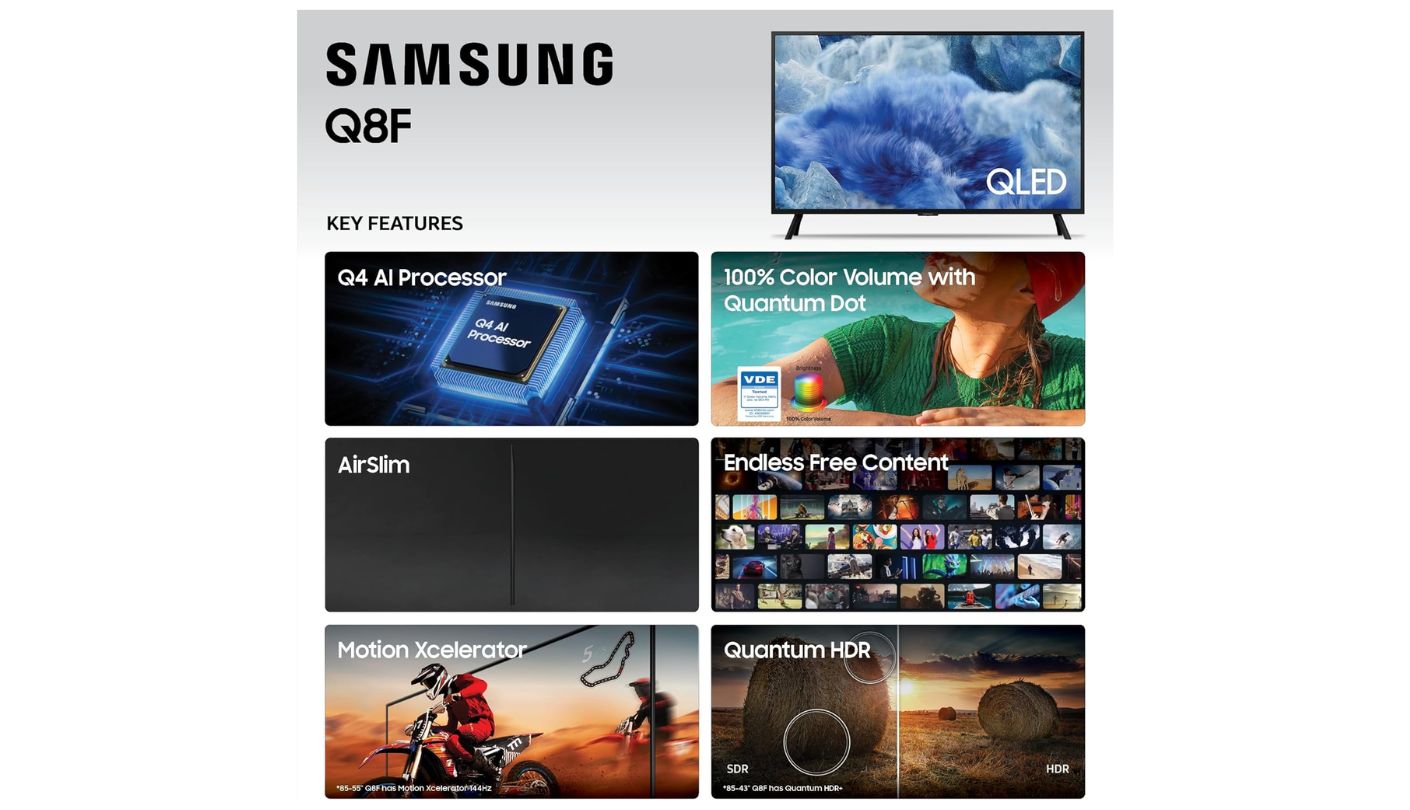
A 32-inch television with a genuine quantum dot panel and full 4K resolution is still uncommon enough that finding the Samsung Q8F at this size caught me off guard the first time I unboxed it. The rest of this lineup tops out at 1080p or 720p. The Q8F is doing something meaningfully different on the panel itself, even before factoring in Samsung's Quantum Dot color layer that widens the palette well beyond a standard LED screen.
The Q4 AI Processor handles upscaling duties for lower-resolution content, and I noticed it sharpening cable news broadcasts and older cooking show reruns in a way that made text and faces read more clearly from across a kitchen island. Quantum HDR supports HDR10+ and HLG, though Samsung skips Dolby Vision here the way it does across most of its lineup, which matters mainly for anyone streaming Dolby Vision-mastered content on Netflix or Disney+.
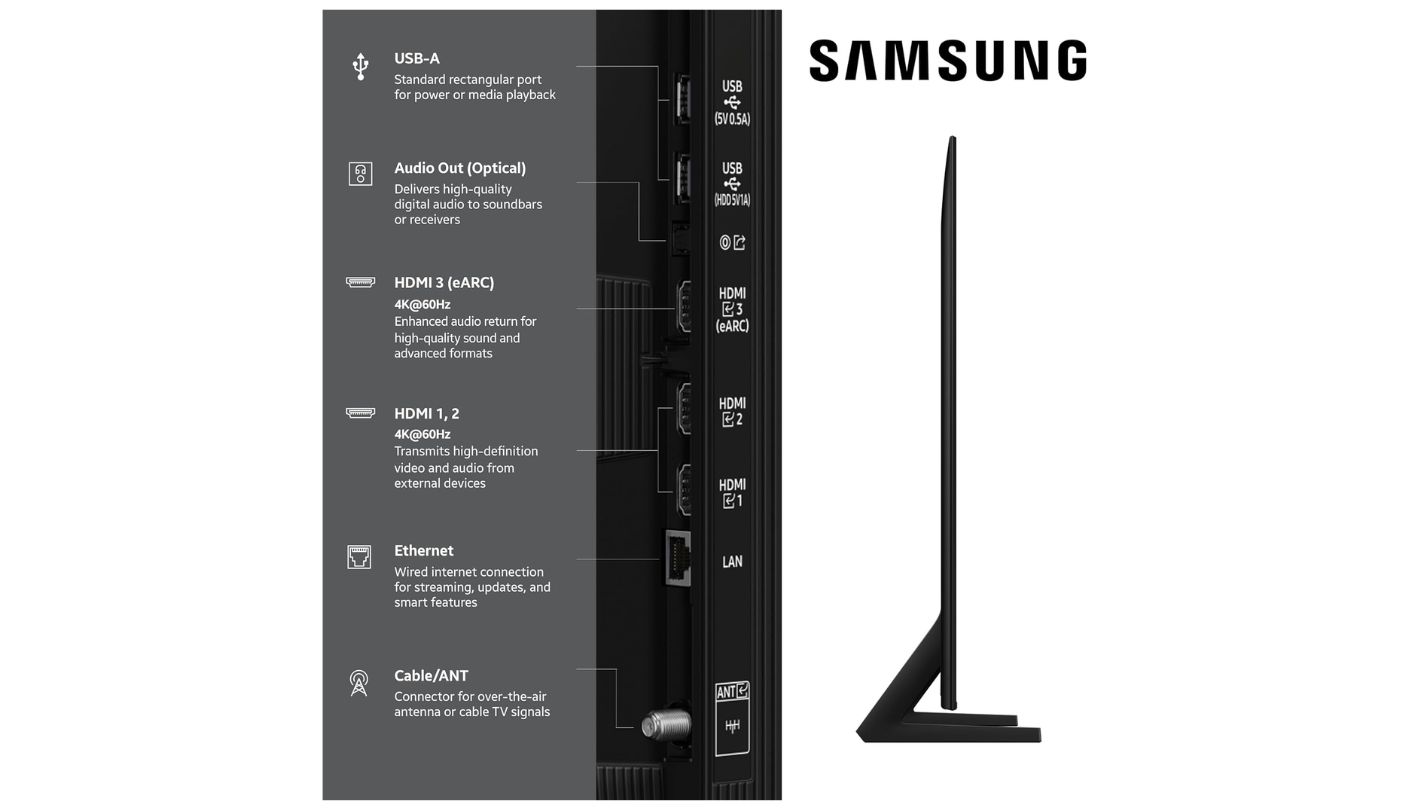
Three HDMI ports cap out at HDMI 2.0b rather than the newer 2.1 standard, and the panel runs at a 60Hz native refresh rate with Motion Xcelerator and ALLM support rather than the VRR gaming features Samsung reserves for its larger Q8F sizes. That trade-off barely registers for a kitchen set, since a screen mounted under a cabinet rarely doubles as a gaming display, and I never felt the absence during morning news or recipe streaming.
Tizen OS runs snappier here than expected from a budget-adjacent 32-inch set, and Samsung's Vision AI layer surfaces contextual recommendations that occasionally landed better than anticipated, though a typed search still beat the AI suggestions more often than not. Alexa comes built into the remote rather than the chassis, and Samsung Knox handles account security in the background, which felt like a reasonable trade for a screen that stays connected to a home Wi-Fi network around the clock.
The AirSlim chassis keeps the panel thin enough to sit flush against a wall mount without protruding far into already tight kitchen clearance, and the bezel is narrow enough that the screen doesn't feel oversized even mounted close to eye level above a counter. Samsung TV Plus adds a library of free ad-supported channels directly on the home screen, which turned out to be a convenient way to leave background news or a cooking channel running without opening a separate streaming app each morning.
Pros:
- Genuine 4K QLED
- Quantum Dot Color
- Alexa Built-In
- Knox Security
- AirSlim Design
Cons:
- No Dolby Vision
- No VRR Gaming
Summary: A quantum dot 4K panel at 32 inches is rare on its own, but the upscaling from the Q4 AI Processor is the part that actually justifies the price above a kitchen sink, turning fuzzy cable broadcasts into something worth glancing at while dinner cooks.
Hisense 32-Inch Class A4 Series FHD 1080p Smart Fire TV Review
Best Overall
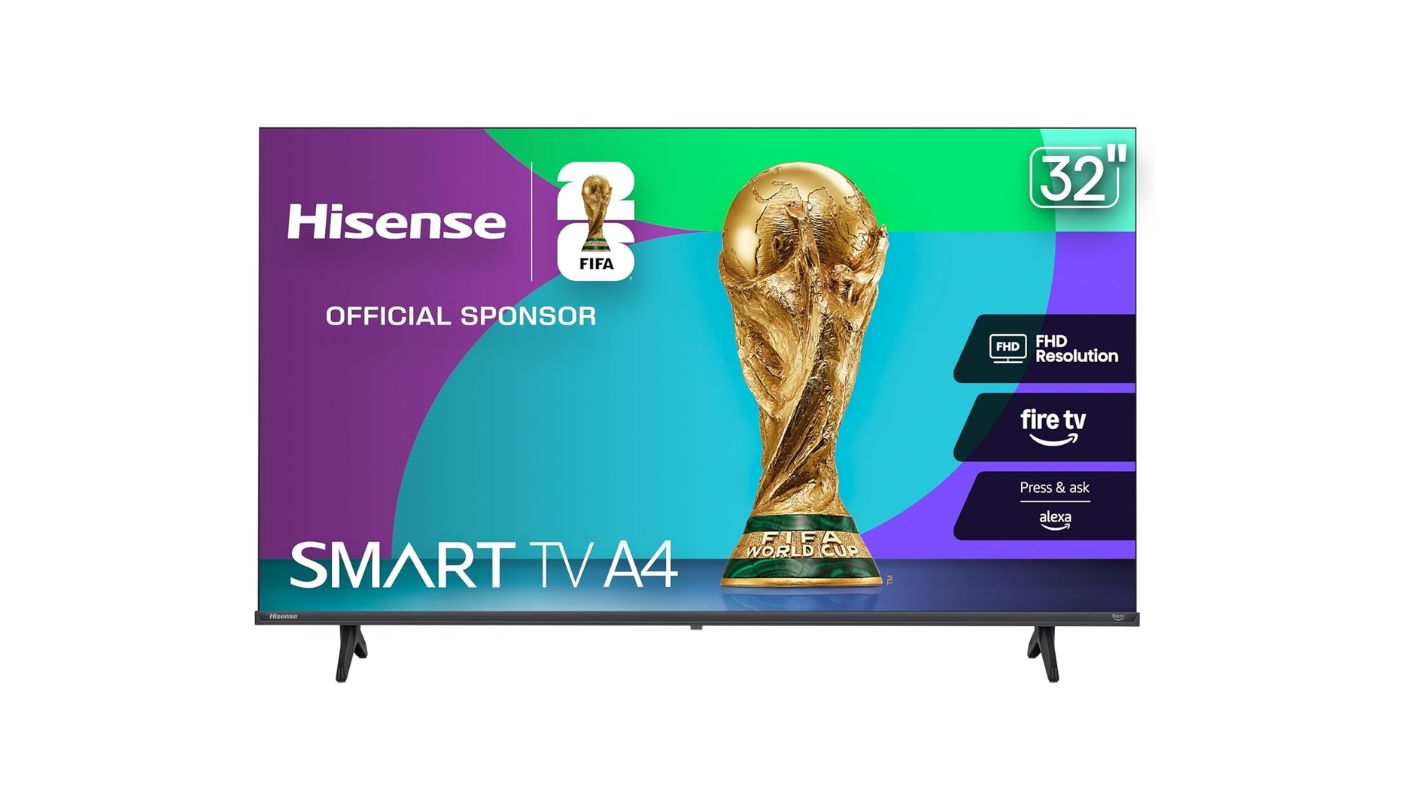
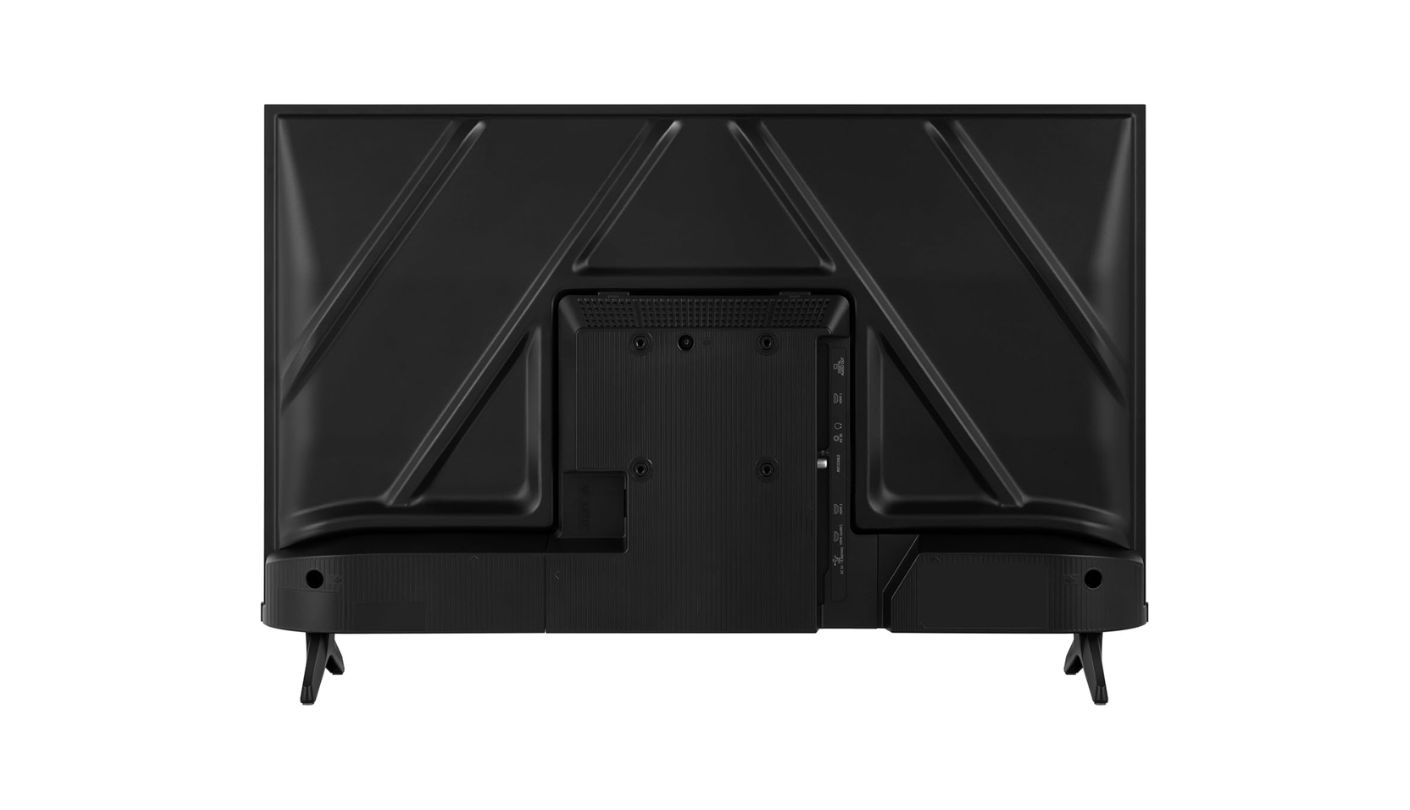
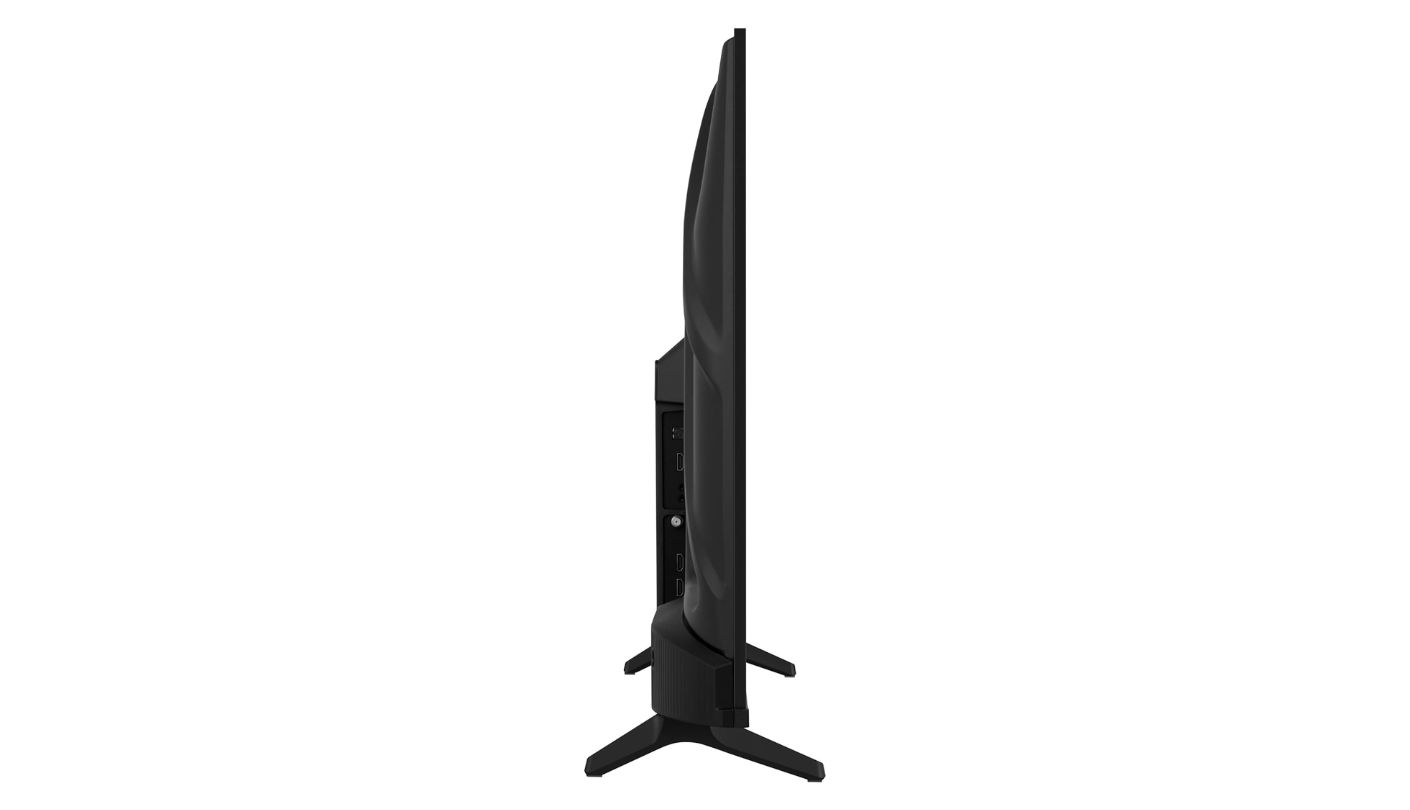
I'll admit I expected the Hisense 32A4NF to feel like a placeholder set, the kind of budget Fire TV that exists mainly to fill a shelf slot. It ended up being the model I kept reaching for once the novelty of the Samsung's 4K panel wore off. A full array LED backlight behind a 1080p panel tends to produce a brighter, more even picture than a direct-lit panel at this size, though the actual result still comes down to zone count and how aggressively the backlight is driven, and here the difference showed up clearly during a sunlit morning breakfast session with light pouring in through a kitchen window.
Fire TV runs the interface, and household members already streaming through other Amazon devices will notice their watchlists and recommendations carry over without any extra setup. The Alexa Voice Remote handles the press-and-ask style of voice control common across this price range, and I found the button large enough to hit accurately even with wet hands fresh from rinsing dishes.
DTS Virtual:X processes the built-in speakers for a wider, more surround-like sound than the flat stereo output typical of a 32-inch set, and Hisense's Game Mode brought input lag down low enough that a quick round of a retro console game felt responsive rather than sluggish. Natural Color Enhancer pushes greens and skin tones toward a more lifelike register, a small touch that mattered more than I expected while streaming cooking demonstrations where food color is the whole point.
Three HDMI ports cover a streaming stick, a game console, and a cable box without forcing anything to share a slot, and Wi-Fi 5 kept streaming stable throughout testing even with several other devices competing on the same home network. There's no HDR support on this panel at all, the one spec where the Samsung pulls ahead, though at 32 inches viewed from a few feet away that gap rarely announced itself during actual cooking sessions.
The slim bezel design keeps the visual footprint small enough to blend into a kitchen backsplash rather than dominate it, and the stand base is narrow enough to sit comfortably on a standard countertop shelf without crowding a coffee maker or a spice rack. Between the brighter backlight, the responsive Fire TV interface, and a price that undercuts the Samsung by a wide margin, this ended up being the set I would point most households toward first.
Pros:
- Full Array Backlight
- Fire TV Platform
- DTS Virtual:X Audio
- Low Input Lag
- Alexa Voice Remote
Cons:
- No HDR Support
- WiFi 5 Only
Summary: The full array backlight is doing more work than a spec sheet suggests, holding up brightness in a sun-drenched kitchen morning when several of its direct-lit competitors here washed out noticeably faster.
Roku Smart TV 2026 Select Series 32-Inch Review
Fastest Interface
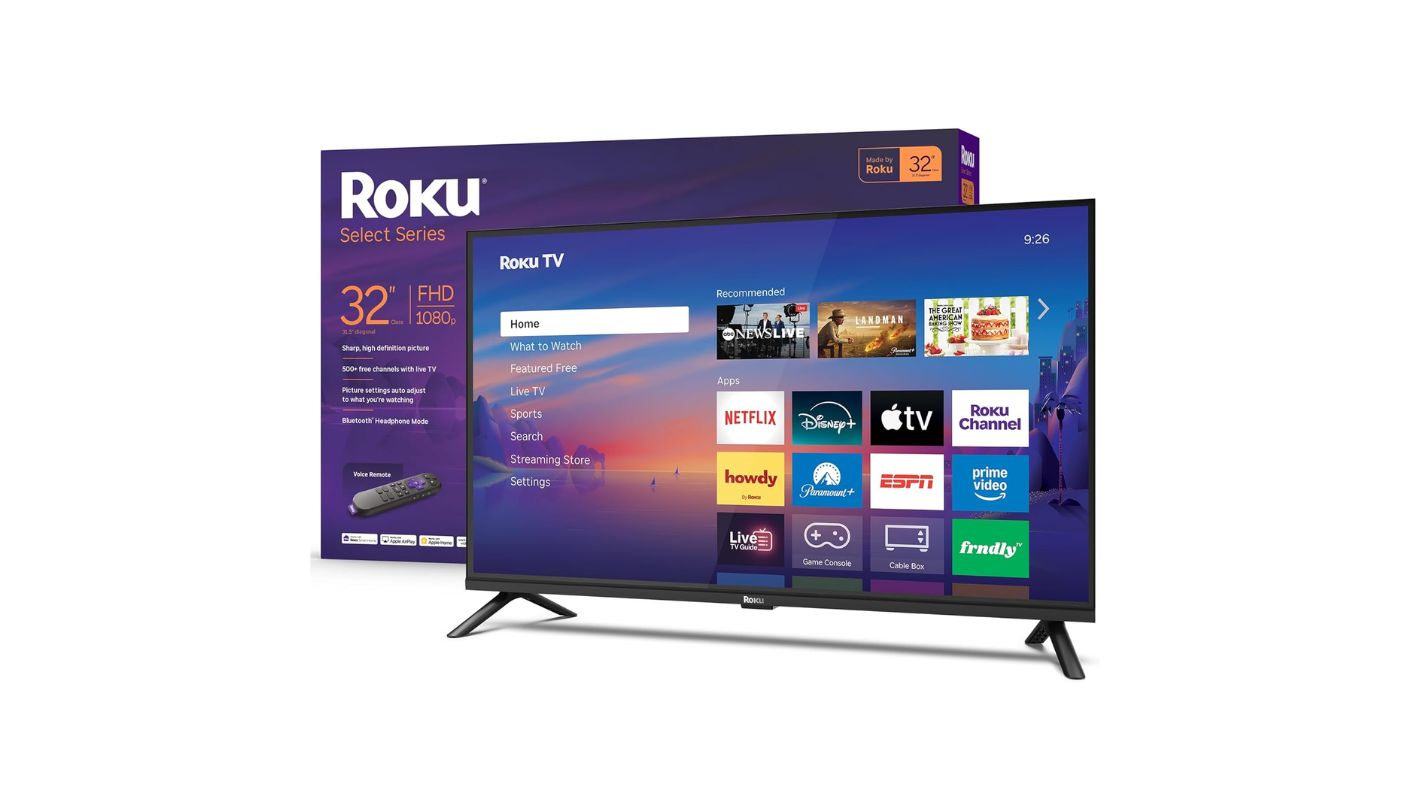
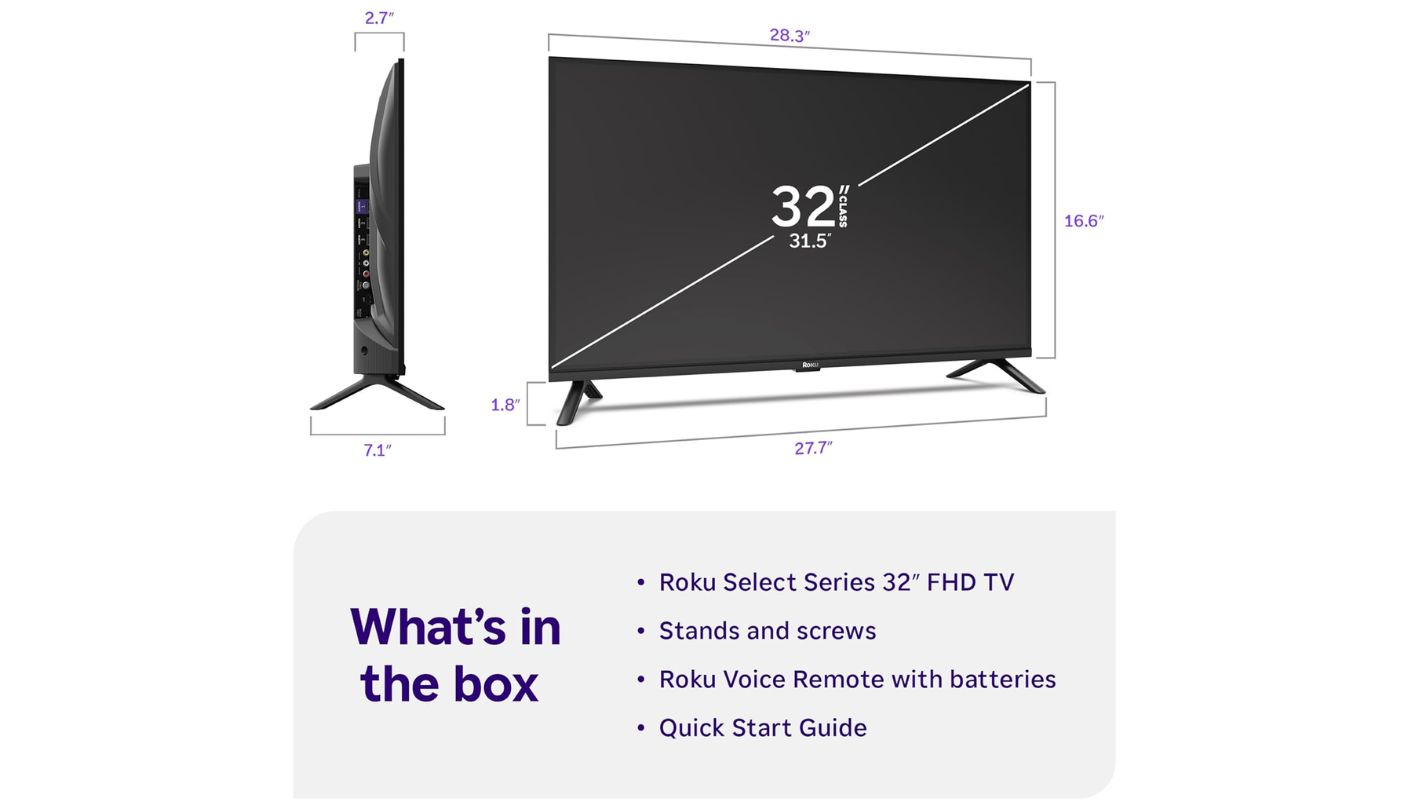
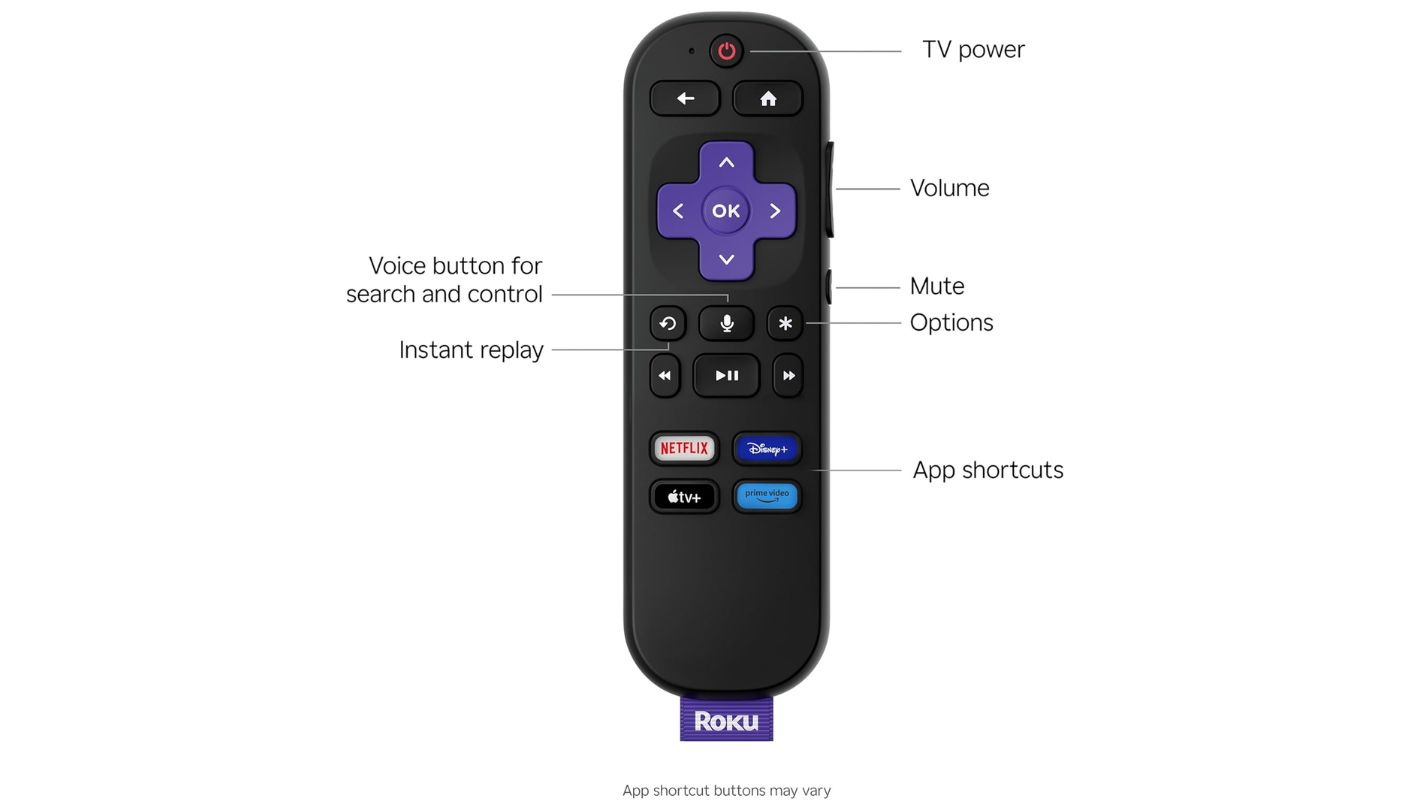
How fast should a kitchen TV actually boot up on a rushed weekday morning? After switching between all five sets repeatedly over several days, the Roku Select Series answered that question better than anything else here, launching apps within a couple of seconds and skipping the recommendation carousels that slow down a first glance at the home screen. The QLED-branded panel uses quantum dots for a wider color range than plain LED, though without a full array backlight behind it, so it reads best with some ambient kitchen light rather than in a dim room.
Roku Smart Picture cleans up incoming signals automatically, and it handled low-bitrate cable content competently during testing, sharpening edges on a local news broadcast without introducing obvious artifacts around faces or text. Auto speech clarity boosts dialogue during louder scenes, which matters directly in a kitchen where a running dishwasher or a hood fan is often competing for the same airspace as the television.
Bluetooth Headphone Mode pairs wireless headphones straight to the TV, a feature that felt more useful in a kitchen than I initially assumed, since it lets someone follow a recipe video privately while a partner watches something else on the same set later. The voice remote works across Roku Voice, Siri, Alexa, or Google Assistant, so it slots into whichever smart home ecosystem a household already runs rather than forcing a switch.
Three HDMI ports handle a streaming box, a game console, and a cable connection at once, and the customizable home screen lets frequently used apps and inputs sit one tap apart. HDR support is absent, matching the Hisense here, but the trade feels reasonable given how quickly everything else on this platform loads.
Dolby Audio processes the built-in speakers for clearer dialogue and louder output than a typical entry-level driver setup manages, and pairing that with auto speech clarity made cooking show narration easy to follow even with a stand mixer running nearby. The direct-lit backlight without local dimming zones is the one area where the panel trails the Hisense, showing a slightly flatter black level during evening use, though during typical daytime kitchen hours that gap rarely mattered.
Pros:
- Fast Roku Interface
- Auto Speech Clarity
- Bluetooth Headphone Mode
- Free Live Channels
- Multi-Assistant Remote
Cons:
- Skips HDR Formats
- No Local Dimming
Summary: Speed is the whole pitch here, and Roku OS earning that reputation on a 32-inch budget panel says more about software optimization than it does about the hardware underneath it.
Insignia F20 32-Inch Fire TV Review
Lowest Price
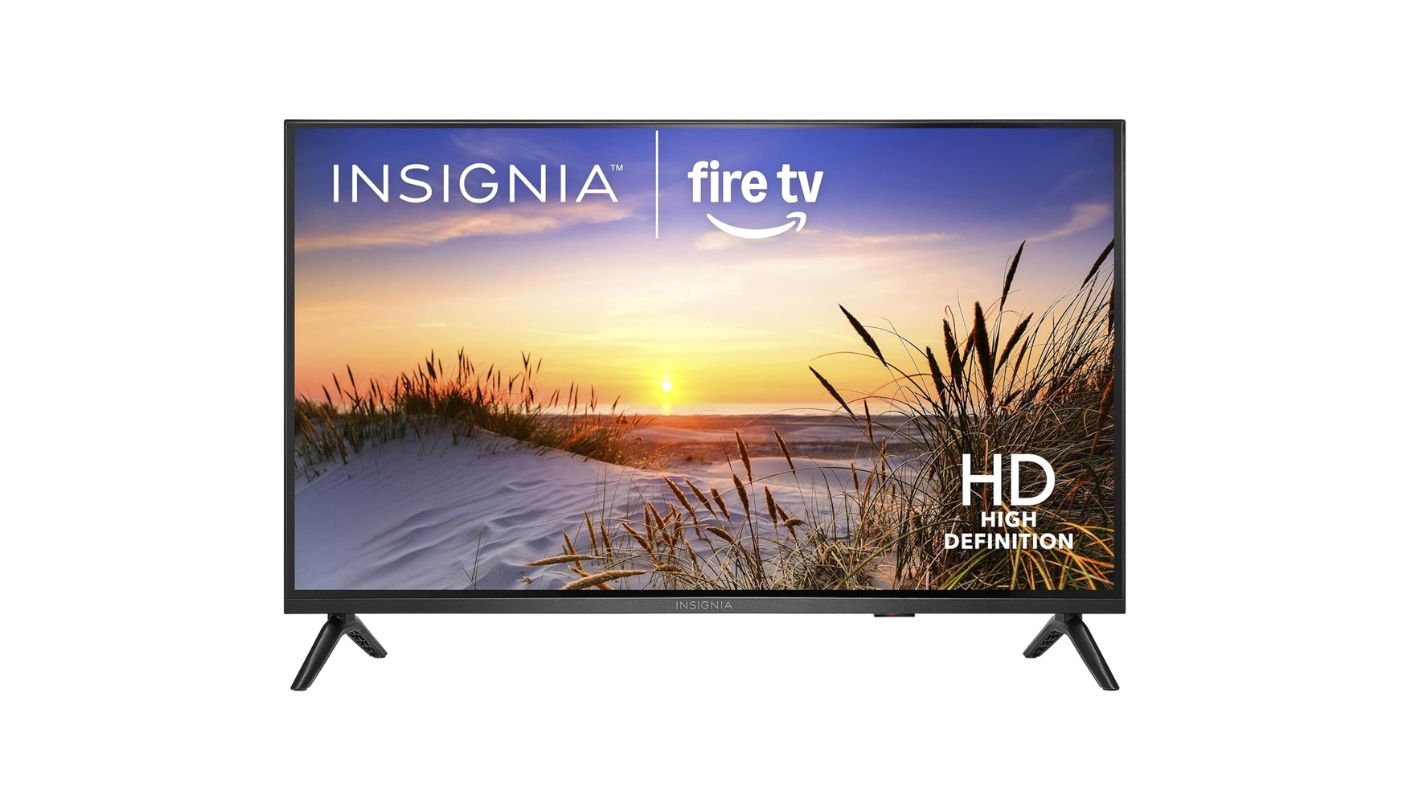
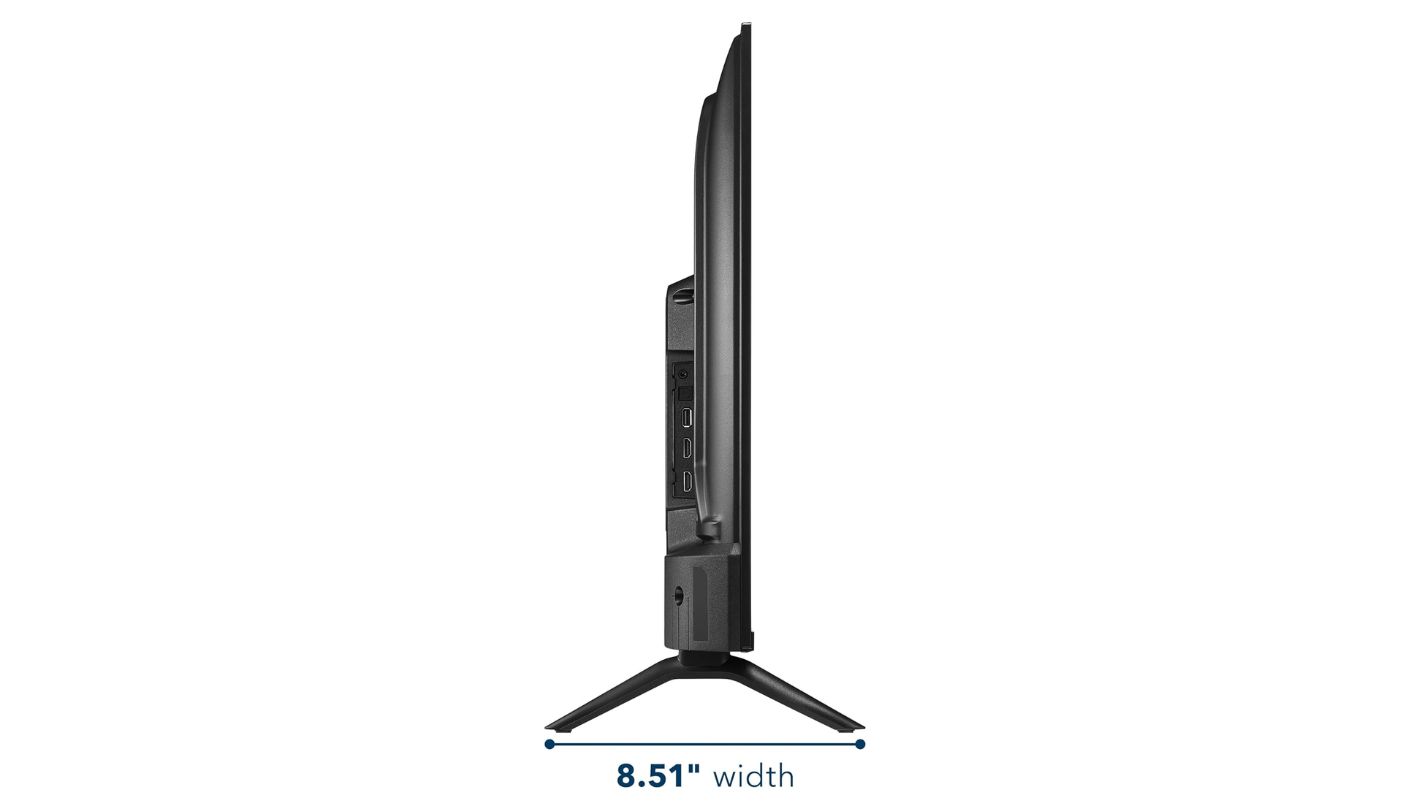
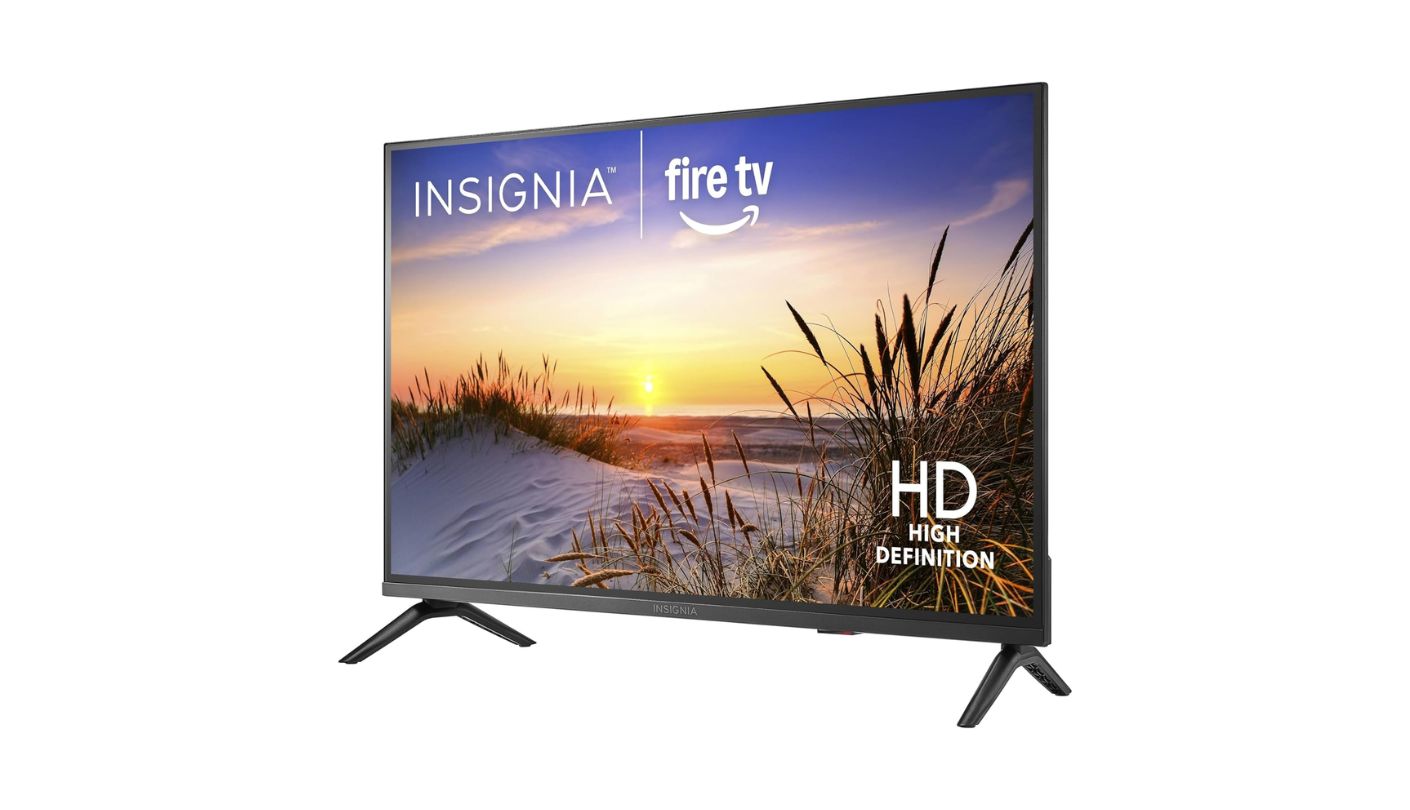
My neighbor bought the Insignia F20 for a rental kitchen on a whim during a clearance sale, and when I borrowed it back for this comparison I half expected it to feel like a placeholder rather than a real contender. It surprised me by doing exactly what a secondary kitchen screen needs to do and nothing more, running a 720p panel that looks perfectly fine from across a counter even if it would disappoint mounted above a living room sofa.
Fire TV powers the interface, giving access to the same app library and Alexa integration found across Amazon's own hardware, and the Alexa Voice Remote handles basic voice search and app launching without any noticeable lag during testing. HDMI ARC sends audio out to a soundbar or receiver without an extra cable, a small convenience that matters more on a budget set where the built-in speakers are the first thing worth upgrading.
DTS TruSurround processes the onboard audio for a slightly wider soundstage than a flat stereo mix, though it never fully compensates for how thin the actual drivers sound at higher volumes. Apple AirPlay support lets an iPhone push a recipe video or a photo slideshow directly to the screen, which turned out to be one of the more genuinely useful features during actual kitchen use rather than a checkbox spec.
Two HDMI ports is the tightest port count in this lineup, enough for a streaming device and a cable box but not much beyond that without a switcher. The direct-lit LED backlight lacks the brightness headroom of the Hisense's full array panel, so a sunlit kitchen window can wash out the picture during peak daylight hours in a way the other sets here handle more gracefully.
Setup took less than ten minutes from unboxing to a working Fire TV home screen, and the included stand assembled without tools beyond the two screws in the box. Anyone furnishing a rental unit, a dorm kitchenette, or a guest space where the TV is a nice-to-have rather than a centerpiece will find this covers the basics without asking for much in return.
Pros:
- Rock-Bottom Price
- Simple Setup
- Fire TV Access
- HDMI ARC Support
- Alexa Voice Remote
Cons:
- 720p Resolution Only
- Just Two HDMI
Summary: This is the set to buy when a kitchen just needs a screen and nothing else, and it does that one job without the frustrations that usually come with the cheapest option on a shelf.
Amazon Ember 32-Inch 2-Series with Fire TV Review
Alexa Hub
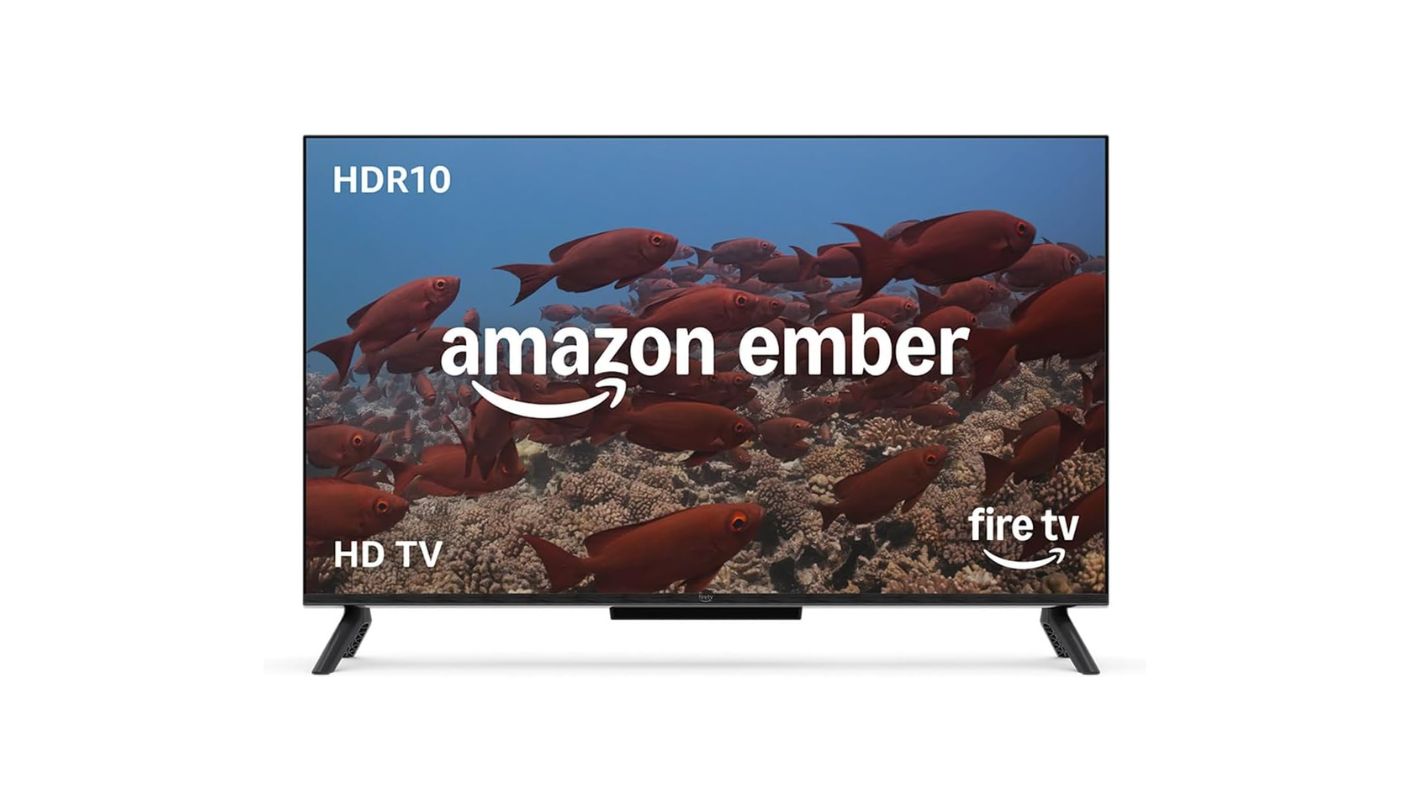
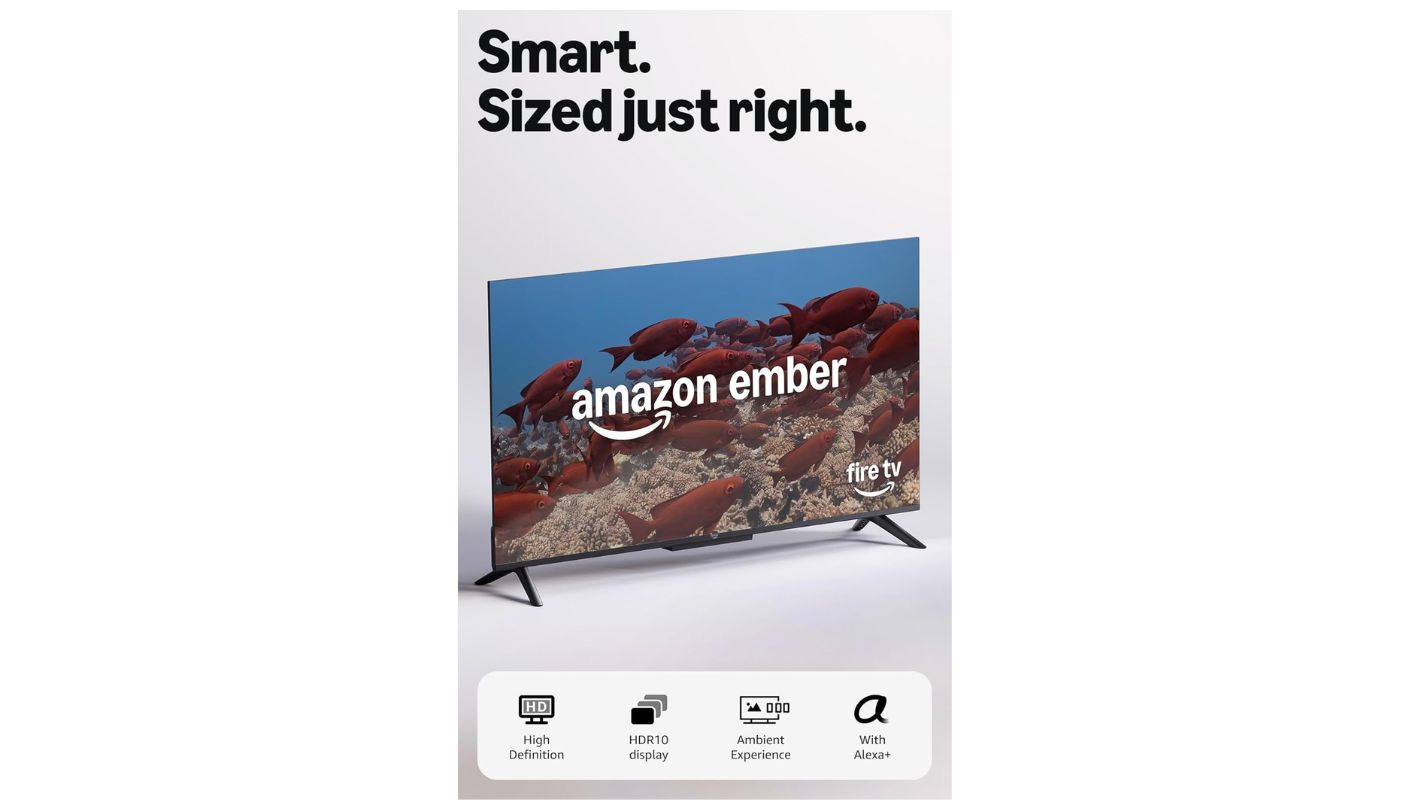
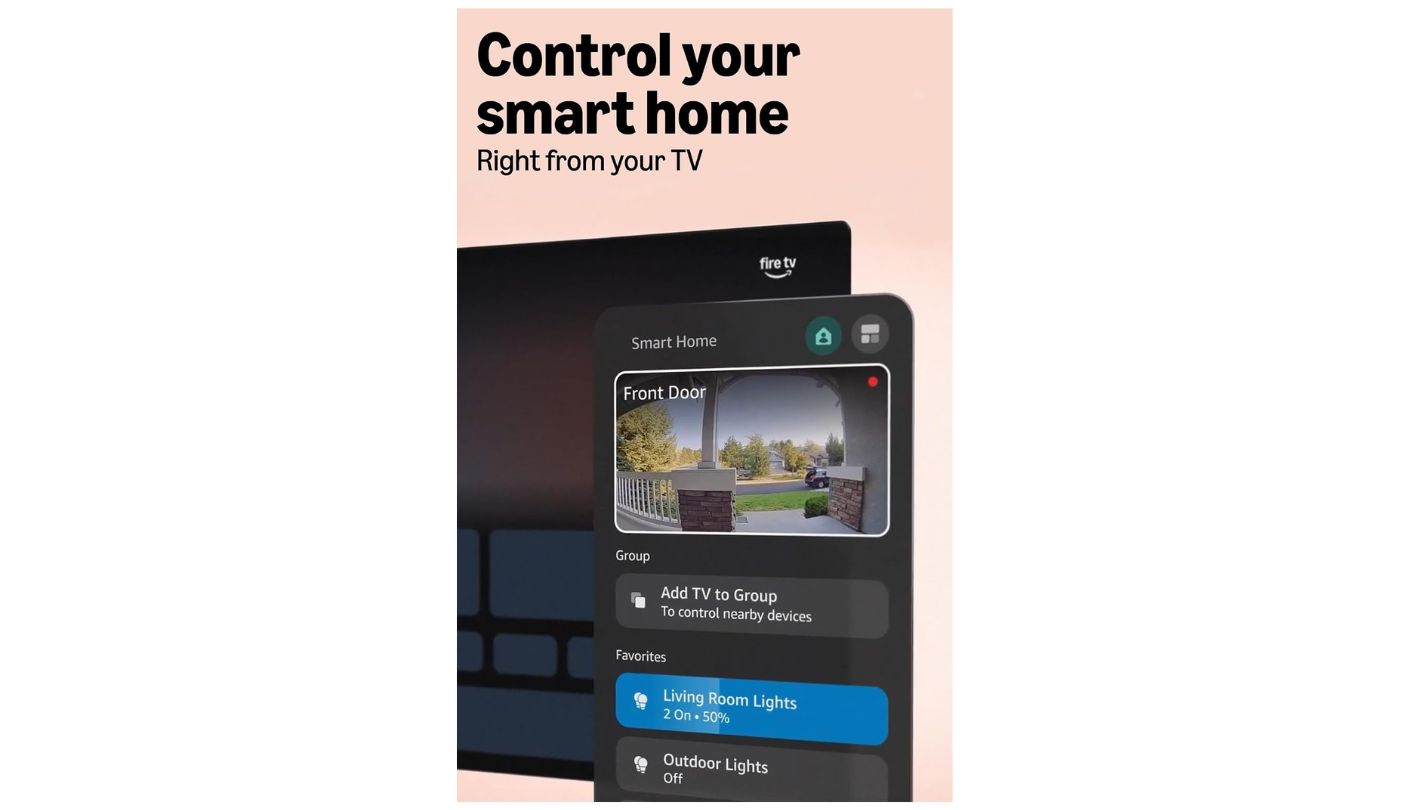
Amazon renamed this set from Fire TV 2-Series to the Amazon Ember 2-Series partway through its production run, so the box on a store shelf might read either name depending on when it was manufactured, though the hardware inside stays identical either way. What sets this apart from the Insignia at a similar 720p resolution is the newer quad-core processor and Wi-Fi 6 radio underneath, both of which showed up clearly in how quickly apps opened and how consistently video streamed during a busy morning with multiple devices on the same network.
Ambient Experience turns the screen into a rotating art and information display when nothing is actively streaming, and having weather or a clock face visible on an otherwise idle kitchen screen earned a permanent spot in my own morning routine rather than staying a novelty. The new Fire TV interface layered onto this set leans into Alexa+ for content recommendations, surfacing categories and pinned apps a beat faster than the older Fire TV layout it replaces.
HDR support here covers HDR10 and HLG, putting it ahead of the Hisense, Roku, and Insignia sets on format coverage even though the panel itself tops out at 720p rather than full 1080p. I compared the same HDR-mastered clip on the Ember and on the Insignia, and the extra contrast processing on the Ember produced a noticeably less flat image despite both panels sharing the same resolution ceiling.
Two HDMI inputs limit simultaneous device connections, with one carrying eARC for higher-bandwidth audio passthrough to a compatible soundbar, though whether that passthrough is truly lossless depends on the source app and the soundbar's own codec support rather than the port alone. Dolby Atmos passthrough is absent here, so the audio ceiling sits a step below what a full home theater setup would want. AirPlay support rounds out the connectivity for anyone pushing content from an iPhone or iPad, and the overall package reads like Amazon quietly upgrading its cheapest smart TV line rather than launching something new.
Instantly On technology, Amazon's term for a faster wake-from-standby state, cut the gap between pressing the power button and seeing a usable picture noticeably compared to the Insignia's slower boot cycle. For a household already leaning on Echo speakers and other Amazon hardware elsewhere in the house, the tighter ecosystem integration here carries more day-to-day weight than the resolution ceiling might suggest on paper.
Pros:
- Quad-Core Processor
- Wi-Fi 6 Speed
- Ambient Experience
- HDR10 Support
- Fast App Switching
Cons:
- Capped At 720p
- No Dolby Atmos
Summary: The processor and Wi-Fi upgrade over the Insignia matters more in daily use than the identical resolution ceiling suggests, since a faster chip is what actually determines whether a kitchen TV feels sluggish two years in.
32-Inch Kitchen TVs: FAQ
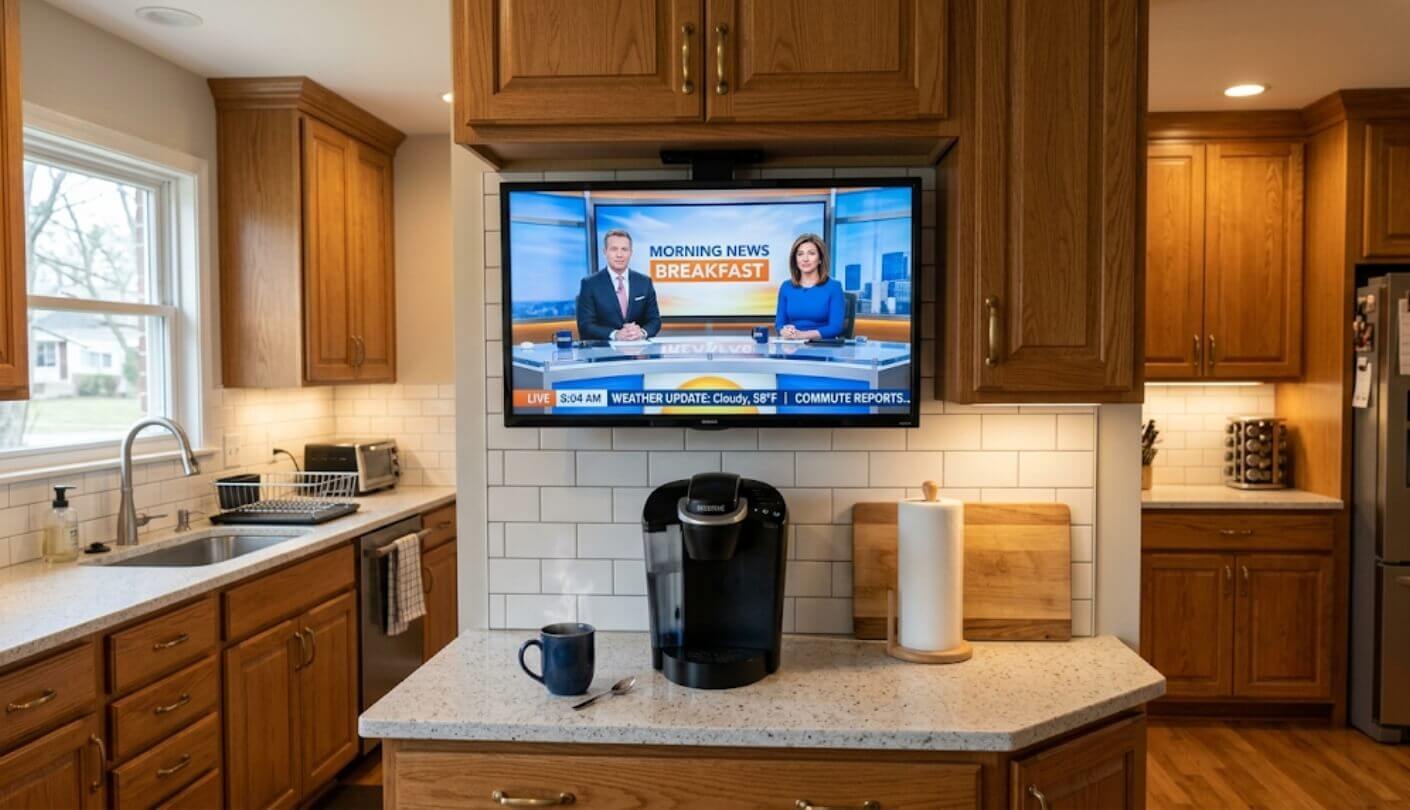
Do any 32-inch kitchen TVs come in 4K?
Yes, though it remains the exception rather than the norm. The Samsung Q8F is the only set in this lineup with a full 3840x2160 panel, while the Hisense and Roku both top out at 1080p and the Insignia and Amazon Ember cap at 720p. At typical kitchen viewing distances, the 4K jump matters less than it would on a larger living room screen.
Which of these TVs works best for hands-free voice control while cooking?
None of the five ships with a true always-listening far-field microphone, so the real differentiator is how easy each voice remote is to use one-handed. The Roku Select Series stands out for compatibility across Roku Voice, Siri, Alexa, and Google Assistant, while the Samsung, Hisense, Insignia, and Amazon Ember all rely on a dedicated Alexa button built into their remotes.
Is 1080p enough for a kitchen TV, or is it worth paying more to avoid 720p?
For most kitchen setups, 1080p is the sweet spot rather than a compromise. The Hisense and Roku sets both hit that resolution and looked noticeably sharper than the 720p Insignia and Amazon Ember during side-by-side testing with recipe text and news captions, which are the kinds of content a kitchen screen displays most often.
How many HDMI ports do I actually need for a kitchen setup?
Two ports cover a basic streaming stick and a cable box, which is enough for most kitchens. The Samsung, Hisense, and Roku sets all include three HDMI ports for anyone who also wants to plug in a game console or a secondary device, while the Insignia and Amazon Ember each include two.
Which TV fits best in a tight cabinet space or on a narrow counter?
The Roku Select Series and the Insignia F20 both ship with the lightest stand bases in this lineup, which makes a difference specifically for anyone using a basic tilt bracket rated for lower weight limits rather than a heavy-duty full-motion mount.
Do any of these TVs support HDR content?
The Samsung Q8F supports HDR10+ and HLG, and the Amazon Ember covers HDR10 and HLG as well, though neither supports Dolby Vision. The Hisense, Roku, and Insignia sets skip HDR entirely, which rarely stands out at 32 inches viewed from a few feet away during everyday cooking.
Which smart platform loads apps fastest for a rushed morning routine?
Roku OS launched apps the fastest and cluttered its home screen the least during testing, making it the platform best suited to someone who wants the news on within seconds. Fire TV, running on the Hisense, Insignia, and Amazon Ember, works well for households already streaming through other Amazon devices since watch history carries over automatically.
Do I need a soundbar for a kitchen TV, or are the built-in speakers enough?
Built-in speakers on a 32-inch set are generally fine for background viewing over normal kitchen noise, especially on the Hisense and Roku sets, which both include dialogue-focused audio processing. A soundbar becomes worth adding only if the kitchen regularly runs loud enough, from a range hood or a dishwasher, to bury dialogue even with those processing features active.
Wrapping Up the Kitchen TV Search
None of these five sets is trying to be a living room centerpiece, and judging them like one misses the point. Reach for the Samsung Q8F if a sharp picture still matters on a small screen tucked under a cabinet, since its quantum dot panel and 4K resolution stand apart from everything else covered here. Most kitchens, though, will be happier with the Hisense 32A4NF, whose full array backlight shrugs off morning window glare better than any direct-lit set in this lineup.
Speed is what won me over on the Roku Select Series, and after a week of rushed mornings I stopped noticing the missing HDR entirely because the interface never made me wait for it. The Insignia F20 did its job in a different setting, sitting in a guest kitchen where nobody expected much and nobody complained either. If your household already leans on Alexa and other Amazon hardware, the Ember 2-Series is worth the small step up from the Insignia for the faster chip alone, since that difference is the one you'll actually feel two years down the line rather than on day one.

Jeb here, your go-to geek for everything from video projection to the latest tech trends. As an avid outdoorsman, I enjoy using monoculars and binoculars for hunting, traveling, and birdwatching. Join me in exploring the cool, quirky side of technology!


